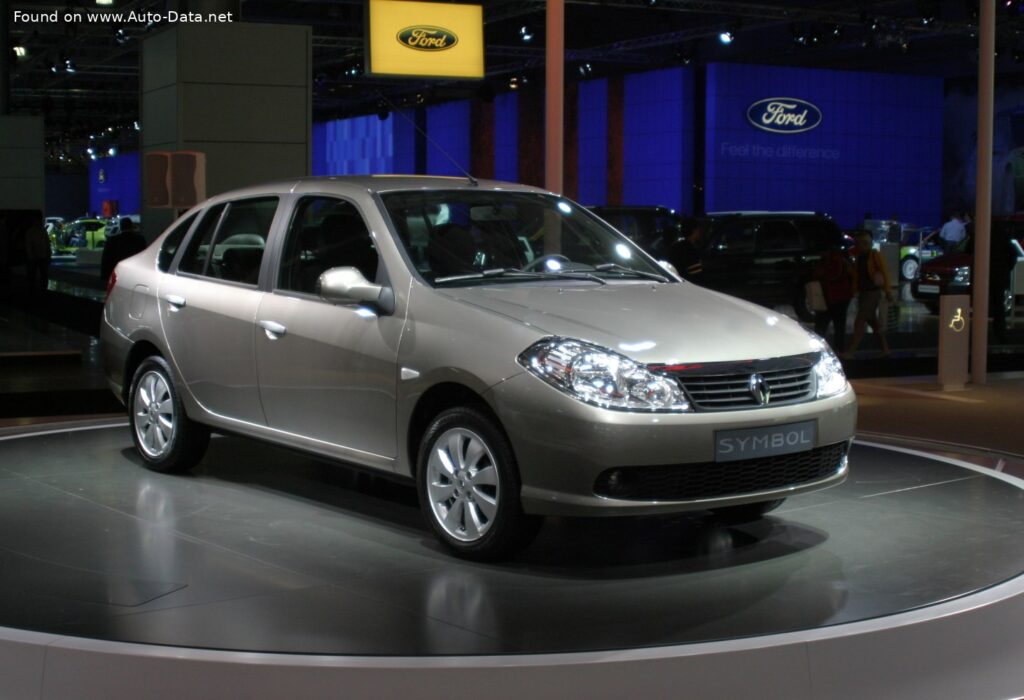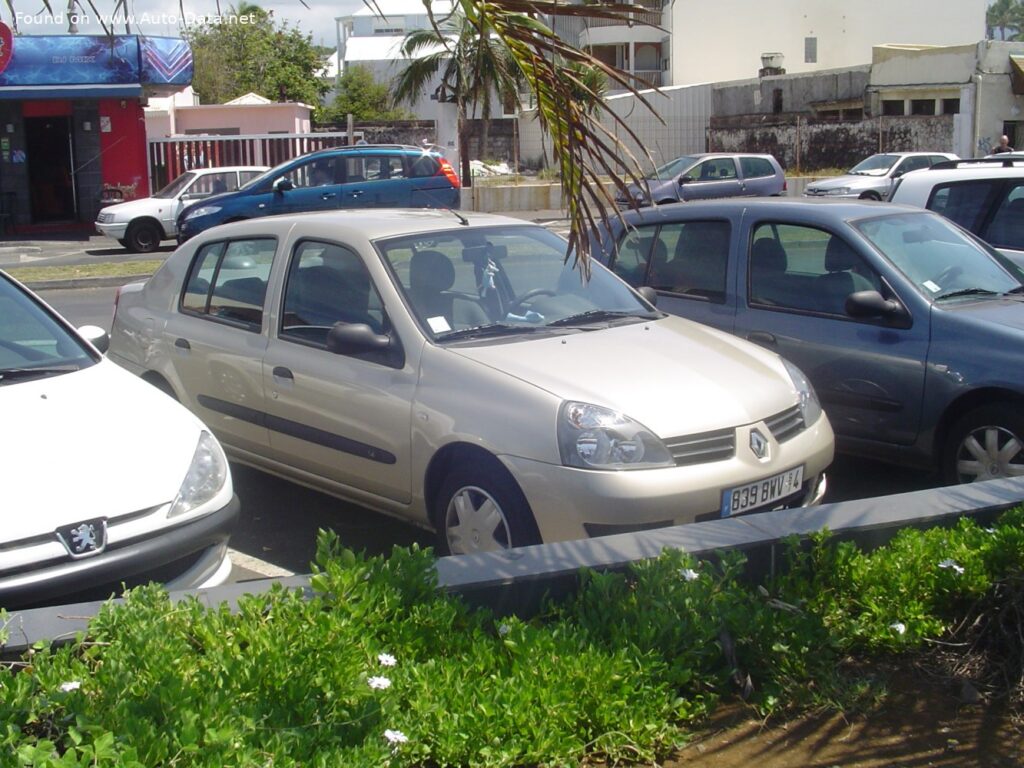
The Renault Symbol I (facelift 2002) represents a strategic offering from the French automaker, specifically tailored to appeal to a broad demographic in emerging markets and as an accessible, value-oriented option within Europe. Launched in 2002 as a refreshed iteration of the original Symbol, this compact sedan aimed to provide a practical, economical, and robust vehicle solution. Known as the Thalia in some markets, the Renault Symbol I (facelift 2002) was essentially a sedan variant of the popular Clio hatchback, designed to offer increased trunk space and a more traditional body style favored by certain consumer segments. Its production run from 2002 to 2008 solidified its position as a reliable workhorse, particularly appealing to families and fleet operators seeking affordability without compromising on essential functionality. The 2002 facelift brought subtle aesthetic enhancements and minor mechanical refinements, ensuring the Symbol remained competitive in its segment, focusing on longevity and low running costs in regions where such attributes are highly valued.
Engine & Performance of the Renault Symbol I (facelift 2002)
At the heart of the Renault Symbol I (facelift 2002) 1.4 (75 Hp) lies a naturally aspirated 1.4-liter (1390 cm3 or 84.82 cu. in.) inline four-cylinder engine, designated by the code K7J 700. This powertrain was engineered for reliability and efficiency, reflecting Renault’s commitment to providing accessible motoring solutions. The engine features an Overhead Camshaft (OHC) valvetrain with two valves per cylinder, a configuration known for its simplicity and robustness, contributing to lower maintenance requirements and dependable performance. Fuel delivery is managed by a multi-port manifold injection system, ensuring precise fuel metering and combustion efficiency, which was a standard and effective technology for its time.
The 1.4-liter unit generates a modest but entirely adequate 75 horsepower at 5800 revolutions per minute (rpm). This power output, while not designed for spirited driving, is well-suited for urban commuting and comfortable highway cruising, especially considering the vehicle’s compact dimensions and kerb weight. Complementing the horsepower is a peak torque output of 114 Newton-meters (84.08 lb.-ft.) delivered at 4250 rpm. This torque figure is crucial for providing sufficient pulling power in everyday driving scenarios, aiding in city traffic maneuverability and allowing for reasonable acceleration, particularly when the vehicle is fully loaded.
In terms of outright performance, the Renault Symbol I (facelift 2002) 1.4 (75 Hp) accelerates from 0 to 60 miles per hour in a calculated 11.9 seconds, a respectable time for a vehicle of its class and power output from that era. Its maximum speed is rated at 105.63 miles per hour (170 km/h), making it perfectly capable of maintaining highway speeds. The engine’s power-to-weight ratio stands at 12.5 kg per horsepower (79.8 Hp per tonne), indicating a balanced approach to performance and efficiency. A key attribute of the Symbol’s powertrain is its fuel economy. In urban driving conditions, it achieves approximately 24.2 US miles per gallon (9.7 l/100 km), while on the extra-urban cycle, this improves significantly to an impressive 41.3 US miles per gallon (5.7 l/100 km). These figures underscore its design philosophy as an economical vehicle, making it an attractive option for budget-conscious consumers seeking low running costs.
Power is transmitted to the front wheels via a five-speed manual transmission. This setup is a hallmark of affordability and driver engagement, offering good control over the engine’s power band and contributing to the overall fuel efficiency. The front-wheel-drive architecture, combined with the transverse engine layout, optimizes interior space and simplifies the drivetrain, further reducing manufacturing costs and enhancing reliability. The engine oil capacity is 3.1 liters (3.28 US qt), and the cooling system holds 5.5 liters (5.81 US qt), indicating standard service requirements for its class, making routine maintenance straightforward and cost-effective.
Design & Features of the Renault Symbol I (facelift 2002)
The design philosophy behind the Renault Symbol I (facelift 2002) was driven by practicality, maximizing interior space and trunk capacity within a compact footprint. As a four-door sedan, it offered a more traditional and often preferred body style in many global markets compared to its hatchback sibling. The facelift in 2002 introduced subtle refinements to the exterior, including revised headlamps, grille, and bumper designs, giving it a more contemporary appearance without straying from its utilitarian roots. Its dimensions are well-suited for urban environments, with a length of 164.21 inches (4171 mm), a width of 64.53 inches (1639 mm), and a height of 56.57 inches (1437 mm). The wheelbase of 97.32 inches (2472 mm) contributes to a stable ride and reasonable interior room for its class, making it easy to maneuver in tight city streets while still offering adequate passenger comfort.
Inside, the Renault Symbol was designed to accommodate five occupants comfortably, with a focus on durability and user-friendliness. While not lavish, the interior plastics and upholstery were chosen for their hard-wearing properties, reflecting the car’s role as a dependable daily driver. The dashboard layout was ergonomic and intuitive, prioritizing functionality over elaborate aesthetics. A standout feature for a vehicle of its size and segment is the generous trunk (boot) space, offering a substantial 18.01 cubic feet (510 liters) of cargo capacity. This large boot was a significant selling point, providing ample room for luggage, groceries, or commercial goods, making it highly versatile for families and small businesses alike, a crucial factor in its target markets.
The chassis and suspension system of the Renault Symbol I (facelift 2002) were engineered for a comfortable ride and predictable handling. Both the front and rear suspensions utilize coil springs, a common and effective setup that balances