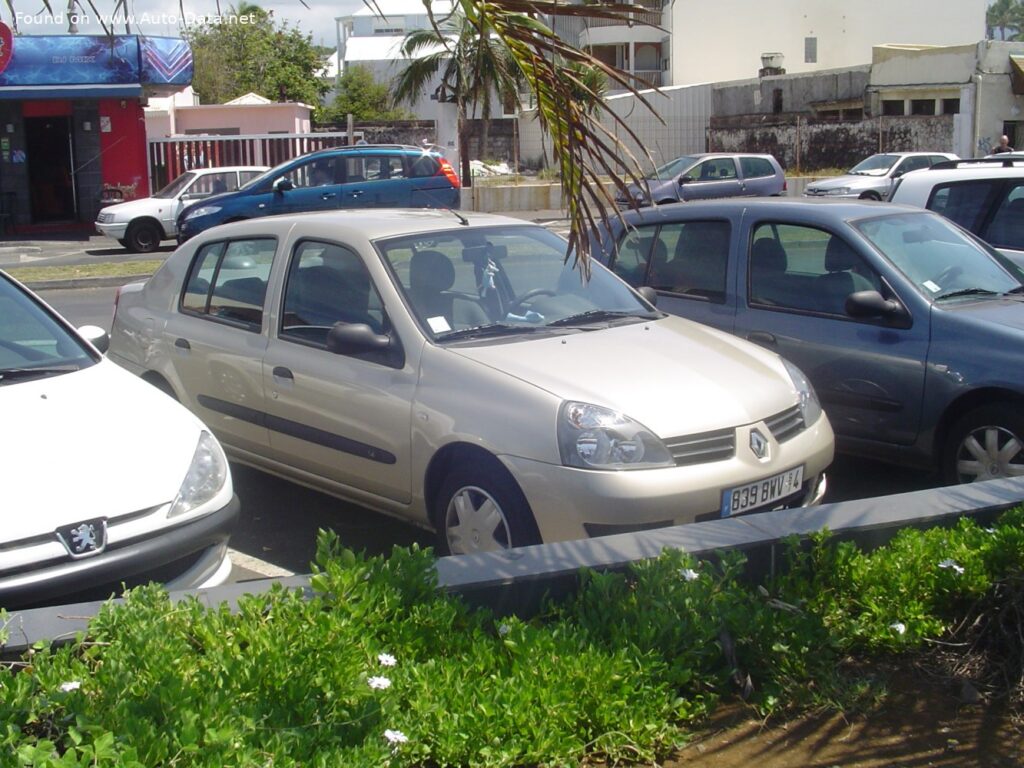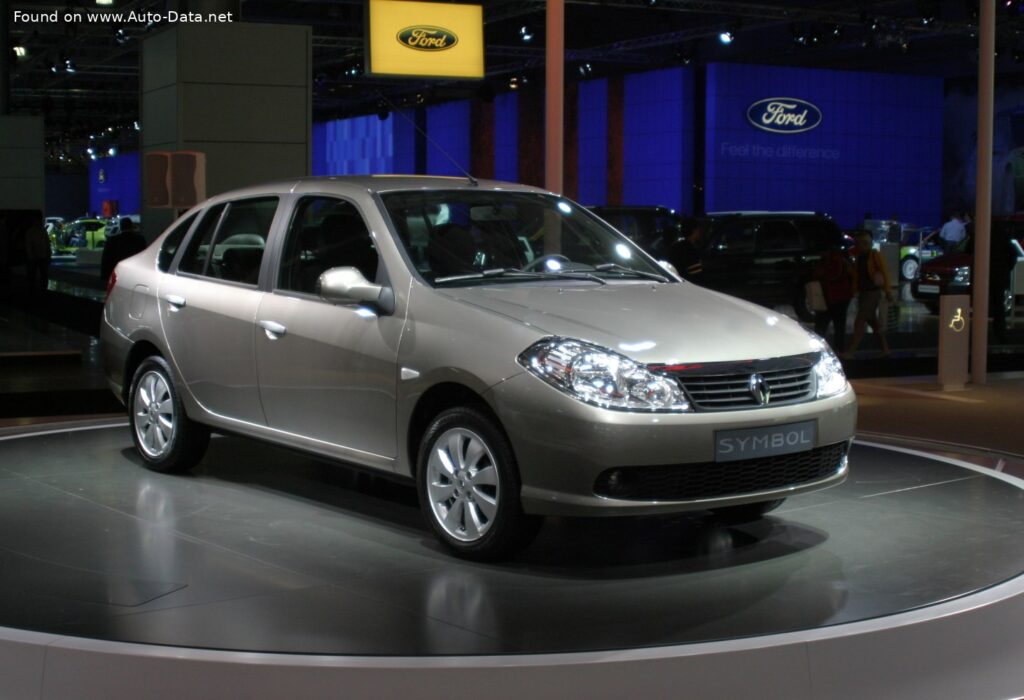
The Renault Symbol II 1.4 16V, produced between 2008 and 2012, is a compact sedan primarily aimed at the European and Turkish markets. While not officially sold in the United States, it represents a significant model in Renault’s lineup as an affordable and practical vehicle. The Symbol II served as a budget-friendly option, often positioned as a step up from the entry-level Logan while offering a more conventional sedan body style. It competed with vehicles like the Peugeot 301 and Fiat Linea in its segment, focusing on value and efficiency.
Renault Symbol II: An Overview
The Symbol II is the second generation of the Symbol, a nameplate Renault used for different models in different markets. This iteration was based on the second-generation Renault Clio platform, offering a blend of practicality, affordability, and reasonable fuel economy. It was designed to appeal to buyers seeking a reliable and spacious sedan without the higher price tag of more established competitors. The 1.4 16V engine variant, producing 98 horsepower, was a common choice, balancing performance with fuel efficiency.
Engine & Performance
The Renault Symbol II 1.4 16V is powered by a 1.390-liter inline four-cylinder gasoline engine, designated the K4J 712. This naturally aspirated engine delivers 98 horsepower at 5,700 rpm and 127 Nm (93.67 lb.-ft.) of torque at 4,250 rpm. While not a performance-oriented engine, it provides adequate power for everyday driving. The engine features a multi-port fuel injection system and a single overhead camshaft (SOHC) valvetrain with four valves per cylinder. This configuration contributes to a reasonable power-to-weight ratio of 10.6 kg/Hp.
Performance figures include a 0-100 km/h (0-62 mph) acceleration time of 11.5 seconds, and a 0-60 mph time of 10.9 seconds. The car achieves a maximum speed of 185 km/h (114.95 mph). Fuel economy is a strong point, with combined cycle consumption rated at 7.0 l/100 km (33.6 US mpg or 40.4 UK mpg). Urban fuel consumption is 9.9 l/100 km (23.8 US mpg), while extra-urban consumption is a more economical 5.4 l/100 km (43.6 US mpg).
Design & Features
The Renault Symbol II is a traditional four-door sedan with a relatively conservative design. It offers seating for five passengers and a trunk capacity of 504 liters (17.8 cubic feet). The car’s design prioritizes practicality and space over stylistic flair. The interior is functional and straightforward, with a focus on durability and ease of use.
Safety features for the time included ventilated disc brakes on the front wheels and drum brakes on the rear. Hydraulic power steering was standard. The Symbol II met Euro 3 emission standards, reflecting the environmental regulations in place during its production run. The suspension system consists of an independent McPherson strut setup at the front and an independent coil spring arrangement at the rear, providing a comfortable ride quality. The vehicle rides on 14-inch wheels with 175/65 R14 tires.
Technical Specifications
| Brand | Renault |
| Model | Symbol |
| Generation | Symbol II |
| Type (Engine) | 1.4 16V (98 Hp) |
| Start of production | 2008 |
| End of production | 2012 |
| Powertrain Architecture | Internal Combustion engine |
| Body type | Sedan |
| Seats | 5 |
| Doors | 4 |
| Fuel consumption (urban) | 9.9 l/100 km (23.8 US mpg) |
| Fuel consumption (extra urban) | 5.4 l/100 km (43.6 US mpg) |
| Fuel consumption (combined) | 7 l/100 km (33.6 US mpg) |
| Fuel Type | Petrol (Gasoline) |
| Acceleration 0 – 100 km/h | 11.5 sec |
| Acceleration 0 – 62 mph | 11.5 sec |
| Acceleration 0 – 60 mph | 10.9 sec |
| Maximum speed | 185 km/h (114.95 mph) |
| Emission standard | Euro 3 |
| Weight-to-power ratio | 10.6 kg/Hp |
| Weight-to-torque ratio | 8.2 kg/Nm |
| Power | 98 Hp @ 5700 rpm |
| Torque | 127 Nm @ 4250 rpm (93.67 lb.-ft. @ 4250 rpm) |
| Engine layout | Front, Transverse |
| Engine Model/Code | K4J 712 |
| Engine displacement | 1390 cm3 (84.82 cu. in.) |
| Number of cylinders | 4 |
| Engine configuration | Inline |
| Cylinder Bore | 79.5 mm (3.13 in.) |
| Piston Stroke | 70 mm (2.76 in.) |
| Compression ratio | 10:1 |
| Number of valves per cylinder | 4 |
| Fuel injection system | Multi-port manifold injection |
| Engine aspiration | Naturally aspirated engine |
| Valvetrain | SOHC |
| Engine oil capacity | 4.8 l (5.07 US qt | 4.22 UK qt) |
| Coolant | 5.7 l (6.02 US qt | 5.02 UK qt) |
| Kerb Weight | 1036 kg (2283.99 lbs.) |
| Max. weight | 1500 kg (3306.93 lbs.) |
| Max load | 464 kg (1022.94 lbs.) |
| Trunk (boot) space – minimum | 504 l (17.8 cu. ft.) |
| Fuel tank capacity | 50 l (13.21 US gal | 11 UK gal) |
| Length | 4261 mm (167.76 in.) |
| Width | 1940 mm (76.38 in.) |
| Height | 1439 mm (56.65 in.) |
| Wheelbase | 1940 mm (76.38 in.) |
| Front track | 1406 mm (55.35 in.) |
| Rear (Back) track | 1385 mm (54.53 in.) |
| Drivetrain Architecture | Front wheel drive |
| Number of gears and type of gearbox | 5 gears, manual transmission |
| Front suspension | Independent, type McPherson with coil spring and anti-roll bar |
| Rear suspension | Independent coil spring |
| Front brakes | Ventilated discs |
| Rear brakes | Drum |
| Power steering | Hydraulic Steering |
| Tires size | 175/65 R14 |
| Wheel rims size | 14 |
In conclusion, the Renault Symbol II 1.4 16V was a practical and affordable sedan that served a specific niche in the European car market. While not known for its performance or groundbreaking features, it offered a reliable and economical transportation solution for buyers prioritizing value and functionality.