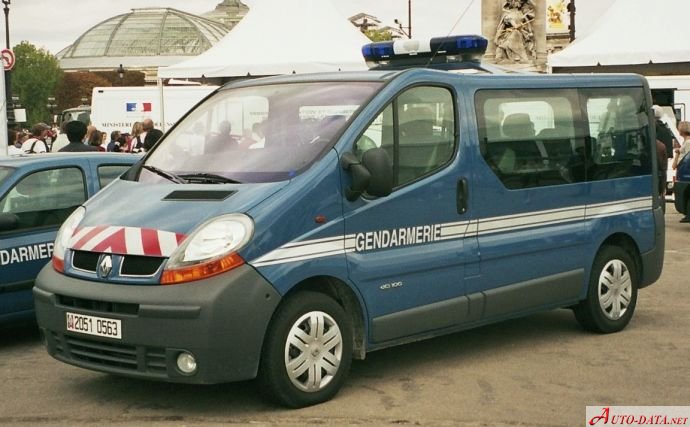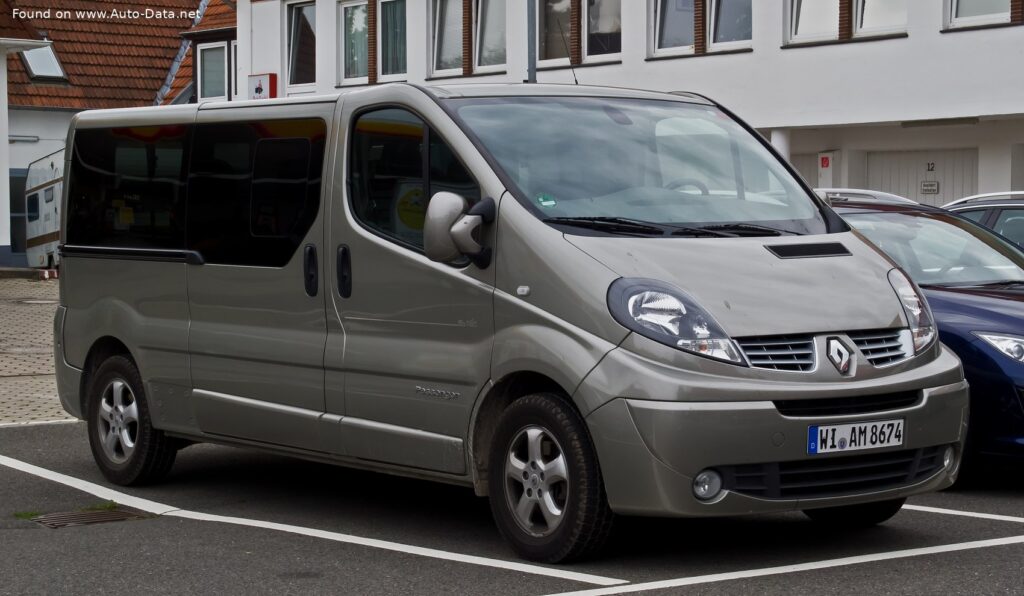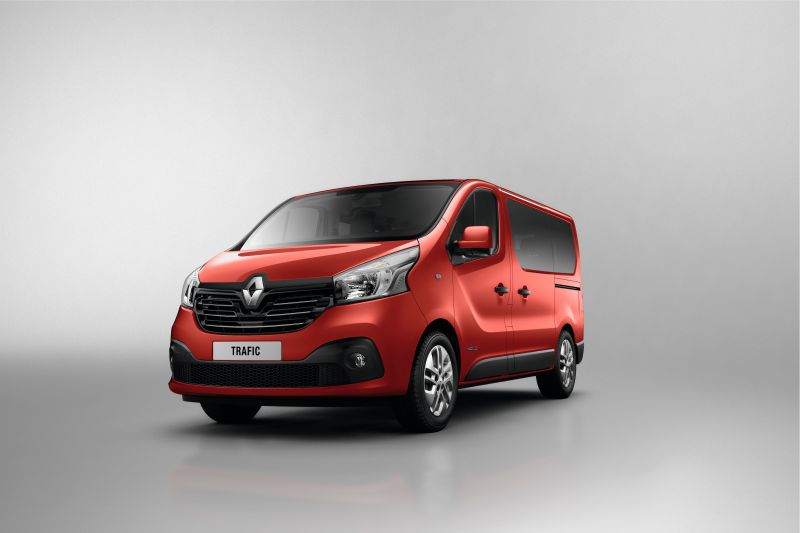
The Renault Trafic III 1.6 dCi (90 Hp) start&stop L1H1, produced from 2014 to 2015, represents the third generation of Renault’s popular light commercial vehicle. Primarily marketed in Europe as a versatile workhorse, the Trafic occupies the mid-size van segment, competing with vehicles like the Volkswagen Transporter, Ford Transit, and Citroën Dispatch. While not officially sold in the United States, understanding its specifications provides insight into the European commercial vehicle market and Renault’s engineering approach to efficiency and practicality. The “L1H1” designation refers to the van’s body length and roof height, indicating a shorter wheelbase and lower roof configuration, making it suitable for urban environments and easier maneuverability.
Renault Trafic III: Overview and Market Position
The Trafic III marked a significant step forward for Renault’s commercial vehicle range, introducing a more refined design, improved fuel efficiency, and enhanced practicality. Developed in collaboration with Nissan (resulting in the similar Nissan NV300), the Trafic aimed to provide a compelling alternative to established competitors. Its primary role in the European market was to cater to businesses and tradespeople requiring a reliable and adaptable van for deliveries, transportation, and mobile workshops. The 9-seat configuration offered in this model broadened its appeal to passenger transport applications, such as airport shuttles or community transport services. The introduction of the Start & Stop system highlighted Renault’s commitment to reducing emissions and improving fuel economy, aligning with increasingly stringent European environmental regulations.
Engine & Performance
The Renault Trafic III 1.6 dCi (90 Hp) start&stop L1H1 is powered by a 1.6-liter, four-cylinder turbocharged diesel engine, designated the R9M. This engine produces 90 horsepower at 3500 rpm and 260 Nm (191.77 lb.-ft.) of torque at 1500 rpm. The engine’s design incorporates a diesel commonrail fuel injection system and an intercooler to optimize combustion and enhance power delivery. The power-to-weight ratio of 21.1 kg/Hp and torque-to-weight ratio of 7.3 kg/Nm demonstrate a focus on usability rather than outright performance, prioritizing load-carrying capacity and fuel efficiency. The engine is transversely mounted at the front of the vehicle, driving the front wheels through a six-speed manual transmission. Fuel economy figures are respectable for a vehicle of its size and type, achieving 6.2 l/100 km (37.9 US mpg) on a combined cycle, with urban and extra-urban figures of 7.2 l/100 km (32.7 US mpg) and 5.7 l/100 km (41.3 US mpg) respectively. CO2 emissions are rated at 164 g/km, meeting Euro 5 emission standards.
Design & Features
The Renault Trafic III features a functional and modern design, prioritizing practicality and load space. As a minivan, the L1H1 configuration offers a balance between external dimensions and internal volume. The van boasts a kerb weight of 1901 kg and a maximum permissible weight of 2785 kg, allowing for a substantial payload capacity of 884 kg. The cargo area provides a minimum volume of 1000 liters (35.31 cu. ft.) and can be expanded to 2100 liters (74.16 cu. ft.) with the rear seats folded or removed. The vehicle’s dimensions – 4999 mm (196.81 in.) in length, 1956 mm (77.01 in.) in width, and 1971 mm (77.6 in.) in height – are typical for the mid-size van segment. Safety features include ABS (Anti-lock Braking System), while the Start & Stop system contributes to fuel savings and reduced emissions. The hydraulic power steering and McPherson independent front suspension contribute to a comfortable driving experience, even when fully loaded. The Trafic’s design emphasizes ease of access with four doors and a relatively low load floor height.
Technical Specifications
| Brand | Renault |
| Model | Trafic |
| Generation | Trafic III |
| Type (Engine) | 1.6 dCi (90 Hp) start&stop L1H1 |
| Start of production | 2014 |
| End of production | 2015 |
| Powertrain Architecture | Internal Combustion engine |
| Body type | Minivan |
| Seats | 9 |
| Doors | 4 |
| Fuel consumption (urban) | 7.2 l/100 km (32.7 US mpg) |
| Fuel consumption (extra urban) | 5.7 l/100 km (41.3 US mpg) |
| Fuel consumption (combined) | 6.2 l/100 km (37.9 US mpg) |
| CO2 emissions | 164 g/km |
| Fuel Type | Diesel |
| Emission standard | Euro 5 |
| Weight-to-power ratio | 21.1 kg/Hp |
| Weight-to-torque ratio | 7.3 kg/Nm |
| Power | 90 Hp @ 3500 rpm |
| Torque | 260 Nm @ 1500 rpm (191.77 lb.-ft. @ 1500 rpm) |
| Engine layout | Front, Transverse |
| Engine Model/Code | R9M |
| Engine displacement | 1598 cm3 (97.52 cu. in.) |
| Number of cylinders | 4 |
| Engine configuration | Inline |
| Cylinder Bore | 80 mm (3.15 in.) |
| Piston Stroke | 79.5 mm (3.13 in.) |
| Compression ratio | 15:1 |
| Number of valves per cylinder | 4 |
| Fuel injection system | Diesel Commonrail |
| Engine aspiration | Turbocharger, Intercooler |
| Engine oil capacity | 6 l (6.34 US qt | 5.28 UK qt) |
| Coolant | 8.3 l (8.77 US qt | 7.3 UK qt) |
| Kerb Weight | 1901 kg (4190.99 lbs.) |
| Max. weight | 2785 kg (6139.87 lbs.) |
| Max load | 884 kg (1948.89 lbs.) |
| Trunk (boot) space – minimum | 1000 l (35.31 cu. ft.) |
| Trunk (boot) space – maximum | 2100 l (74.16 cu. ft.) |
| Fuel tank capacity | 80 l (21.13 US gal | 17.6 UK gal) |
| Max. roof load | 280 kg (617.29 lbs.) |
| Permitted trailer load with brakes (12%) | 2000 kg (4409.25 lbs.) |
| Permitted trailer load without brakes | 750 kg (1653.47 lbs.) |
| Permitted towbar download | 80 kg (176.37 lbs.) |
| Length | 4999 mm (196.81 in.) |
| Width | 1956 mm (77.01 in.) |
| Width including mirrors | 2283 mm (89.88 in.) |
| Height | 1971 mm (77.6 in.) |
| Wheelbase | 3098 mm (121.97 in.) |
| Front track | 1615 mm (63.58 in.) |
| Rear (Back) track | 1628 mm (64.09 in.) |
| Front overhang | 933 mm (36.73 in.) |
| Rear overhang | 968 mm (38.11 in.) |
| Ride height (ground clearance) | 160 mm (6.3 in.) |
| Minimum turning circle (turning diameter) | 11.8 m (38.71 ft.) |
| Drivetrain Architecture | Front wheel drive |
| Number of gears and type of gearbox | 6 gears, manual transmission |
| Front suspension | Independent type McPherson |
| Rear suspension | Independent coil spring |
| Front brakes | Ventilated discs |
| Rear brakes | Disc |
| Tires size | 205/65 R16 |
| Wheel rims size | 16 |