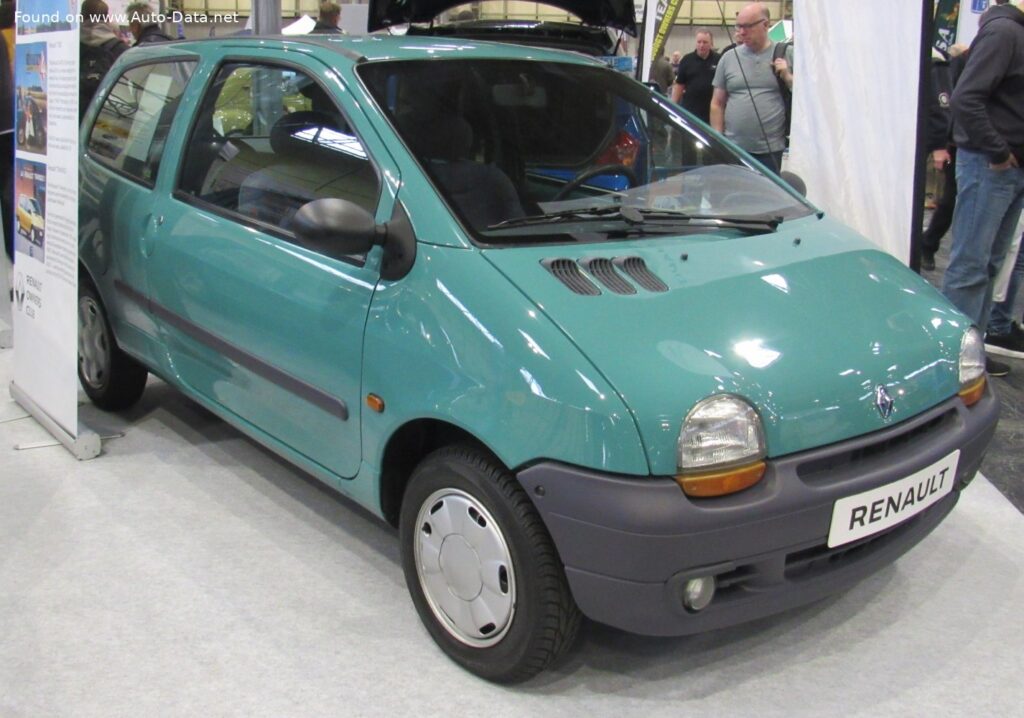
The Renault Twingo I 1.2 (58 Hp) Automatic, produced between 1996 and 2000, represents a significant entry in the European city car segment. Designed as a small, affordable, and practical vehicle, the Twingo quickly gained popularity for its nimble handling and efficient use of space. While never officially sold in the United States, the Twingo I was a mainstay in European markets, offering a compelling alternative to other subcompact hatchbacks. Its focus was on providing a comfortable and economical driving experience within a compact footprint, making it ideal for navigating crowded urban environments.
Renault Twingo I: A European City Car
The Twingo I was part of Renault’s strategy to offer a diverse range of vehicles catering to different needs. It filled a niche below the Clio, providing a more accessible and maneuverable option for buyers prioritizing practicality and affordability. The “Twingo” name itself is a portmanteau of “twin” and “go,” reflecting the car’s intended versatility and ease of use. The first generation Twingo distinguished itself with its distinctive styling and innovative interior packaging, maximizing space within its small dimensions. It was a popular choice for first-time car buyers, city dwellers, and those seeking a second vehicle for short trips.
Engine & Performance
The 1.2-liter inline-four cylinder engine powering the Twingo I Automatic delivers 58 horsepower at 5250 rpm and 93 Nm (68.59 lb.-ft.) of torque at 2500 rpm. This engine, designated the D7F, is a naturally aspirated unit employing multi-port fuel injection. While not designed for outright speed, the engine provides adequate power for urban driving and moderate highway cruising. The three-speed automatic transmission offers a smooth, albeit not particularly quick, driving experience. Acceleration from 0 to 100 km/h (0-62 mph) takes 16.4 seconds, and 0 to 60 mph is achieved in 15.6 seconds. The Twingo I 1.2 Automatic reaches a maximum speed of 150 km/h (93.21 mph). The engine’s power-to-weight ratio is 14.7 kg/Hp, and its torque-to-weight ratio is 9.2 kg/Nm, reflecting the car’s lightweight construction. Fuel economy is a strong point, with urban consumption at 8.9 l/100 km (26.4 US mpg) and extra-urban consumption at 6 l/100 km (39.2 US mpg).
Design & Features
The Renault Twingo I is a three-door hatchback with seating for four passengers. Its compact dimensions – 3433 mm (135.16 in.) in length, 1630 mm (64.17 in.) in width, and 1423 mm (56.02 in.) in height – contribute to its exceptional maneuverability. The car’s design prioritizes practicality and functionality. The interior is surprisingly spacious for its size, thanks to a clever layout and efficient use of space. The rear seats can be folded down to increase cargo capacity from a minimum of 168 liters (5.93 cu. ft.) to a maximum of 1096 liters (38.7 cu. ft.). Safety features for the era include an Anti-lock Braking System (ABS). The Twingo I features a steering rack and pinion system with hydraulic power steering, providing responsive and easy handling. The suspension consists of a wishbone setup at the front and coil springs at the rear, offering a comfortable ride quality. The vehicle rides on 155/70 R13 tires mounted on 13-inch wheel rims.
Technical Specifications
| Brand | Renault |
| Model | Twingo |
| Generation | Twingo I |
| Type (Engine) | 1.2 (58 Hp) Automatic |
| Start of production | 1996 |
| End of production | 2000 |
| Powertrain Architecture | Internal Combustion engine |
| Body type | Hatchback |
| Seats | 4 |
| Doors | 3 |
| Fuel consumption (urban) | 8.9 l/100 km (26.4 US mpg) |
| Fuel consumption (extra urban) | 6 l/100 km (39.2 US mpg) |
| Fuel Type | Petrol (Gasoline) |
| Acceleration 0 – 100 km/h | 16.4 sec |
| Acceleration 0 – 62 mph | 16.4 sec |
| Acceleration 0 – 60 mph | 15.6 sec |
| Maximum speed | 150 km/h (93.21 mph) |
| Weight-to-power ratio | 14.7 kg/Hp |
| Weight-to-torque ratio | 9.2 kg/Nm |
| Power | 58 Hp @ 5250 rpm |
| Torque | 93 Nm @ 2500 rpm (68.59 lb.-ft. @ 2500 rpm) |
| Engine layout | Front, Transverse |
| Engine Model/Code | D7F |
| Engine displacement | 1149 cm3 (70.12 cu. in.) |
| Number of cylinders | 4 |
| Engine configuration | Inline |
| Cylinder Bore | 69 mm (2.72 in.) |
| Piston Stroke | 76.8 mm (3.02 in.) |
| Compression ratio | 9.6:1 |
| Number of valves per cylinder | 2 |
| Fuel injection system | Multi-port manifold injection |
| Engine aspiration | Naturally aspirated engine |
| Valvetrain | OHC |
| Engine oil capacity | 4 l (4.23 US qt | 3.52 UK qt) |
| Coolant capacity | 5 l (5.28 US qt | 4.4 UK qt) |
| Kerb Weight | 855 kg (1884.95 lbs.) |
| Max. weight | 1230 kg (2711.69 lbs.) |
| Max load | 375 kg (826.73 lbs.) |
| Trunk (boot) space – minimum | 168 l (5.93 cu. ft.) |
| Trunk (boot) space – maximum | 1096 l (38.7 cu. ft.) |
| Fuel tank capacity | 40 l (10.57 US gal | 8.8 UK gal) |
| Length | 3433 mm (135.16 in.) |
| Width | 1630 mm (64.17 in.) |
| Height | 1423 mm (56.02 in.) |
| Wheelbase | 2340 mm (92.13 in.) |
| Front track | 1416 mm (55.75 in.) |
| Rear track | 1374 mm (54.09 in.) |
| Drivetrain Architecture | Front wheel drive |
| Number of gears | 3 |
| Gearbox type | Automatic transmission |
| Front suspension | Wishbone |
| Rear suspension | Coil spring |
| Front brakes | Disc |
| Rear brakes | Drum |
| Assisting systems | ABS (Anti-lock braking system) |
| Steering type | Steering rack and pinion |
| Power steering | Hydraulic Steering |
| Tires size | 155/70 R13 |
| Wheel rims size | 13 |
The Renault Twingo I 1.2 Automatic, while not a performance vehicle, offered a compelling package of affordability, practicality, and efficiency. Its success in the European market demonstrated the demand for small, well-designed city cars, and it laid the foundation for subsequent generations of the Twingo.