
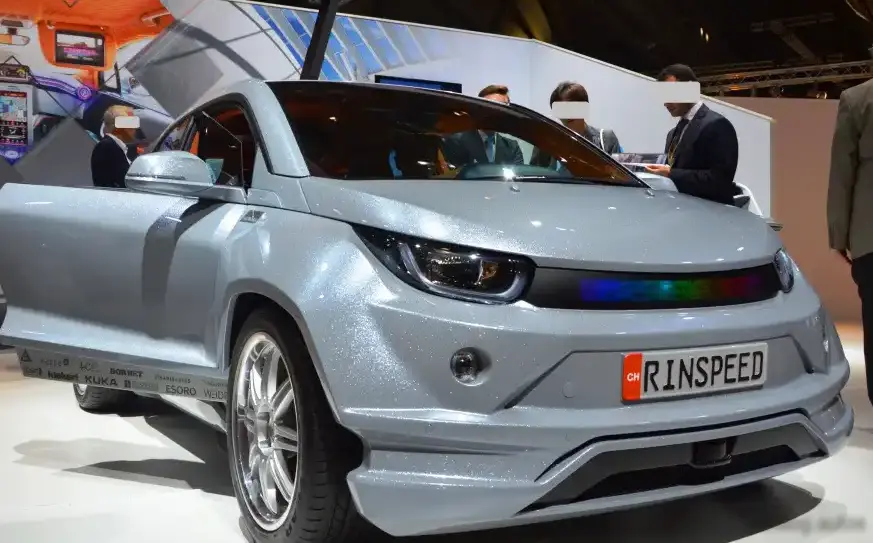
The Rinspeed Budii Concept, unveiled in 2015, represents a fascinating exploration of autonomous driving technology packaged within a stylish, compact SUV form factor. This all-electric concept vehicle aimed to showcase a vision of future personal transportation, emphasizing connectivity, safety, and a luxurious driving experience. The Budii wasn’t intended for mass production, but rather as a technology demonstrator, highlighting Rinspeed’s innovative approach to automotive design and engineering. It debuted at the Geneva Motor Show, quickly garnering attention for its unique features and forward-thinking design. The vehicle’s core concept revolved around a steer-by-wire system and a high degree of autonomous capability, allowing for both traditional driving and fully automated operation.
Technical Specifications
| Brand | Rinspeed |
| Model | Budii |
| Generation | Budii Concept |
| Type (Engine) | 21.6 kWh (170 Hp) Electric |
| Start of production | 2015 |
| Powertrain Architecture | BEV (Electric Vehicle) |
| Body type | SUV |
| Seats | 2 |
| Doors | 5 |
| Fuel Type | Electricity |
| Acceleration 0 – 100 km/h | 7.2 sec |
| Acceleration 0 – 62 mph | 7.2 sec |
| Acceleration 0 – 60 mph | 6.8 sec |
| Maximum speed | 150 km/h (93.21 mph) |
| Weight-to-power ratio | 7.7 kg/Hp, 129.8 Hp/tonne |
| Gross battery capacity | 21.6 kWh |
| All-electric range | 200 km (124.27 mi) |
| Electric motor power | 170 Hp |
| Electric motor Torque | 250 Nm (184.39 lb.-ft.) |
| System power | 170 Hp |
| Kerb Weight | 1310 kg (2888.06 lbs.) |
| Length | 4008 mm (157.8 in.) |
| Width | 1905 mm (75 in.) |
| Height | 1620 mm (63.78 in.) |
| Wheelbase | 2570 mm (101.18 in.) |
| Drive wheel | Rear wheel drive |
| Number of gears and type of gearbox | 1 gears, automatic transmission |
| Front suspension | Air suspension |
| Rear suspension | Air suspension |
| Assisting systems | ABS (Anti-lock braking system) |
| Tires size | 235/45 R19; 255/40 R19 |
| Wheel rims size | 8J x 19; 9J x 19 |
Powertrain & Engine Architecture
The Rinspeed Budii Concept is powered by a single electric motor producing 170 horsepower. The vehicle utilizes a 21.6 kWh battery pack, providing an all-electric range of approximately 200 kilometers (124 miles). The powertrain is a fully electric, Battery Electric Vehicle (BEV) configuration, meaning it relies entirely on electricity for propulsion. The single-speed automatic transmission is a direct-drive system, typical of most electric vehicles, maximizing efficiency and providing instant torque delivery. The motor’s 250 Nm (184.39 lb-ft) of torque contributes to a relatively quick acceleration time of 7.2 seconds from 0 to 100 km/h (0-62 mph). The Budii’s electrical architecture was designed to be highly integrated, allowing for over-the-air software updates and advanced energy management systems.
Driving Characteristics
While the Budii was primarily a concept vehicle and not subjected to extensive real-world testing, the projected driving characteristics were geared towards a smooth and refined experience. The rear-wheel-drive configuration, combined with the instant torque of the electric motor, would have provided responsive acceleration. The single-speed automatic transmission simplifies the driving experience, eliminating gear changes. The air suspension system, both front and rear, was intended to deliver a comfortable ride, absorbing road imperfections effectively. The steer-by-wire system, a key feature of the Budii, allows for variable steering ratios and enhanced maneuverability, particularly in autonomous mode. The vehicle’s relatively low curb weight of 1310 kg (2888.06 lbs) further contributes to its agility.
Equipment & Trim Levels
As a concept car, the Budii featured a highly customized and luxurious interior. The two-seat configuration emphasized a premium experience. The interior was dominated by a curved, panoramic display that served as the primary interface for both the driver and passenger. This display integrated navigation, entertainment, and vehicle control functions. The use of high-quality materials, such as leather and aluminum, throughout the cabin further enhanced the sense of luxury. The Budii also incorporated advanced connectivity features, including seamless integration with smartphones and other devices. While not a traditional trim level structure, the Budii showcased a fully equipped and technologically advanced interior.
Chassis & Braking
The Budii’s chassis was designed to accommodate the electric powertrain and air suspension system. The air suspension provided adjustable ride height and damping, optimizing comfort and handling. The braking system incorporated ABS (Anti-lock Braking System) for enhanced safety. The vehicle’s tires, sized 235/45 R19 at the front and 255/40 R19 at the rear, were chosen to provide a balance of grip and rolling resistance. The wheel rims, measuring 8J x 19 and 9J x 19 respectively, complemented the vehicle’s sporty aesthetic. The rear-wheel-drive layout contributed to a balanced weight distribution, enhancing handling characteristics.
Market Reception & Comparison
The Rinspeed Budii Concept received generally positive reception from the automotive press and industry observers. Critics praised its innovative technology, stylish design, and forward-thinking approach to autonomous driving. However, as a concept vehicle, it wasn’t directly compared to production models in terms of fuel economy or reliability. Its primary purpose was to demonstrate the potential of future automotive technologies, rather than compete in a specific market segment. Compared to other electric vehicles of the time, the Budii’s range of 200 km (124 miles) was considered competitive, although not class-leading. The focus on autonomous driving capabilities set it apart from many contemporary EVs.
Legacy
The Rinspeed Budii Concept served as an important stepping stone in the development of autonomous driving technology. Many of the features showcased in the Budii, such as steer-by-wire systems and advanced connectivity, have since become increasingly common in production vehicles. While the Budii itself was never mass-produced, its influence can be seen in the ongoing evolution of electric and autonomous vehicles. The concept helped to shape the conversation around future mobility, highlighting the potential benefits of connected and automated transportation. Today, the Budii remains a significant example of Rinspeed’s commitment to innovation and its vision of the future of automotive technology.
