
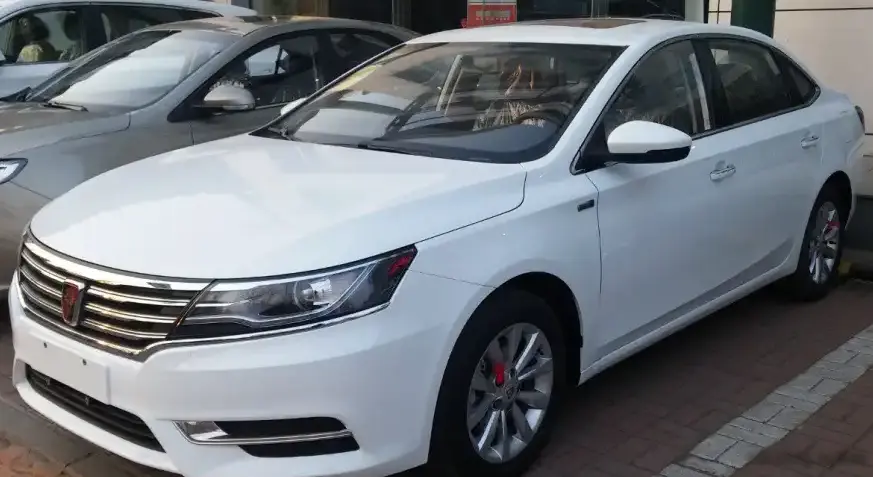
The Roewe i6 ei6 1.0 T (228 Hp) Plug-in-Hybrid is a compact sedan produced by the Chinese automaker Roewe, beginning with its introduction in 2017. Representing a significant step in Roewe’s development of new energy vehicles, the i6 ei6 combines a small-displacement turbocharged gasoline engine with an electric motor and battery pack, offering both all-electric driving capability and extended range through hybrid operation. This variant occupied a mid-range position within the i6 lineup, offering a balance of performance, fuel efficiency, and technology. It was primarily aimed at the Chinese domestic market, responding to growing demand for environmentally friendly vehicles and government incentives for plug-in hybrids.
Technical Specifications
| Brand | Roewe |
| Model | i6 |
| Generation | i6 |
| Type (Engine) | ei6 1.0 T (228 Hp) Plug-in-Hybrid |
| Start of production | 2017 |
| Powertrain Architecture | PHEV (Plug-in Hybrid Electric Vehicle) |
| Body type | Sedan |
| Seats | 5 |
| Doors | 4 |
| Fuel Type | Petrol / electricity |
| Acceleration 0 – 100 km/h | 7.9 sec |
| Acceleration 0 – 62 mph | 7.9 sec |
| Acceleration 0 – 60 mph | 7.5 sec |
| Maximum speed | 200 km/h (124.27 mph) |
| Weight-to-power ratio | 6.3 kg/Hp, 159.4 Hp/tonne |
| Weight-to-torque ratio | 2.3 kg/Nm, 435 Nm/tonne |
| All-electric range | 53 km (32.93 mi) |
| Electric motor power (1) | 44 Hp |
| Electric motor Torque (1) | 150 Nm (110.63 lb.-ft.) |
| Electric motor power (2) | 82 Hp |
| Electric motor Torque (2) | 318 Nm (234.54 lb.-ft.) |
| System power | 228 Hp |
| System torque | 622 Nm (458.76 lb.-ft.) |
| Engine Power | 125 Hp @ 5200 rpm |
| Power per litre | 125.1 Hp/l |
| Engine Torque | 170 Nm @ 2000-4700 rpm (125.39 lb.-ft. @ 2000-4700 rpm) |
| Engine displacement | 999 cm3 (60.96 cu. in.) |
| Number of cylinders | 3 |
| Engine configuration | Inline |
| Fuel injection system | Direct injection |
| Engine aspiration | Turbocharger |
| Kerb Weight | 1430 kg (3152.61 lbs.) |
| Trunk (boot) space – minimum | 306 l (10.81 cu. ft.) |
| Fuel tank capacity | 30 l (7.93 US gal | 6.6 UK gal) |
| Length | 4671 mm (183.9 in.) |
| Width | 1835 mm (72.24 in.) |
| Height | 1460 mm (57.48 in.) |
| Wheelbase | 2715 mm (106.89 in.) |
| Front track | 1559 mm (61.38 in.) |
| Rear (Back) track | 1555 mm (61.22 in.) |
| Ride height (ground clearance) | 115 mm (4.53 in.) |
| Minimum turning circle | 11.2 m (36.75 ft.) |
| Drive wheel | Front wheel drive |
| Number of gears and type of gearbox | 1 gears, automatic transmission |
| Front suspension | Independent type McPherson |
| Rear suspension | Torsion |
| Front brakes | Ventilated discs |
| Rear brakes | Disc |
| Assisting systems | ABS (Anti-lock braking system) |
| Tires size | 205/55 R16; 215/50 R17 |
| Wheel rims size | 16; 17 |
Powertrain & Engine Architecture
The Roewe i6 ei6 1.0 T utilizes a plug-in hybrid powertrain centered around a 999cc, three-cylinder turbocharged gasoline engine. This engine, designated as part of Roewe’s ‘NetBlue’ hybrid system, produces 125 horsepower at 5200 rpm and 170 Nm of torque between 2000 and 4700 rpm. Direct fuel injection and a turbocharger contribute to its relatively high output for its size. The engine is paired with two electric motors, one with 44 hp and 150 Nm of torque, and another with 82 hp and 318 Nm of torque. The combined system output reaches 228 horsepower and 622 Nm of torque. The powertrain is managed by a single-speed automatic transmission, optimized for smooth operation in both electric and hybrid modes. The battery pack, providing an all-electric range of 53 kilometers (33 miles), is lithium-ion based and can be charged via a standard charging port.
Driving Characteristics
The i6 ei6 1.0 T offers a distinct driving experience compared to its gasoline-only counterparts. In pure electric mode, the vehicle provides near-silent acceleration and responsive torque, making it ideal for urban commuting. When the gasoline engine engages, the transition is generally seamless, and the combined power output delivers brisk acceleration – achieving 0-60 mph in approximately 7.5 seconds. The single-speed transmission simplifies the driving experience, but it doesn’t offer the gear ratios for maximizing efficiency at higher speeds like a multi-gear automatic. Compared to the standard 1.5L gasoline i6, the plug-in hybrid variant offers significantly improved fuel economy and a more refined driving experience, albeit with a slight weight penalty due to the battery pack.
Equipment & Trim Levels
The Roewe i6 ei6 1.0 T typically came equipped with a comprehensive suite of features, reflecting its position as a mid-range offering. Standard equipment included automatic climate control, a touchscreen infotainment system with smartphone connectivity, power windows and locks, and a basic suite of safety features like ABS and airbags. Higher trim levels added features such as leather upholstery, a panoramic sunroof, advanced driver-assistance systems (ADAS) like adaptive cruise control and lane departure warning, and upgraded audio systems. Interior design focused on a modern aesthetic with a minimalist dashboard layout and comfortable seating.
Chassis & Braking
The i6 ei6 1.0 T utilizes a front-wheel-drive layout with an independent McPherson strut suspension in the front and a torsion beam suspension in the rear. This setup provides a reasonable balance between ride comfort and handling. The vehicle is equipped with ventilated disc brakes in the front and solid disc brakes in the rear, providing adequate stopping power for its weight class. The steering is typically electrically assisted, offering light and precise control. The relatively low ride height (115mm) contributes to stability but may limit its ability to navigate rough road surfaces.
Market Reception & Comparison
The Roewe i6 ei6 1.0 T was generally well-received in the Chinese market, particularly among consumers seeking a fuel-efficient and technologically advanced sedan. Critics praised its all-electric range, smooth hybrid operation, and comfortable interior. Compared to other plug-in hybrid sedans in its class, the i6 ei6 offered a competitive price point and a generous level of standard equipment. However, some reviewers noted that the interior materials weren’t as premium as those found in some European or Japanese competitors. Fuel economy figures were notably better than the standard gasoline i6, and reliability reports have been generally positive, although long-term data is still emerging.
Legacy
The Roewe i6 ei6 1.0 T represents an important milestone in Roewe’s transition towards electrification. It demonstrated the brand’s ability to develop and produce competitive plug-in hybrid vehicles, paving the way for future electric models. On the used car market, the i6 ei6 1.0 T remains a relatively affordable option for those seeking a fuel-efficient and well-equipped sedan. The longevity of the battery pack is a key consideration for potential buyers, and regular maintenance of the hybrid system is crucial for ensuring long-term reliability. As China continues to promote electric vehicle adoption, the i6 ei6 1.0 T is likely to remain a relevant and popular choice for budget-conscious consumers.
