
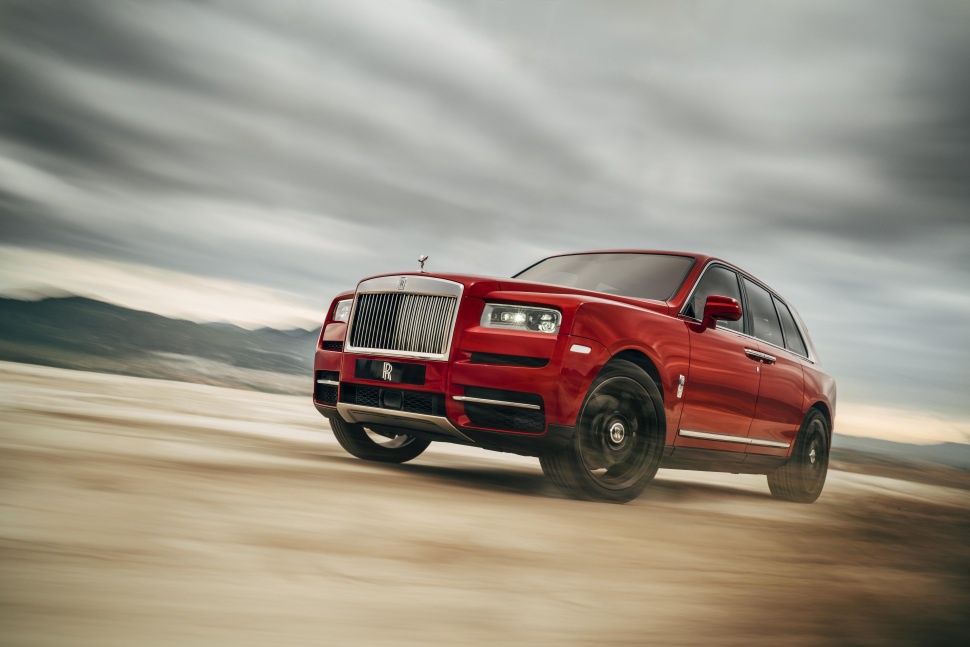
The Rolls-Royce Cullinan, launched in 2018, represents the British marque’s first foray into the Sport Utility Vehicle (SUV) segment. Named after the largest rough diamond ever discovered, the Cullinan is positioned as a luxury all-terrain vehicle, offering the renowned Rolls-Royce experience – unparalleled comfort, bespoke craftsmanship, and effortless performance – in a more versatile package. It caters to clients desiring a high-riding vehicle without compromising the brand’s core values. While Rolls-Royce traditionally focused on ultra-luxury sedans and coupes, the Cullinan was developed to meet a growing demand for SUVs within the high-net-worth individual market, particularly in regions like North America and the Middle East.
Rolls-Royce Cullinan: A New Paradigm in Luxury
The Cullinan isn’t simply a Rolls-Royce with increased ground clearance; it’s a comprehensively engineered vehicle designed to deliver the “Magic Carpet Ride” synonymous with the brand, regardless of the terrain. It utilizes a modified version of the Rolls-Royce aluminum spaceframe architecture, providing a robust yet lightweight platform. The vehicle’s design blends the iconic Rolls-Royce aesthetic with a more rugged, adventurous character, appealing to those who seek both opulence and capability. The Cullinan quickly became a significant model for Rolls-Royce, demonstrating the brand’s ability to adapt to evolving market preferences while maintaining its commitment to exclusivity and quality.
Engine & Performance
At the heart of the Rolls-Royce Cullinan lies a 6.7-liter twin-turbocharged V12 engine, producing 571 horsepower at 5000 rpm and a substantial 850 Nm (626.93 lb.-ft.) of torque at just 1600 rpm. This powerplant, designated N74B68A, is renowned for its smooth, virtually vibration-free operation and prodigious power delivery. The engine features direct fuel injection and an intercooler to optimize performance and efficiency. Power is transmitted to all four wheels via an eight-speed automatic transmission, ensuring seamless gear changes and responsive acceleration. The Cullinan achieves a 0-60 mph (0-97 km/h) time of approximately 4.9 seconds and a 0-100 km/h (0-62 mph) time of 5.2 seconds, while its top speed is electronically limited to 155.34 mph (250 km/h). Despite its size and weight, the Cullinan offers surprisingly agile handling, thanks to its sophisticated suspension system and all-wheel-drive configuration. Fuel economy is rated at 15 liters per 100 kilometers (15.7 US mpg or 18.8 UK mpg), with CO2 emissions of 341 g/km, figures typical for a vehicle of this size and performance.
Design & Features
The Rolls-Royce Cullinan is a full-size luxury SUV, characterized by its imposing presence and elegant design. It features a traditional Rolls-Royce grille, laser headlights, and a boxy silhouette that maximizes interior space. The body-on-frame construction, while not traditional, provides a solid foundation for both on-road comfort and off-road capability. The interior is meticulously crafted with the finest materials, including premium leather, wood veneers, and metal accents. The Cullinan offers seating for five passengers and boasts a generous 526-liter (18.58 cu. ft.) trunk space, expandable with the rear seats folded down. Key features include a panoramic sunroof, advanced driver-assistance systems (ABS), electric power steering, and a highly customizable infotainment system. The Cullinan also offers unique features such as the “Viewing Suite” – two rear-facing seats that can be deployed from the trunk floor, providing a comfortable vantage point for outdoor events. The emphasis is on providing a serene and luxurious experience for all occupants, regardless of the driving conditions.
Technical Specifications
| Brand | Rolls-Royce |
| Model | Cullinan |
| Type (Engine) | 6.7 V12 (571 Hp) AWD Automatic |
| Start of production | 2018 |
| Powertrain Architecture | Internal Combustion engine |
| Body type | SUV |
| Seats | 5 |
| Doors | 4 |
| Fuel consumption (urban) | 21.9-22.4 l/100 km (10.7 – 10.5 US mpg) |
| Fuel consumption (extra urban) | 10.9-11.0 l/100 km (21.6 – 21.4 US mpg) |
| Fuel consumption (combined) | 15 l/100 km (15.7 US mpg) |
| CO2 emissions | 341 g/km |
| Fuel Type | Petrol (Gasoline) |
| Acceleration 0 – 100 km/h | 5.2 sec |
| Acceleration 0 – 62 mph | 5.2 sec |
| Acceleration 0 – 60 mph | 4.9 sec |
| Maximum speed | 250 km/h (155.34 mph) |
| Emission standard | Euro 6 |
| Weight-to-power ratio | 4.7 kg/Hp |
| Weight-to-torque ratio | 3.1 kg/Nm |
| Power | 571 Hp @ 5000 rpm |
| Torque | 850 Nm @ 1600 rpm (626.93 lb.-ft. @ 1600 rpm) |
| Engine layout | Front, Longitudinal |
| Engine Model/Code | N74B68A |
| Engine displacement | 6749 cm3 (411.85 cu. in.) |
| Number of cylinders | 12 |
| Engine configuration | V-engine |
| Number of valves per cylinder | 4 |
| Fuel injection system | Direct injection |
| Engine aspiration | Twin-Turbo, Intercooler |
| Engine oil capacity | 14 l (14.79 US qt | 12.32 UK qt) |
| Kerb Weight | 2660 kg (5864.3 lbs.) |
| Trunk (boot) space – minimum | 526 l (18.58 cu. ft.) |
| Length | 5341 mm (210.28 in.) |
| Width | 2000 mm (78.74 in.) |
| Width with mirrors folded | 2164 mm (85.2 in.) |
| Height | 1835 mm (72.24 in.) |
| Wheelbase | 3295 mm (129.72 in.) |
| Minimum turning circle | 13.23 m (43.41 ft.) |
| Drive wheel | All wheel drive (4×4) |
| Number of gears | 8 |
| Gearbox type | Automatic transmission |
| Front suspension | Double wishbone |
| Rear suspension | Independent multi-link suspension |
| Front brakes | Ventilated discs |
| Rear brakes | Disc |
