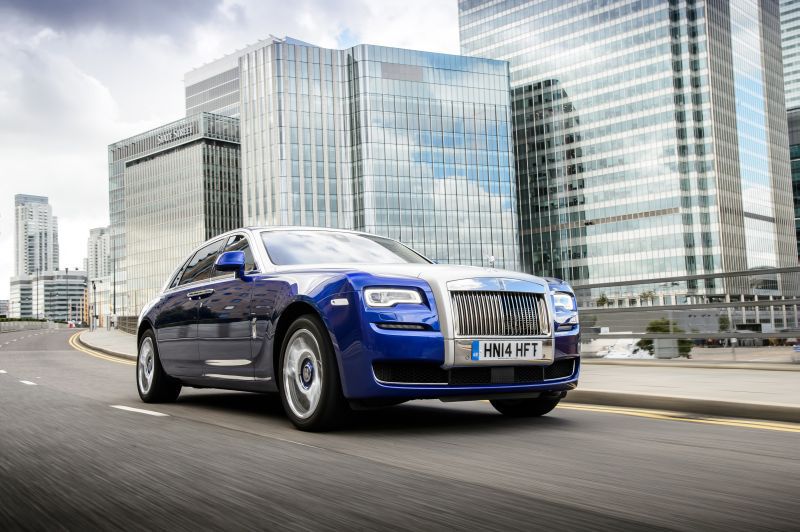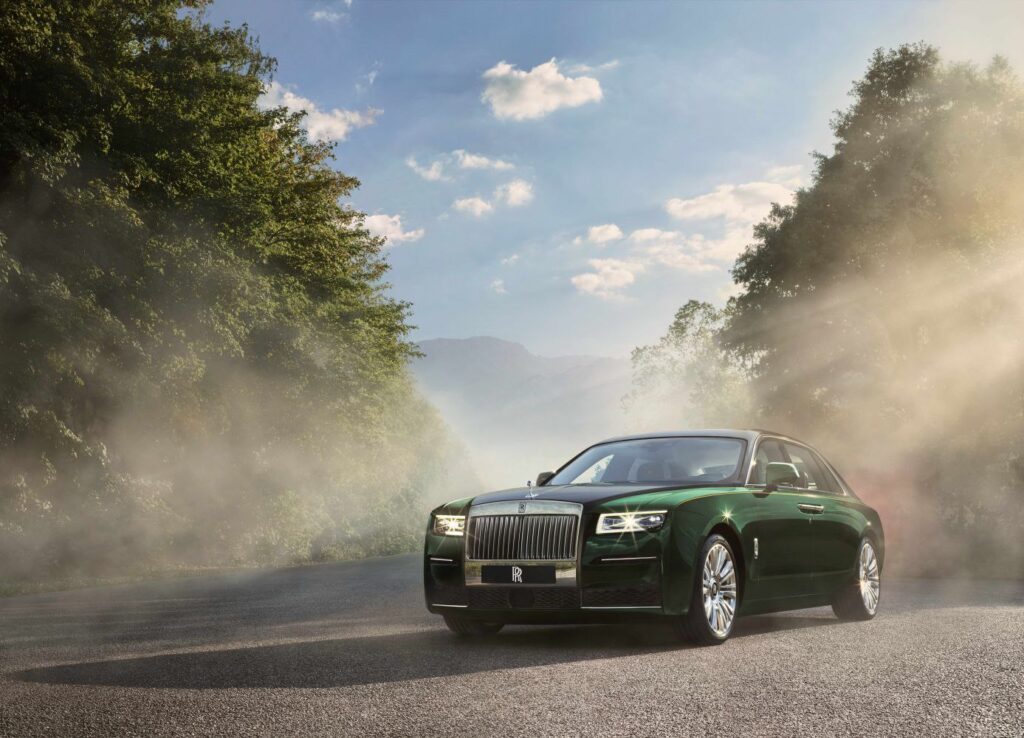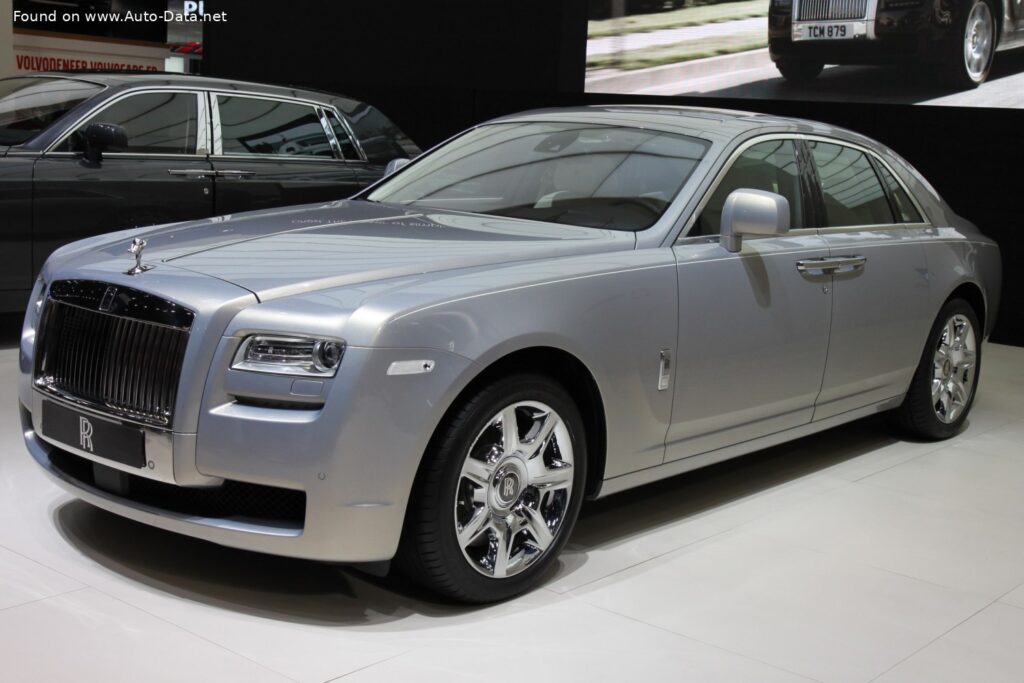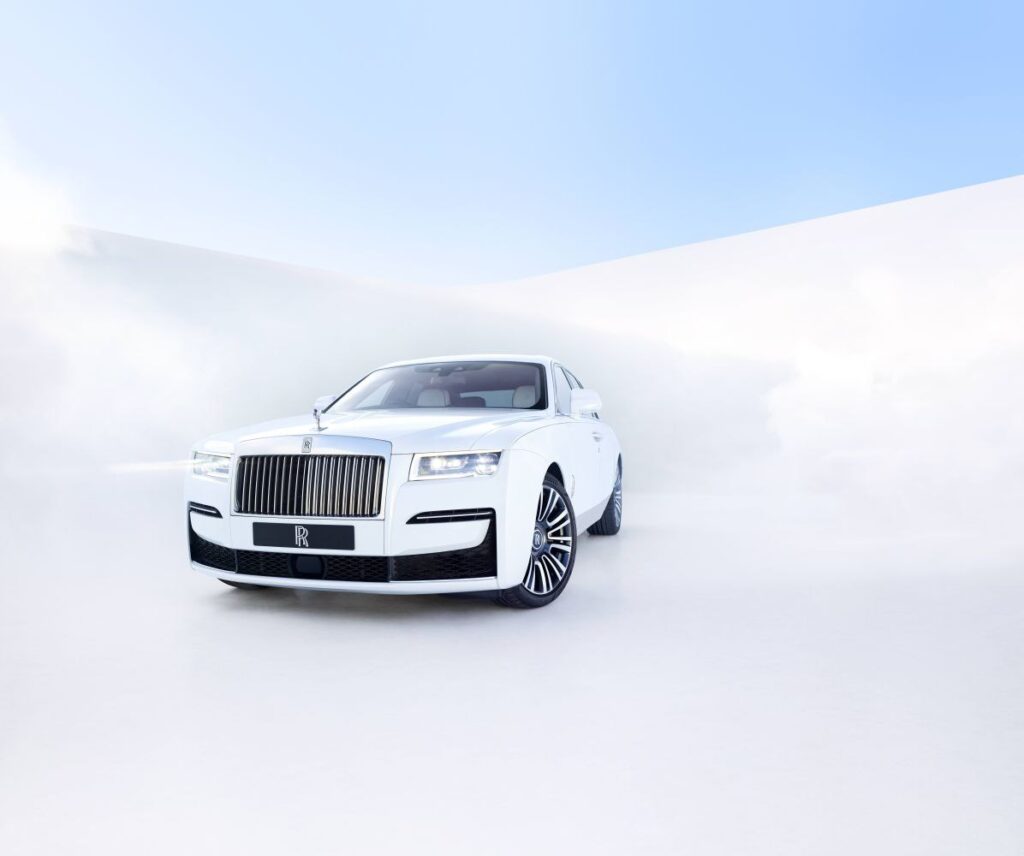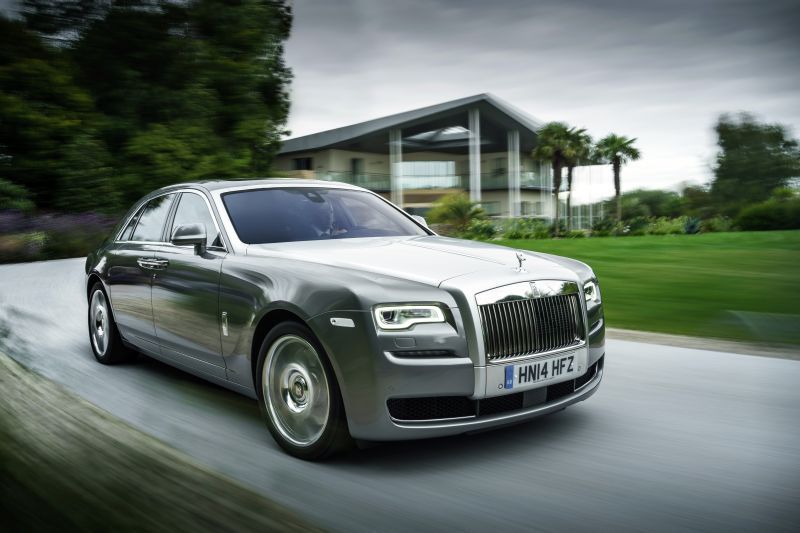
The Rolls-Royce Ghost I, particularly the facelifted version introduced in 2014, represents a pivotal moment in the British marque’s history. Positioned as a more “accessible” entry point into the Rolls-Royce lineup – though still firmly within the luxury segment – the Ghost aimed to attract a new generation of affluent customers while maintaining the brand’s renowned standards of craftsmanship and engineering. The 2014 facelift brought subtle yet significant enhancements to the vehicle’s aesthetics and technology, solidifying its position as a competitor to the Bentley Flying Spur and other ultra-luxury sedans. This generation of the Ghost was produced from 2014 through 2020.
Rolls-Royce Ghost I (Facelift 2014): A Detailed Overview
The Ghost I facelift continued the original Ghost’s design philosophy, blending classic Rolls-Royce cues with a more contemporary aesthetic. It’s a four-door, five-seat sedan built on a shortened version of the BMW 7 Series platform, reflecting Rolls-Royce’s ownership under the BMW Group. The facelift focused on refining the exterior styling, enhancing the interior appointments, and improving the car’s technological offerings. The Ghost I aimed to provide a supremely comfortable and refined driving experience, prioritizing a smooth ride and quiet cabin over outright sporting performance.
Engine & Performance
At the heart of the 2014 Rolls-Royce Ghost I facelift lies a formidable 6.6-liter twin-turbocharged V12 engine. This powerplant, designated N74B66A, produces 570 horsepower at 5250 rpm and a substantial 820 Nm (604.8 lb.-ft.) of torque available from just 1500 rpm. This immense torque output provides effortless acceleration and a relaxed cruising experience. The engine is mated to an eight-speed automatic transmission, delivering smooth and seamless gear changes.
Performance figures are impressive for a vehicle of its size and weight. Acceleration from 0 to 60 mph takes approximately 4.7 seconds, while 0 to 100 km/h (0-62 mph) is achieved in 4.9 seconds. Top speed is electronically limited to 250 km/h (155.34 mph). Despite its performance capabilities, the Ghost prioritizes refinement and comfort. The engine’s power is delivered in a smooth, linear fashion, and the suspension effectively isolates occupants from road imperfections. Fuel economy, unsurprisingly, is not a strong suit, with combined fuel consumption rated at 14.3 l/100 km (16.4 US mpg, 19.8 UK mpg).
Design & Features
The Rolls-Royce Ghost I facelift retains the elegant and imposing presence of the original model. Key design features include the iconic Rolls-Royce grille, large light clusters, and a long, flowing silhouette. The facelift brought subtle revisions to the front fascia, including redesigned headlights and a more prominent bumper. The car’s profile is characterized by its long wheelbase and short overhangs, contributing to its stately appearance.
Inside, the Ghost I is a sanctuary of luxury and craftsmanship. The cabin is meticulously finished with high-quality materials, including premium leather, wood veneers, and polished metal accents. Occupants are enveloped in comfort, with spacious seating and a host of convenience features. The 2014 facelift introduced updated infotainment systems and driver-assistance technologies, including adaptive cruise control, lane departure warning, and a head-up display. The trunk offers a generous 490 liters (17.3 cu. ft.) of storage space. The air suspension system provides a remarkably smooth and comfortable ride, automatically adjusting to road conditions to minimize body roll and vibrations.
Technical Specifications
| Brand | Rolls-Royce |
| Model | Ghost |
| Generation | Ghost I (facelift 2014) |
| Type (Engine) | 6.6 V12 (570 Hp) Automatic |
| Start of production | 2014 |
| End of production | 2020 |
| Powertrain Architecture | Internal Combustion engine |
| Body type | Sedan |
| Seats | 5 |
| Doors | 4 |
| Fuel consumption (urban) | 21.8 l/100 km (10.8 US mpg, 13 UK mpg, 4.6 km/l) |
| Fuel consumption (extra urban) | 9.9 l/100 km (23.8 US mpg, 28.5 UK mpg, 10.1 km/l) |
| Fuel consumption (combined) | 14.3 l/100 km (16.4 US mpg, 19.8 UK mpg, 7 km/l) |
| CO2 emissions | 327 g/km |
| Fuel Type | Petrol (Gasoline) |
| Acceleration 0 – 100 km/h | 4.9 sec |
| Acceleration 0 – 62 mph | 4.9 sec |
| Acceleration 0 – 60 mph | 4.7 sec |
| Maximum speed | 250 km/h (155.34 mph) |
| Emission standard | Euro 6 |
| Weight-to-power ratio | 4.1 kg/Hp, 241.5 Hp/tonne |
| Weight-to-torque ratio | 2.9 kg/Nm, 347.5 Nm/tonne |
| Power | 570 Hp @ 5250 rpm |
| Power per litre | 86.5 Hp/l |
| Torque | 820 Nm @ 1500 rpm (604.8 lb.-ft. @ 1500 rpm) |
| Engine layout | Front, Longitudinal |
| Engine Model/Code | N74B66A |
| Engine displacement | 6592 cm3 (402.27 cu. in.) |
| Number of cylinders | 12 |
| Engine configuration | V-engine |
| Cylinder Bore | 89 mm (3.5 in.) |
| Piston Stroke | 88.3 mm (3.48 in.) |
| Compression ratio | 10:1 |
| Number of valves per cylinder | 4 |
| Fuel injection system | Direct injection |
| Engine aspiration | Twin-Turbo, Intercooler |
| Valvetrain | DOHC |
| Engine oil capacity | 11 l (11.62 US qt | 9.68 UK qt) |
| Kerb Weight | 2360 kg (5202.91 lbs.) |
| Max. weight | 2940 kg (6481.59 lbs.) |
| Max load | 580 kg (1278.68 lbs.) |
| Trunk (boot) space – minimum | 490 l (17.3 cu. ft.) |
| Fuel tank capacity | 82.5 l (21.79 US gal | 18.15 UK gal) |
| Length | 5399 mm (212.56 in.) |
| Width | 1948 mm (76.69 in.) |
| Height | 1550 mm (61.02 in.) |
| Wheelbase | 3295 mm (129.72 in.) |
| Front track | 1622 mm (63.86 in.) |
| Rear (Back) track | 1660 mm (65.35 in.) |
| Drag coefficient (Cd) | 0.33 |
| Minimum turning circle (turning diameter) | 13.4 m (43.96 ft.) |
| Drivetrain Architecture | Rear wheel drive |
| Number of gears and type of gearbox | 8 gears, automatic transmission |
| Front suspension | Double wishbone, Air suspension |
| Rear suspension | Independent multi-link suspension, Air suspension |
| Front brakes | Ventilated discs |
| Rear brakes | Ventilated discs |
| Assisting systems | ABS (Anti-lock braking system) |
| Steering type | Steering rack and pinion |
| Power steering | Electric Steering |
| Tires size | Front wheel tires: 255/50 R20Rear wheel tires: 285/40 R20 |
| Wheel rims size | Front wheel rims: 8.5J x 20Rear wheel rims: 9.5J x 20 |