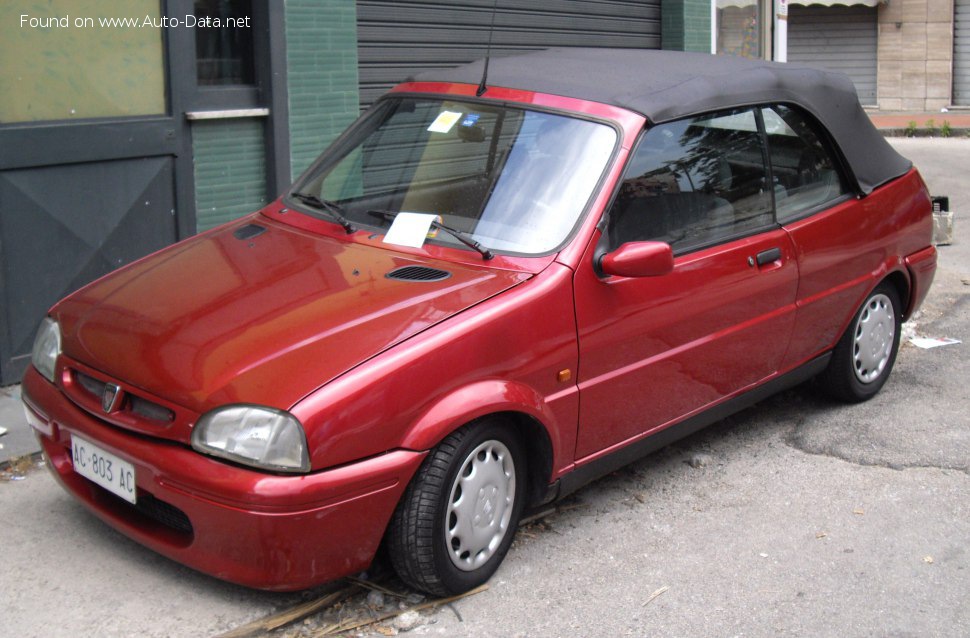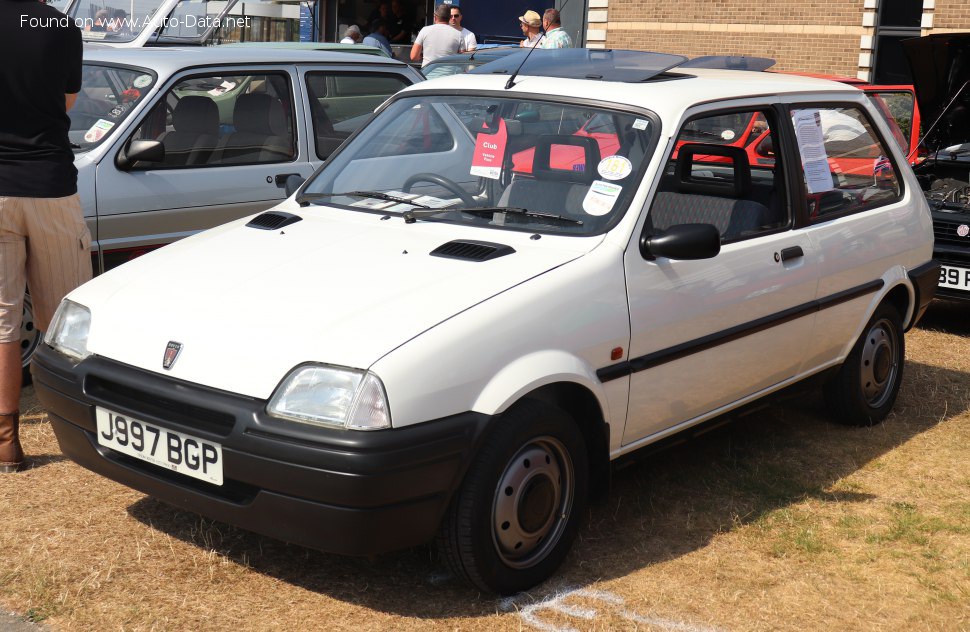
The Rover 100, specifically the 111 L variant producing 60 horsepower, was a subcompact hatchback manufactured between 1990 and 1998. This model represented a significant shift for Rover, being heavily based on the Honda City (AA) – a result of the British Leyland/Rover’s partnership with Honda. The 111 L served as the entry-level model within the Rover 100 range, positioned below the 1.4L variants and offering a more affordable option for budget-conscious buyers. It was part of the XP platform, internally designated as the 1HX0, and aimed to provide economical transportation in a practical, albeit basic, package.
Rover 100 111 L: An Overview
The Rover 100 111 L was designed to appeal to first-time car buyers, city dwellers, and those seeking a reliable and inexpensive vehicle. Its compact size made it easy to maneuver in urban environments, and its relatively low running costs were a key selling point. While not known for its performance, the 111 L offered a functional and dependable driving experience. The model was available in both 3-door and 5-door configurations, adding to its versatility.
Powertrain & Engine Architecture
At the heart of the Rover 100 111 L lies the K8 engine, a 1.1-liter (1119 cc) inline-four cylinder petrol engine. This engine, while simple in design, was known for its durability and fuel efficiency. The K8 featured a single overhead camshaft (OHC) valvetrain with two valves per cylinder. Fuel delivery was managed by a single-point fuel injection system, which, while less sophisticated than multi-point injection, contributed to the engine’s simplicity and cost-effectiveness. The engine produced 60 hp at 5900 rpm and 90 Nm (66.38 lb-ft) of torque at 3500 rpm. The engine’s bore and stroke measured 75mm x 63.2mm, resulting in a compression ratio of 9.8:1.
The 111 L was exclusively offered with a 5-speed manual transmission. This transmission was chosen to maximize fuel economy and provide a reasonably engaging driving experience, given the engine’s modest power output. The gearbox was front-wheel drive, reflecting the vehicle’s focus on efficiency and practicality. The engine oil capacity was 4.5 liters (4.76 US qt / 3.96 UK qt), and the coolant capacity was also 4.5 liters.
Driving Characteristics
The Rover 100 111 L’s driving characteristics were defined by its modest power output and lightweight construction. Acceleration from 0-60 mph took approximately 14.1 seconds, and 0-100 km/h was achieved in 14.8 seconds. The top speed was around 96.31 mph (155 km/h). The engine’s torque peak at 3500 rpm meant that it felt relatively responsive in everyday driving situations, particularly around town. However, overtaking maneuvers required careful planning, and the engine could feel strained at higher speeds or when carrying a full load.
The 5-speed manual transmission was well-matched to the engine’s characteristics, allowing drivers to keep the engine in its optimal power band. The gear ratios were relatively tall, further emphasizing fuel economy. Compared to the 1.4L versions of the Rover 100, the 111 L offered a less refined but more economical driving experience. The 1.4L models provided significantly more power and performance, but at the expense of fuel efficiency and affordability.
Equipment & Trim Levels
The Rover 100 111 L was designed as the entry-level model, and as such, it came with a relatively basic level of equipment. Standard features typically included cloth upholstery, a basic instrument cluster, and manual windows and door locks. Central locking and power steering were often optional extras. Interior trim was functional and durable, prioritizing practicality over luxury. The 3-door version generally had a more spartan interior than the 5-door model.
Optional extras available for the 111 L included a radio/cassette player, upgraded seat fabrics, and alloy wheels. Some models also featured a sunroof. The overall interior design was simple and straightforward, reflecting the car’s budget-oriented positioning. The trunk (boot) space ranged from 229 liters (8.09 cu. ft.) with the rear seats up to 552 liters (19.49 cu. ft.) with the rear seats folded down.
Chassis & Braking
The Rover 100 111 L featured a front-wheel drive chassis with independent wishbone suspension at the front and a trailing arm suspension at the rear. This suspension setup provided a reasonably comfortable ride, although it was not particularly sporty. The front brakes were discs, while the rear brakes were drums. This configuration was typical for vehicles in this price range during the 1990s.
Anti-lock braking system (ABS) was available as an optional extra, enhancing safety. The steering was rack and pinion, providing precise and responsive handling. The standard tire size was 155/65 R13. The kerb weight of the 111 L was 840 kg (1851.88 lbs), contributing to its relatively nimble handling. The maximum weight was 1290 kg (2843.96 lbs), with a maximum load capacity of 450 kg (992.08 lbs).
Market Reception & Comparison
The Rover 100 111 L received mixed reviews from automotive critics. While praised for its affordability, fuel economy (7.1 l/100 km urban, 4.5 l/100 km extra urban, 6.1 l/100 km combined), and practicality, it was often criticized for its lack of power and refinement. Compared to its rivals, such as the Ford Fiesta and Vauxhall Corsa, the Rover 100 111 L offered a competitive price point but lacked the performance and sophistication of some of its competitors.
In terms of reliability, the Rover 100 111 L was generally considered to be a dependable vehicle, although the K8 engine was known to be susceptible to head gasket failures in some cases. Maintenance costs were relatively low, thanks to the engine’s simple design and the availability of affordable spare parts. The 1.4L Rover 100 models offered a more enjoyable driving experience but were more expensive to purchase and maintain.
Technical Specifications
| Brand | Rover |
| Model | 100 |
| Generation | 100 (METRO) (XP) |
| Type (Engine) | 111 L (60 Hp) |
| Start of production | 1990 |
| End of production | 1998 |
| Powertrain Architecture | Internal Combustion engine |
| Body type | Hatchback |
| Seats | 5 |
| Doors | 3-5 |
| Fuel consumption (urban) | 7.1 l/100 km (33.1 US mpg) |
| Fuel consumption (extra urban) | 4.5 l/100 km (52.3 US mpg) |
| Fuel consumption (combined) | 6.1 l/100 km (38.6 US mpg) |
| Fuel Type | Petrol (Gasoline) |
| Acceleration 0 – 100 km/h | 14.8 sec |
| Acceleration 0 – 62 mph | 14.8 sec |
| Acceleration 0 – 60 mph | 14.1 sec |
| Maximum speed | 155 km/h (96.31 mph) |
| Weight-to-power ratio | 14 kg/Hp |
| Power | 60 Hp @ 5900 rpm |
| Torque | 90 Nm @ 3500 rpm (66.38 lb.-ft. @ 3500 rpm) |
| Engine layout | Front, Transverse |
| Engine Model/Code | K8 |
| Engine displacement | 1119 cm3 (68.29 cu. in.) |
| Number of cylinders | 4 |
| Cylinder Bore | 75 mm (2.95 in.) |
| Piston Stroke | 63.2 mm (2.49 in.) |
| Compression ratio | 9.8:1 |
| Number of valves per cylinder | 2 |
| Fuel injection system | Single-point injection |
| Engine oil capacity | 4.5 l (4.76 US qt | 3.96 UK qt) |
| Kerb Weight | 840 kg (1851.88 lbs.) |
| Max. weight | 1290 kg (2843.96 lbs.) |
| Trunk (boot) space – minimum | 229 l (8.09 cu. ft.) |
| Trunk (boot) space – maximum | 552 l (19.49 cu. ft.) |
| Fuel tank capacity | 35 l (9.25 US gal | 7.7 UK gal) |
| Length | 3521 mm (138.62 in.) |
| Width | 1550 mm (61.02 in.) |
| Height | 1377 mm (54.21 in.) |
| Wheelbase | 2269 mm (89.33 in.) |
| Gears | 5, manual transmission |
Legacy
The Rover 100 111 L, while not a particularly memorable car, played an important role in Rover’s lineup during the 1990s. It provided an affordable and economical entry point into the Rover brand. Today, the 111 L is a relatively rare sight on the roads, and well-maintained examples are becoming increasingly sought after by enthusiasts. The K8 engine, while prone to certain issues, is generally considered to be a durable and reliable unit. The Rover 100 111 L remains a testament to a period of collaboration and adaptation within the British automotive industry.