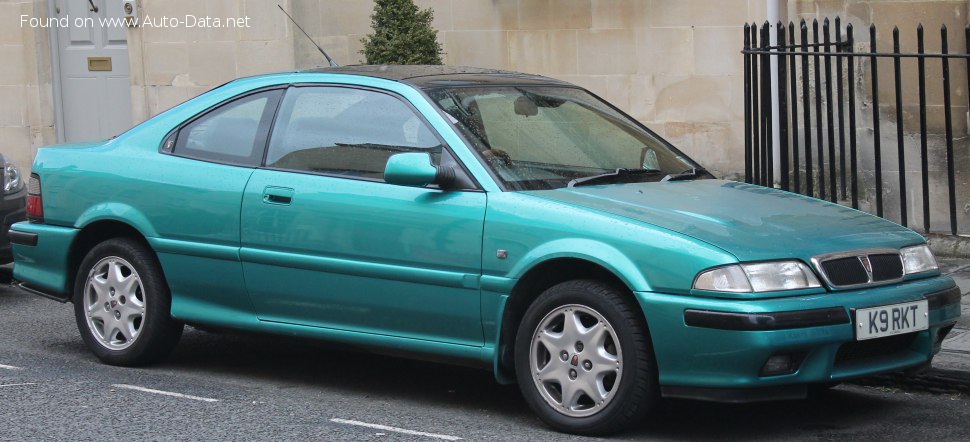
The Rover 200 Coupe (XW) 220i, produced between 1994 and 2000, represented a sporting iteration of the Rover 200 series. Positioned as the performance-oriented model within the coupe range, the 220i offered a more powerful engine and a focus on driver engagement compared to lower-spec variants. It was built on the 1HX0/A3 platform, shared with the Honda Civic and Concerto, reflecting the British Leyland/Rover Group’s ongoing collaboration with Honda. The Coupe body style itself was a relatively late addition to the 200 series, aiming to broaden the model’s appeal and attract a younger demographic.
Powertrain & Engine Architecture
The heart of the 220i was the Rover K-Series engine, specifically the 2.0-liter (1994 cc) inline-four cylinder variant. This engine, designated as a naturally aspirated unit, produced 140 horsepower at 6000 rpm and 180 Nm (132.76 lb-ft) of torque at 4500 rpm. The K-Series was notable for its lightweight construction, utilizing an aluminum cylinder head and a thin-walled iron block. This contributed to the engine’s responsiveness. The engine featured a multi-port fuel injection system, delivering fuel directly into the intake ports, and a double overhead camshaft (DOHC) valvetrain with four valves per cylinder. This configuration optimized airflow and contributed to the engine’s power output.
The 220i was exclusively offered with a five-speed manual transmission. This transmission was chosen to complement the engine’s performance characteristics and provide drivers with greater control. The gearbox featured a conventional layout with synchromesh on all forward gears. The final drive was a standard open differential, transmitting power to the front wheels.
Engine Codes and Variations
While the core 2.0-liter K-Series engine was consistent, minor variations existed throughout the production run. These differences primarily related to engine management system calibrations and emissions control equipment. However, the fundamental engine architecture remained unchanged. The engine’s power-to-weight ratio of 121.7 hp/tonne and torque-to-weight ratio of 156.5 Nm/tonne contributed to its lively performance.
Driving Characteristics
The Rover 200 Coupe 220i offered a noticeably more engaging driving experience than its lower-powered siblings. The 2.0-liter engine provided ample power for spirited driving, with a relatively linear power delivery. The five-speed manual transmission allowed drivers to keep the engine within its optimal power band. Acceleration from 0 to 60 mph was achieved in approximately 8.2 seconds, and the car had a top speed of 126.76 mph (204 km/h). While not a sports car in the purest sense, the 220i provided a good balance of performance and everyday usability.
The front-wheel-drive layout, combined with the relatively lightweight chassis, resulted in predictable handling. However, torque steer could be noticeable under hard acceleration. The steering was hydraulically assisted, providing a reasonable level of feedback. The suspension, while comfortable for everyday driving, was not particularly sporty, resulting in some body roll during cornering.
Equipment & Trim Levels
The 220i typically came equipped with a higher level of standard features than the base models. Standard equipment included power steering, central locking, electric front windows, and an upgraded interior trim. The interior typically featured cloth upholstery, although leather options were available. The dashboard layout was functional and straightforward, with clear instrumentation. Optional extras included air conditioning, a sunroof, and upgraded audio systems. The 220i also benefited from a more comprehensive range of exterior styling enhancements, including a rear spoiler and alloy wheels.
Chassis & Braking
The Rover 200 Coupe utilized a front-wheel-drive chassis with independent wishbone suspension at the front and a coil spring rear suspension. The front suspension provided a good balance of comfort and handling, while the rear suspension offered adequate stability. The braking system consisted of ventilated discs at the front and solid discs at the rear. Anti-lock braking system (ABS) was standard, enhancing safety and control during emergency braking situations. The tires were typically 185/55 R15 V-rated, providing adequate grip for everyday driving.
Market Reception & Comparison
The Rover 200 Coupe 220i was generally well-received by automotive critics. It was praised for its lively performance, attractive styling, and relatively affordable price. However, some critics noted the interior quality was not as refined as some of its competitors, such as the Volkswagen Golf GTI. Compared to the lower-powered 1.4 and 1.6-liter versions of the 200 Coupe, the 220i offered a significant performance upgrade. Fuel economy was reasonable, averaging around 28.3 US mpg (34 UK mpg or 12 km/l) in combined driving. Reliability was generally good, although the K-Series engine was known to be susceptible to head gasket failure if not properly maintained. The 220i competed with other compact coupes, such as the Peugeot 306 XSi and the Ford Escort RS2000.
Technical Specifications
| Body Type | Coupe, 2 Doors, 4 Seats |
| Fuel Economy (Combined) | 8.3 l/100 km (28.3 US mpg, 34 UK mpg, 12 km/l) |
| Maximum Speed | 204 km/h (126.76 mph) |
| Weight-to-Power Ratio | 8.2 kg/Hp |
| Weight-to-Torque Ratio | 6.4 kg/Nm |
| Power | 140 Hp @ 6000 rpm |
| Power per Liter | 70.2 Hp/l |
| Torque | 180 Nm @ 4500 rpm (132.76 lb.-ft. @ 4500 rpm) |
| Engine Layout | Front, Transverse |
| Engine Displacement | 1994 cm3 (121.68 cu. in.) |
| Number of Cylinders | 4 |
| Engine Configuration | Inline |
| Cylinder Bore | 84.5 mm (3.33 in.) |
| Piston Stroke | 89 mm (3.5 in.) |
| Compression Ratio | 10:1 |
| Number of Valves per Cylinder | 4 |
| Fuel Injection System | Multi-port manifold injection |
| Engine Aspiration | Naturally aspirated |
| Valvetrain | DOHC |
| Kerb Weight | 1150 kg (2535.32 lbs.) |
| Trunk Space (Minimum) | 300 l (10.59 cu. ft.) |
| Trunk Space (Maximum) | 610 l (21.54 cu. ft.) |
| Fuel Tank Capacity | 55 l (14.53 US gal | 12.1 UK gal) |
| Length | 4250 mm (167.32 in.) |
| Width | 1680 mm (66.14 in.) |
| Height | 1370 mm (53.94 in.) |
| Wheelbase | 2550 mm (100.39 in.) |
| Front Track | 1475 mm (58.07 in.) |
| Rear Track | 1470 mm (57.87 in.) |
| Drivetrain | Front wheel drive, Internal Combustion Engine |
| Number of Gears | 5, manual transmission |
Legacy
The Rover 200 Coupe 220i remains a popular choice among enthusiasts today. Its combination of sporty performance, attractive styling, and relative affordability has ensured its continued appeal. While the K-Series engine requires careful maintenance to prevent head gasket failure, it is generally a reliable unit when properly cared for. Parts availability can be a challenge, but a dedicated network of Rover specialists and online suppliers exists to support owners. The 220i represents a high point in Rover’s engineering and design, and it continues to be a rewarding car to own and drive.