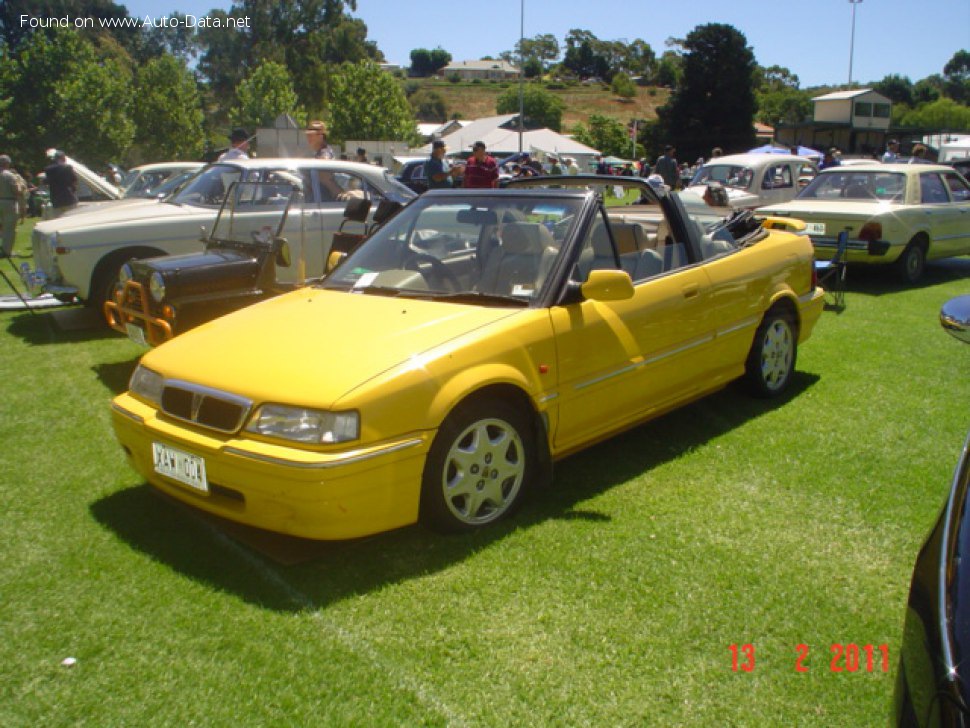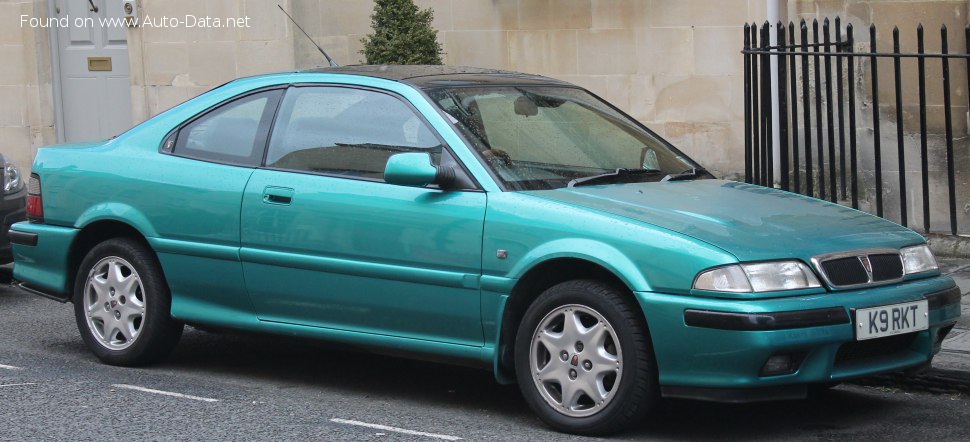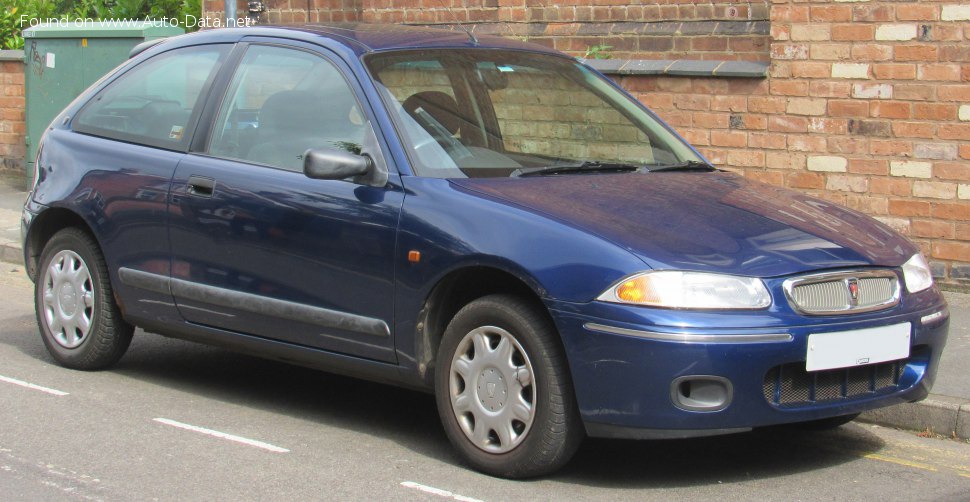
The Rover 200 (RF) was a small family car produced by the British Rover Group from 1995 to 2000. It represented a significant step forward for Rover, being based on the Honda Concerto platform (internally designated 1HX0/A3 following BMW’s acquisition of Rover), and sharing many components with the Honda Civic. The 200 Vi, equipped with a 1.8-liter engine producing 145 horsepower, occupied a mid-range position within the 200 lineup, offering a balance between performance and affordability. It sat above the base 1.4-liter models and below the more performance-oriented Vitesse variants.
Rover 200 Vi: A Detailed Overview
The Rover 200 Vi, introduced in 1995, aimed to provide a more engaging driving experience than the entry-level models while remaining a practical and economical choice for family buyers. It was available in both 3-door and 5-door hatchback configurations, catering to different lifestyle needs. The “Vi” designation signified a higher level of equipment and a more powerful engine compared to the lower trim levels.
Powertrain & Engine Architecture
The heart of the 200 Vi was the Rover K-Series engine, specifically the 1.8-liter (1796 cc) inline-four cylinder variant. This engine, designated with the code ‘K18’, was a key component of Rover’s engineering efforts in the 1990s. It featured a naturally aspirated configuration, multi-port fuel injection, and a double overhead camshaft (DOHC) valvetrain with four valves per cylinder. The K-Series was known for its relatively lightweight construction and willingness to rev, contributing to the 200 Vi’s sporty character. The engine produced 145 hp at 6750 rpm and 174 Nm (128.34 lb-ft) of torque at 4000 rpm. The compression ratio was set at 10.5:1.
While a five-speed manual transmission was the most common pairing for the 1.8-liter engine, a four-speed automatic transmission was also offered. This automatic, sourced from Honda as part of the platform sharing agreement, was a conventional hydraulic automatic, known for its smooth operation but not particularly for its fuel efficiency or responsiveness compared to more modern automatic transmissions. The automatic transmission’s gear ratios were geared towards comfort and ease of driving rather than outright performance.
Driving Characteristics
The Rover 200 Vi with the 1.8-liter engine and manual transmission offered brisk acceleration, achieving 0-60 mph in approximately 7.1 seconds and a top speed of 126.76 mph (204 km/h). The automatic version, however, saw a slight decrease in performance due to the transmission’s inherent power loss and less aggressive gearing. Real-world driving revealed a car that was enjoyable to drive, with a responsive engine and well-weighted steering. The automatic transmission, while smooth, could feel somewhat sluggish during quick overtaking maneuvers. The suspension, tuned for comfort, provided a reasonably compliant ride, although it wasn’t as sporty as some of its rivals. The 200 Vi’s front-wheel-drive configuration provided predictable handling, but could exhibit some torque steer under hard acceleration.
Equipment & Trim Levels
The 200 Vi came standard with a respectable level of equipment for its time. This typically included central locking, power steering, electric front windows, an adjustable steering column, and a basic stereo system. Interior upholstery was usually cloth, with options for upgraded materials. The dashboard layout was functional and straightforward, with clearly labeled controls. Optional extras included air conditioning, alloy wheels, a sunroof, and upgraded audio systems. The 200 Vi often featured body-colored bumpers and door handles, distinguishing it from the more basic models.
Chassis & Braking
The Rover 200 Vi utilized a front-wheel-drive layout with independent wishbone suspension at the front and a semi-independent suspension with traction connecting levers at the rear. This suspension setup provided a good balance between ride comfort and handling. Braking duties were handled by ventilated discs at the front and discs at the rear, providing adequate stopping power for the vehicle’s weight and performance. Anti-lock Braking System (ABS) was standard equipment, enhancing safety. The steering system employed a hydraulic power steering rack and pinion, offering a light and precise feel.
Market Reception & Comparison
The Rover 200 Vi was generally well-received by automotive critics. It was praised for its stylish design, comfortable interior, and enjoyable driving experience. However, some critics noted that the automatic transmission felt dated and lacked the responsiveness of more modern units. Compared to its rivals, such as the Ford Escort and Vauxhall Astra, the 200 Vi offered a more refined and sophisticated driving experience, but often at a slightly higher price point. Fuel economy was respectable, with combined figures around 36.2 US mpg (43.5 UK mpg or 15.4 km/l), but the automatic transmission reduced fuel efficiency compared to the manual version. Reliability was generally good, although the K-Series engine was known to be susceptible to head gasket failure if not properly maintained.
Technical Specifications
| Engine Type | Inline-4, Naturally Aspirated |
| Engine Displacement | 1796 cc (109.6 cu in) |
| Engine Code | K18 |
| Power Output | 145 hp @ 6750 rpm |
| Torque Output | 174 Nm (128.34 lb-ft) @ 4000 rpm |
| Fuel Injection | Multi-port Fuel Injection |
| Valvetrain | DOHC, 4 valves per cylinder |
| Compression Ratio | 10.5:1 |
| Transmission | 5-speed Manual or 4-speed Automatic |
| Drive Wheels | Front Wheel Drive |
| Kerb Weight | 1135 kg (2502.25 lbs) |
| Maximum Weight | 1520 kg (3351.03 lbs) |
| Fuel Tank Capacity | 55 liters (14.53 US gal) |
| 0-60 mph | 7.1 seconds (Manual) |
| Top Speed | 204 km/h (126.76 mph) |
| Fuel Consumption (Combined) | 6.5 l/100 km (36.2 US mpg) |
| Length | 3973 mm (156.42 in) |
| Width | 1688 mm (66.46 in) |
| Height | 1419 mm (55.87 in) |
Legacy
The Rover 200 Vi, while no longer in production, remains a popular choice among classic car enthusiasts. The 1.8-liter K-Series engine, when properly maintained, is generally considered reliable, although the potential for head gasket failure remains a concern. Parts availability can be challenging, but a dedicated network of Rover specialists and online suppliers exists. The 200 Vi’s combination of stylish design, comfortable interior, and enjoyable driving experience has ensured its continued appeal in the used car market. The automatic transmission models, while less sought after by driving enthusiasts, offer a more relaxed and convenient driving experience, making them suitable for everyday use. The Rover 200 Vi represents a significant chapter in British automotive history, showcasing Rover’s engineering capabilities and design flair during the 1990s.