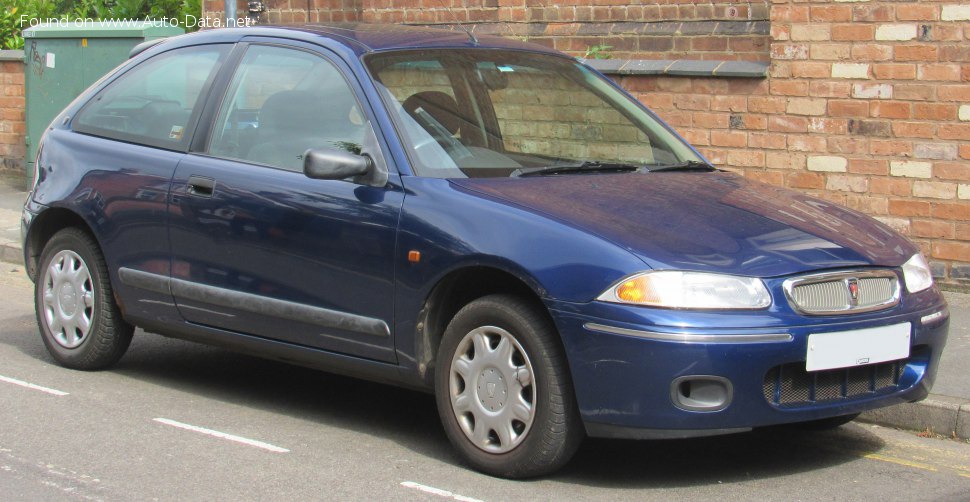
The Rover 200 (RF) 220 SDi, produced between 1995 and 2000, represented a significant offering in the small family car segment. Positioned as a more economical and refined alternative to the petrol-powered versions of the 200 series, the 220 SDi utilized a direct-injection diesel engine to deliver improved fuel efficiency and torque. This model was part of the RF generation of the Rover 200, which itself was based on the Honda Concerto platform (1HX0/A3), a result of the British Leyland/Honda partnership. The 220 SDi aimed to appeal to buyers seeking a practical, affordable, and fuel-conscious hatchback or saloon.
Rover 200 (RF) 220 SDi: An Overview
The 220 SDi occupied a unique space within the Rover 200 lineup. While the 1.4 and 1.6-liter petrol engines catered to those prioritizing affordability and a lighter driving experience, and the V6 models offered performance, the 220 SDi targeted drivers who valued fuel economy and low-speed torque. It was often chosen by fleet operators and private buyers covering high mileages. Available in both 3-door hatchback and 5-door saloon body styles, the 220 SDi provided a balance between practicality and running costs.
Powertrain & Engine Architecture
The heart of the 220 SDi was the L / 20T2N 2.0-liter inline four-cylinder diesel engine. This engine was a product of Rover’s collaboration with Perkins Engines, and featured direct injection technology. Direct injection, unlike indirect injection systems, injects fuel directly into the combustion chamber, leading to more complete combustion and improved efficiency. The engine utilized a turbocharger to boost power output and compensate for the inherent limitations of diesel engines. The turbocharger provided 7.25 psi of boost. The engine’s valvetrain employed an overhead camshaft (OHC) configuration, simplifying the design and reducing weight. The engine produced 105 horsepower at 4200 rpm and 210 Nm (154.89 lb-ft) of torque at 2000 rpm. The compression ratio was relatively high at 19.5:1, typical for a direct-injection diesel. The engine’s oil capacity was 4.8 liters (5.07 US quarts), and it required a specific oil specification (details often found in owner’s manuals). The cooling system held 7 liters (7.4 US quarts) of coolant.
Driving Characteristics
The 220 SDi’s driving experience was defined by its strong low-end torque. While not a particularly fast car – achieving 0-60 mph in approximately 9.9 seconds and a top speed of 114.95 mph – it offered effortless acceleration in everyday driving situations. The five-speed manual transmission was the standard offering, providing a reasonable spread of gears for maximizing fuel efficiency and performance. The gear ratios were tuned to prioritize fuel economy and usability rather than outright speed. Compared to the petrol-powered 200 models, the SDi felt heavier and less responsive at higher engine speeds, but its superior torque made it more relaxed on the highway and when carrying a full load. The turbocharger did exhibit some lag, a common characteristic of early turbo diesel engines, but once spooled up, it provided a noticeable increase in power.
Equipment & Trim Levels
The 220 SDi typically came with a reasonable level of standard equipment, reflecting its position as a mid-range offering. Standard features generally included power steering, central locking, electric front windows, and an adjustable steering column. Interior upholstery was typically cloth, with a relatively simple dashboard layout. Optional extras included air conditioning, alloy wheels, a sunroof, and upgraded audio systems. Trim levels varied slightly depending on the market, but generally followed a progression from base models to more luxurious variants with additional features. The interior plastics were of reasonable quality for the price point, but lacked the refinement of some competitors.
Chassis & Braking
The Rover 200 (RF) 220 SDi utilized an independent McPherson strut suspension at the front, providing a comfortable ride and decent handling. The rear suspension employed a torsion beam setup with traction connecting levers, a cost-effective solution that offered a reasonable compromise between ride comfort and handling. The front brakes were ventilated discs, providing good stopping power, while the rear brakes were solid discs. Anti-lock Braking System (ABS) was standard, enhancing safety. The steering was a rack and pinion system with hydraulic power assistance, offering a light and responsive feel. The standard tire size was 175/65 R14 H, providing a balance between comfort and grip. The kerb weight of the 220 SDi was approximately 1210 kg (2667.59 lbs).
Market Reception & Comparison
The Rover 200 220 SDi received generally positive reviews for its fuel economy and low-speed torque. Critics praised its practicality and affordability, but some noted its lack of outright performance compared to petrol-powered rivals. Fuel consumption figures were impressive for the time, averaging around 42 US mpg (combined cycle). Compared to the 1.6-liter petrol version, the 220 SDi offered significantly better fuel economy, but slightly slower acceleration. The V6 models provided a more exciting driving experience, but at the cost of significantly higher fuel consumption and a higher purchase price. Reliability was generally good, although the diesel engine’s direct injection system could be prone to issues if not properly maintained. The 220 SDi competed with other small family cars such as the Ford Escort, Vauxhall Astra, and Peugeot 306.
Technical Specifications
| Engine Type | Inline 4-cylinder Diesel |
| Engine Code | L / 20T2N |
| Engine Displacement | 1994 cm³ (121.68 cu. in.) |
| Bore x Stroke | 84.5 mm x 88.9 mm (3.33 in x 3.5 in) |
| Compression Ratio | 19.5:1 |
| Fuel Injection | Direct Injection |
| Aspiration | Turbocharged |
| Max Power | 105 hp @ 4200 rpm |
| Max Torque | 210 Nm (154.89 lb-ft) @ 2000 rpm |
| Fuel Consumption (Urban) | 6 l/100 km (39.2 US mpg) |
| Fuel Consumption (Extra Urban) | 4 l/100 km (58.8 US mpg) |
| Fuel Consumption (Combined) | 5.6 l/100 km (42 US mpg) |
| 0-60 mph | 9.9 sec (Calculated) |
| 0-100 km/h | 10.4 sec |
| Top Speed | 185 km/h (114.95 mph) |
| Kerb Weight | 1210 kg (2667.59 lbs) |
| Fuel Tank Capacity | 55 l (14.53 US gal) |
| Transmission | 5-speed Manual |
Legacy
The Rover 200 220 SDi, while not a groundbreaking vehicle, played an important role in offering a fuel-efficient and practical option within the Rover 200 range. The L / 20T2N engine proved to be relatively durable, although regular maintenance, particularly regarding the fuel injection system, was crucial for long-term reliability. Today, the 220 SDi is a relatively rare sight on the roads, but well-maintained examples are sought after by enthusiasts and those looking for a classic British car with good fuel economy. Parts availability can be a challenge, but a dedicated community of Rover owners helps to keep these cars running. The 220 SDi represents a unique chapter in Rover’s history, showcasing the company’s efforts to adapt to changing market demands and offer a more economical alternative to traditional petrol-powered vehicles.