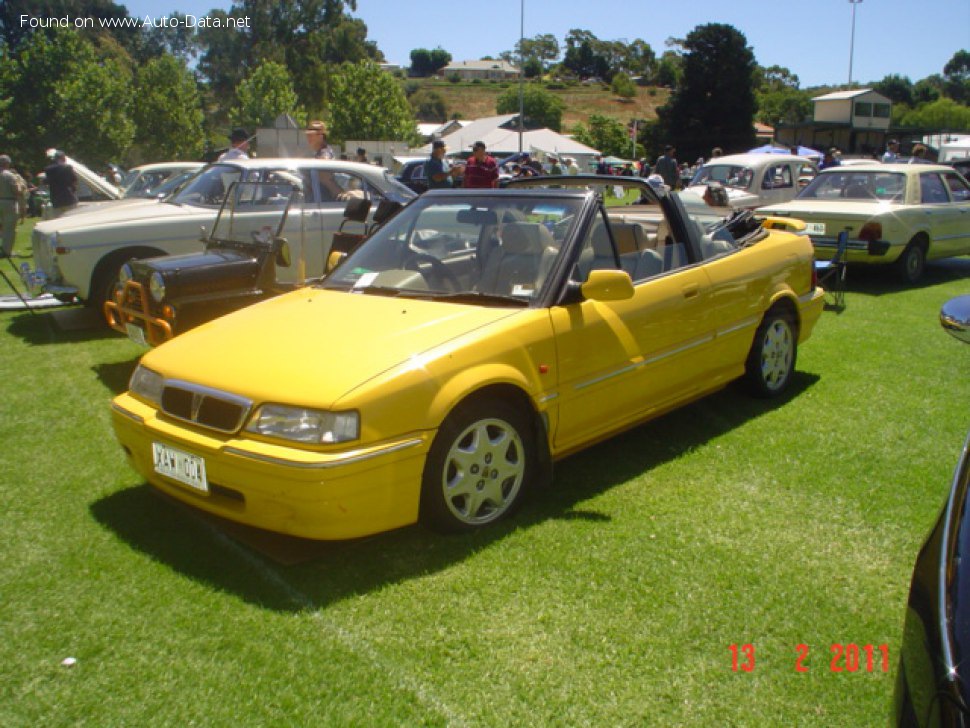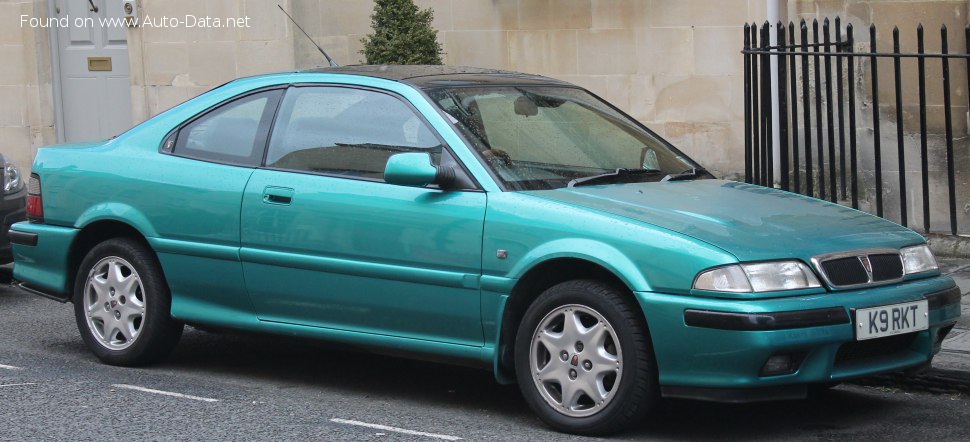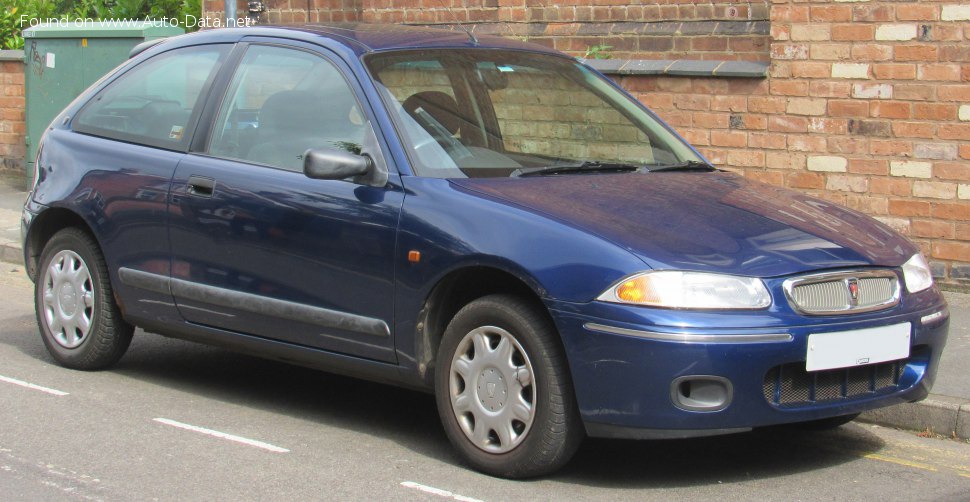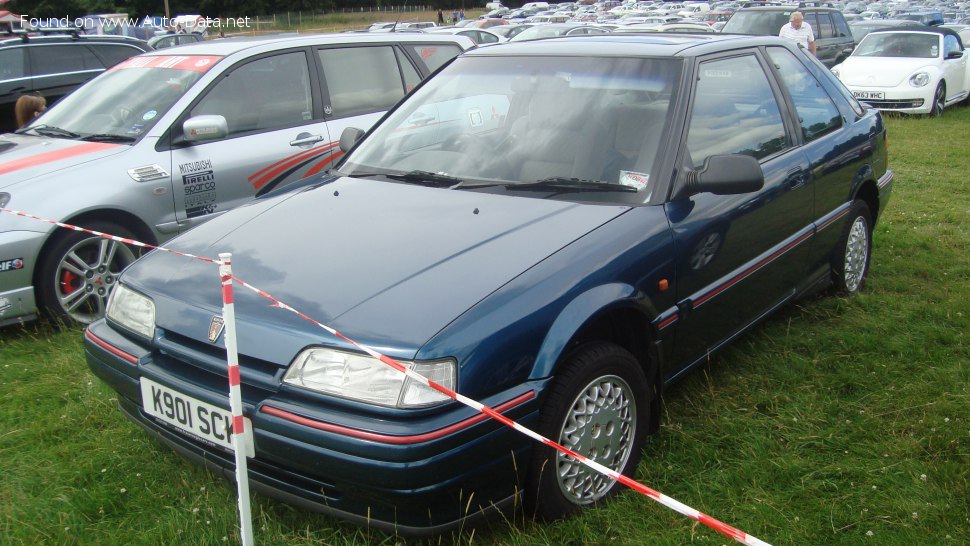
The Rover 200 (XW) 218 TD represented a significant chapter in the history of the British Rover Group. Launched in 1990, this second-generation Rover 200 succeeded the SD3 model and was a product of the collaboration between Rover and Honda. Positioned within the European C-segment (compact car class), the XW aimed to provide a more refined and modern alternative to its competitors. Though never officially sold in the United States, the Rover 200 (XW), particularly the 218 TD (88 hp) diesel variant, became a common sight on European roads, offering a blend of fuel efficiency and practical performance for families and commuters. Production of this model ran from 1990 to 1995.
The Rover 200 (XW) 218 TD: Positioning and Development
The 200 (XW) was based heavily on the Honda Concerto platform, sharing many components and some body panels with its Japanese counterpart. This partnership allowed Rover to benefit from Honda’s engineering expertise and build quality, addressing criticisms leveled at earlier British Leyland vehicles. The 218 TD specifically reflected Rover’s commitment to the growing European diesel market, where fuel economy and torque were increasingly important to buyers. The five-door hatchback design became a familiar presence, known for its comfortable ride, relatively refined interior for its class, and the dependable, economical performance of its turbodiesel engine.
Powertrain & Engine Architecture
The heart of the Rover 200 (XW) 218 TD was the 1.8-liter (1769 cc) inline four-cylinder turbodiesel engine, designated XUD 7TE. This engine wasn’t a Rover design but was sourced from Peugeot-Citroën, renowned for its robustness and efficiency. It featured a single overhead camshaft (SOHC) with two valves per cylinder, a common configuration for diesel engines of the time. Fuel delivery was handled by a precombustion chamber injection system, a well-established technology before the widespread adoption of direct injection. A turbocharger significantly increased power and torque, making it more responsive than naturally aspirated diesel alternatives.
The XUD 7TE in the 218 TD produced 88 horsepower at 4300 rpm and 133.5 lb-ft of torque at 2500 rpm. This strong low-end torque was crucial for the car’s drivability, providing ample pulling power for everyday use and highway cruising. Power was transmitted to the front wheels through a smooth-shifting five-speed manual transmission, a standard setup for the segment.
Driving Characteristics
The 218 TD offered a distinctly different driving experience compared to the gasoline-powered versions of the Rover 200 or higher-output diesel variants. While not a performance-oriented vehicle, the 88 hp and 133.5 lb-ft of torque provided adequate acceleration for typical European roads. The turbocharger helped mitigate some of the inherent lag associated with diesel engines, offering a more responsive feel than older, naturally aspirated diesels. The five-speed manual transmission allowed drivers to keep the engine in its optimal power band, maximizing efficiency and performance. Compared to the 1.4L or 1.6L gasoline engines, the 218 TD prioritized torque over outright horsepower, making it better suited for carrying passengers and luggage or tackling hilly terrain. The gear ratios were tuned for fuel economy and everyday usability, rather than sporty acceleration.
Equipment & Trim Levels
The 218 TD typically occupied a mid-range position within the Rover 200 (XW) lineup. Standard equipment included central locking, electric front windows, and a basic stereo system. Interior upholstery was typically cloth, with a focus on durability and practicality. Optional extras included power steering, alloy wheels, a sunroof, and upgraded audio systems. The dashboard layout was functional and straightforward, with clearly labeled controls. Higher trim levels offered more luxurious interior materials and additional features, but the 218 TD generally prioritized value and efficiency over outright luxury.
Chassis & Braking
The Rover 200 (XW) 218 TD featured an independent front suspension with wishbones, providing a comfortable ride and predictable handling. The rear suspension utilized a coil spring setup. Braking was handled by disc brakes at the front and drum brakes at the rear, a common configuration for vehicles in this class. The use of drum brakes on the rear helped to keep costs down. An Anti-lock Braking System (ABS) was available as an option, enhancing safety during emergency braking. Steering was rack and pinion, offering precise control. The car rode on 175/65 R13 tires, a size chosen for a balance of comfort, fuel efficiency, and grip.
Market Reception & Comparison
Critics generally praised the Rover 200 (XW) 218 TD for its fuel economy, robust engine, and comfortable ride. It was seen as a practical and economical choice for families and commuters. However, some reviewers noted that the performance was not particularly exciting, and the interior, while well-built, lacked the sophistication of some competitors. Compared to the gasoline-powered Rover 200 variants, the 218 TD offered significantly better fuel economy but less outright performance. Against rivals like the Volkswagen Golf Diesel, the Rover 200 218 TD offered a comparable driving experience and fuel efficiency, often at a slightly lower price point. The Peugeot 305/306 diesel models were direct competitors, offering similar performance and economy, but the Rover often appealed to buyers seeking a more British aesthetic.
Technical Specifications
| Category | Specification |
| Brand | Rover |
| Model | 200 |
| Generation | 200 (XW) |
| Type (Engine) | 218 TD (88 Hp) |
| Production Start | 1990 |
| Production End | 1995 |
| Powertrain Architecture | Internal Combustion engine |
| Body Type | Hatchback |
| Seats | 5 |
| Doors | 5 |
| Fuel consumption (urban) | 6.6 l/100 km |
| Fuel consumption (extra urban) | 4.3 l/100 km |
| Fuel consumption (combined) | 6.1 l/100 km |
| Fuel Type | Diesel |
| Acceleration 0-60 mph | 11.2 sec |
| Maximum speed | 171 km/h (106.25 mph) |
| Power | 88 Hp @ 4300 rpm |
| Torque | 181 Nm @ 2500 rpm (133.5 lb.-ft. @ 2500 rpm) |
| Engine Model/Code | XUD 7TE |
| Engine displacement | 1769 cm3 (1.8 liters / 107.95 cu. in.) |
| Number of cylinders | 4 |
| Fuel injection system | Precombustion chamber injection |
| Engine aspiration | Turbocharger |
| Kerb Weight | 1145 kg (2524.29 lbs.) |
| Trunk (boot) space – minimum | 352 l (12.43 cu. ft.) |
| Length | 4220 mm (166.14 in.) |
| Width | 1680 mm (66.14 in.) |
| Height | 1390 mm (54.72 in.) |
| Wheelbase | 2550 mm (100.39 in.) |
Legacy
The Rover 200 (XW) 218 TD powertrain has proven to be remarkably durable over the long term. The XUD 7TE engine is known for its longevity and relatively simple maintenance requirements. In the used car market, these models are often sought after by those looking for an affordable and reliable diesel vehicle. While age and mileage inevitably take their toll, well-maintained examples can still provide years of service. Common issues include wear and tear on suspension components, corrosion, and potential problems with the turbocharger. However, the engine itself is generally considered to be very robust. The Rover 200 (XW) 218 TD remains a testament to the benefits of the Honda-Rover collaboration and a reminder of a time when British cars offered a unique blend of style, comfort, and practicality.