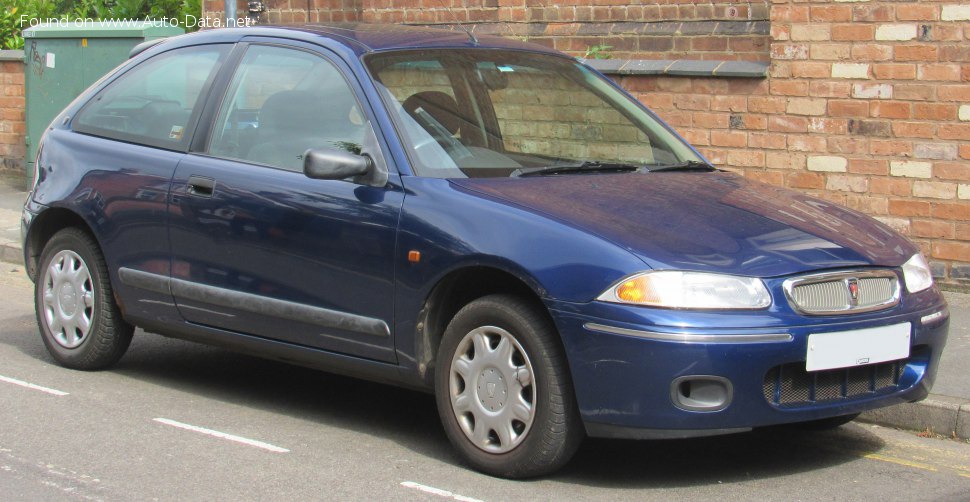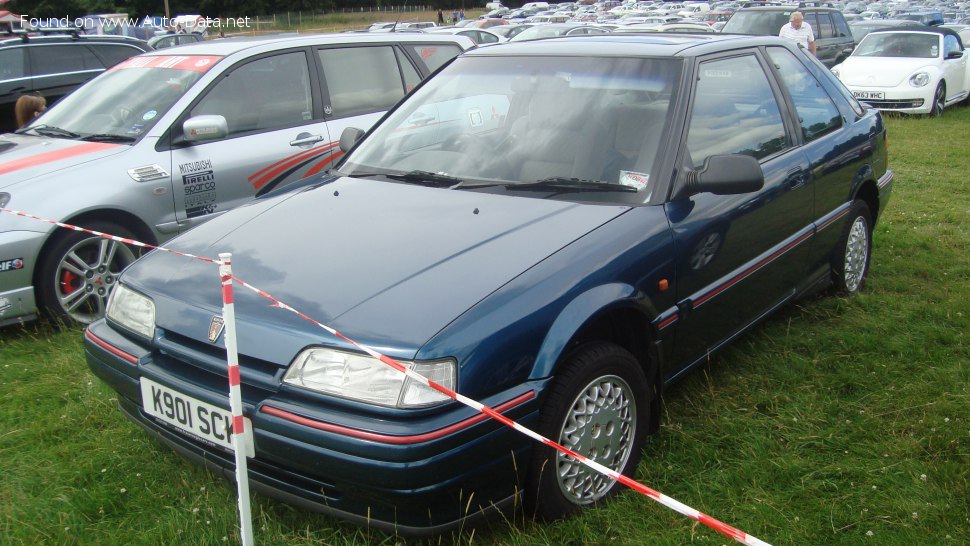
The Rover 200 (XW) 220 GTi (136 Hp) represents a significant chapter in the history of the British automotive manufacturer, Rover Group. Launched in 1993 and produced until 1995, this specific variant of the second-generation Rover 200 series (internally codenamed XW) was Rover’s earnest entry into the fiercely competitive European hot hatchback segment. Unlike many of its predecessors and contemporaries that were heavily influenced by Honda’s engineering, the XW generation of the Rover 200 marked a more distinct British identity, particularly in its design and interior appointments, although it still shared some underpinnings with the Honda Concerto. The 220 GTi variant, with its potent 136 horsepower engine, was positioned as the performance flagship of the range, aiming to combine spirited driving dynamics with the traditional Rover emphasis on refinement and comfort.
Primarily sold in the United Kingdom and across various European markets, the Rover 200 (XW) 220 GTi (136 Hp) was never officially offered in the United States. Its role was to challenge established hot hatchbacks from German and Japanese manufacturers, offering a distinctly British flavor to performance motoring. This model was characterized by its three-door hatchback body style, a common configuration for performance-oriented compact cars of the era, providing a blend of practicality for five occupants and a sporty aesthetic. It served as a testament to Rover’s ambition to shed its conservative image and appeal to a younger, more enthusiastic demographic, showcasing capabilities that often surprised those accustomed to the brand’s more sedate offerings.
Powertrain & Engine Architecture
At the heart of the Rover 200 (XW) 220 GTi (136 Hp) was a robust 2.0-liter (1994 cm³) naturally aspirated inline-four engine, a powerplant known within Rover as the ‘T-Series’. This engine, a development of Rover’s M-series and O-series engines, was a significant step forward for the brand, featuring a modern DOHC (Double Overhead Camshaft) valvetrain with four valves per cylinder. This configuration, combined with a multi-port manifold injection fuel system, allowed the engine to produce a respectable 136 horsepower at 6000 rpm. Its power per liter figure stood at 68.2 Hp/l, a competitive number for a naturally aspirated engine of its time.
Crucially for a performance car, the engine also delivered a healthy 136.45 lb.-ft. of torque at a relatively low 2500 rpm. This broad torque band contributed to the car’s impressive responsiveness and drivability in everyday conditions, not just at high revs. Power was sent to the front wheels via a precise 5-speed manual transmission, a standard setup for hot hatchbacks designed to maximize driver engagement. The drivetrain architecture, with the engine mounted transversely at the front, was typical for front-wheel-drive vehicles of this class, optimizing packaging and weight distribution for dynamic handling.
T-Series Engine Details
The Rover T-Series engine utilized a cast iron block with an aluminum cylinder head. The multi-port fuel injection system was a Bosch Motronic system, providing precise fuel delivery control. The DOHC valvetrain employed hydraulic lifters, reducing the need for frequent valve adjustments. The engine’s design prioritized reliability and durability, characteristics often associated with Rover’s engineering philosophy. The engine code for the 220 GTi variant is generally identified as 20T, though variations existed depending on specific market requirements.
Driving Characteristics
The Rover 200 (XW) 220 GTi (136 Hp) offered a driving experience that blended performance with a degree of refinement. The 136 horsepower engine provided brisk acceleration, with a 0-60 mph time of approximately 7.9 seconds. While not as overtly aggressive as some of its rivals, the 220 GTi’s power delivery was smooth and linear, making it easy to control and enjoyable to drive in a variety of conditions. The five-speed manual transmission featured a well-defined shift gate, allowing for precise gear changes.
Compared to lower-powered versions of the Rover 200, such as the 1.4 or 1.6-liter models, the 220 GTi offered a significantly more engaging driving experience. The increased power and torque allowed for effortless overtaking and confident cruising on motorways. Compared to other hot hatches of the era, like the Volkswagen Golf GTI, the Rover 200 GTi offered a slightly softer suspension setup, prioritizing ride comfort over ultimate handling precision. This made it a more comfortable choice for everyday driving, although it didn’t quite match the GTI’s cornering prowess.
Equipment & Trim Levels
The Rover 200 (XW) 220 GTi was generally well-equipped for its time, reflecting Rover’s commitment to providing a comfortable and refined interior. Standard features typically included power steering, central locking, electric front windows, and an upgraded stereo system. The interior trim featured sporty cloth upholstery, often with a distinctive pattern. The dashboard layout was functional and well-designed, with clear instrumentation.
Optional extras available for the 220 GTi included a sunroof, alloy wheels (often 15-inch), and upgraded sound systems. Some models also featured a rear spoiler, adding to the car’s sporty appearance. The 220 GTi was positioned as the premium trim level within the Rover 200 range, offering a higher level of equipment and a more refined interior compared to the base models.
Chassis & Braking
The Rover 200 (XW) 220 GTi utilized a MacPherson strut front suspension and a coil-sprung rear axle. This suspension setup provided a good balance between ride comfort and handling. The car’s kerb weight of 2634.52 lbs. (1195 kg) contributed to its agile handling characteristics. The front brakes were ventilated discs, providing strong stopping power, while the rear brakes were solid discs.
ABS (Anti-lock Braking System) was a standard feature on the 220 GTi, enhancing driver control during emergency braking. The steering was a hydraulic rack and pinion system, offering precise and responsive steering feel. The car rode on 185/55 R15 H tires, providing a good balance between grip and ride comfort. The suspension was tuned to provide a slightly firmer ride than the lower-spec Rover 200 models, enhancing handling performance.
Market Reception & Comparison
The Rover 200 (XW) 220 GTi received generally positive reviews from automotive critics. It was praised for its robust engine, comfortable interior, and refined driving experience. However, it was also criticized for its slightly less aggressive handling compared to some of its rivals, such as the Peugeot 306 GTi and the Volkswagen Golf GTI.
In terms of fuel economy, the 220 GTi offered a combined cycle rating of 30.2 US mpg (7.8 l/100 km), which was comparable to other hot hatches of its era. Reliability was generally good, although the Rover T-Series engine was known to be susceptible to head gasket failures if not properly maintained. Compared to the 1.4 and 1.6-liter Rover 200 models, the 220 GTi offered significantly improved performance and a more engaging driving experience, but at a higher price point.
Technical Specifications: Rover 200 (XW) 220 GTi (136 Hp)
| Brand | Rover |
| Model | 200 |
| Generation | 200 (XW) |
| Type (Engine) | 220 GTi (136 Hp) |
| Production Start | 1993 year |
| Production End | 1995 year |
| Powertrain Architecture | Internal Combustion engine |
| Body Type | Hatchback |
| Seats | 5 |
| Doors | 3 |
| Fuel Consumption (Urban) | 10.8 l/100 km |
| Fuel Consumption (Extra Urban) | 6 l/100 km |
| Fuel Consumption (Combined) | 7.8 l/100 km |
| Fuel Type | Petrol (Gasoline) |
| Acceleration 0-60 mph | 7.9 sec |
| Acceleration 0-62 mph (0-100 km/h) | 8.3 sec |
| Maximum Speed | 202 km/h |
| Weight-to-Power Ratio | 8.8 kg/Hp |
| Weight-to-Torque Ratio | 6.5 kg/Nm |
| Power | 136 Hp @ 6000 rpm |
| Power per Liter | 68.2 Hp/l |
| Torque | 185 Nm @ 2500 rpm |
| Engine Layout | Front, Transverse |
| Engine Displacement | 1994 cm³ |
| Number of Cylinders | 4 |
| Engine Configuration | Inline |
| Cylinder Bore | 84.5 mm |
| Piston Stroke | 88.9 mm |
| Compression Ratio | 10:1 |
| Valves per Cylinder | 4 |
| Fuel Injection System | Multi-port manifold injection |
| Engine Aspiration | Naturally aspirated |
| Valvetrain | DOHC |
| Kerb Weight | 1195 kg |
| Max. Weight | 1650 kg |
| Max Load | 455 kg |
| Trunk Space (Minimum) | 352 l |
| Fuel Tank Capacity | 55 l |
| Length | 4220 mm |
| Width | 1680 mm |
| Height | 1390 mm |
| Wheelbase | 2550 mm |
| Front Track | 1475 mm |
| Rear Track | 1470 mm |
| Drivetrain Architecture | ICE drives front wheels |
| Drive Wheel | Front wheel drive |
| Gearbox | 5 gears, manual transmission |
| Front Suspension | Wishbone |
| Rear Suspension | Coil spring |
| Front Brakes | Ventilated discs |
| Rear Brakes | Disc |
| Assisting Systems | ABS (Anti-lock braking system) |
| Steering Type | Steering rack and pinion |
| Power Steering | Hydraulic Steering |
| Tires Size | 185/55 R15 H |
Legacy
The Rover 200 (XW) 220 GTi (136 Hp) is remembered as a capable and somewhat underrated performance car from a brand that ultimately faced significant challenges. Its T-Series engine proved to be generally reliable, although head gasket issues could occur if maintenance was neglected. Today, well-maintained examples of the 220 GTi are sought after by enthusiasts of classic European hot hatches.
The car’s relatively simple mechanical design makes it easier to maintain and repair compared to more modern vehicles. Its blend of performance, comfort, and affordability has earned it a loyal following among those who appreciate British automotive heritage. While it may not have achieved the same iconic status as some of its rivals, the Rover 200 (XW) 220 GTi remains a testament to Rover’s ambition to produce genuinely competitive and desirable vehicles, embodying the spirit of accessible performance motoring from the 1990s.