
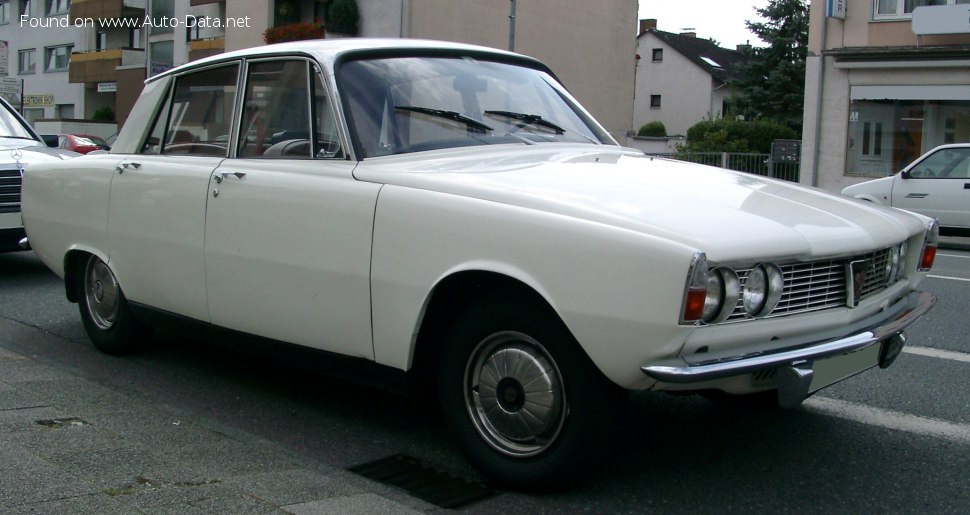
The Rover P6 series, officially known as the Rover 2000 and later expanded to include the 2200 and 3500 models, represents a pivotal moment in British automotive engineering and design. Launched in 1963, the P6 was conceived as a revolutionary mid-size executive sedan, aiming to blend sophisticated engineering with modern styling and a comfortable, luxurious driving experience. It quickly earned critical acclaim, being crowned the inaugural European Car of the Year in 1964, a testament to its forward-thinking approach.
The Rover 2200 (TC): A Refined Mid-Range Offering
Designed primarily for the European market, the Rover 2200-3500 (P6) saw limited official sales in the United States, making it a relatively unknown but historically significant vehicle here. The specific variant under discussion, the Rover 2200 (TC) with 113 horsepower, occupied a crucial mid-range position within the P6 lineup. It offered a step up in performance and refinement from the base 2000 model, while remaining more accessible than the flagship 3500 V8. Produced from 1963 to 1976, this model encapsulated Rover’s commitment to innovation and quality during a transformative era for the automotive industry.
Powertrain & Engine Architecture
At the heart of the Rover 2200 (TC) lay its 2.2-liter (2200 cc) inline-four cylinder engine. This engine was an evolution of the original 2.0-liter unit used in the initial P6 2000 models, developed to provide increased torque and horsepower. The “TC” designation signified “Twin Carburetor,” indicating the presence of two SU (Skinners Union) carburetors. These twin carbs were instrumental in improving fuel delivery and boosting power output compared to single-carburetor configurations.
The engine, identified by various codes depending on the year of manufacture, featured a cast iron block and cylinder head. It employed a single overhead camshaft (SOHC) valvetrain, operating with a relatively mild camshaft profile optimized for smooth operation and broad torque delivery. The SU carburetors, while requiring periodic adjustment, were known for their responsiveness and ability to provide consistent fuel mixture across a range of driving conditions. The engine’s compression ratio was approximately 8.5:1, and it utilized a conventional distributor ignition system.
The Rover 2200 (TC) was typically paired with either a four-speed manual transmission or a Borg-Warner automatic transmission. The automatic, a three-speed unit, was a popular choice for buyers prioritizing comfort and ease of driving. The automatic transmission featured a torque converter, providing smooth acceleration from a standstill and contributing to the car’s refined driving experience. Gear ratios were tailored to provide a balance between acceleration and fuel economy, with the automatic transmission prioritizing smooth shifts over outright performance.
Driving Characteristics
The Rover 2200 (TC) offered a distinctly British driving experience – refined, comfortable, and capable. With 113 horsepower and approximately 128 lb-ft of torque, the 2.2-liter engine provided adequate performance for its era and vehicle class. While not a sports car, the 2200 TC could comfortably cruise at highway speeds and offered sufficient acceleration for overtaking maneuvers. The automatic transmission, while not as engaging as a manual, provided smooth and effortless gear changes, enhancing the car’s overall comfort.
Compared to the 2.0-liter P6, the 2200 TC offered noticeably improved acceleration and a more relaxed cruising experience, particularly when equipped with the automatic transmission. The 3500 V8, however, represented a significant leap in performance, offering considerably more power and a more sporting driving character. The 2200 TC’s power delivery was linear and predictable, making it easy to control and enjoyable to drive in a variety of conditions. The rear-wheel drive layout contributed to balanced handling, although it wasn’t particularly sporty by modern standards.
Equipment & Trim Levels
The Rover 2200 (TC) was generally well-equipped for its time, offering a level of comfort and convenience that was competitive with other executive sedans. Standard features typically included reclining front seats, a comprehensive instrument panel with gauges for speed, fuel level, coolant temperature, and oil pressure, and a heater. Later models often included features like power-assisted steering and optional air conditioning.
Interior upholstery was typically cloth, available in a range of colors and patterns. Higher trim levels offered options such as leather upholstery and wood veneer trim on the dashboard and door panels. The dashboard layout was clean and functional, with controls logically arranged for ease of use. Optional extras included a radio, a sunroof, and overdrive for the manual transmission. The Rover 2200 (TC) aimed to provide a comfortable and refined interior environment, befitting its status as an executive sedan.
Chassis & Braking
The Rover P6’s most innovative feature was its monocoque chassis construction, often referred to as a “base unit” or “safety frame.” This design involved a strong, rigid steel frame onto which the body panels and mechanical components were bolted. This modular approach offered several advantages, including improved safety, easier repairs, and reduced manufacturing costs. The chassis provided a solid foundation for the suspension system.
The suspension consisted of independent front suspension with coil springs and a De Dion tube rear axle with inboard disc brakes. The De Dion tube setup, more commonly found on sports cars, provided excellent ride quality and handling characteristics. Braking was initially accomplished with Dunlop disc brakes on all four wheels, although some earlier models featured drum brakes on the rear. Steering was typically unassisted, although power steering became available as an option on later models. The chassis and suspension were designed to provide a comfortable and controlled ride, prioritizing refinement over outright sporting performance.
Market Reception & Comparison
The Rover 2200 (TC) received generally positive reviews from automotive critics. It was praised for its comfortable ride, refined engine, and innovative chassis construction. However, some critics noted that its performance was not as exhilarating as some of its competitors, particularly the BMW New Class sedans. Fuel economy was reasonable for the time, but not exceptional.
Compared to the 2.0-liter P6, the 2200 TC offered improved performance and refinement. Compared to the 3500 V8, it was less powerful but more affordable and fuel-efficient. In terms of reliability, the 2200 TC was generally considered to be a durable and dependable vehicle, although it was susceptible to the same issues as other British cars of the era, such as electrical problems and corrosion. The Rover 2200 (TC) offered a compelling alternative to other executive sedans, appealing to buyers who prioritized comfort, refinement, and innovative engineering.
Technical Specifications
| Brand | Rover |
| Model | 2200-3500 |
| Generation | 2200-3500 (P6) |
| Type (Engine) | 2200 (TC) (113 Hp) |
| Start of Production | 1963 year |
| End of Production | 1976 year |
| Powertrain Architecture | Internal Combustion engine |
| Body Type | Sedan |
| Seats | 5 |
| Doors | 4 |
| Fuel Type | Petrol (Gasoline) |
| Power | 113 Hp |
| Engine Aspiration | Naturally aspirated engine |
| Engine Oil Capacity | 5 l (5.28 US qt | 4.4 UK qt) |
| Coolant Capacity | 8 l (8.45 US qt | 7.04 UK qt) |
| Drivetrain Type | Internal Combustion engine (RWD) |
Legacy
The Rover P6, including the 2200 (TC) variant, left a lasting legacy on the automotive industry. Its innovative monocoque chassis construction, advanced suspension design, and commitment to passenger safety set new standards for executive sedans. The P6’s influence can be seen in subsequent Rover models and in the broader automotive landscape.
Today, the Rover 2200 (TC) is a sought-after classic car, appreciated by enthusiasts for its unique design, engineering integrity, and historical significance. While finding well-maintained examples can be challenging, the 2200 TC remains a rewarding ownership experience for those willing to invest the time and effort. The engine, while not overly complex, requires regular maintenance to ensure reliable operation. Parts availability can be limited, but a dedicated community of Rover enthusiasts provides support and resources for owners. The Rover 2200 (TC) stands as a testament to a golden age of British automotive engineering, a symbol of innovation, quality, and understated elegance.
