
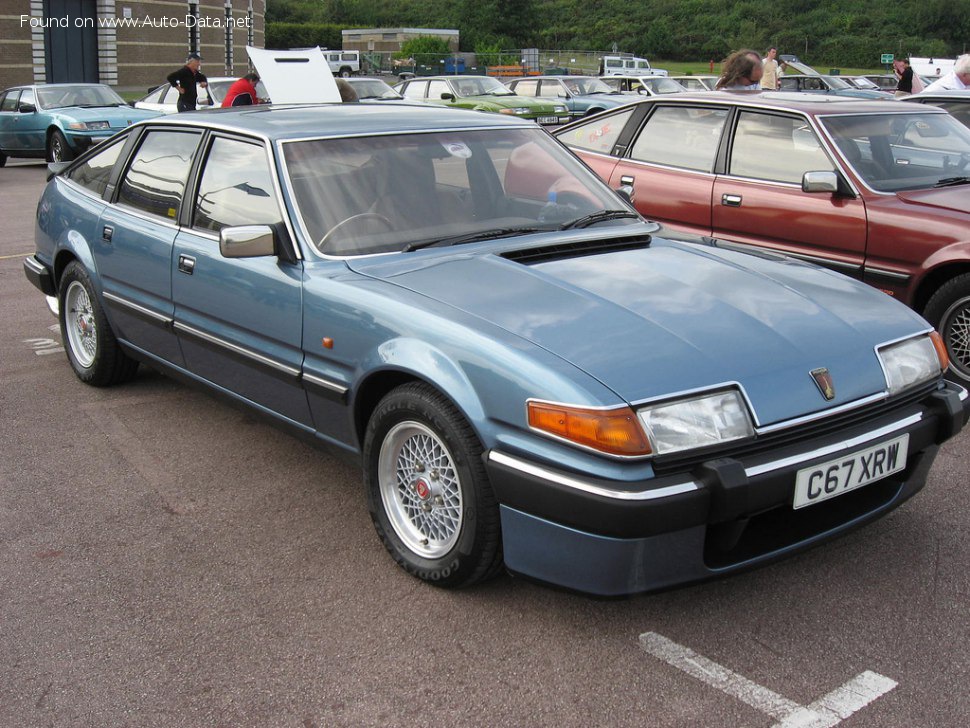
The Rover 2000-3500 Hatchback (SD1) 3500 Vitesse (193 Hp) represents a high-water mark in British automotive engineering and design. Launched in 1976, the SD1 was British Leyland’s attempt to create a world-class executive car, and later continued under the Rover Group. Its distinctive fastback styling, often compared to the Ferrari Daytona, combined with British luxury and, in the case of the Vitesse, substantial V8 power, made it a standout vehicle. The SD1 earned the European Car of the Year award in 1977, recognizing its innovative approach. The 3500 Vitesse, introduced in 1982 and produced through 1986, was the performance flagship of the SD1 range, designed to deliver a thrilling driving experience and showcase Rover’s engineering capabilities.
The Rover SD1 3500 Vitesse: A Performance Variant
Within the SD1 lineup, the 3500 Vitesse occupied the premium performance position. It was positioned above the 2300 and 2600 models, offering a significant power upgrade and a more focused driving experience. While the 2300 and 2600 models catered to a more comfort-oriented executive buyer, the Vitesse targeted drivers who desired a blend of luxury and performance. It wasn’t a direct competitor to outright sports cars, but it offered a compelling alternative for those seeking a practical, yet exhilarating, executive hatchback. The Vitesse’s success on the racetrack further solidified its image as a performance-oriented model.
Powertrain & Engine Architecture
The heart of the Rover SD1 3500 Vitesse was its 3.5-liter (3500 cc) naturally aspirated V8 engine. This engine had its origins in the Buick 215 cubic inch V8 of the late 1950s, which Rover acquired and extensively modified. Rover’s engineers focused on improving the engine’s durability, refinement, and power output. The Vitesse version was tuned to produce 193 horsepower. This was achieved through a combination of revised cylinder heads, a higher compression ratio, and a performance-oriented camshaft. The engine featured a cast iron block and aluminum cylinder heads, contributing to its relatively lightweight construction.
Fuel delivery was handled by a Bosch Jetronic fuel injection system, providing precise fuel metering for optimal performance and efficiency. The engine utilized a single overhead camshaft (SOHC) valvetrain, operating two valves per cylinder. The Vitesse was exclusively offered with a three-speed automatic transmission, a Chrysler TorqueFlite A727 unit. This transmission was known for its robustness and smooth shifting characteristics, although it lacked the efficiency of more modern automatic gearboxes. The automatic transmission was chosen to provide ease of use and complement the Vitesse’s grand touring character.
Driving Characteristics
The Rover SD1 3500 Vitesse delivered a distinctly British driving experience, characterized by a comfortable ride and a powerful, yet refined, engine. The 193 hp V8 provided ample torque throughout the rev range, making the car feel responsive in most driving situations. Acceleration from 0 to 60 mph took approximately 6.9 seconds, a respectable figure for the early 1980s. Top speed was around 131 mph. The automatic transmission, while smooth, did result in some power loss compared to the manual transmission options available on other SD1 models.
Compared to the lower-powered SD1 variants, the Vitesse offered a significantly more engaging driving experience. The increased power and torque allowed for effortless cruising at highway speeds and confident overtaking maneuvers. However, the Vitesse’s weight (approximately 3,600 lbs) and the limitations of the automatic transmission meant it wasn’t as nimble or agile as some of its European rivals. The suspension, while comfortable, was tuned more for grand touring than outright handling prowess.
Equipment & Trim Levels
The 3500 Vitesse was the most well-equipped SD1 variant. Standard features included leather upholstery, walnut wood trim, electric windows, central locking, and a sunroof. The interior was designed to provide a luxurious and comfortable environment for both driver and passengers. The Vitesse also featured a unique instrument cluster with additional gauges, including a voltmeter and oil pressure gauge.
Optional extras included air conditioning, a premium sound system, and upgraded wheels. The exterior of the Vitesse was distinguished by its unique alloy wheels, a rear spoiler, and a distinctive side stripe. The interior trim was typically available in a range of colors, allowing buyers to personalize their vehicle. The Vitesse’s interior appointments were a clear step above the base SD1 models, reflecting its premium positioning.
Chassis & Braking
The Rover SD1 3500 Vitesse utilized a monocoque chassis construction, providing a good balance of strength and rigidity. The suspension consisted of independent double wishbones at the front and a live axle with trailing arms at the rear. The Vitesse featured thicker anti-roll bars compared to the standard SD1 models, improving handling and reducing body roll. Braking was initially provided by disc brakes at the front and drum brakes at the rear. Later models received disc brakes all around, offering improved stopping power. The steering was power-assisted, providing light and effortless steering control.
Market Reception & Comparison
The Rover SD1 3500 Vitesse received generally positive reviews from automotive critics. It was praised for its powerful engine, comfortable ride, and distinctive styling. However, some critics noted the car’s relatively high price and occasional quality control issues, which were common during the British Leyland era. Compared to its rivals, such as the Ford Granada and Opel Senator, the Vitesse offered a more luxurious and refined experience, but it was often less reliable. Fuel economy was also a concern, with the V8 engine consuming a significant amount of fuel. Despite these drawbacks, the Vitesse remained a popular choice for buyers seeking a stylish and powerful executive car.
Technical Specifications
| Brand | Rover |
| Model | 2000-3500 Hatchback (SD1) |
| Generation | 2000-3500 Hatchback (SD1) |
| Type (Engine) | 3500 Vitesse (193 Hp) |
| Start of Production | 1982 |
| End of Production | 1986 |
| Powertrain Architecture | Internal Combustion engine |
| Body Type | Hatchback |
| Seats | 5 |
| Doors | 5 |
| Fuel Type | Petrol (Gasoline) |
| Power | 193 Hp |
| Engine Aspiration | Naturally aspirated engine |
| Acceleration 0-60 mph | 6.9 sec |
| Acceleration 0-62 mph (0-100 km/h) | 7.3 sec |
| Maximum Speed | 131.11 mph (211 km/h) |
| Fuel Consumption (Urban) | 15.4 US mpg (15.3 l/100 km) |
| Fuel Consumption (Extra Urban) | 31.4 US mpg (7.5 l/100 km) |
| Fuel Tank Capacity | 17.44 US gal (66 l) |
Legacy
The Rover SD1 3500 Vitesse has become a highly sought-after classic car. Its combination of distinctive styling, powerful V8 engine, and motorsport heritage has made it a favorite among enthusiasts. While the SD1 range as a whole suffered from reliability issues, the Vitesse variant is generally considered to be one of the more robust models. Today, well-maintained examples command high prices in the used car market. The Vitesse’s legacy extends beyond its performance and styling; it represents a bold and ambitious attempt by British Leyland to create a world-class executive car. Its success in motorsport further cemented its reputation as a genuine performance machine, and it remains a cherished icon of British automotive history.
