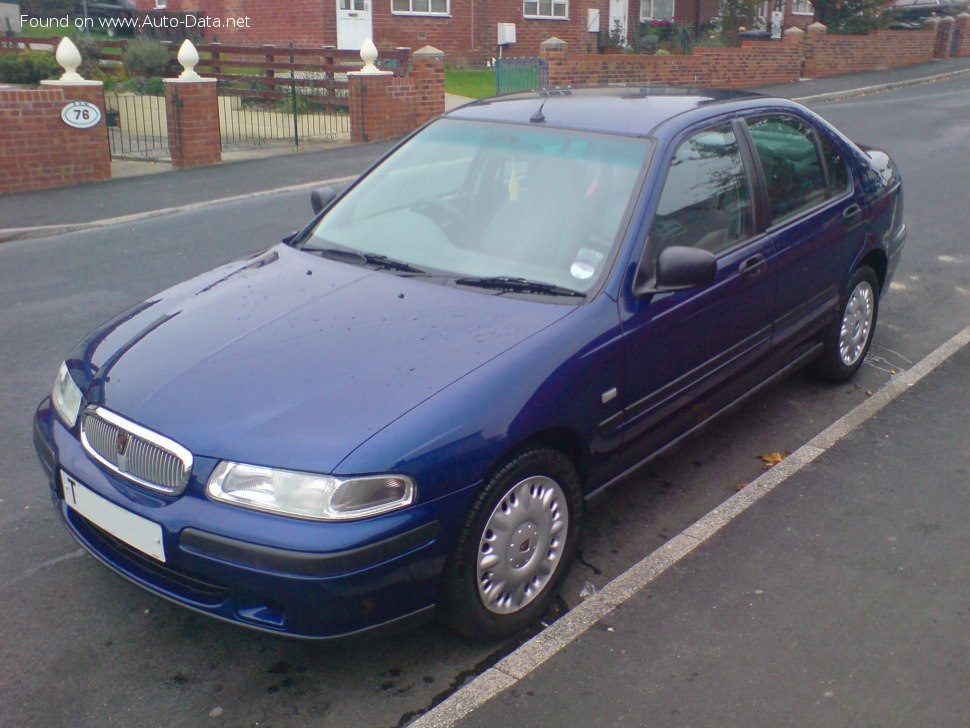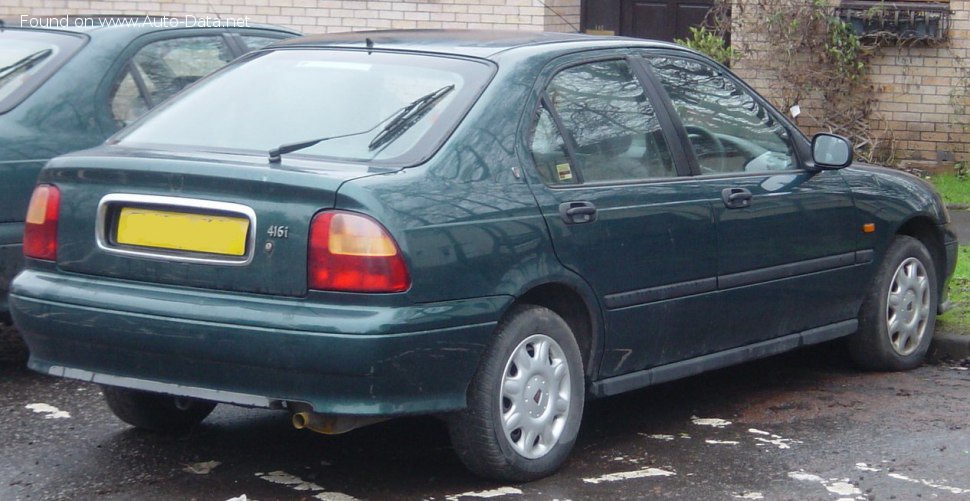
The Rover 400 Hatchback (RT) 420 Di (105 Hp) represents a significant offering from the British automaker Rover Group within the European compact family car segment. Produced from 1995 to 2000 as part of the RT generation, the 400 series aimed to provide a more upscale alternative to mainstream competitors. While never officially sold in the United States, this variant was a notable presence in markets like the United Kingdom and continental Europe, appealing to buyers seeking a practical, comfortable, and fuel-efficient vehicle with a touch of British refinement. The 400 series was built on the 1HX0/A3 platform, shared with the Honda Civic, reflecting Rover’s strategic partnership with the Japanese manufacturer.
The 420 Di: Positioning and Role in the Rover 400 Lineup
The 420 Di occupied a mid-range position within the Rover 400 Hatchback lineup. It sat above the entry-level 1.4 and 1.6-liter gasoline models, offering a more sophisticated and economical option for buyers willing to pay a premium. Compared to the higher-specification 420 GSi and V6 variants, the 420 Di prioritized fuel efficiency and low-end torque over outright performance. It was targeted towards families, company car drivers, and individuals who valued practicality and running costs over sporty handling or a powerful engine. The diesel engine was a key differentiator, appealing to a growing segment of European buyers who favored diesel’s fuel economy benefits.
Powertrain & Engine Architecture
The Rover 400 Hatchback (RT) 420 Di (105 Hp) was powered by Rover’s ‘L Series’ 2.0-liter (1994 cm³ or 121.68 cu. in.) inline four-cylinder diesel engine. This engine represented a significant step forward for Rover’s diesel technology, moving away from older designs and embracing modern common rail direct injection. The engine code is typically identified as either an ABS or ADZ, depending on specific production dates and minor revisions. The engine was transversely mounted at the front of the vehicle, driving the front wheels.
The L Series diesel featured a single overhead camshaft (OHC) valvetrain operating two valves per cylinder. The common rail fuel injection system, supplied by Lucas (later Delphi), delivered fuel directly into the combustion chamber at extremely high pressure, optimizing combustion efficiency and reducing emissions. A turbocharger with an intercooler was employed to boost power output and improve torque across the engine’s operating range. The engine’s robust construction and relatively simple design contributed to its reputation for durability. The 420 Di was exclusively paired with a 5-speed manual transmission, offering precise gear changes and a direct connection to the engine.
Driving Characteristics
The 420 Di’s driving experience was characterized by its strong low-end torque and relaxed cruising ability. The 105 horsepower output, while not particularly high, was sufficient for everyday driving, providing brisk acceleration from a standstill and effortless overtaking on open roads. The engine’s peak torque of 210 Nm (154.89 lb.-ft.) at 2000 rpm meant that the car rarely needed to be revved hard, contributing to its fuel efficiency. Compared to the 1.6-liter gasoline version, the 420 Di offered significantly more torque, making it feel more responsive and less strained when fully loaded or climbing hills. However, it lacked the higher-revving eagerness of the gasoline engines. The 5-speed manual transmission was well-matched to the engine’s characteristics, providing smooth and precise gear changes. The gear ratios were optimized for fuel economy and relaxed cruising, rather than outright performance.
Equipment & Trim Levels
The Rover 400 Hatchback (RT) 420 Di (105 Hp) came equipped with a reasonable level of standard features for its price point. Standard equipment typically included central locking, power steering, an adjustable steering column, and an RDS stereo radio. Interior upholstery was generally cloth, with a choice of colors and patterns. The dashboard layout was functional and ergonomically designed, with clear instrumentation and easy-to-use controls. Optional extras included air conditioning, electric windows, alloy wheels, and a sunroof. Higher-specification versions of the 420 Di could also be equipped with features such as leather upholstery, upgraded audio systems, and a trip computer. The RT trim level generally signified a slightly more refined specification than the base models, with improved interior trim and additional comfort features.
Chassis & Braking
The Rover 400 Hatchback (RT) 420 Di (105 Hp) utilized a conventional suspension setup, with MacPherson strut front suspension and a trailing arm rear suspension. This configuration provided a comfortable ride quality, absorbing bumps and imperfections in the road surface effectively. The suspension was tuned for comfort rather than sporty handling, resulting in a slightly softer and more forgiving ride than some of its rivals. Braking was provided by front disc brakes and rear drum brakes. Anti-lock Braking System (ABS) was standard equipment, enhancing braking performance and stability, particularly in wet or slippery conditions. The steering system was a hydraulic rack and pinion setup, offering responsive and precise steering feel. Stabilizer bars were fitted to both the front and rear axles to reduce body roll during cornering.
Market Reception & Comparison
The Rover 400 Hatchback (RT) 420 Di (105 Hp) received generally positive reviews from automotive critics. It was praised for its comfortable ride, fuel efficiency, and refined diesel engine. However, some critics noted that its performance was not as exciting as some of its rivals, and its interior styling was somewhat conservative. Compared to the gasoline-powered versions of the 400, the 420 Di offered superior fuel economy and torque, making it a more practical choice for long-distance drivers. However, it was slightly more expensive to purchase and maintain. In terms of reliability, the L Series diesel engine proved to be generally robust, although it was susceptible to certain issues, such as injector problems and turbocharger failures. Overall, the 420 Di was considered a competent and well-rounded family car, offering a good balance of comfort, economy, and practicality.
Technical Specifications
| Category | Specification |
| Brand | Rover |
| Model | 400 |
| Generation | 400 Hatchback (RT) |
| Type (Engine) | 420 Di (105 Hp) |
| Start of Production | 1995 year |
| End of Production | 2000 year |
| Powertrain Architecture | Internal Combustion engine |
| Body type | Hatchback |
| Seats | 5 |
| Doors | 5 |
| Performance Specifications | |
| Fuel consumption (economy) – urban | 5.6 l/100 km (42 US mpg) |
| Fuel consumption (economy) – extra urban | 4.0 l/100 km (58.8 US mpg) |
| Fuel consumption (economy) – combined | 5.5 l/100 km (42.8 US mpg) |
| Fuel Type | Diesel |
| Acceleration 0 – 60 mph | 10.5 sec |
| Maximum speed | 114.95 mph (185 km/h) |
| Weight-to-power ratio | 11.6 kg/Hp, 86.1 Hp/tonne |
| Weight-to-torque ratio | 5.8 kg/Nm, 172.1 Nm/tonne |
| Engine Specifications | |
| Power | 105 Hp @ 4200 rpm |
| Power per liter | 52.7 Hp/l |
| Torque | 210 Nm @ 2000 rpm (154.89 lb.-ft. @ 2000 rpm) |
| Engine layout | Front, Transverse |
| Engine Model/Code | L |
| Engine displacement | 1994 cm³ (2.0 l / 121.68 cu. in.) |
| Number of cylinders | 4 |
| Engine configuration | Inline |
| Cylinder Bore | 84.5 mm (3.33 in.) |
| Piston Stroke | 88.9 mm (3.5 in.) |
| Compression ratio | 19.5:1 |
| Number of valves per cylinder | 2 |
| Fuel injection system | Diesel Commonrail |
| Engine aspiration | Turbocharger |
| Valvetrain | OHC |
| Engine oil capacity | 4.5 l (4.76 US qt) |
| Coolant capacity | 7 l (7.4 US qt) |
| Space, Volume and Weights | |
| Kerb Weight | 1220 kg (2689.64 lbs.) |
| Trunk (boot) space – minimum | 370 l (13.07 cu. ft.) |
| Trunk (boot) space – maximum | 720 l (25.43 cu. ft.) |
| Fuel tank capacity | 55 l (14.53 US gal) |
| Dimensions | |
| Length | 4320 mm (170.08 in.) |
| Width | 1700 mm (66.93 in.) |
| Height | 1390 mm (54.72 in.) |
| Wheelbase | 2620 mm (103.15 in.) |
| Front track | 1480 mm (58.27 in.) |
| Rear (Back) track | 1470 mm (57.87 in.) |
| Drivetrain, Brakes and Suspension | |
| Drivetrain Architecture | Front-wheel drive, Internal Combustion engine |
| Drive wheel | Front wheel drive |
| Number of gears and type of gearbox | 5 gears, manual transmission |
| Front suspension | Spring Strut |
| Rear suspension | Spring Strut |
| Front brakes | Disc |
| Rear brakes | Drum |
| Assisting systems | ABS (Anti-lock braking system) |
| Steering type | Steering rack and pinion |
| Power steering | Hydraulic Steering |
| Tires size | 175/65 R14 |
Legacy
Today, the Rover 400 Hatchback (RT) 420 Di (105 Hp) is a relatively rare sight on the roads. The Rover brand’s demise in 2005 led to a decline in parts availability and a gradual reduction in the number of surviving vehicles. However, a dedicated community of Rover enthusiasts continues to keep these cars running, appreciating their unique character and British heritage. The L Series diesel engine, when properly maintained, has proven to be a durable and reliable unit. Well-maintained examples of the 420 Di can still provide affordable and economical transportation, appealing to those seeking a classic British car with a practical diesel engine. The car’s value in the used car market remains relatively low, making it an accessible entry point for classic car enthusiasts.