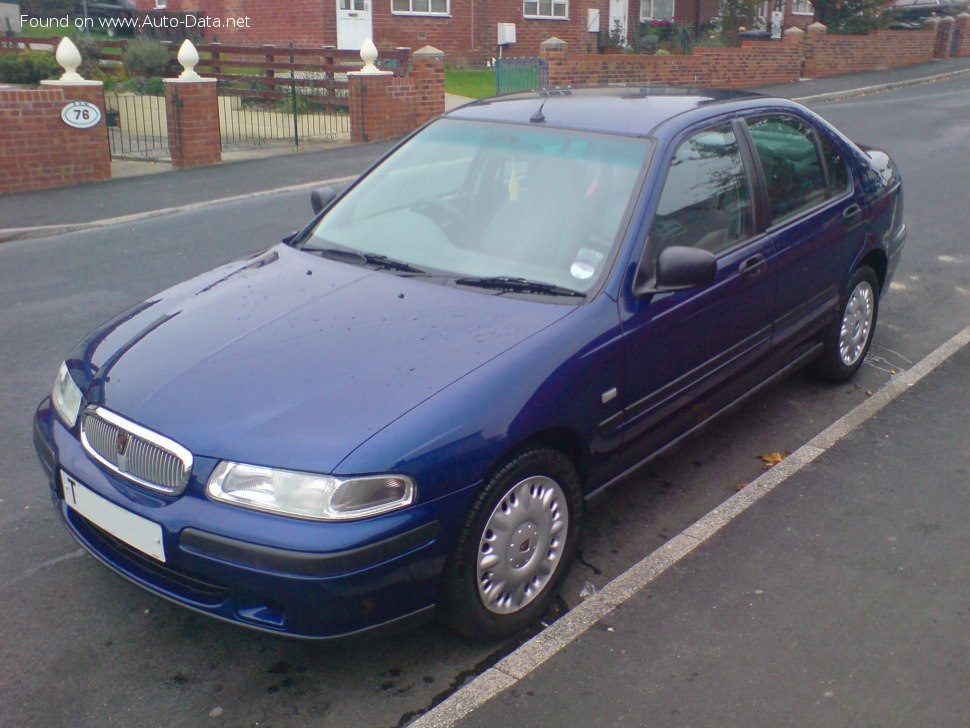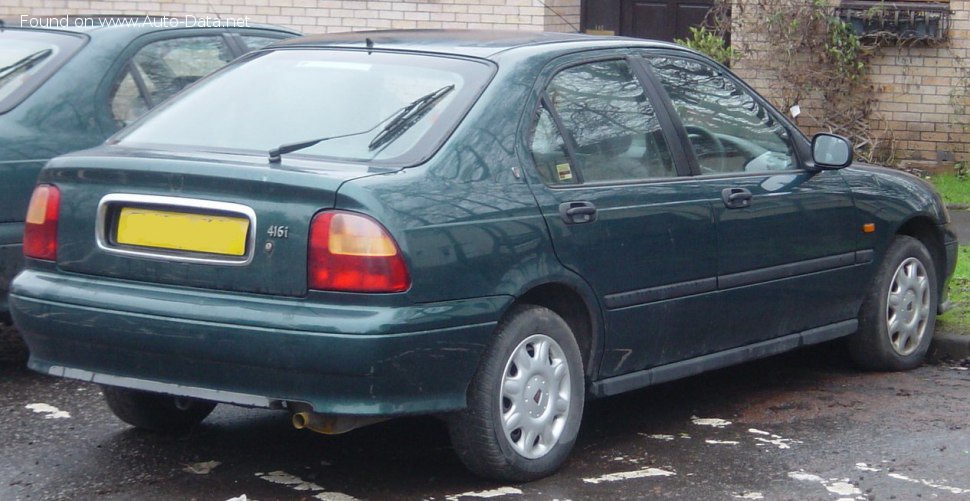
The Rover 400 Hatchback, specifically the RT generation produced between 1995 and 2000, represented a pivotal model for the British automaker. Positioned squarely in the competitive European C-segment, this vehicle aimed to blend traditional British craftsmanship and styling with modern engineering, largely thanks to its collaborative roots with Honda. The Rover 400 Hatchback (RT) 420 Si Lux (136 Hp) variant, the focus of this analysis, stood as a premium offering within the lineup, designed to appeal to buyers seeking a well-appointed and capable family car. While the Rover brand was not present in the United States market during this period, the 400 series played a crucial role in Europe, competing against established players like the Volkswagen Golf, Ford Escort, and Opel Astra. This particular model, the 420 Si Lux, was distinguished by its potent 2.0-liter engine and a higher level of interior refinement and standard features, embodying Rover’s ambition to offer a more luxurious alternative in the compact car segment.
During its production run, the RT generation of the Rover 400 was a significant volume seller for the company, showcasing a more contemporary design language than its predecessors while retaining a distinctly British aesthetic. The “RT” designation signifies its platform, which was shared with the contemporary Honda Civic (Domani in some markets), a collaboration that provided Rover with access to modern chassis and powertrain technology. This strategic alliance was key to the 400’s development, allowing it to offer competitive dynamics and reliability in a segment where these attributes were paramount. The 420 Si Lux, with its powerful engine and comprehensive feature set, was intended to be the flagship of the hatchback range, demonstrating Rover’s capability to deliver performance and luxury in a compact package.
Rover 400 Hatchback (RT) 420 Si Lux: Powertrain & Engine Architecture
At the heart of the Rover 400 Hatchback (RT) 420 Si Lux was Rover’s robust and well-regarded T16 engine. This naturally aspirated, 2.0-liter (1994 cm3 or 121.68 cu. in.) inline four-cylinder unit was a testament to Rover’s engineering prowess, particularly given its DOHC (Double Overhead Camshaft) valvetrain with four valves per cylinder. This configuration allowed for efficient breathing and strong power delivery across the RPM range. The engine produced a respectable 136 horsepower at 6000 rpm, which was quite competitive for a non-turbocharged engine in its class at the time. More impressively, it delivered 136.45 lb.-ft. of torque at a relatively low 2500 rpm, ensuring excellent low-end grunt and flexible everyday driving.
Power was sent to the front wheels through a precise 5-speed manual transmission, a common and reliable setup for European compact cars. This combination allowed the 420 Si Lux to accelerate from 0 to 60 mph in a swift 9 seconds, making it one of the quicker options in its segment. Its top speed was rated at 123.65 mph (199 km/h), demonstrating its capability for sustained highway cruising. The engine layout was front, transverse, contributing to the car’s front-wheel-drive architecture and efficient packaging. Fuel injection was handled by a multi-port manifold system, ensuring precise fuel delivery and optimal combustion. With a compression ratio of 10:1, the engine was designed for a good balance of power and efficiency, using petrol (gasoline) fuel.
Despite its performance orientation, the 420 Si Lux also offered reasonable fuel economy for its era, especially on longer journeys. Its extra-urban fuel consumption was rated at an impressive 39.2 US mpg (6 l/100 km), highlighting the efficiency benefits of a well-tuned, naturally aspirated engine. Urban driving, as expected, saw higher consumption at 18 US mpg (13.1 l/100 km). The vehicle’s weight-to-power ratio stood at 9.3 kg/Hp (107.5 Hp/tonne), indicating a lively driving experience for a car of its size and class. The engineering of the T16 engine, with its reliable DOHC setup and strong torque delivery, made the 420 Si Lux a genuinely engaging car to drive, particularly on winding European roads.
Driving Characteristics of the 420 Si Lux
The Rover 400 420 Si Lux offered a driving experience that prioritized a balance between comfort and performance. The 2.0-liter T16 engine, while not exceptionally powerful, provided ample torque for everyday driving and confident overtaking maneuvers. The 5-speed manual transmission was well-matched to the engine’s characteristics, offering smooth shifts and allowing the driver to keep the engine in its optimal power band. Compared to lower-spec Rover 400 models with smaller engines, the 420 Si Lux felt significantly more responsive and capable, particularly when fully loaded with passengers or luggage.
The gear ratios were tuned to provide brisk acceleration in the lower gears, while the higher gears were geared for relaxed cruising on motorways. While not a sports car, the 420 Si Lux offered a reasonably engaging driving experience, thanks to its well-weighted steering and predictable handling. Compared to the more performance-focused variants available in the C-segment, such as the Volkswagen Golf GTI or Ford Escort RS2000, the 420 Si Lux was more focused on providing a comfortable and refined driving experience. It lacked the outright pace and sharper handling of these rivals, but it compensated with a more compliant ride and a quieter cabin.
Equipment & Trim Levels
As the “Si Lux” designation implies, this variant was equipped with a higher level of standard features and interior appointments. Rover was known for its emphasis on interior quality and comfort, and the 400 Si Lux aimed to uphold this reputation. Specific luxury features varied by market and optional packages, but the ‘Lux’ trim typically included more upscale upholstery, often with wood-grain or metallic trim accents on the dashboard and door panels, reflecting a touch of traditional British luxury. Power windows, central locking, and potentially air conditioning were often standard or widely available on this trim level. The ergonomic layout of the dashboard was designed for ease of use, with clear instrumentation and accessible controls.
Optional extras could include features such as a sunroof, upgraded audio systems, leather upholstery, and alloy wheels. The 420 Si Lux was positioned as a premium offering within the Rover 400 range, and its equipment levels reflected this. It was aimed at buyers who appreciated a comfortable and well-equipped car, rather than those seeking outright performance or sporty styling.
Chassis & Braking
The Rover 400 (RT) utilized a MacPherson strut front suspension and a trailing arm rear suspension, a common configuration for front-wheel-drive cars of this era. This setup provided a good balance between ride comfort and handling. The 420 Si Lux typically featured a slightly stiffer suspension setup compared to lower-spec models, to better manage the increased power and weight. Disc brakes were fitted to all four wheels, providing ample stopping power. An Anti-lock Braking System (ABS) was standard equipment, enhancing safety by preventing wheel lock-up during hard braking.
The steering system utilized a hydraulic power-assisted rack and pinion setup, providing a direct and communicative feel to the driver. The 195/55 R15 H tires provided a good blend of grip and ride quality. The chassis was designed to provide a stable and predictable driving experience, with minimal body roll in corners.
Market Reception & Comparison
The Rover 400 420 Si Lux received generally positive reviews from automotive critics. It was praised for its comfortable ride, refined interior, and the performance of its 2.0-liter engine. However, it also faced criticism for its perceived lack of long-term reliability compared to its Japanese rivals. Fuel economy was considered reasonable for its class, although not exceptional. Compared to other trims in the Rover 400 lineup, the 420 Si Lux offered a significant performance upgrade, but at a higher price point.
Against its competitors, such as the Volkswagen Golf, Ford Escort, and Opel Astra, the 420 Si Lux offered a more luxurious and refined driving experience, but it lacked the outright performance and handling of some of its rivals. Its strengths lay in its comfort, practicality, and distinctive British styling.
Technical Specifications
| Category | Specification |
| General Information | |
| Brand | Rover |
| Model | 400 |
| Generation | 400 Hatchback (RT) |
| Type (Engine) | 420 Si Lux (136 Hp) |
| Start of Production | 1995 year |
| End of Production | 2000 year |
| Powertrain Architecture | Internal Combustion engine |
| Body type | Hatchback |
| Seats | 5 |
| Doors | 5 |
| Performance Specs | |
| Fuel consumption (economy) – urban | 13.1 l/100 km (18 US mpg) |
| Fuel consumption (economy) – extra urban | 6 l/100 km (39.2 US mpg) |
| Fuel Type | Petrol (Gasoline) |
| Acceleration 0 – 60 mph | 9 sec |
| Maximum speed | 199 km/h (123.65 mph) |
| Weight-to-power ratio | 9.3 kg/Hp, 107.5 Hp/tonne |
| Weight-to-torque ratio | 6.8 kg/Nm, 146.2 Nm/tonne |
| Engine Specs | |
| Power | 136 Hp @ 6000 rpm |
| Power per liter | 68.2 Hp/l |
| Torque | 185 Nm @ 2500 rpm (136.45 lb.-ft. @ 2500 rpm) |
| Engine layout | Front, Transverse |
| Engine Model/Code | T16 |
| Engine displacement | 1994 cm3 (2.0 l / 121.68 cu. in.) |
| Number of cylinders | 4 |
| Engine configuration | Inline |
| Cylinder Bore | 84.45 mm (3.32 in.) |
| Piston Stroke | 89 mm (3.5 in.) |
| Compression ratio | 10:1 |
| Number of valves per cylinder | 4 |
| Fuel injection system | Multi-port manifold injection |
| Engine aspiration | Naturally aspirated engine |
| Valvetrain | DOHC |
| Engine oil capacity | 4.5 l (4.76 US qt) |
| Coolant | 7.5 l (7.93 US qt) |
| Space, Volume and Weights | |
| Kerb Weight | 1265 kg (2788.85 lbs.) |
| Max. weight | 1690 kg (3725.81 lbs.) |
| Max load | 425 kg (936.96 lbs.) |
| Trunk (boot) space – minimum | 370 l (13.07 cu. ft.) |
| Trunk (boot) space – maximum | 720 l (25.43 cu. ft.) |
| Fuel tank capacity | 55 l (14.53 US gal) |
| Dimensions | |
| Length | 4320 mm (170.08 in.) |
| Width | 1700 mm (66.93 in.) |
| Height | 1390 mm (54.72 in.) |
| Wheelbase | 2620 mm (103.15 in.) |
| Front track | 1480 mm (58.27 in.) |
| Rear (Back) track | 1470 mm (57.87 in.) |
| Drivetrain, Brakes and Suspension Specs | |
| Drivetrain Architecture | The Internal combustion engine (ICE) drives the front wheels of the vehicle. |
| Drive wheel | Front wheel drive |
| Number of gears and type of gearbox | 5 gears, manual transmission |
| Front suspension | Spring Strut |
| Rear suspension | Spring Strut |
| Front brakes | Disc |
| Rear brakes | Disc |
| Assisting systems | ABS (Anti-lock braking system) |
| Steering type | Steering rack and pinion |
| Power steering | Hydraulic Steering |
| Tires size | 195/55 R15 H |
Legacy
The Rover 400 Hatchback (RT) 420 Si Lux, like the broader Rover 400 series, occupied a unique position in the European automotive landscape of the late 1990s. It was a product of a complex alliance between Rover and Honda, intended to offer European buyers a blend of British charm and Japanese reliability. For Rover, the 400 (RT) was a crucial model, representing a modernized offering in the fiercely competitive C-segment. Its main rivals included the perennial best-sellers such as the Volkswagen Golf, Ford Escort (later Focus), Vauxhall Astra (Opel Astra), and Peugeot 306. The 420 Si Lux specifically aimed to carve out a niche against higher trim levels of these competitors, offering a more premium feel and potent performance than many of its contemporaries.
The reputation of the Rover 400 was somewhat mixed. While praised for its comfortable ride, refined interior (especially in ‘Lux’ trims), and the performance of engines like the T16, it also faced criticism regarding its perceived lack of long-term reliability compared to its Japanese platform-mate, the Honda Civic. The collaboration with Honda provided a solid engineering foundation, but Rover’s own manufacturing and supply chain issues sometimes led to inconsistencies. Nonetheless, the 420 Si Lux was generally well-regarded for its driving dynamics, which struck a good balance between comfort and engagement, thanks to its well-tuned suspension and hydraulic power steering. The T16 engine was a highlight, known for its durability and strong power output.
Historically, the Rover 400 (RT) generation is significant as one of the last major models developed during the Rover-Honda partnership, preceding BMW’s acquisition of Rover Group in 1994. Its design, while aiming for modernity, still carried a distinct Rover identity, distinguishing it from its Honda counterparts. The 420 Si Lux, with its emphasis on performance and luxury features, represented Rover’s aspiration to move slightly upmarket, offering a more sophisticated alternative to the mainstream. However, the broader challenges faced by Rover as a company, including financial instability and changing market demands, ultimately overshadowed the individual merits of models like the 400.
Today, the Rover 400 Hatchback (RT) 420 Si Lux remains a notable example of late 20th-century British automotive engineering, albeit one heavily influenced by international collaboration. While not a global icon, it holds a place in European automotive history as a practical, relatively well-equipped, and surprisingly potent family hatchback that attempted to uphold Rover’s heritage in a rapidly evolving market. Its legacy is intertwined with the broader narrative of the British automotive industry and the complexities of international partnerships in car manufacturing. For enthusiasts, the 420 Si Lux with its T16 engine represents a spirited and somewhat overlooked performance variant from a bygone era of British car production.