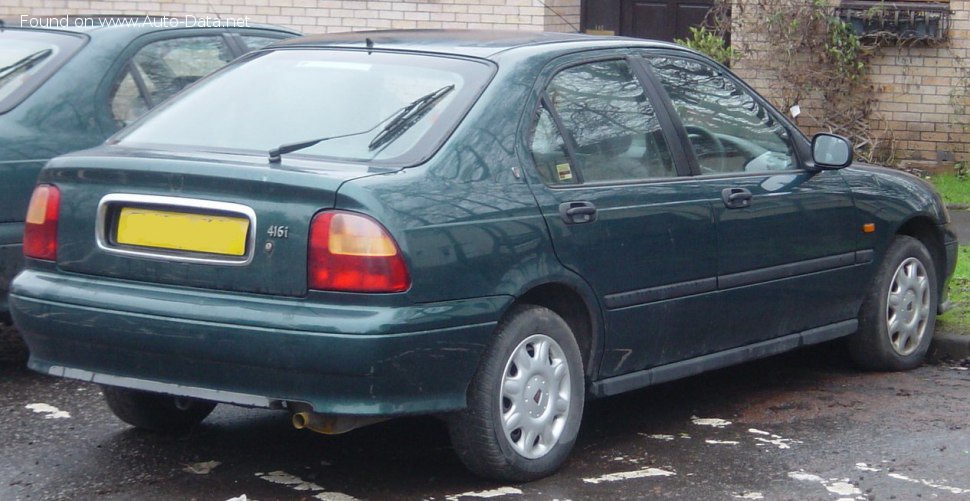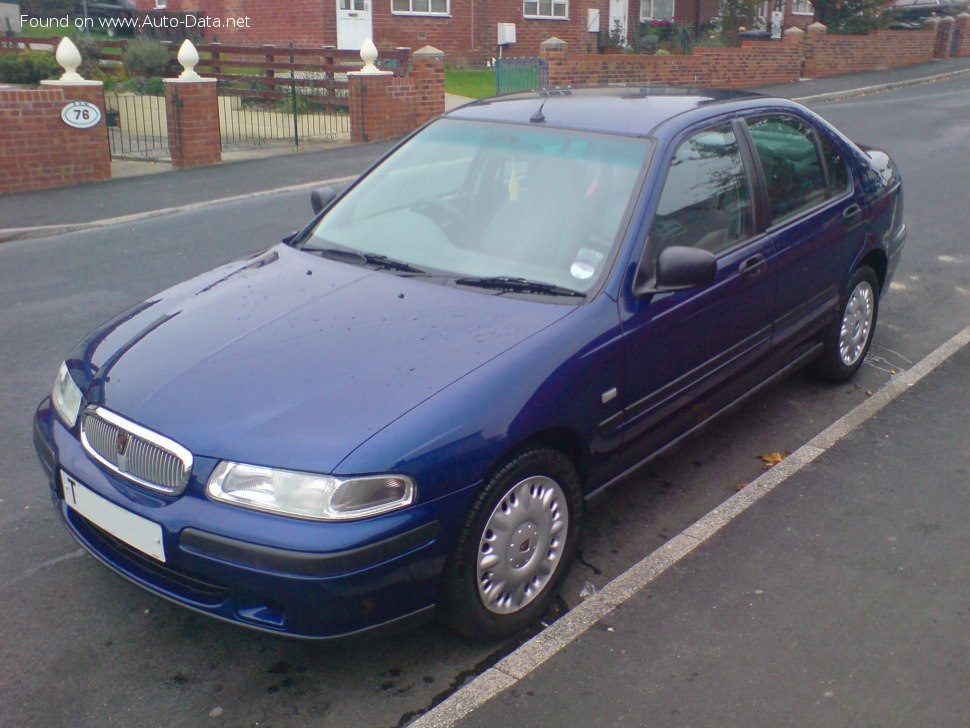
The Rover 400 (RT) 414 i (103 Hp) represents a significant chapter in the history of the British automotive manufacturer, Rover Group. Launched in 1995, this second-generation 400 series, internally designated “RT,” aimed to solidify Rover’s presence in the fiercely competitive European compact family car segment. Building upon a successful partnership with Honda, the RT generation shared its underpinnings with the Honda Civic (specifically the Domani/Concerto platform), yet it was distinctively styled and engineered by Rover to appeal to a more traditional European palate. The 414 i, with its 103 horsepower engine, was a popular choice, offering a blend of economical motoring, respectable performance, and a touch of traditional British refinement in a practical sedan package. Produced from 1995 to 2000, this model played a crucial role in Rover’s strategy during a period of intense change and ownership transitions for the company.
Powertrain & Engine Architecture
At the core of the Rover 400 (RT) 414 i was Rover’s K-Series engine, a lightweight and innovative all-aluminum inline-four unit. This specific variant utilized the K16 engine, boasting a displacement of 1.4 liters (1396 cm³ or 85.19 cu. in.). The engine featured a Double Overhead Camshaft (DOHC) valvetrain and multi-port manifold fuel injection, a relatively advanced setup for a mainstream compact car of its era. This configuration allowed for precise fuel delivery and efficient combustion, contributing to the engine’s respectable performance and fuel economy.
The K16 engine produced 103 horsepower at 6000 rpm, delivering a power-per-liter output of 73.8 Hp/l. Torque figures stood at 127 Nm (93.67 lb.-ft.) peaking at 5000 rpm. The engine was transversely mounted at the front, driving the front wheels. The standard transmission for the 414 i was a 5-speed manual, though a 4-speed automatic transmission was also offered. The automatic transmission, a Japanese-sourced unit, was chosen for its smoothness and reliability, catering to drivers prioritizing comfort over outright performance. It featured electronic control for optimized shift points and a torque converter for smooth acceleration from a standstill.
Driving Characteristics
The Rover 400 (RT) 414 i, particularly when equipped with the automatic transmission, offered a comfortable and relaxed driving experience. Acceleration from 0 to 60 mph was calculated at 11.2 seconds (0-100 km/h in 11.8 seconds), and it could reach a top speed of 114.95 mph (185 km/h). While these figures weren’t particularly sporty, they were adequate for everyday driving and highway cruising. Compared to the manual transmission version, the automatic 414 i offered slightly slower acceleration due to the inherent power loss within the torque converter and the transmission’s shift programming. However, it provided a more effortless driving experience, especially in urban traffic.
The automatic transmission’s gear ratios were optimized for fuel efficiency and smooth cruising. The first gear was relatively short for quick off-the-line acceleration, while the higher gears were taller to reduce engine speed at highway speeds, improving fuel economy. The automatic transmission’s shift points were programmed to prioritize smoothness and comfort, resulting in a less engaging driving experience than the manual version, but a more refined one for many drivers. The car’s curb weight of 2469.18 lbs. (1120 kg) contributed to a reasonably agile feel, though it wasn’t as nimble as lighter, more performance-focused rivals.
Equipment & Trim Levels
The Rover 400 (RT) 414 i was positioned as a mid-range offering within the 400 series lineup. Standard equipment included central locking, power steering, electric front windows, and an adjustable steering column. Interior upholstery typically consisted of cloth seats, though higher trim levels offered optional leather upholstery. The dashboard featured a conventional layout with analog gauges for speed, engine rpm, fuel level, and coolant temperature. A radio/cassette player was standard, with options for a CD player and upgraded sound systems.
Optional extras available for the 414 i included air conditioning, alloy wheels, a sunroof, and upgraded interior trim. The 414 i was often chosen by families and commuters who valued comfort and practicality over outright performance. It was a popular choice for company car fleets due to its reasonable running costs and comfortable ride. The trim level could be identified by subtle differences in interior materials and exterior detailing, such as the addition of chrome trim or different wheel designs.
Chassis & Braking
The Rover 400 (RT) 414 i utilized a MacPherson strut front suspension and a trailing arm rear suspension. This setup provided a good balance of ride comfort and handling. The suspension was tuned to prioritize comfort, resulting in a smooth and compliant ride over uneven road surfaces. Stabilizer bars were fitted to both the front and rear axles to reduce body roll during cornering. The steering system was a hydraulic rack and pinion setup, providing a conventional and communicative steering feel.
The braking system consisted of disc brakes on the front wheels and drum brakes on the rear wheels. ABS (Anti-lock Braking System) was standard, enhancing braking performance and stability, particularly in wet or slippery conditions. The brake discs and drums were sized appropriately for the vehicle’s weight and performance, providing adequate stopping power for everyday driving. The 175/65 R14 tires, a common size for compact cars of the period, balanced grip and ride comfort.
Market Reception & Comparison
Critics generally viewed the Rover 400 (RT) 414 i as a competent and comfortable family car. It was praised for its refined interior, smooth ride, and economical engine. However, it was also criticized for its somewhat conservative styling and lack of dynamic flair compared to some of its rivals. Fuel economy was a strong point, with the 414 i achieving a combined fuel consumption of 36.2 US mpg (6.5 l/100 km). Reliability was generally good, though the K-Series engine was later associated with head gasket issues in some applications.
Compared to other trims in the 400 series lineup, the 414 i offered a more affordable entry point. The higher-powered 416 i and 420 i models provided more performance but came at a higher price. The 414 i also compared favorably to rivals such as the Ford Escort and Vauxhall Astra in terms of comfort and refinement, though it lacked the sporty image of the Ford and the widespread dealer network of the Vauxhall. The 414 i’s automatic transmission option made it particularly appealing to drivers prioritizing ease of use and comfort.
Technical Specifications
| General Information | |
| Brand | Rover |
| Model | 400 |
| Generation | 400 (RT) |
| Type (Engine) | 414 i (103 Hp) |
| Start of Production | 1995 year |
| End of Production | 2000 year |
| Powertrain Architecture | Internal Combustion Engine |
| Body Type | Sedan |
| Seats | 5 |
| Doors | 4 |
| Performance Specifications | |
| Fuel Consumption (Economy) – Urban | 8.9 l/100 km (26.4 US mpg) |
| Fuel Consumption (Economy) – Extra Urban | 5.1 l/100 km (46.1 US mpg) |
| Fuel Consumption (Economy) – Combined | 6.5 l/100 km (36.2 US mpg) |
| Fuel Type | Petrol (Gasoline) |
| Acceleration 0 – 60 mph (Calculated) | 11.2 sec |
| Acceleration 0 – 100 km/h | 11.8 sec |
| Maximum Speed | 185 km/h (114.95 mph) |
| Weight-to-Power Ratio | 10.9 kg/Hp (92 Hp/tonne) |
| Weight-to-Torque Ratio | 8.8 kg/Nm (113.4 Nm/tonne) |
| Engine Specifications | |
| Power | 103 Hp @ 6000 rpm |
| Power per Liter | 73.8 Hp/l |
| Torque | 127 Nm @ 5000 rpm (93.67 lb.-ft. @ 5000 rpm) |
| Engine Layout | Front, Transverse |
| Engine Model/Code | K16 |
| Engine Displacement | 1396 cm³ (1.4 l / 85.19 cu. in.) |
| Number of Cylinders | 4 |
| Engine Configuration | Inline |
| Cylinder Bore | 75 mm (2.95 in.) |
| Piston Stroke | 79 mm (3.11 in.) |
| Compression Ratio | 9.5:1 |
| Number of Valves per Cylinder | 4 |
| Fuel Injection System | Multi-port manifold injection |
| Engine Aspiration | Naturally Aspirated |
| Valvetrain | DOHC |
| Engine Oil Capacity | 4.5 l (4.76 US qt) |
| Coolant Capacity | 5.8 l (6.13 US qt) |
| Space, Volume, and Weights | |
| Kerb Weight | 1120 kg (2469.18 lbs) |
| Max. Weight | 1550 kg (3417.17 lbs) |
| Max Load | 430 kg (947.99 lbs) |
| Trunk (Boot) Space – Minimum | 470 l (16.6 cu. ft.) |
| Trunk (Boot) Space – Maximum | 810 l (28.6 cu. ft.) |
| Fuel Tank Capacity | 55 l (14.53 US gal) |
| Dimensions | |
| Length | 4490 mm (176.77 in.) |
| Width | 1695 mm (66.73 in.) |
| Height | 1390 mm (54.72 in.) |
| Wheelbase | 2622 mm (103.23 in.) |
| Front Track | 1477 mm (58.15 in.) |
| Rear (Back) Track | 1465 mm (57.68 in.) |
| Drivetrain, Brakes, and Suspension Specifications | |
| Drivetrain Architecture | Front-wheel drive, Internal Combustion Engine |
| Drive Wheel | Front-wheel drive |
| Number of Gears and Type of Gearbox | 5 gears, manual transmission |
| Front Suspension | Spring Strut |
| Rear Suspension | Spring Strut |
| Front Brakes | Disc |
| Rear Brakes | Drum |
| Assisting Systems | ABS (Anti-lock braking system) |
| Steering Type | Steering rack and pinion |
| Power Steering | Hydraulic Steering |
| Tires Size | 175/65 R14 |
Legacy
The Rover 400 (RT) 414 i, while not a groundbreaking vehicle, holds a significant place in the history of Rover. It represented a solid effort to compete in the crowded European compact car segment, offering a blend of British style, comfort, and reliability. The K-Series engine, despite its later reputation for head gasket issues, was a technically advanced and efficient powerplant for its time. Today, the 414 i is a relatively affordable classic car, appealing to enthusiasts who appreciate its understated charm and comfortable driving experience.
The long-term reliability of the 414 i, particularly the automatic transmission version, is generally good, provided that the car has been well-maintained. Common issues include wear and tear on suspension components, corrosion, and potential head gasket problems. However, parts availability is reasonable, and the car’s relatively simple mechanical design makes it relatively easy to repair. In the used car market, the 414 i represents a budget-friendly option for those seeking a comfortable and reliable classic car with a touch of British heritage.