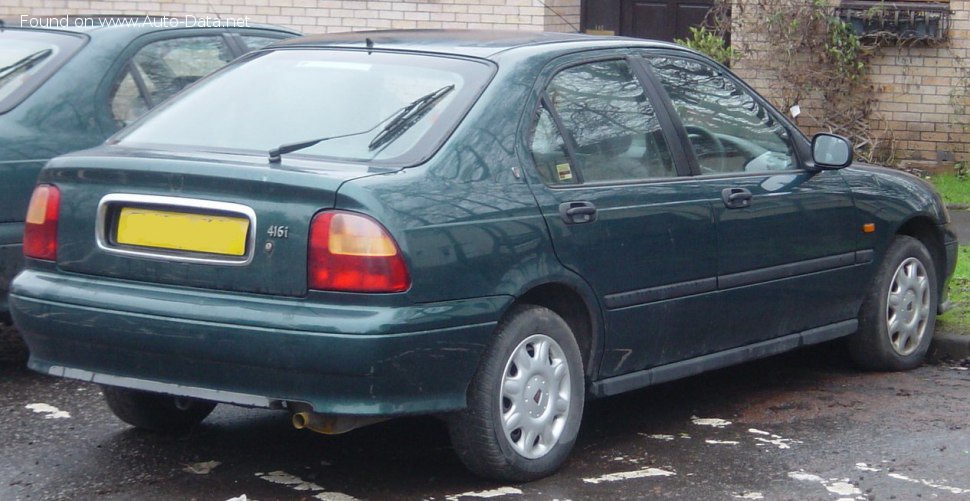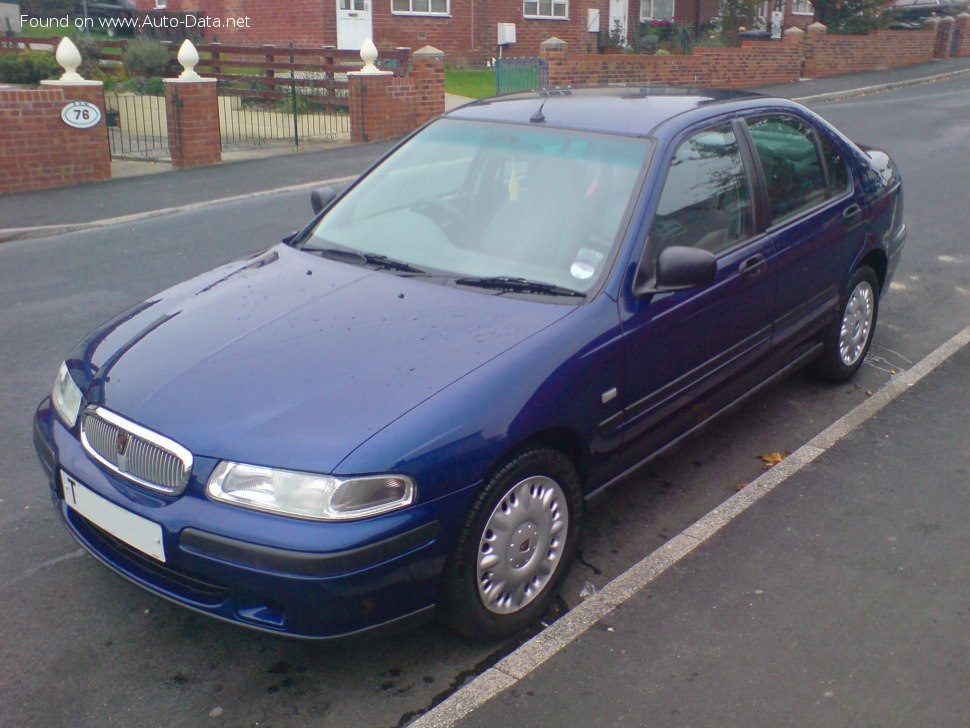
The Rover 400 (RT) 416 Si (113 Hp) represents a significant chapter in the history of the British automotive manufacturer Rover Group. Launched in 1995 and produced until 2000, the second-generation Rover 400 series, internally designated “RT,” aimed to elevate Rover’s standing in the highly competitive European compact family car segment. While Rover vehicles were not typically sold in the United States, they held a distinct position in their primary markets, particularly the United Kingdom and continental Europe, often leveraging a blend of traditional British styling cues with modern engineering. The 400 (RT) generation was a crucial model for Rover, positioned above the smaller 200 series and below the executive-class 600, directly competing with popular models like the Ford Mondeo, Vauxhall Vectra (Opel Vectra), and Volkswagen Passat.
Rover 400 (RT) 416 Si: Positioning and Overview
The 416 Si trim occupied a mid-range position within the Rover 400 (RT) lineup. It was designed to appeal to buyers seeking a balance between affordability, comfort, and reasonable performance. Above it sat the higher-specification 418 Si and 420 Si models, offering more powerful engines and additional features. Below it were the base-level 414 models, geared towards fleet sales and budget-conscious buyers. The 416 Si, with its 1.6-liter engine and automatic transmission, was a popular choice for families and individuals who prioritized ease of driving and a comfortable ride over outright sporting performance.
Powertrain & Engine Architecture
At the heart of the Rover 400 (RT) 416 Si (113 Hp) lies the Rover K-series engine, a powerplant that, despite its challenges in other applications, was generally well-regarded for its lightweight design and free-revving nature in this configuration. Specifically, the 416 Si was equipped with a 1.6-liter (1590 cm3 or 97.03 cubic inches) naturally aspirated inline four-cylinder engine, designated K16. This engine featured a Double Overhead Camshaft (DOHC) valvetrain with four valves per cylinder, a setup that was increasingly common in the mid-90s for optimizing both power output and efficiency.
The K16 engine utilized a multi-port fuel injection system, delivering fuel directly into the intake ports. This system, combined with the DOHC valvetrain, allowed for precise control over the air-fuel mixture and optimized combustion. The engine’s block was constructed from cast iron, while the cylinder head was made from aluminum alloy, contributing to its relatively lightweight design. The engine produced a respectable 113 horsepower at 6200 rpm, translating to 71.1 horsepower per liter, a solid figure for a non-turbocharged engine of its era. Torque output stood at 103.26 lb.-ft. (140 Nm) delivered at 5100 rpm.
Power was sent to the front wheels via a 4-speed automatic transmission. This transmission, while providing smooth shifts and ease of use, was not known for its particularly quick response or sporty feel. It was a conventional hydraulic automatic, lacking the electronic controls found in more modern transmissions. The gear ratios were optimized for fuel efficiency and comfortable cruising, rather than aggressive acceleration. First gear was relatively short, providing good off-the-line acceleration, while the higher gears were spaced to reduce engine speed at highway speeds.
Driving Characteristics
The Rover 400 (RT) 416 Si Automatic offered a comfortable and refined driving experience, prioritizing ease of use over sporty handling. The 113 horsepower engine provided adequate power for everyday driving, but it wasn’t particularly quick. Acceleration from 0 to 60 mph took approximately 12.1 seconds, and the car felt somewhat sluggish when overtaking at higher speeds. Compared to the manual transmission versions of the 416, the automatic suffered a noticeable performance penalty due to the transmission’s inherent inefficiencies and the lack of driver control over gear selection.
The automatic transmission’s shift points were programmed for smooth transitions, but they could sometimes feel hesitant or ill-timed, particularly when attempting to accelerate quickly. The steering was light and precise, making the car easy to maneuver in urban environments. The suspension provided a comfortable ride, absorbing bumps and imperfections in the road surface effectively. However, the car wasn’t particularly engaging to drive on winding roads, as the suspension tended to roll in corners and the steering lacked feedback. Overall, the 416 Si Automatic was best suited for drivers who valued comfort and convenience over sporty performance.
Equipment & Trim Levels
The Rover 400 (RT) 416 Si came reasonably well-equipped as standard, reflecting its mid-range positioning. Standard features typically included central locking, power windows, power steering, an adjustable steering column, and a basic stereo system. Interior upholstery was usually cloth, available in a range of colors and patterns. The dashboard featured a simple, functional design with easy-to-read gauges. Optional extras available for the 416 Si included air conditioning, alloy wheels, a sunroof, and upgraded stereo systems. Higher-specification trims, such as the 418 Si and 420 Si, offered additional features such as leather upholstery, wood trim, and more advanced audio systems.
The 416 Si also offered a range of optional packages, allowing buyers to customize their cars to their specific needs and preferences. These packages could include features such as heated front seats, electric mirrors, and a trip computer. The overall interior ambiance was one of understated elegance, with a focus on comfort and practicality.
Chassis & Braking
The Rover 400 (RT) utilized a MacPherson strut front suspension and a trailing arm rear suspension. This setup provided a good balance between ride comfort and handling, although it wasn’t particularly sporty. The front suspension featured a stabilizer bar to reduce body roll, while the rear suspension lacked a stabilizer bar. Braking was handled by disc brakes at the front and drum brakes at the rear. This configuration was typical for vehicles in this class and price range during the mid-1990s. The Anti-lock Braking System (ABS) was available as an option, providing improved braking performance in slippery conditions.
The chassis was relatively lightweight, contributing to the car’s fuel efficiency and handling. The steering was rack and pinion, providing precise and responsive steering feel. The tires were typically 185/60 R14, offering a good balance between grip and ride comfort.
Market Reception & Comparison
The Rover 400 (RT) 416 Si Automatic received generally positive reviews from automotive critics. It was praised for its comfortable ride, refined interior, and reasonable fuel economy. However, it was also criticized for its lack of performance and its somewhat dated automatic transmission. Compared to its rivals, such as the Ford Mondeo and Vauxhall Vectra, the 400 offered a more upmarket feel and a more comfortable ride, but it lacked the performance and handling of those cars. The 416 Si Automatic was generally considered to be a good value for money, offering a lot of features for its price. Fuel economy was competitive, with an urban rating of approximately 23.3 US mpg (10.1 l/100 km) and an extra-urban rating of around 27.7 US mpg (8.5 l/100 km). Reliability was generally good, although the Rover K-series engine was known to be susceptible to head gasket failures if not properly maintained.
Technical Specifications: Rover 400 (RT) 416 Si (113 Hp)
| Category | Specification |
| General Information | |
| Brand | Rover |
| Model | 400 |
| Generation | 400 (RT) |
| Type (Engine) | 416 Si (113 Hp) |
| Production Start | 1995 |
| Production End | 2000 |
| Powertrain Architecture | Internal Combustion Engine |
| Body Type | Sedan |
| Seats | 5 |
| Doors | 4 |
| Performance Specs | |
| Fuel Consumption (Urban) | 10.1 l/100 km (23.3 US mpg) |
| Fuel Consumption (Extra Urban) | 8.5 l/100 km (27.7 US mpg) |
| Fuel Type | Petrol (Gasoline) |
| Acceleration 0-60 mph | 12.1 seconds |
| Acceleration 0-100 km/h | 12.7 seconds |
| Maximum Speed | 118.06 mph (190 km/h) |
| Weight-to-Power Ratio | 10.2 kg/Hp (97.8 Hp/tonne) |
| Weight-to-Torque Ratio | 8.3 kg/Nm (121.2 Nm/tonne) |
| Engine Specs | |
| Power | 113 Hp @ 6200 rpm |
| Power per Liter | 71.1 Hp/l |
| Torque | 103.26 lb.-ft. (140 Nm) @ 5100 rpm |
| Engine Layout | Front, Transverse |
| Engine Model/Code | K16 |
| Engine Displacement | 1.6 liters (1590 cm3 / 97.03 cu. in.) |
| Number of Cylinders | 4 |
| Engine Configuration | Inline |
| Cylinder Bore | 2.95 in. (75 mm) |
| Piston Stroke | 3.54 in. (90 mm) |
| Compression Ratio | 9.1:1 |
| Valves per Cylinder | 4 |
| Fuel Injection System | Multi-port manifold injection |
| Engine Aspiration | Naturally aspirated |
| Valvetrain | DOHC |
| Engine Oil Capacity | 3.7 US qt (3.5 l) |
| Coolant Capacity | 5.81 US qt (5.5 l) |
| Space, Volume, and Weights | |
| Kerb Weight | 2546.34 lbs. (1155 kg) |
| Max. Weight | 3615.58 lbs. (1640 kg) |
| Max Load | 1069.24 lbs. (485 kg) |
| Trunk (Boot) Space – Minimum | 16.6 cu. ft. (470 l) |
| Trunk (Boot) Space – Maximum | 28.6 cu. ft. (810 l) |
| Fuel Tank Capacity | 14.53 US gal (55 l) |
| Dimensions | |
| Length | 176.81 in. (4491 mm) |
| Width | 66.73 in. (1695 mm) |
| Height | 54.53 in. (1385 mm) |
| Wheelbase | 103.23 in. (2622 mm) |
| Front Track | 58.07 in. (1475 mm) |
| Rear Track | 57.68 in. (1465 mm) |
| Drivetrain, Brakes, and Suspension Specs | |
| Drivetrain Architecture | Internal combustion engine drives the front wheels. |
| Drive Wheel | Front-wheel drive |
| Number of Gears and Type | 4 gears, automatic transmission |
| Front Suspension | Spring Strut |
| Rear Suspension | Spring Strut |
| Front Brakes | Disc |
| Rear Brakes | Drum |
| Assisting Systems | ABS (Anti-lock braking system) |
| Steering Type | Steering rack and pinion |
| Power Steering | Hydraulic Steering |
| Tire Size | 185/60 R14 |
Legacy
The Rover 400 (RT) 416 Si Automatic, while not a groundbreaking vehicle, holds a significant place in automotive history as a representative of British engineering and design during the mid-1990s. Its blend of comfort, practicality, and understated elegance appealed to a specific segment of the European market. Today, the 416 Si Automatic is a relatively rare sight on the roads, but it remains a popular choice among classic car enthusiasts and Rover collectors. The Rover K-series engine, while prone to certain issues, is generally reliable when properly maintained. The availability of spare parts is becoming increasingly limited, but a dedicated community of Rover enthusiasts continues to support the preservation of these vehicles. In the used car market, well-maintained examples of the 416 Si Automatic can fetch reasonable prices, reflecting their nostalgic appeal and their status as a reminder of a bygone era of British automotive manufacturing.