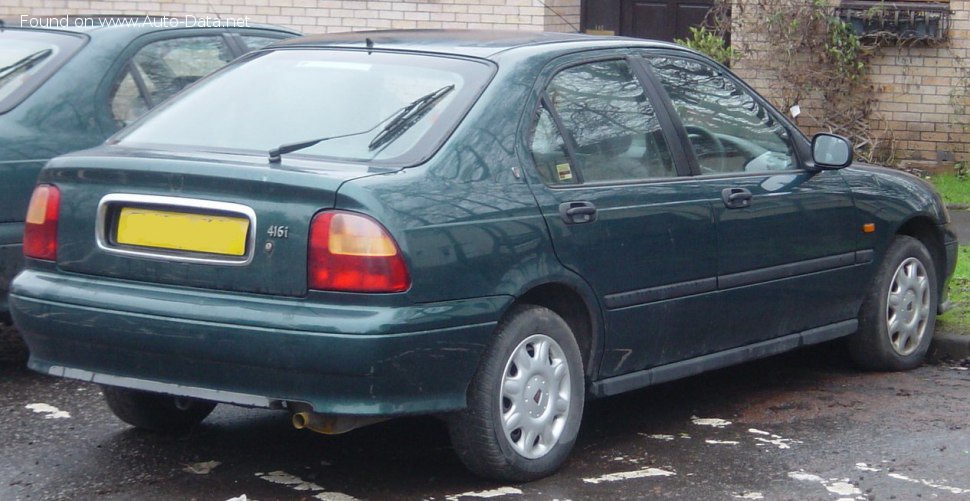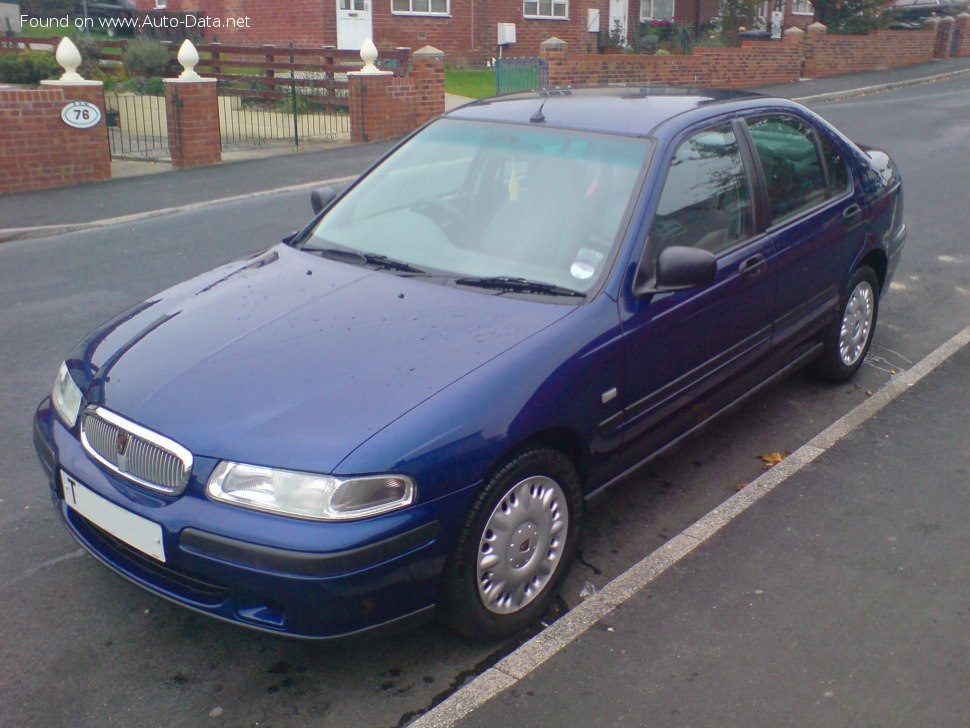
The Rover 400 (RT) 425 i (175 Hp) represents a significant, though ultimately challenging, chapter in the history of the British Rover Group. Launched in 1995, the RT generation was the second iteration to carry the Rover 400 badge, but marked a departure from its predecessor by being an entirely in-house design, rather than a rebadged Honda Civic/Concerto. Positioned in the highly competitive European C-segment – known as the compact or small family car segment – the Rover 400 aimed to offer a more premium, refined alternative to mainstream rivals. This analysis focuses on the Rover 400 (RT) 425 i (175 Hp), a particular variant produced between 1998 and 2000 that stood out in the lineup for its powerful V6 engine and upscale aspirations. This model was never officially sold in the United States, making its primary impact felt across the United Kingdom and continental Europe, where it competed for buyers seeking a blend of traditional British comfort and modern performance.
Rover 400 (RT) 425 i (175 Hp): Powertrain & Engine Architecture
At the heart of the Rover 400 (RT) 425 i (175 Hp) was Rover’s much-touted KV6 engine. This 2.5-liter (2497 cc) V6 engine, configured with six cylinders and a DOHC (Double Overhead Camshaft) valvetrain with four valves per cylinder, was a testament to Rover’s engineering ambition. Unlike many of its four-cylinder competitors in the compact segment, the KV6 provided a level of refinement and smoothness typically found in larger, more expensive vehicles. The KV6 was a relatively compact V6 design, allowing it to be transversely mounted in a front-wheel-drive configuration.
The engine utilized a multi-port fuel injection system, delivering a respectable 175 horsepower (hp) at 6500 rpm. This power output, combined with 177 lb-ft of torque peaking at 4000 rpm, endowed the sedan with brisk performance for its class. The engine block was constructed from aluminum alloy, contributing to weight savings. The KV6 featured a timing belt, requiring periodic replacement as part of scheduled maintenance.
The 425 i was exclusively paired with a 4-speed automatic transmission. This transmission, while providing smooth shifts, was a somewhat dated design by the late 1990s, lacking the efficiency and responsiveness of newer automatic gearboxes with more gears. The transmission was electronically controlled, offering adaptive shift patterns based on driving conditions. While a manual transmission was available on other Rover 400 models, it was not offered with the KV6 engine.
Engine Codes and Variations
The KV6 engine came in several variations, but the version used in the 425 i is generally identified by specific engine codes. These codes are crucial for identifying correct parts during maintenance and repair. While specific codes varied slightly depending on the year of manufacture, they generally fall within a narrow range. The KV6 engine was also used in other Rover models, including the Rover 600 and MG ZT, often with slight power variations.
Driving Characteristics
The Rover 400 (RT) 425 i (175 Hp) offered a distinctly different driving experience compared to its four-cylinder siblings. The V6 engine provided a smooth and linear power delivery, making it well-suited for relaxed cruising. Acceleration from 0 to 60 mph was achieved in approximately 8.1 seconds, and the top speed reached around 139.8 mph. This performance was competitive for the time, placing it above many of its rivals in the C-segment.
The 4-speed automatic transmission, while smooth, did detract somewhat from the driving experience. Gear changes were not as quick or precise as those found in more modern automatic transmissions. The gear ratios were optimized for comfortable cruising rather than sporty performance. Compared to the manual transmission versions of the Rover 400, the 425 i felt less engaging to drive, but offered greater convenience, particularly in urban traffic.
The Rover 400’s suspension was tuned for comfort, providing a relatively soft ride. This, combined with the smooth V6 engine, made it a pleasant car for long journeys. However, the soft suspension also resulted in noticeable body roll during cornering.
Equipment & Trim Levels
The Rover 400 (RT) 425 i (175 Hp) was positioned as a premium trim level within the Rover 400 range. Standard equipment typically included central locking, electric windows, power steering, an anti-theft system, and a basic audio system. The interior featured cloth upholstery, although leather upholstery was available as an optional extra. The dashboard was typically finished in wood veneer, adding to the car’s upscale ambiance.
Optional extras included air conditioning, a sunroof, upgraded audio systems, and alloy wheels. Higher-specification models often featured additional chrome trim and more luxurious interior appointments. The 425 i was often chosen by buyers who prioritized comfort and refinement over outright performance, and were willing to pay a premium for these features.
Chassis & Braking
The Rover 400 (RT) utilized a MacPherson strut front suspension and a semi-independent torsion beam rear suspension. This setup provided a good balance between ride comfort and handling. The front suspension featured stabilizer bars to reduce body roll. The braking system consisted of ventilated disc brakes at the front and drum brakes at the rear. Anti-lock Braking System (ABS) was standard equipment on the 425 i.
The steering was power-assisted, providing light and easy steering feel. The tires were typically 195/60 R15, offering a good compromise between grip and ride comfort. The chassis was relatively lightweight, contributing to the car’s overall agility.
Market Reception & Comparison
The Rover 400 (RT) 425 i (175 Hp) received mixed reviews from automotive critics. While the V6 engine and smooth ride were praised, the dated automatic transmission and somewhat bland styling were criticized. Fuel economy was also a concern, particularly compared to smaller-engined rivals. Compared to other cars in the C-segment, such as the Ford Focus, Volkswagen Golf, and Opel/Vauxhall Astra, the Rover 400 offered a more luxurious and refined experience, but at a higher price point.
In terms of reliability, the KV6 engine was known to be somewhat prone to head gasket failures, requiring careful maintenance and regular coolant checks. The automatic transmission also had a reputation for being less durable than some of its competitors. However, with proper care, the Rover 400 (RT) 425 i (175 Hp) could provide years of reliable service.
Technical Specifications
| Engine Type | 2.5-liter V6 |
| Engine Code | KV6 |
| Displacement | 2497 cc (152.38 cu in) |
| Horsepower | 175 hp @ 6500 rpm |
| Torque | 177 lb-ft @ 4000 rpm |
| Transmission | 4-speed Automatic |
| Drive Type | Front-Wheel Drive |
| 0-60 mph | 8.1 seconds (approx.) |
| Top Speed | 139.8 mph (225 km/h) |
| Fuel Economy (Urban) | 16.8 US mpg (14 l/100 km) |
| Fuel Economy (Extra-Urban) | 29.4 US mpg (8 l/100 km) |
| Curb Weight | 2976.24 lbs (1350 kg) |
| Power-to-Weight Ratio | 129.6 HP/tonne |
Legacy
The Rover 400 (RT) 425 i (175 Hp) remains a relatively rare and sought-after classic car. While not known for exceptional reliability, the KV6 engine provides a unique and enjoyable driving experience. Today, the Rover 400 (RT) 425 i (175 Hp) is primarily found in the hands of enthusiasts and collectors who appreciate its British heritage and distinctive character. Parts availability can be challenging, but a dedicated community of Rover owners and specialists exists to provide support and assistance. The car represents a final flourish of British automotive engineering before the Rover Group’s eventual demise, and serves as a reminder of a bygone era of automotive design and craftsmanship.