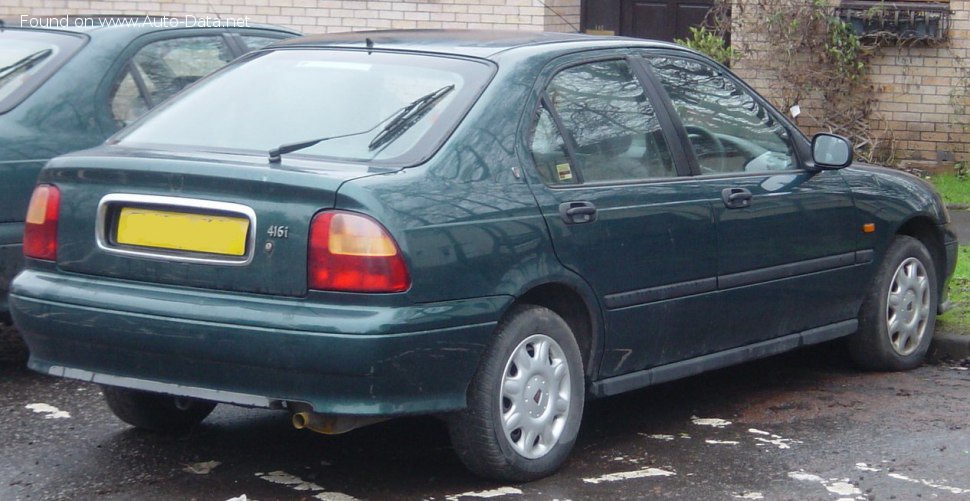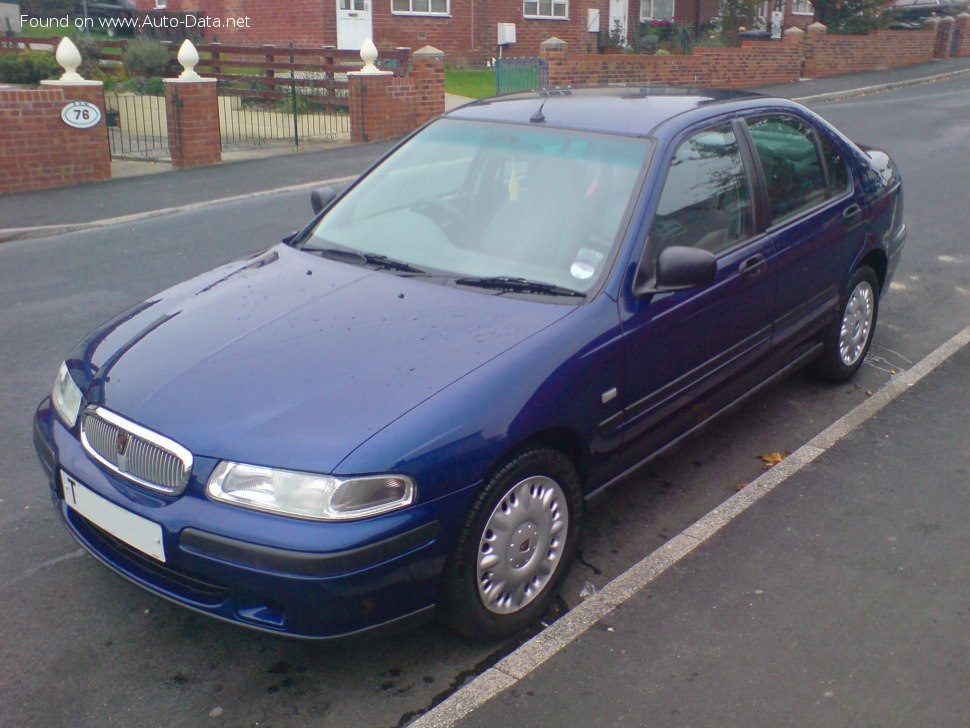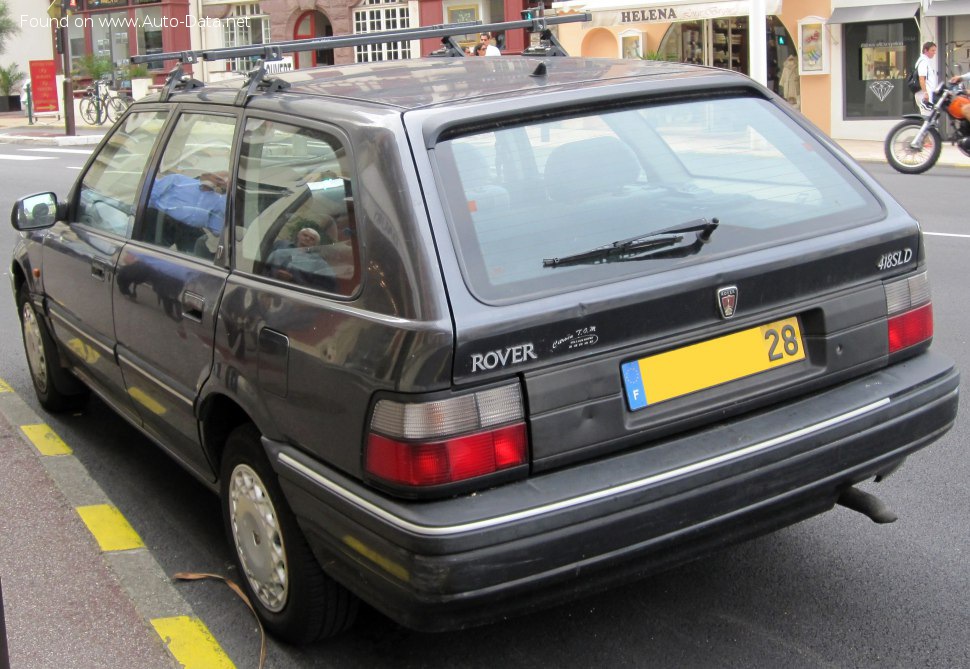
The Rover 400 Tourer (XW) 416 Si (112 Hp) represents a significant chapter in the history of the British automotive manufacturer Rover, particularly in the compact family car segment during the mid-to-late 1990s. Produced from 1994 to 1998, this particular iteration of the Rover 400 series was a five-door station wagon (known as an “estate” in its primary European markets), engineered to offer practicality, comfort, and a touch of traditional British refinement to families across the continent. While not officially sold in the United States, the Rover 400 Tourer played a crucial role in Rover’s strategy to compete against established European rivals, leveraging its collaboration with Honda to deliver a competent and well-appointed vehicle.
Rover 400 Tourer (XW) 416 Si: Positioning and Overview
The XW generation of the Rover 400, on which the Tourer was based, was a direct evolution of the R8 Rover 200/400 series, sharing its underpinnings with the Honda Concerto. This partnership allowed Rover to benefit from Honda’s engineering prowess, particularly in areas of reliability and efficiency, while Rover contributed its distinct styling and interior ambiance. The 416 Si variant, with its 1.6-liter engine producing 112 horsepower, was positioned as a mid-range option within the lineup. It sat above the base 1.4-liter models and below the more powerful 1.8-liter and diesel variants. The 416 Si appealed to buyers seeking a versatile family vehicle that could handle both urban commutes and longer journeys with ease. Its station wagon body style was specifically designed to maximize cargo capacity and passenger comfort, making it a practical choice for the European market where such vehicles were highly popular.
Powertrain & Engine Architecture
At the heart of the Rover 400 Tourer (XW) 416 Si (112 Hp) was Rover’s K16 engine, a naturally aspirated 1.6-liter (1590 cm3 or 97.03 cubic inches) inline four-cylinder unit. This powerplant, featuring a multi-port fuel injection system and an Overhead Camshaft (OHC) valvetrain with four valves per cylinder, was tuned to produce 112 horsepower (83.6 kW) at 6300 revolutions per minute. This output translated to a power-per-liter figure of 70.4 horsepower per liter, which was competitive for its class at the time. Torque output stood at 138 Newton-meters (approximately 101.78 lb.-ft.) delivered at 5200 rpm, providing adequate pulling power for a family station wagon. The engine was identified by the code K16.
Power was transmitted to the front wheels via a four-speed automatic transmission. This transmission, while offering convenience, was not known for its sportiness or efficiency compared to the available five-speed manual gearbox. The automatic transmission featured a traditional torque converter and hydraulic control system. Gear ratios were optimized for fuel economy and smooth cruising rather than rapid acceleration. The automatic transmission was a key differentiator for the 416 Si, targeting buyers who prioritized ease of driving over outright performance.
Driving Characteristics
The Rover 400 Tourer 416 Si with the automatic transmission offered a comfortable and relaxed driving experience. Acceleration was adequate for everyday driving, with a 0 to 60 mph time of approximately 11.5-12.5 seconds, noticeably slower than the manual version. The automatic transmission’s shift points were programmed for smooth transitions, but could sometimes feel hesitant during overtaking maneuvers. The engine delivered its peak torque at 5200 rpm, meaning drivers often needed to apply a significant amount of throttle to access its full potential. Compared to the manual transmission, the automatic version felt less engaging and responsive.
The suspension, tuned for comfort, absorbed bumps and imperfections in the road well, providing a stable and predictable ride. Steering was light and easy, making it suitable for urban driving. However, it lacked the precision and feedback found in some of its German competitors. The overall driving experience was geared towards practicality and comfort rather than sporty handling.
Equipment & Trim Levels
The 416 Si trim level offered a reasonable level of equipment for a mid-range family car in the 1990s. Standard features typically included power steering, central locking, electric front windows, and an AM/FM radio. The interior was typically upholstered in cloth, with a focus on durability and comfort. Woodgrain trim accents were often used to enhance the cabin’s perceived quality. The dashboard layout was functional and straightforward, with easy-to-read gauges and controls.
Optional extras available for the 416 Si included air conditioning, alloy wheels, a sunroof, and upgraded audio systems. Higher-spec versions might also feature leather upholstery and more advanced safety features. The Rover 400 Tourer aimed to provide a comfortable and well-equipped interior, appealing to families who valued practicality and convenience.
Chassis & Braking
The Rover 400 Tourer (XW) utilized a front-wheel-drive chassis with independent front suspension using MacPherson struts and a semi-independent rear suspension with trailing arms and coil springs. This setup prioritized ride comfort and space efficiency. The chassis was relatively lightweight, contributing to reasonable fuel economy and handling. The steering system employed a hydraulic rack and pinion setup for precise control.
The braking system consisted of ventilated disc brakes at the front and drum brakes at the rear. Anti-lock Braking System (ABS) was standard on the 416 Si, enhancing braking performance and stability, particularly on slippery surfaces. The braking system provided adequate stopping power for everyday driving, but was not particularly powerful compared to some of its rivals.
Market Reception & Comparison
Critics generally viewed the Rover 400 Tourer 416 Si as a competent and practical family car. It was praised for its comfortable ride, spacious interior, and reasonable fuel economy. However, it was often criticized for its somewhat bland styling and lack of dynamic flair compared to some of its competitors. The automatic transmission, while convenient, was seen as detracting from the driving experience.
Compared to other trims in the Rover 400 lineup, the 416 Si automatic offered a balance between performance and economy. The 1.4-liter models were more affordable but lacked sufficient power for long journeys, while the 1.8-liter and diesel versions offered more performance but at a higher price point. The 416 Si automatic appealed to buyers who prioritized comfort and convenience over outright performance. Fuel economy was comparable to other 1.6-liter family cars of the era, typically achieving around 25-35 mpg in mixed driving conditions. Reliability was generally good, benefiting from the Honda-derived platform, but some owners reported issues with electrical components.
Technical Specifications: Rover 400 Tourer (XW) 416 Si (112 Hp)
| Category | Specification |
| General Information | |
| Brand | Rover |
| Model | 400 |
| Generation | 400 Tourer (XW) |
| Type (Engine) | 416 Si (112 Hp) |
| Start of Production | 1994 |
| End of Production | 1998 |
| Powertrain Architecture | Internal Combustion engine |
| Body Type | Station wagon (estate) |
| Seats | 5 |
| Doors | 5 |
| Performance Specs | |
| Fuel Consumption (Economy) – Urban | 10 l/100 km (23.5 US mpg) |
| Fuel Consumption (Economy) – Extra Urban | 5.8 l/100 km (40.6 US mpg) |
| Fuel Type | Petrol (Gasoline) |
| Acceleration 0 – 60 mph | 11.5-12.5 sec (estimated) |
| Acceleration 0 – 62 mph (0-100 km/h) | Approximately 10 sec |
| Maximum Speed | 190 km/h (118.06 mph) |
| Engine Specs | |
| Power | 112 Hp @ 6300 rpm |
| Torque | 138 Nm (101.78 lb.-ft. @ 5200 rpm) |
| Engine Layout | Front, Transverse |
| Engine Model/Code | K16 |
| Engine Displacement | 1590 cm3 (1.6 Liters / 97.03 cu. in.) |
| Number of Cylinders | 4 |
| Engine Configuration | Inline |
| Fuel Injection System | Multi-port manifold injection |
| Valvetrain | OHC |
| Drivetrain, Brakes and Suspension Specs | |
| Drivetrain Architecture | Internal combustion engine drives front wheels. |
| Drive Wheel | Front wheel drive |
| Number of Gears and Type of Gearbox | 4 gears, automatic transmission |
Legacy
The Rover 400 Tourer (XW) 416 Si, while not a groundbreaking vehicle, remains a fondly remembered example of British automotive engineering from the 1990s. The K16 engine, while not without its quirks, proved to be relatively reliable when properly maintained. Today, surviving examples are becoming increasingly sought after by enthusiasts and collectors. The automatic transmission, while not the most desirable configuration, does offer a comfortable and convenient driving experience for those seeking a classic family estate. In the used car market, these vehicles are typically affordable and represent a unique piece of automotive history. However, potential buyers should be aware of the challenges associated with sourcing parts and finding qualified mechanics familiar with Rover vehicles.