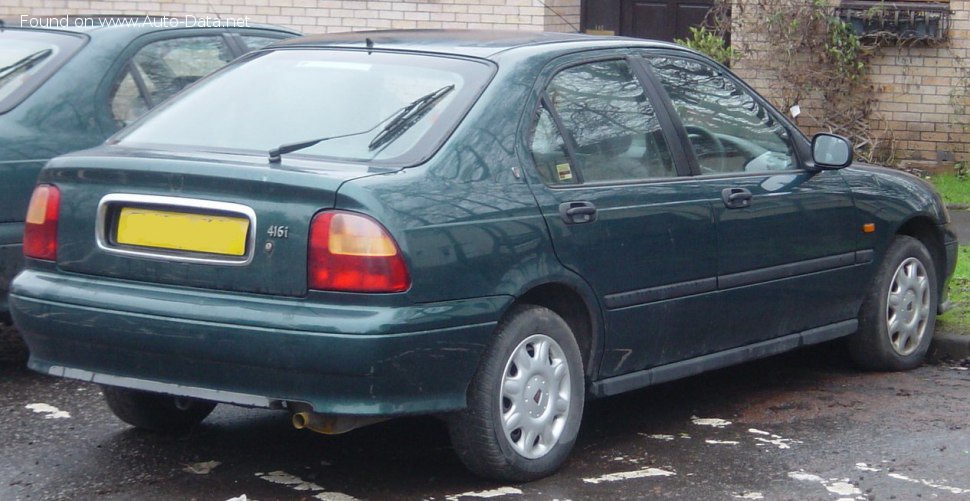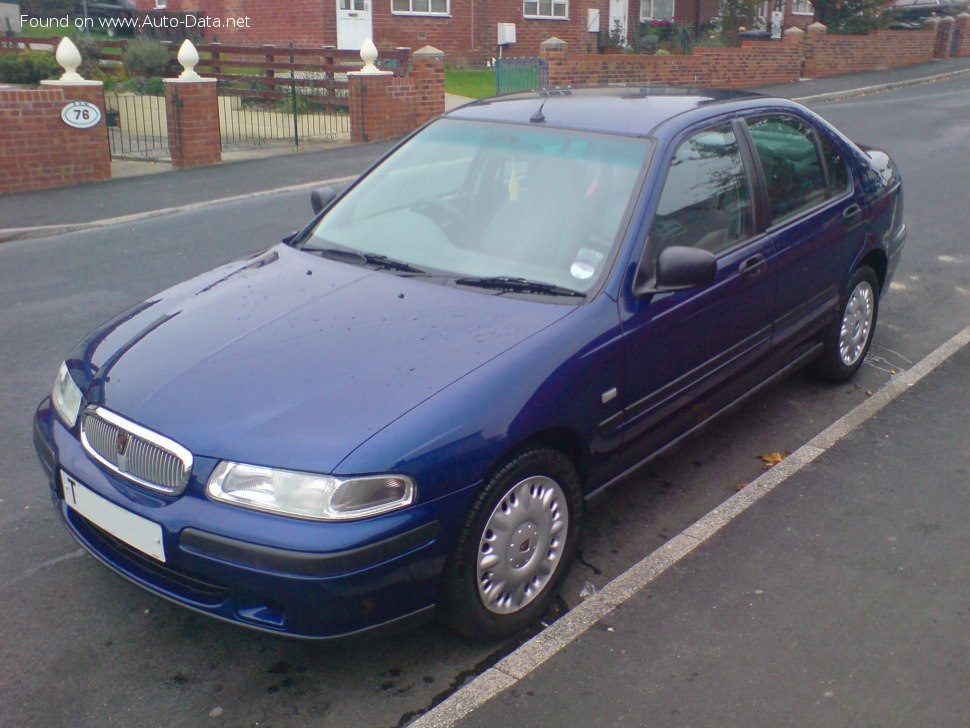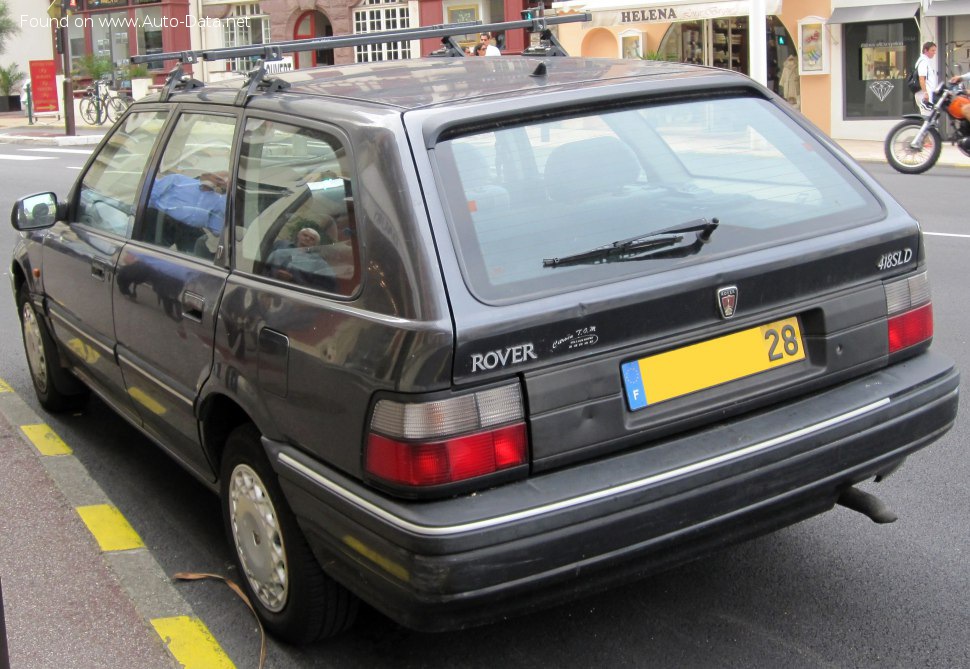
The Rover 400 Tourer (XW) 420 i (136 Hp) represents a significant model within the British automaker’s lineup during the mid-1990s. Introduced in 1994 as part of the XW generation, this particular variant carved out a niche in the highly competitive European compact family car segment, specifically targeting buyers seeking the practicality and versatility of a station wagon. While the Rover brand, and indeed this specific model, was never officially sold in the United States, it played a vital role in its primary markets, offering a blend of traditional British styling, respectable performance, and family-friendly utility. The 400 Tourer (XW) was a testament to Rover’s engineering capabilities during a period of evolving corporate partnerships and a rapidly modernizing automotive landscape.
Powertrain & Engine Architecture
The Rover 400 Tourer (XW) 420 i (136 Hp) was powered by Rover’s M16 engine, a 2.0-liter (1994 cc) inline-four cylinder gasoline engine. This naturally aspirated engine featured a Double Overhead Camshaft (DOHC) valvetrain with four valves per cylinder, a relatively sophisticated setup for a mainstream family car of the era. Fuel delivery was managed by a multi-port fuel injection system, contributing to efficient and responsive power delivery. The engine code for this variant is generally identified as either M16 or, in some markets, variations thereof.
The M16 engine produced 136 horsepower (hp) at 6000 rpm and 136.45 lb-ft (185 Nm) of torque at 2500 rpm. This torque figure was particularly useful for a station wagon, providing strong pulling power at lower engine speeds, beneficial when carrying passengers or cargo. The engine was mounted transversely at the front of the vehicle, driving the front wheels. The 420 i was typically equipped with a 5-speed manual transmission, although a 4-speed automatic transmission was also available, impacting performance and fuel economy.
Automatic Transmission Details
The optional 4-speed automatic transmission used in the 420 i was a Jatco unit, commonly found in various European vehicles of the time. While offering convenience, the automatic transmission resulted in slightly reduced acceleration compared to the manual version. Gear ratios were optimized for a balance of fuel efficiency and drivability, but the automatic did introduce some power loss through the torque converter. The automatic transmission was not known for being particularly sporty, prioritizing smooth shifts and ease of use over aggressive performance.
Driving Characteristics
The Rover 400 Tourer (XW) 420 i (136 Hp) with the manual transmission offered a reasonably engaging driving experience. Acceleration from 0 to 60 mph was estimated at around 8.3 seconds, and the top speed was approximately 124 mph (200 km/h). The engine felt responsive, and the chassis provided a comfortable ride. The automatic transmission version, however, felt noticeably slower, with 0-60 mph times extending to around 10-11 seconds. The automatic’s gear changes were smooth but lacked the immediacy of the manual. The steering was light and precise, making it easy to maneuver in urban environments, while the suspension absorbed bumps effectively, providing a comfortable ride on the highway.
Compared to other Rover 400 variants, the 420 i occupied a mid-range position. The base models with smaller engines (1.4 and 1.6 liters) offered better fuel economy but significantly less performance. The higher-specification 420 VVC models, with their variable valve control, delivered more power and a sportier driving experience, but at a higher price point. The 420 i struck a balance between performance, economy, and cost, making it a popular choice for families.
Equipment & Trim Levels
The Rover 400 Tourer (XW) 420 i (136 Hp) typically came equipped with a reasonable level of standard features. These included central locking, power windows, power steering, an adjustable steering column, and a basic stereo system. Interior upholstery was typically cloth, although leather options were available as upgrades. The dashboard layout was functional and straightforward, with clearly labeled controls. Trim levels varied depending on the market, but generally included options for upgraded audio systems, alloy wheels, sunroofs, and air conditioning. The 420 i often featured wood trim accents, contributing to the Rover’s perceived sense of quality and refinement.
Chassis & Braking
The Rover 400 Tourer (XW) utilized a MacPherson strut front suspension and a coil-sprung rear suspension. This setup provided a comfortable ride and predictable handling. The chassis was relatively lightweight, contributing to the car’s agility. Braking was handled by ventilated disc brakes at the front and drum brakes at the rear. Anti-lock Braking System (ABS) was standard equipment, enhancing safety during emergency braking. The 420 i typically rode on 185/55 R15 tires, providing a good balance of grip and ride comfort. Stabilizer bars were fitted to both the front and rear axles to reduce body roll during cornering.
Market Reception & Comparison
The Rover 400 Tourer (XW) 420 i (136 Hp) received generally positive reviews from automotive critics. It was praised for its comfortable ride, spacious interior, and respectable performance. However, some critics noted that the interior quality, while good, wasn’t quite on par with some of its German rivals. Fuel economy was considered reasonable for a car of its size and performance, averaging around 29 mpg (combined). Compared to the lower-powered Rover 400 variants, the 420 i offered a significant performance boost, making it a more enjoyable car to drive. Compared to the higher-specification 420 VVC, the 420 i was more affordable but lacked the VVC’s extra power and sporty character. Reliability was generally considered average for a British car of the era, with some reports of minor electrical issues.
Technical Specifications
| Category | Specification |
| Brand | Rover |
| Model | 400 |
| Generation | 400 Tourer (XW) |
| Type (Engine) | 420 i (136 Hp) |
| Start of Production | 1994 |
| End of Production | 1998 |
| Powertrain Architecture | Internal Combustion Engine |
| Body Type | Station Wagon (Estate) |
| Seats | 5 |
| Doors | 5 |
| Fuel Consumption (Combined) | 8 l/100 km |
| Fuel Type | Petrol (Gasoline) |
| Acceleration 0 – 60 mph | 8.3 sec (Manual) / 10-11 sec (Automatic) |
| Maximum Speed | 124.27 mph (200 km/h) |
| Power | 136 Hp @ 6000 rpm |
| Torque | 185 Nm @ 2500 rpm / 136.45 lb.-ft. @ 2500 rpm |
| Engine Displacement | 1994 cm3 / 121.68 cu. in. |
| Number of Cylinders | 4 |
| Engine Configuration | Inline |
| Fuel Injection System | Multi-port manifold injection |
| Valvetrain | DOHC |
| Kerb Weight | 1210 kg / 2667.59 lbs. |
| Trunk (Boot) Space – minimum | 430 l / 15.19 cu. ft. |
| Trunk (Boot) Space – maximum | 1410 l / 49.79 cu. ft. |
| Transmission | 5-speed Manual or 4-speed Automatic |
| Front Brakes | Ventilated Discs |
| Rear Brakes | Drum |
Legacy
The Rover 400 Tourer (XW) 420 i (136 Hp) remains a fondly remembered car among enthusiasts. The M16 engine, while not without its quirks, proved to be relatively durable and is still supported by a network of specialist parts suppliers. The automatic transmission, while less desirable than the manual, is generally reliable if properly maintained. On the used car market, these vehicles are becoming increasingly rare and are sought after by collectors and enthusiasts who appreciate their classic British charm. While not known for exceptional long-term reliability compared to some Japanese rivals, the 420 i, when well-maintained, can provide years of dependable service. Its blend of practicality, performance, and understated style continues to appeal to those seeking a unique and characterful classic car.