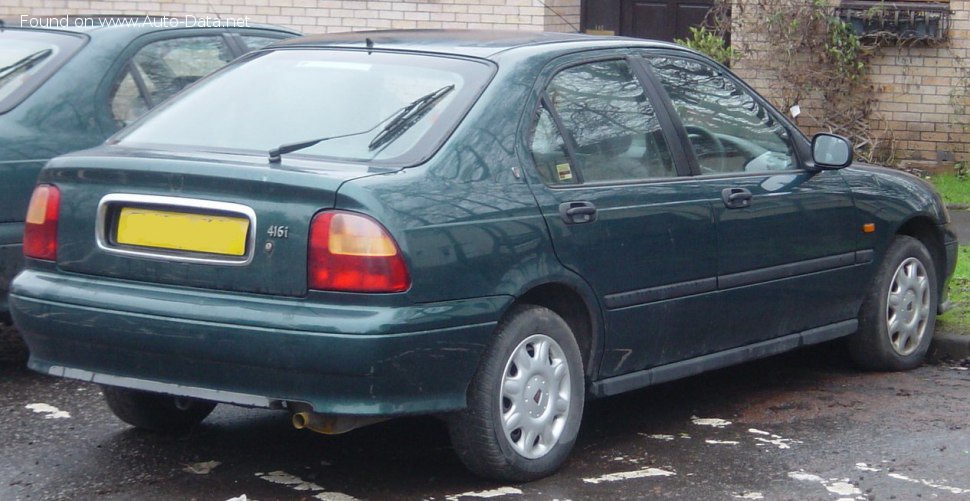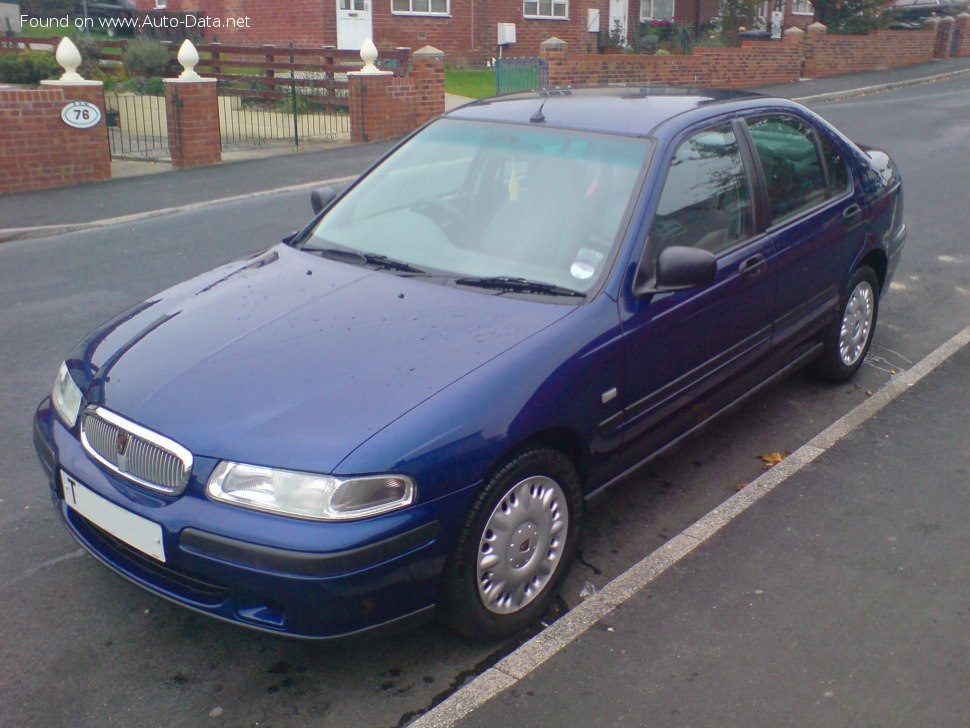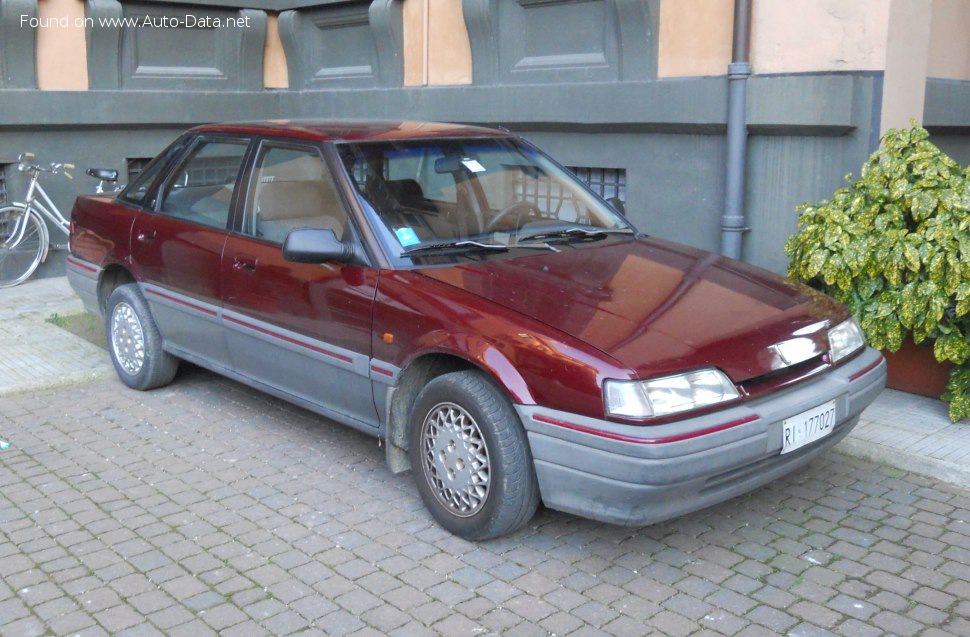
The Rover 400 (XW) 416 GSI (111 Hp) represents a significant chapter in the history of the British automotive manufacturer Rover, particularly during an era defined by crucial collaborations. Launched in 1990 and produced until 1995, the XW generation of the Rover 400 series was a compact family sedan that played a vital role in Rover’s lineup, primarily targeting the competitive European C-segment. This model, specifically the 416 GSI variant, embodied a blend of traditional British styling and refinement with the underlying mechanical prowess derived from its partnership with Honda. While Rover vehicles were not widely distributed in the United States, the 400 (XW) was a familiar sight on European roads, offering a practical, comfortable, and relatively sprightly option for families and commuters alike. Its design and engineering were a testament to the cross-continental efforts to create a globally competitive vehicle, even if its primary market remained within the confines of Europe and select Asian regions.
Rover 400 (XW) 416 GSI: Positioning and Overview
The 400 (XW) generation was a direct successor to the Rover 200 series (R8), which itself was a product of the Rover-Honda alliance. The 400 series essentially took the R8 platform and stretched it to create a more substantial four-door sedan, offering increased interior space and a more executive appearance compared to its hatchback sibling. The 416 GSI variant, with its 1.6-liter engine, stood out as a well-balanced offering within the range, providing a commendable mix of performance and fuel efficiency for its time. It was designed to appeal to buyers seeking a car with a touch of class and sophistication that was often associated with the Rover brand, combined with the reliability and modern engineering that Honda brought to the table. Within the 400 lineup, the 416 GSI occupied a mid-range position. It sat above the base 414i models, offering more power and a slightly more premium specification, but below the higher-performance 416Si and the larger-engined 420 variants.
Powertrain & Engine Architecture
At the core of the Rover 400 (XW) 416 GSI’s appeal was its capable powertrain, a product of the collaborative engineering efforts between Rover and Honda. This particular variant was equipped with a 1.6-liter (1590 cm³ or 97.03 cu. in.) naturally aspirated inline four-cylinder engine, designated as the K16. This engine featured a Double Overhead Camshaft (DOHC) valvetrain with four valves per cylinder, a configuration that was advanced for a family car of its era and contributed to its responsive nature. It delivered a respectable 111 horsepower at 6300 rpm, translating to a power-per-liter output of 69.8 horsepower per liter, which was competitive for its class.
Torque figures for the 416 GSI stood at 137 Nm (101.05 lb.-ft.) peaking at 5200 rpm. The engine utilized multi-point fuel injection, ensuring efficient combustion. The K16 engine was known for its relatively smooth operation and decent reliability, benefiting from Honda’s engineering input. The engine was paired with a four-speed automatic transmission, a common choice for buyers prioritizing convenience over outright performance. This transmission was a traditional hydraulic automatic, lacking the electronic controls found in more modern units. It featured torque converter technology for smooth gear changes, but was not known for its particularly quick shift speeds or fuel efficiency.
Driving Characteristics
The Rover 400 (XW) 416 GSI with the automatic transmission offered a comfortable and relaxed driving experience. Acceleration from 0 to 60 mph took approximately 9 seconds (0-100 km/h in 9.5 seconds), which was adequate for everyday driving but noticeably slower than the manual transmission versions of the same engine. The automatic transmission’s gear ratios were geared towards fuel economy and smooth cruising rather than spirited acceleration. Compared to the 416Si, which often featured a five-speed manual, the automatic 416 GSI felt less engaging and responsive. The automatic transmission also slightly diminished the overall fuel economy compared to the manual version.
The power delivery was linear, with a usable amount of torque available from mid-range revs. The steering was light and precise, making it easy to maneuver in urban environments. The suspension provided a comfortable ride, absorbing bumps and imperfections in the road surface effectively. However, it wasn’t particularly sporty, with a noticeable amount of body roll during cornering. Overall, the driving experience was geared towards comfort and ease of use, making it a suitable choice for commuters and family drivers.
Equipment & Trim Levels
The GSI trim level represented a step up from the base models, offering a more comprehensive list of standard features. Typically, the 416 GSI included power windows, central locking, a more refined upholstery finish (often cloth with a patterned design), and a basic stereo system. Optional extras available for the 416 GSI included air conditioning, electric sunroof, alloy wheels, and upgraded audio systems. Interior appointments were generally well-executed, with a focus on providing a comfortable and pleasant cabin environment. The dashboard layout was functional and straightforward, with clearly labeled controls. The seats offered good support and cushioning, making long journeys more comfortable.
Chassis & Braking
The Rover 400 (XW) utilized a robust chassis design, providing a stable and secure platform. The front suspension employed independent wishbones and coil springs, while the rear suspension featured a semi-independent twist beam setup. This configuration offered a good balance of ride comfort and handling. Braking performance was handled by disc brakes on both the front and rear axles, a significant advantage over many rivals that still used drum brakes at the rear. An Anti-lock Braking System (ABS) was available as an option, enhancing safety during emergency braking. Steering was managed by a rack and pinion system with hydraulic power steering, offering good feedback and ease of maneuverability. The car rode on 175/65 R14 tires, which provided a good balance of grip and ride comfort for everyday driving.
Market Reception & Comparison
Critics generally viewed the Rover 400 (XW) 416 GSI as a competent and comfortable family sedan. It was praised for its refined ride, spacious interior, and relatively reliable powertrain. However, it was often criticized for its somewhat conservative styling and lack of a truly sporty driving experience. Compared to other trims in the lineup, the 416 GSI offered a good balance of performance and fuel economy. The 414i was more affordable but lacked the power of the 416 GSI, while the 416Si and 420 models offered more performance but at a higher price point. In terms of fuel economy, the 416 GSI automatic typically achieved around 26.1 US mpg (9 l/100 km) combined, which was comparable to other 1.6-liter family sedans of the era. Reliability was generally good, although some owners reported minor issues with the automatic transmission and electrical components.
Technical Specifications
| Brand | Rover | |
| Model | 400 | |
| Generation | 400 (XW) | |
| Type (Engine) | 416 GSI (111 Hp) | |
| Start of Production | 1990 year | |
| End of Production | 1995 year | |
| Powertrain Architecture | Internal Combustion engine | |
| Body Type | Sedan | |
| Seats | 5 | |
| Doors | 4 | |
| Fuel Consumption (Urban) | 9.8 l/100 km | 24 US mpg |
| Fuel Consumption (Extra Urban) | 7 l/100 km | 33.6 US mpg |
| Fuel Consumption (Combined) | 9 l/100 km | 26.1 US mpg |
| Fuel Type | Petrol (Gasoline) | |
| Acceleration 0 – 60 mph | 9 sec | 9 sec |
| Maximum Speed | 190 km/h | 118.06 mph |
| Weight-to-Power Ratio | 9.7 kg/Hp | 103.3 Hp/tonne |
| Power | 111 Hp @ 6300 rpm | 111 Hp @ 6300 rpm |
| Torque | 137 Nm @ 5200 rpm | 101.05 lb.-ft. @ 5200 rpm |
| Engine Layout | Front, Transverse | |
| Engine Model/Code | K16 | |
| Engine Displacement | 1590 cm³ | 97.03 cu. in. |
| Number of Cylinders | 4 | |
| Engine Configuration | Inline | |
| Cylinder Bore | 75 mm | 2.95 in. |
| Piston Stroke | 90 mm | 3.54 in. |
| Compression Ratio | 9.1:1 | |
| Valves per Cylinder | 4 | |
| Fuel Injection System | Multi-port manifold injection | |
| Engine Aspiration | Naturally aspirated engine | |
| Valvetrain | DOHC | |
| Engine Oil Capacity | 3.5 l | 3.7 US qt |
| Coolant Capacity | 5.5 l | 5.81 US qt |
| Kerb Weight | 1075 kg | 2369.97 lbs. |
| Max. Weight | 1550 kg | 3417.17 lbs. |
| Max Load | 475 kg | 1047.2 lbs. |
| Trunk (Boot) Space – Minimum | 410 l | 14.48 cu. ft. |
| Fuel Tank Capacity | 55 l | 14.53 US gal |
| Length | 4370 mm | 172.05 in. |
| Width | 1680 mm | 66.14 in. |
| Height | 1400 mm | 55.12 in. |
| Wheelbase | 2550 mm | 100.39 in. |
| Front Track | 1475 mm | 58.07 in. |
| Rear Track | 1470 mm | 57.87 in. |
| Drivetrain Architecture | Front wheel drive, Internal Combustion engine | |
| Drive Wheel | Front wheel drive | |
| Number of Gears and Type of Gearbox | 4 gears, automatic transmission | |
| Front Suspension | Wishbone | |
| Rear Suspension | Coil spring | |
| Front Brakes | Disc | |
| Rear Brakes | Disc | |
| Assisting Systems | ABS (Anti-lock braking system) | |
| Steering Type | Steering rack and pinion | |
| Power Steering | Hydraulic Steering | |
| Tires Size | 175/65 R14 |
Legacy
The Rover 400 (XW) 416 GSI (111 Hp) carved out a notable, if somewhat understated, legacy in the European automotive landscape of the early to mid-1990s. The K16 engine, while not without its quirks, proved to be reasonably durable and reliable when properly maintained. The automatic transmission, however, is often cited as a potential weak point, with some units experiencing issues with wear and tear over time. Today, surviving examples of the 416 GSI are relatively rare, and are often sought after by Rover enthusiasts and collectors. In the used car market, these vehicles typically command modest prices, reflecting their age and the limited demand for classic British cars. However, well-maintained examples are increasingly appreciated for their unique charm and historical significance, representing a specific era of Anglo-Japanese automotive cooperation.