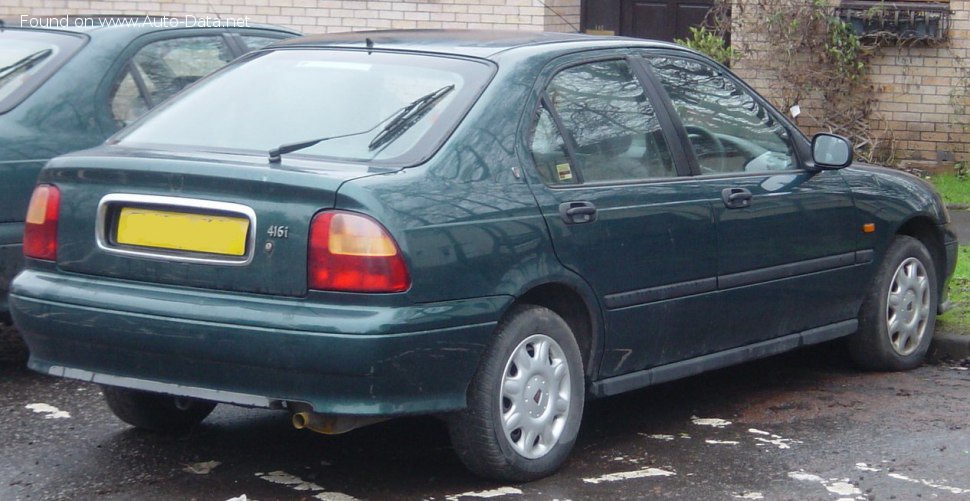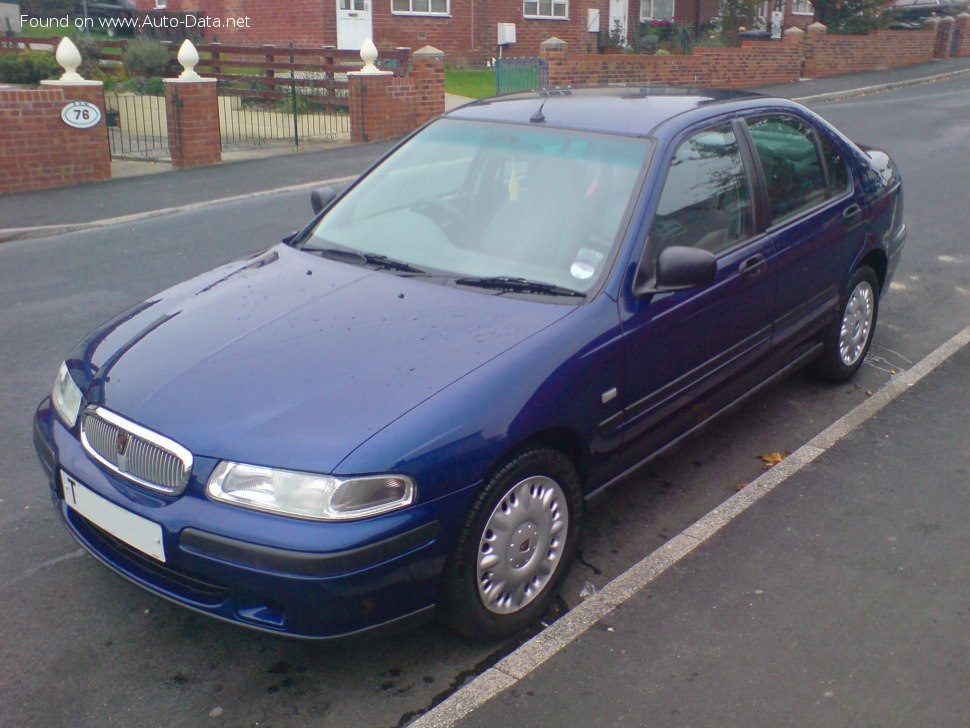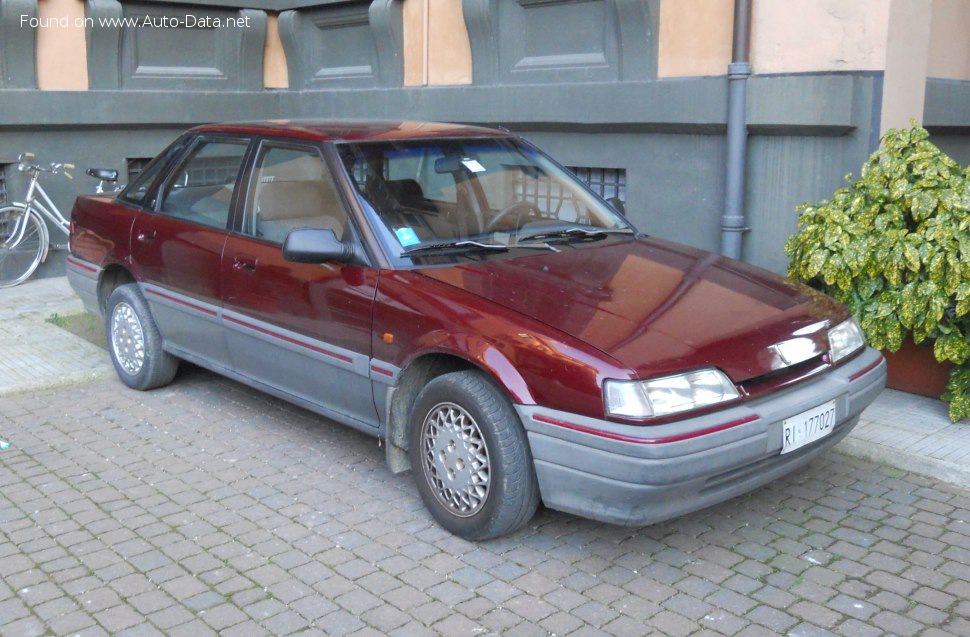
The Rover 400 series, specifically the XW generation produced from 1991 to 1995, represented a significant chapter in the British automaker’s history, born from a strategic alliance with Honda. The Rover 400 (XW) 418 D (67 Hp) variant, a four-door sedan, stood out in its primary European market as an economical and practical family car, offering a compelling blend of British styling with reliable Japanese engineering underpinnings, and in this particular diesel iteration, a highly efficient French powertrain. While never officially sold in the United States, the Rover 400 (XW) played a crucial role in the compact family car segment across the UK and continental Europe, competing against established players with its focus on comfort, respectable build quality, and a more upmarket feel than many of its direct rivals. This specific 418 D model, with its robust diesel engine, was particularly aimed at buyers prioritizing fuel economy and durability, common traits sought after in the European market during the early 1990s.
The Rover-Honda Synergy and the XW Generation
The XW generation of the Rover 400 was a direct evolution of the Rover 200 (R8), sharing its platform with the Honda Concerto. This collaboration allowed Rover to leverage Honda’s renowned reliability and engineering prowess, while Rover contributed its distinct styling and interior design flair. The result was a car that offered a more refined driving experience and a higher perceived quality than many domestic competitors. The sedan body style, which is the focus of the 418 D, provided ample space for five occupants and a generous trunk, making it an ideal choice for families and business users alike. The XW series built upon the success of its predecessors, further solidifying Rover’s reputation for producing well-appointed and comfortable vehicles, even in the compact segment.
Powertrain & Engine Architecture of the 418 D
At the heart of the Rover 400 (XW) 418 D (67 Hp) lies a highly regarded 1.9-liter (1905 cm3) naturally aspirated diesel engine, identified by the D9B (XUD9A) code. This inline four-cylinder unit was sourced from PSA Peugeot Citroën, a testament to the cross-pollination of engineering within the European automotive industry. During this era, Peugeot’s diesel engines were widely acclaimed for their reliability, longevity, and impressive fuel efficiency, making them a popular choice for many manufacturers.
The engine produced a modest but entirely adequate 67 horsepower at 4600 rpm. While this might seem conservative by today’s standards, it was a respectable output for a naturally aspirated diesel of its time, particularly one focused on economy. More importantly, the engine delivered a healthy 89.25 lb.-ft. (121 Nm) of torque at a low 2500 rpm. This low-end torque was crucial for everyday drivability, providing sufficient pulling power for city driving and relaxed cruising, without the need to constantly rev the engine.
Power was transmitted to the front wheels via a smooth-shifting 5-speed manual transmission, a standard setup for economy-focused vehicles of the period. This drivetrain architecture, coupled with the engine’s characteristics, allowed the 418 D to achieve an impressive combined fuel economy of 42 US mpg (5.6 liters per 100 km). This figure was a major selling point in markets where fuel costs were a significant consideration.
The engine utilized a precombustion chamber injection system, a common diesel technology of the time, and an overhead camshaft (OHC) valvetrain with two valves per cylinder. This configuration contributed to the engine’s simplicity and robustness. The XUD9A engine was known for its indirect injection, which, while less efficient than direct injection systems, offered quieter operation and reduced emissions for its era.
Positioning within the Rover 400 Lineup
The 418 D occupied the entry-level position within the Rover 400 range. It was positioned below the 416i (1.6-liter gasoline) and 420i (2.0-liter gasoline) models, offering a more affordable and fuel-efficient alternative. While the gasoline variants provided more power and a smoother driving experience, the 418 D appealed to buyers prioritizing practicality and running costs. It was a deliberate offering for those who valued economy over outright performance.
Driving Characteristics
In real-world conditions, the Rover 400 (XW) 418 D offered a relaxed and unhurried driving experience. The 67 hp output and 89.25 lb-ft of torque were sufficient for everyday commuting and highway cruising, but acceleration was modest. The 5-speed manual transmission allowed drivers to keep the engine in its optimal torque band, maximizing fuel efficiency and drivability. Compared to the 416i or 420i, the 418 D felt noticeably slower, particularly when accelerating from a standstill or overtaking. However, the abundance of low-end torque made it surprisingly capable in city traffic, requiring minimal gear changes.
The gear ratios were optimized for fuel economy rather than performance. First gear was relatively short, providing good acceleration from a standstill, while higher gears were spaced to maintain low engine speeds at cruising speeds. The overall driving experience was characterized by its smoothness and quietness, thanks to the refined Peugeot diesel engine and Rover’s attention to noise insulation.
Equipment & Trim Levels
The Rover 400 (XW) 418 D typically came equipped with a modest level of standard features, reflecting its entry-level positioning. Standard equipment generally included central locking, power steering, and a basic stereo system. Interior upholstery was typically cloth, with a durable and practical finish. The dashboard layout was functional and straightforward, with clearly labeled controls.
Optional extras available for the 418 D included electric windows, a sunroof, alloy wheels, and upgraded stereo systems. Higher trim levels, such as the ‘S’ or ‘SE’ variants, offered additional features such as upgraded interior trim, body-colored bumpers, and more sophisticated audio systems. The availability of options varied depending on the market and the year of manufacture.
Chassis & Braking
The Rover 400 (XW) 418 D featured a well-engineered chassis designed to provide a comfortable and stable ride. The front suspension utilized a MacPherson strut setup, known for its ability to absorb bumps and maintain good handling. The rear suspension employed a twist-beam axle, a cost-effective and space-efficient solution. Braking was handled by ventilated discs at the front, offering good stopping power and fade resistance, while the rear wheels utilized drum brakes, a common and cost-effective solution for cars of its class. The availability of ABS (Anti-lock braking system) was a significant safety feature for the era, enhancing control during emergency braking.
The car rode on 175/70 R14 T tires, a practical size offering a good balance of grip, comfort, and durability. The steering was managed by a rack and pinion system, assisted by hydraulic power steering, providing a comfortable and predictable steering feel.
Market Reception & Comparison
Critics generally viewed the Rover 400 (XW) 418 D as a sensible and practical family car. Its fuel economy and durability were widely praised, while its performance was considered adequate but not exciting. Compared to its gasoline-powered siblings, the 418 D offered a significant advantage in terms of running costs, making it a popular choice for high-mileage drivers. However, it lacked the refinement and responsiveness of the 416i and 420i models.
In terms of reliability, the 418 D benefited from the robust construction of the Rover 400 platform and the proven durability of the Peugeot XUD9A diesel engine. While the Rover 400 series as a whole was not without its issues, the 418 D was generally considered to be one of the more reliable variants. Fuel economy was a key strength, consistently achieving around 42 US mpg in real-world driving conditions.
Technical Specifications
| Category | Specification |
| Brand | Rover |
| Model | 400 (XW) |
| Type (Engine) | 418 D (67 Hp) |
| Production Start | 1991 |
| Production End | 1995 |
| Body Type | Sedan |
| Doors | 4 |
| Seats | 5 |
| Powertrain Architecture | Internal Combustion engine, Front-Wheel Drive |
| Fuel Type | Diesel |
| Engine Displacement | 1.9 liters (1905 cm3 / 116.25 cu. in.) |
| Engine Model/Code | D9B (XUD9A) |
| Engine Layout | Front, Transverse |
| Number of Cylinders | 4, Inline |
| Valvetrain | OHC, 2 valves per cylinder |
| Aspiration | Naturally Aspirated |
| Fuel Injection System | Precombustion chamber injection |
| Compression Ratio | 22.5:1 |
| Cylinder Bore | 3.27 inches (83 mm) |
| Piston Stroke | 3.46 inches (88 mm) |
| Power | 67 Hp @ 4600 rpm |
| Power per liter | 35.2 Hp/l |
| Torque | 89.25 lb.-ft. (121 Nm) @ 2500 rpm |
| Maximum Speed | 95.69 mph (154 km/h) |
| Fuel Economy (Combined) | 42 US mpg (5.6 l/100 km) |
| Gearbox | 5-speed Manual Transmission |
| Drive Wheel | Front-Wheel Drive |
| Front Suspension | Wishbone |
| Rear Suspension | Coil spring |
| Front Brakes | Ventilated discs |
| Rear Brakes | Drum |
| Assisting Systems | ABS (Anti-lock braking system) |
| Steering Type | Steering rack and pinion |
| Power Steering | Hydraulic Steering |
| Tires Size | 175/70 R14 T |
| Length | 172.05 inches (4370 mm) |
| Width | 66.14 inches (1680 mm) |
| Height | 55.12 inches (1400 mm) |
| Wheelbase | 100.39 inches (2550 mm) |
| Front Track | 58.07 inches (1475 mm) |
| Rear Track | 57.87 inches (1470 mm) |
| Kerb Weight | 2535.32 lbs. (1150 kg) |
| Weight-to-Power Ratio | 17.2 kg/Hp (58.3 Hp/tonne) |
| Weight-to-Torque Ratio | 9.5 kg/Nm (105.2 Nm/tonne) |
| Trunk (boot) Space | 14.48 cu. ft. (410 liters) |
| Fuel Tank Capacity | 14.53 US gallons (55 liters) |
| Engine Oil Capacity | 5.28 US quarts (5 liters) |
| Coolant Capacity | 9.3 US quarts (8.8 liters) |
Legacy
The Rover 400 (XW) 418 D (67 Hp) carved out a distinct niche for itself in the European market during its production run. Its primary appeal stemmed from its robust construction, derived from its Honda Concerto platform, and the inclusion of a highly regarded Peugeot diesel engine. This combination offered European consumers a compelling package of reliability, comfort, and exceptional fuel economy, which was a significant factor for buyers in regions with high fuel taxes.
The historical significance of the Rover 400 (XW) lies in its embodiment of the Rover-Honda partnership, which, for a time, provided Rover with access to modern platforms and powertrains that it might not have been able to develop independently. The use of the Peugeot XUD9A diesel engine in the 418 D variant further highlighted Rover’s pragmatic approach to engineering, selecting proven components to meet specific market demands for efficiency and durability. This engine, in particular, gained a reputation for being almost indestructible, contributing significantly to the long-term ownership appeal of the 418 D. Today, well-maintained examples are sought after by enthusiasts and collectors, representing a unique blend of British style and international engineering.