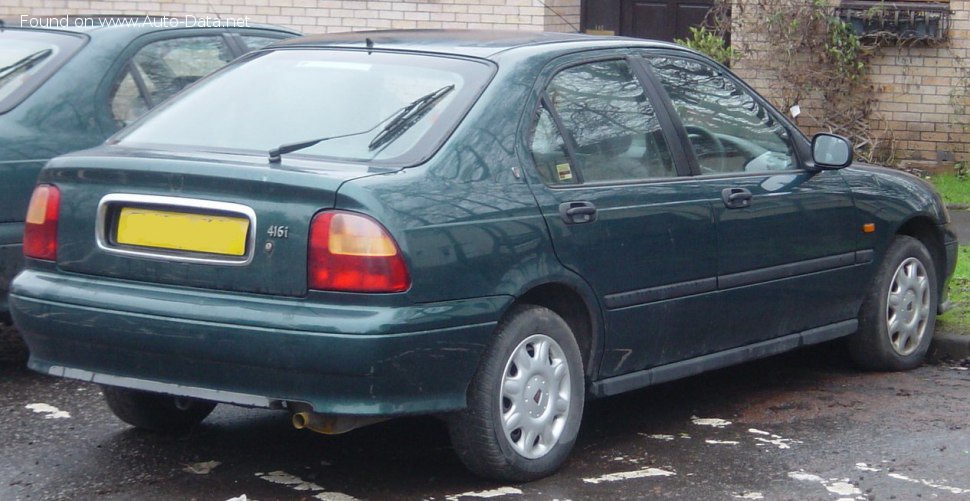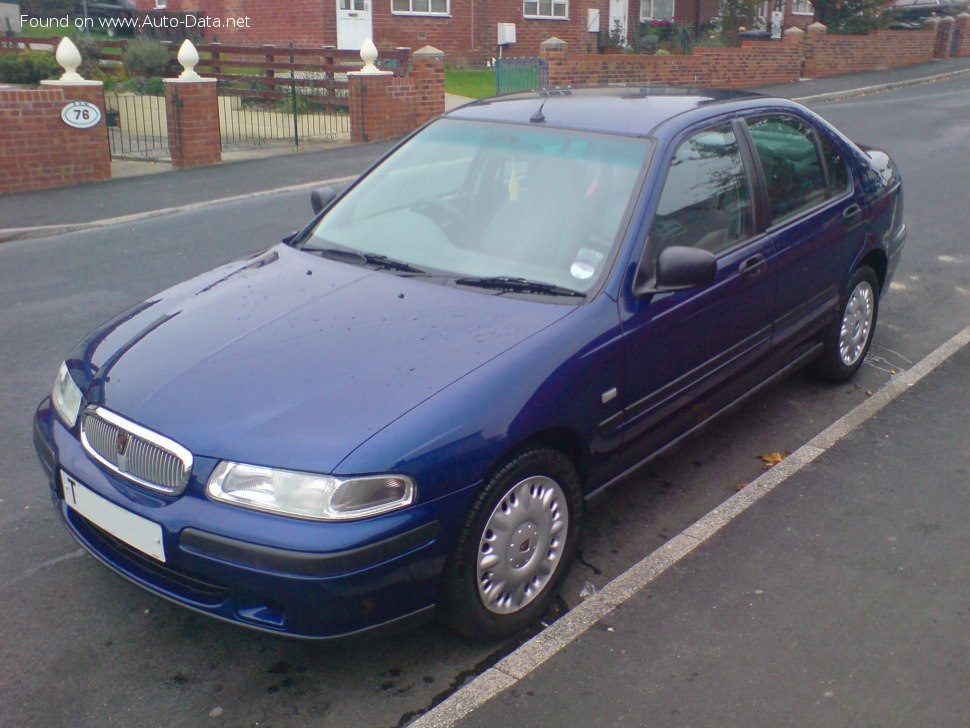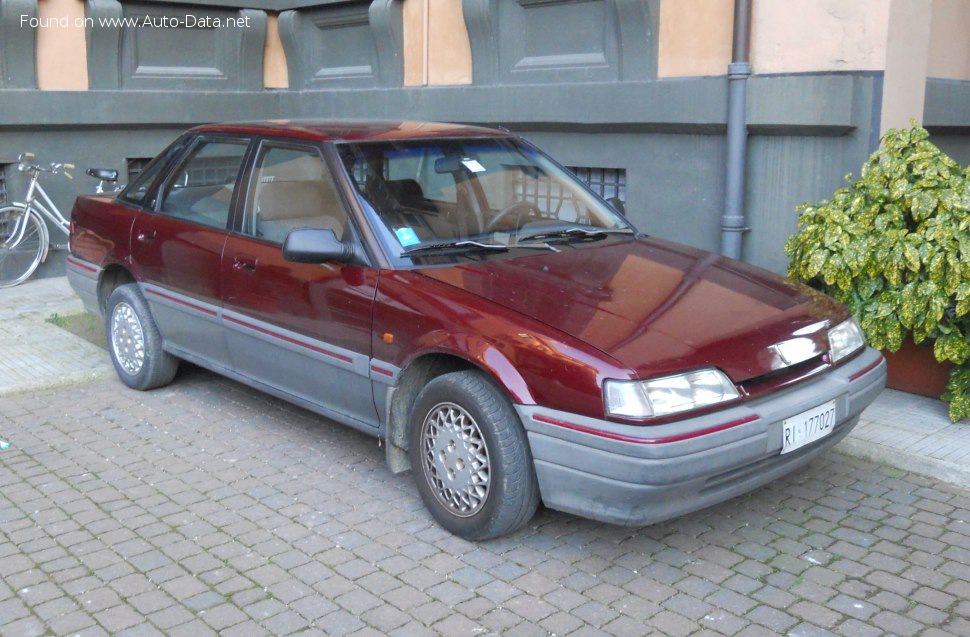
The Rover 400 (XW) series, produced from 1993 to 1995, marked a pivotal period for the British marque Rover, demonstrating its engineering partnership with Japanese automaker Honda. The 420 GSI/SLI/GTI/Vite variants, equipped with a 136 horsepower (hp) 2.0-liter engine, were positioned as the more performance-focused and well-appointed models within the compact family car segment. This generation, commonly known as the XW, was fundamentally a rebadged and restyled version of the Honda Concerto sedan, adapted for the European market with unique British styling and a more traditional interior.
Rover 400 (XW) 420 GSI/SLI/GTI/Vite: Overview
Although never officially sold in the United States, the Rover 400 (XW) played a significant role in the competitive European C-segment. It offered a blend of Japanese reliability and engineering, stemming from its Honda underpinnings, combined with the characteristic “Rover feel” – plush interiors and a refined, understated exterior. These 420 models, ranging from the well-equipped GSI and SLI to the sportier GTI and Vite, targeted buyers seeking a practical yet engaging sedan with a touch of executive appeal.
Development & History
The Rover 400 (XW) originated from the collaboration between British Leyland (later Rover Group) and Honda in the 1980s. This partnership aimed to leverage Honda’s engineering prowess and manufacturing efficiency while allowing Rover to expand its product range. The XW series was based on the Honda Concerto platform, a compact sedan designed for the Japanese and European markets. Rover took the Concerto’s basic structure and extensively modified the exterior styling, interior design, and suspension tuning to create a vehicle that aligned with its brand identity and European customer preferences. The Rover 400 (XW) served as a bridge between Rover’s older designs and its later, more independent models. It was succeeded by the Rover 45 (R3) in 1995, which represented a more significant departure from the Honda platform.
Powertrain & Performance
The Rover 400 (XW) 420 GSI/SLI/GTI/Vite models were powered by the M16 engine, a 2.0-liter (1994 cm³ or 121.68 cubic inches) inline four-cylinder unit. This engine was a product of Rover’s own engineering efforts, featuring a Double Overhead Camshaft (DOHC) valvetrain with four valves per cylinder. The M16 produced 136 hp at 6000 revolutions per minute (rpm) and 185 Newton-meters (136.45 lb-ft) of torque at 2500 rpm. This torque output provided responsive acceleration for everyday driving, suitable for both urban commutes and highway travel. The engine utilized multi-port fuel injection for precise fuel delivery, contributing to both performance and fuel efficiency. Power was transmitted to the front wheels through a smooth-shifting 5-speed manual transmission. The 420 models could achieve a top speed of 124.27 miles per hour (200 km/h), with a weight-to-power ratio of 8.6 kg/Hp (116.7 Hp per tonne). Fuel economy was rated at a combined 29.4 US miles per gallon (8 liters per 100 km), a respectable figure for a 2.0-liter gasoline engine in the early 1990s. The engine’s 10:1 compression ratio optimized efficiency and power output, requiring standard unleaded gasoline.
Chassis & Handling
The Rover 400 (XW) utilized a front-engine, front-wheel-drive layout. The suspension system featured a wishbone configuration at the front and coil springs at the rear, providing a comfortable yet controlled ride. Ventilated discs were used for the front brakes, while solid discs were employed at the rear, offering adequate stopping power. An Anti-lock Braking System (ABS) was available as an option, enhancing safety during emergency braking. The steering system was a rack and pinion setup with hydraulic power assistance, delivering precise and responsive steering feel. The tires, sized 175/70 R14 H, provided a balance of grip and ride comfort. With a kerb weight of 2568.39 lbs (1165 kg), the 400 (XW) was relatively lightweight, contributing to its agile handling characteristics.
Design & Interior
The Rover 400 (XW) was exclusively available as a 4-door sedan, accommodating five passengers. Its design represented a blend of Japanese and British aesthetics. While based on the Honda Concerto, Rover designers implemented unique front and rear fascias, grilles, and interior trim to create a distinctly European appearance. The GSI, SLI, GTI, and Vite trims featured varying levels of interior refinement, alloy wheel designs, and exterior accents, with the GTI and Vite models offering a sportier appearance. The vehicle measured 172.05 inches (4370 mm) in length, 66.14 inches (1680 mm) in width, and 55.12 inches (1400 mm) in height, with a wheelbase of 100.39 inches (2550 mm). The trunk offered 14.48 cubic feet (410 liters) of cargo space. The interior prioritized comfort and ergonomics, featuring supportive seats and a well-laid-out dashboard. Materials used were typical for the era, including cloth upholstery and plastic trim, with higher-spec models offering leather options.
Variants & Special Editions
The Rover 400 (XW) range included several trim levels, each offering a different level of equipment and styling. The GSI and SLI models were the base and mid-range options, respectively, offering a good balance of comfort and value. The GTI variant was the sportier model, featuring a more aggressive exterior styling, upgraded suspension, and enhanced interior trim. The Vite trim level was positioned as a premium offering, with additional features such as leather upholstery, alloy wheels, and a more refined interior. Limited edition models were occasionally released, often featuring unique color schemes or additional equipment.
Technical Specifications
| Category | Specification |
| Brand | Rover |
| Model | 400 |
| Generation | 400 (XW) |
| Type (Engine) | 420 GSI/SLI/GTI/Vite (136 Hp) |
| Start of Production | 1993 year |
| End of Production | 1995 year |
| Powertrain Architecture | Internal Combustion engine |
| Body type | Sedan |
| Seats | 5 |
| Doors | 4 |
| Fuel consumption (combined) | 8 l/100 km (29.4 US mpg, 35.3 UK mpg, 12.5 km/l) |
| Fuel Type | Petrol (Gasoline) |
| Maximum speed | 200 km/h (124.27 mph) |
| Weight-to-power ratio | 8.6 kg/Hp, 116.7 Hp/tonne |
| Weight-to-torque ratio | 6.3 kg/Nm, 158.8 Nm/tonne |
| Power | 136 Hp @ 6000 rpm |
| Power per liter | 68.2 Hp/l |
| Torque | 185 Nm @ 2500 rpm (136.45 lb.-ft. @ 2500 rpm) |
| Engine layout | Front, Transverse |
| Engine Model/Code | M16 |
| Engine displacement | 1994 cm³ (2.0 l, 121.68 cu. in.) |
| Number of cylinders | 4 |
| Engine configuration | Inline |
| Cylinder Bore | 84.45 mm (3.32 in.) |
| Piston Stroke | 89 mm (3.5 in.) |
| Compression ratio | 10:1 |
| Number of valves per cylinder | 4 |
| Fuel injection system | Multi-port manifold injection |
| Engine aspiration | Naturally aspirated engine |
| Valvetrain | DOHC |
| Engine oil capacity | 4.5 l (4.76 US qt | 3.96 UK qt) |
| Coolant | 7 l (7.4 US qt | 6.16 UK qt) |
| Kerb Weight | 1165 kg (2568.39 lbs) |
| Trunk (boot) space – minimum | 410 l (14.48 cu. ft.) |
| Fuel tank capacity | 55 l (14.53 US gal | 12.1 UK gal) |
| Length | 4370 mm (172.05 in.) |
| Width | 1680 mm (66.14 in.) |
| Height | 1400 mm (55.12 in.) |
| Wheelbase | 2550 mm (100.39 in.) |
| Front track | 1475 mm (58.07 in.) |
| Rear track | 1470 mm (57.87 in.) |
| Drivetrain Architecture | The Internal combustion engine (ICE) drives the front wheels of the vehicle. |
| Drive wheel | Front wheel drive |
| Number of gears and type of gearbox | 5 gears, manual transmission |
| Front suspension | Wishbone |
| Rear suspension | Coil spring |
| Front brakes | Ventilated discs |
| Rear brakes | Disc |
| Assisting systems | ABS (Anti-lock braking system) |
| Steering type | Steering rack and pinion |
| Power steering | Hydraulic Steering |
| Tires size | 175/70 R14 H |
Legacy & Reception
The Rover 400 (XW) generation, and particularly the 420 variants, held a notable position in the European automotive market during its production. It was a product of the Rover-Honda alliance, an era that significantly shaped Rover’s product line. The 400 (XW) was generally well-received for its comfortable ride, refined engines, and pleasant interiors. However, its close ties to Honda sometimes led to criticism regarding its lack of a truly unique identity. Despite this, the Rover 400 (XW) was a commercial success, helping to maintain Rover’s market share in a competitive segment. The XW remains a testament to Anglo-Japanese automotive collaboration, offering a compelling blend of practicality, performance, and British charm.