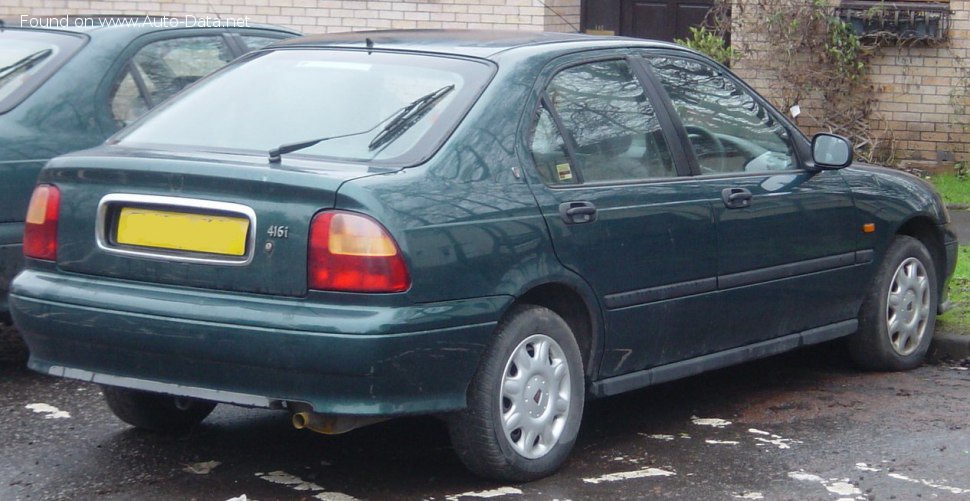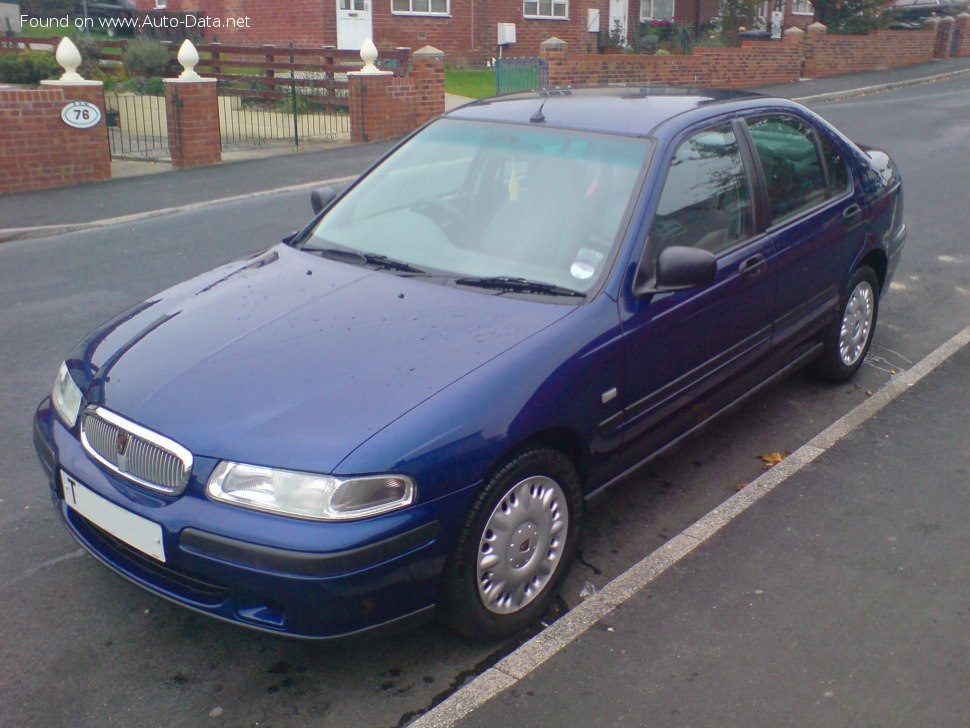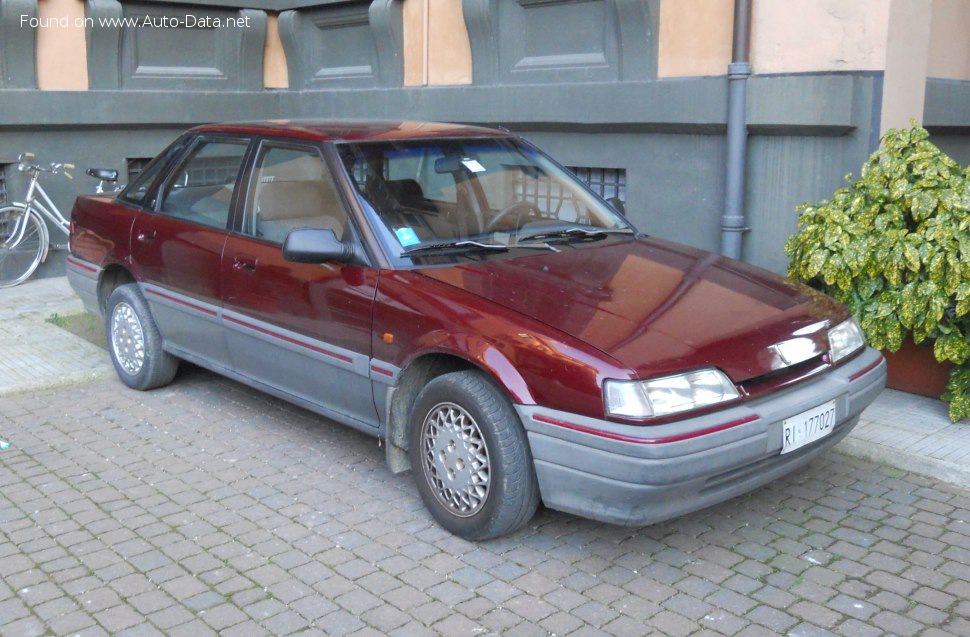
The Rover 400 (XW) 420 Turbo represents a compelling, though often overlooked, performance sedan from the early 1990s. While never officially sold in the United States, this vehicle distinguished itself within the European market as a blend of British elegance and Honda-derived engineering, culminating in a surprisingly potent performance package. It offered a unique proposition for drivers seeking a refined yet capable vehicle.
Rover 400 (XW) 420 Turbo: An Overview
The Rover 400 series, specifically the XW generation, was a compact executive car produced by the British manufacturer Rover Group from 1990 to 1995. Positioned within the competitive European C-segment (equivalent to the US compact segment), the XW was developed in collaboration with Honda, sharing its platform and numerous components with the Honda Concerto. This partnership aimed to leverage Rover’s traditional British styling and interior luxury with Honda’s reputation for engineering reliability. The 420 Turbo, launched in 1993, was the performance flagship of the range, transforming the sedan into a capable “sleeper” car. Its production concluded in 1995, making it a relatively rare and unique offering from Rover.
Engine & Performance: The T16 Turbocharged Heart
The defining feature of the Rover 400 (XW) 420 Turbo was its powertrain. At its core lay a 2.0-liter (1994 cm³ or 121.68 cu. in.) T16 inline-four engine. This engine, known for its inherent robustness and tuning potential, was significantly enhanced with a turbocharger. The engine utilized a multi-port fuel injection system and a Double Overhead Camshaft (DOHC) valvetrain with four valves per cylinder, optimizing both efficiency and power output.
In its turbocharged configuration, the T16 engine produced an impressive 200 horsepower at 6000 rpm, achieving a specific output of 100.3 horsepower per liter. Crucially, the engine generated 237 Nm (174.8 lb.-ft.) of torque at a low 2100 rpm. This readily available torque provided strong acceleration from a standstill and excellent in-gear flexibility. Power was delivered to the front wheels through a precise 5-speed manual transmission, giving the driver direct control. The 420 Turbo could reach a top speed of 235 km/h (146.02 mph). With a curb weight of 1220 kg (2689.64 lbs.), it boasted a weight-to-power ratio of 6.1 kg/Hp (163.9 Hp/tonne) and a weight-to-torque ratio of 5.1 kg/Nm (194.3 Nm/tonne). Despite its performance focus, the 420 Turbo maintained a respectable combined fuel economy of 8.4 l/100 km (28 US mpg) for its time.
Design & Features: Understated Elegance and Practicality
The Rover 400 (XW) featured a classic, understated sedan design, typical of European cars in the early 1990s. Its four-door, five-seat configuration prioritized practicality and comfort. The car measured 4370 mm (172.05 in.) in length, 1680 mm (66.14 in.) in width, and 1400 mm (55.12 in.) in height, with a wheelbase of 2550 mm (100.39 in.). Trunk capacity was a useful 410 liters (14.48 cu. ft.).
The 420 Turbo largely retained the discreet styling of the standard 400, contributing to its “sleeper” character. Visual cues hinting at its performance were minimal, often limited to specific alloy wheels, subtle badging, or a slightly lower stance due to suspension tuning. The interior of the Rover 400 (XW) was well-appointed, reflecting Rover’s commitment to a more upmarket experience. Comfortable seating, quality fabric or leather upholstery, and a logical dashboard layout were standard.
Technically, the 420 Turbo featured a robust suspension system with wishbones at the front and coil springs at the rear, balancing ride comfort and handling. Braking was provided by ventilated discs at the front and solid discs at the rear, enhanced by an Anti-lock Braking System (ABS). Steering was hydraulic power-assisted rack-and-pinion, offering good feedback. The car rode on 195/55 ZR 15 tires, providing a balance of grip and ride quality.
Technical Specifications
| Category | Specification |
| Brand / Model | Rover 400 (XW) 420 Turbo (200 Hp) |
| Generation | 400 (XW) 420 Turbo (200 Hp) |
| Production Years | 1993 – 1995 |
| Powertrain Architecture | Internal Combustion engine |
| Body Type | Sedan |
| Seats / Doors | 5 / 4 |
| Fuel Consumption (Combined) | 8.4 l/100 km (28 US mpg) |
| Fuel Type | Petrol (Gasoline) |
| Maximum Speed | 235 km/h (146.02 mph) |
| Weight-to-Power Ratio | 6.1 kg/Hp (163.9 Hp/tonne) |
| Weight-to-Torque Ratio | 5.1 kg/Nm (194.3 Nm/tonne) |
| Power | 200 Hp @ 6000 rpm |
| Power per Liter | 100.3 Hp/l |
| Torque | 237 Nm (174.8 lb.-ft.) @ 2100 rpm |
| Engine Layout | Front, Transverse |
| Engine Model/Code | T16 |
| Engine Displacement | 1994 cm³ (121.68 cu. in.) |
| Number of Cylinders | 4, Inline |
| Cylinder Bore | 84.5 mm (3.33 in.) |
| Piston Stroke | 89 mm (3.5 in.) |
| Compression Ratio | 8.5:1 |
| Valves per Cylinder | 4 |
| Fuel Injection System | Multi-port manifold injection |
| Engine Aspiration | Turbocharger |
| Valvetrain | DOHC |
| Engine Oil Capacity | 4.5 l (4.76 US qt) |
| Coolant Capacity | 7.5 l (7.93 US qt) |
| Kerb Weight | 1220 kg (2689.64 lbs.) |
| Trunk (Boot) Space – Minimum | 410 l (14.48 cu. ft.) |
| Fuel Tank Capacity | 55 l (14.53 US gal) |
| Length | 4370 mm (172.05 in.) |
| Width | 1680 mm (66.14 in.) |
| Height | 1400 mm (55.12 in.) |
| Wheelbase | 2550 mm (100.39 in.) |
| Front Track | 1475 mm (58.07 in.) |
| Rear (Back) Track | 1470 mm (57.87 in.) |
| Drivetrain Architecture | Internal combustion engine drives the front wheels. |
| Drive Wheel | Front Wheel Drive |
| Number of Gears / Gearbox Type | 5 gears, manual transmission |
| Front Suspension | Wishbone |
| Rear Suspension | Coil spring |
| Front Brakes | Ventilated discs |
| Rear Brakes | Disc |
| Assisting Systems | ABS (Anti-lock braking system) |
| Steering Type | Steering rack and pinion |
| Power Steering | Hydraulic Steering |
| Tires Size | 195/55 ZR 15 |
Legacy & Market Impact
The Rover 400 (XW) 420 Turbo, while not a high-volume seller, earned a reputation as a genuine performance car offering excellent value. It competed with models like the Ford Mondeo V6, Vauxhall Cavalier GSi, and Peugeot 405 Mi16. The 420 Turbo’s unique blend of British character, Honda engineering, and the potent T16 turbo engine set it apart. Its “sleeper” appeal and understated performance attracted enthusiasts who valued performance without ostentation. For Rover, the 420 Turbo demonstrated the brand’s engineering capabilities and willingness to produce exciting vehicles. The 420 Turbo remains a significant vehicle in Rover’s history, representing a successful collaboration with Honda and a high point in British performance sedan design.