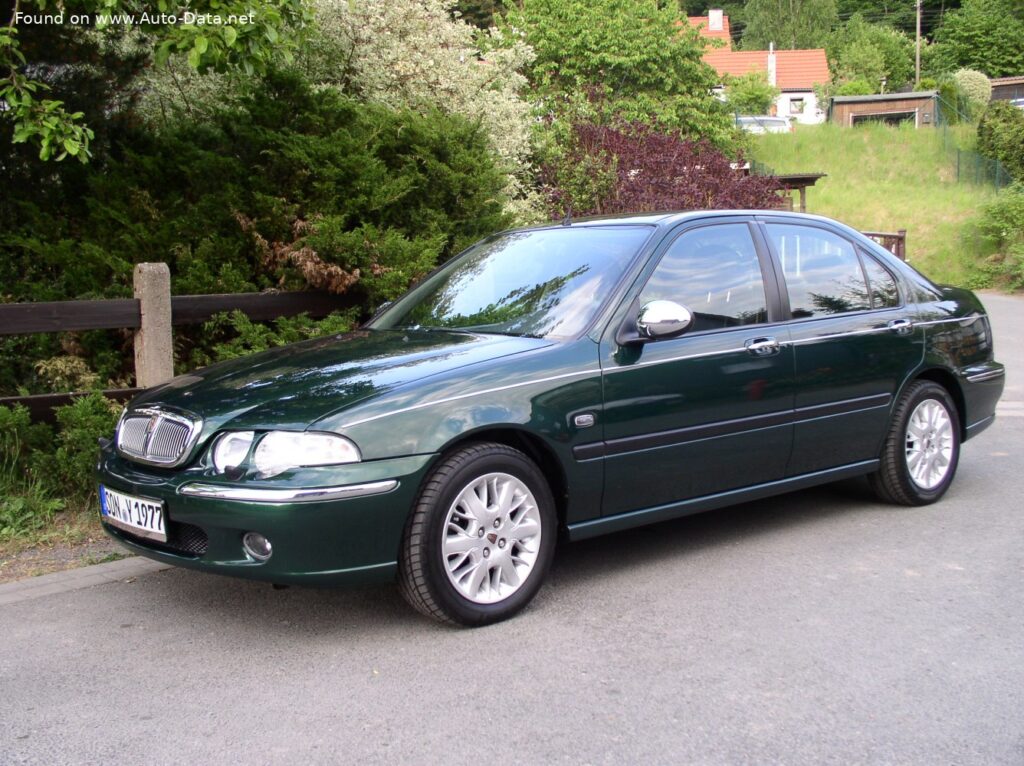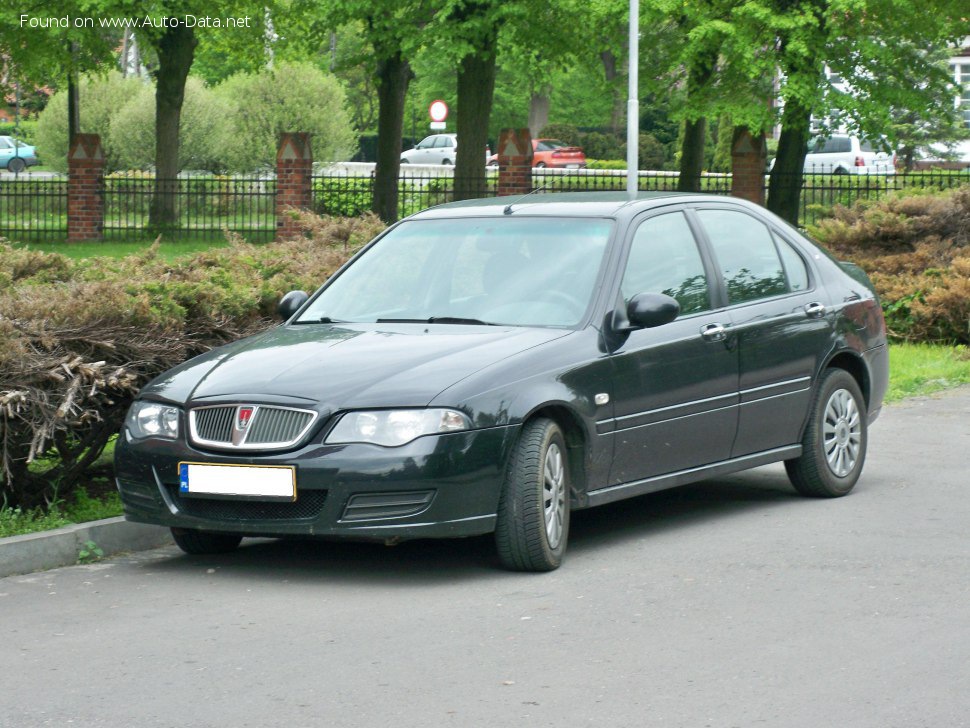
The Rover 45 Hatchback (RT) 2.0 TD (101 Hp) was a crucial compact family car for the British manufacturer Rover Group from 1999 to 2005. Positioned in the highly competitive C-segment, this vehicle was a rebranding and significant facelift of the earlier Rover 400 Series, itself based on the Honda Civic and Domani platforms. While Rover vehicles were not officially sold in the United States, the 45 played a vital role in the European market, offering a blend of traditional British styling, comfort, and increasingly, modern diesel efficiency. The Rover 45 Hatchback (RT) 2.0 TD (101 Hp) aimed to appeal to buyers seeking a practical, well-appointed, and economical vehicle, particularly with its robust turbodiesel powertrain.
Rover 45 Hatchback (RT) 2.0 TD: A European Perspective
The RT generation marked a concerted effort by Rover to modernize its compact offering. The name change from 400 to 45 was intended to align it with the larger 75 model, creating a more cohesive brand identity. Despite its underpinnings dating back to a collaboration with Honda, the Rover 45 received a distinctive exterior and interior design that embodied Rover’s unique aesthetic. The introduction of the 2.0 TD engine further bolstered its appeal, providing a compelling option for European consumers who prioritized fuel economy and torque for daily driving and longer journeys. The vehicle’s success was intrinsically linked to the European market’s preference for diesel engines, offering a cost-effective and efficient alternative to gasoline-powered vehicles.
Engine & Performance
At the heart of the Rover 45 Hatchback (RT) 2.0 TD (101 Hp) lay a 1994 cm3 (121.68 cu. in.) inline four-cylinder turbodiesel engine, identified by the “L” engine code. This unit was a significant part of Rover’s powertrain lineup, known for its strong low-end torque and impressive fuel efficiency. Delivering 101 horsepower at 4200 rpm and a substantial 240 Nm (177.01 lb.-ft.) of torque at a low 2000 rpm, the engine provided ample power for its class, especially for a vehicle of its modest size and weight.
The engine’s architecture featured a front, transverse layout, driving the front wheels through a 5-speed manual transmission. This configuration was standard for compact front-wheel-drive vehicles of the era, offering a balance of interior space and mechanical simplicity. The use of a common rail diesel fuel injection system was a key technological advancement for its time, contributing to improved fuel atomization, reduced emissions, and enhanced power delivery compared to older direct injection systems. A turbocharger further boosted performance, ensuring responsive acceleration and better highway cruising ability. Performance figures were respectable for a family diesel. It could accelerate from 0 to 60 mph in a calculated 10.1 seconds (0-100 km/h in 10.6 seconds) and reach a maximum speed of 114.95 mph (185 km/h). However, where the 2.0 TD truly shined was in its fuel economy. The combined cycle consumption was rated at an impressive 5.4 l/100 km, translating to approximately 43.6 US mpg. On the extra-urban cycle, it achieved an outstanding 4.3 l/100 km, or 54.7 US mpg, making it a highly economical choice for long-distance travel.
Design & Features
The Rover 45 Hatchback (RT) retained the practical 5-door, 5-seat configuration of its predecessor, emphasizing versatility and family-friendliness. Its exterior design received a noticeable refresh from the 400 Series, incorporating a more contemporary front fascia with new headlights and grille, along with revised taillights. These changes aimed to give the car a more modern and upscale appearance, aligning it visually with the larger Rover 75.
Inside, the 45 offered an interior that, while sharing some components with its Honda origins, featured distinct Rover touches, including wood trim and chrome accents in higher specifications, reflecting a more traditional British luxury feel than many of its rivals. The hatchback body style provided excellent practicality, with a minimum trunk space of 380 liters (13.42 cu. ft.) that could expand to 717 liters (25.32 cu. ft.) with the rear seats folded, offering ample cargo capacity. In terms of safety and driving dynamics, the Rover 45 Hatchback (RT) was equipped with standard features appropriate for its time, including an Anti-lock Braking System (ABS) for enhanced stopping control. The suspension comprised a Wishbone front suspension and a Spring Strut rear suspension, providing a comfortable ride and predictable handling. Steering was handled by a hydraulic rack and pinion system, offering a direct and communicative feel.
Technical Specifications: Rover 45 Hatchback (RT) 2.0 TD (101 Hp)
| Category | Specification |
|---|---|
| General Information | |
| Brand | Rover |
| Model | 45 |
| Generation | 45 Hatchback (RT) |
| Type (Engine) | 2.0 TD (101 Hp) |
| Start of Production | 1999 year |
| End of Production | 2005 year |
| Powertrain Architecture | Internal Combustion engine |
| Body type | Hatchback |
| Seats | 5 |
| Doors | 5 |
| Performance Specs | |
| Fuel consumption (economy) – urban | 7.1 l/100 km (33.1 US mpg) |
| Fuel consumption (economy) – extra urban | 4.3 l/100 km (54.7 US mpg) |
| Fuel consumption (economy) – combined | 5.4 l/100 km (43.6 US mpg) |
| Fuel Type | Diesel |
| Acceleration 0 – 60 mph | 10.1 sec |
| Maximum speed | 185 km/h (114.95 mph) |
| Weight-to-power ratio | 12.9 kg/Hp |
| Weight-to-torque ratio | 5.4 kg/Nm |
| Engine Specs | |
| Power | 101 Hp @ 4200 rpm |
| Torque | 240 Nm @ 2000 rpm (177.01 lb.-ft. @ 2000 rpm) |
| Engine layout | Front, Transverse |
| Engine Model/Code | L |
| Engine displacement | 1994 cm3 (121.68 cu. in.) |
| Number of cylinders | 4 |
| Engine configuration | Inline |
| Cylinder Bore | 84.5 mm (3.33 in.) |
| Piston Stroke | 88.9 mm (3.5 in.) |
| Compression ratio | 19.5:1 |
| Number of valves per cylinder | 2 |
| Fuel injection system | Diesel Commonrail |
| Engine aspiration | Turbocharger |
| Valvetrain | OHC |
| Engine oil capacity | 5 l (5.28 US qt) |
| Coolant capacity | 7 l (7.4 US qt) |
| Space, Volume and Weights | |
| Kerb Weight | 1305 kg (2877.03 lbs.) |
| Max. weight | 1720 kg (3791.95 lbs.) |
| Max load | 415 kg (914.92 lbs.) |
| Trunk (boot) space – minimum | 380 l (13.42 cu. ft.) |
| Trunk (boot) space – maximum | 717 l (25.32 cu. ft.) |
| Fuel tank capacity | 55 l (14.53 US gal) |
| Dimensions | |
| Length | 4362 mm (171.73 in.) |
| Width | 1696 mm (66.77 in.) |
| Height | 1394 mm (54.88 in.) |
| Wheelbase | 2620 mm (103.15 in.) |
| Front track | 1475 mm (58.07 in.) |
| Rear (Back) track | 1465 mm (57.68 in.) |
| Drivetrain, Brakes and Suspension Specs | |
| Drivetrain Architecture | The Internal combustion engine (ICE) drives the front wheels of the vehicle. |
| Drive wheel | Front wheel drive |
| Number of gears and type of gearbox | 5 gears, manual transmission |
| Front suspension | Wishbone |
| Rear suspension | Spring Strut |
| Front brakes | Ventilated discs |
| Rear brakes | Disc |
| Assisting systems | ABS (Anti-lock braking system) |
| Steering type | Steering rack and pinion |
| Power steering | Hydraulic Steering |
| Tires size | 175/70 R14 T |
Legacy & Market Impact
The Rover 45, and particularly its 2.0 TD variant, entered a highly competitive segment dominated by established players like the Ford Focus, Volkswagen Golf, Vauxhall Astra (Opel Astra), Peugeot 307, and Renault Megane. In this environment, the Rover 45 Hatchback (RT) 2.0 TD (101 Hp) carved out a niche by offering a distinct British character, a comfortable ride, and a relatively upscale interior ambiance compared to some of its more utilitarian rivals. Its Honda-derived platform provided a solid foundation, known for reliability and a generally well-sorted chassis. The diesel engine was a key selling point in Europe, where diesel vehicles commanded a significant market share due to their superior fuel economy and lower running costs.
However, the Rover 45’s market impact was ultimately overshadowed by the broader struggles of the Rover Group. The company faced significant financial challenges, leading to uncertainty and a decline in consumer confidence. Despite its merits, the 45 struggled to compete with newer, often more technologically advanced, and aggressively marketed competitors. The Rover 45 represents one of the final chapters in the history of the Rover brand before its collapse in 2005. Today, it is remembered as a testament to British automotive design and engineering, and a practical workhorse that served its European market well.