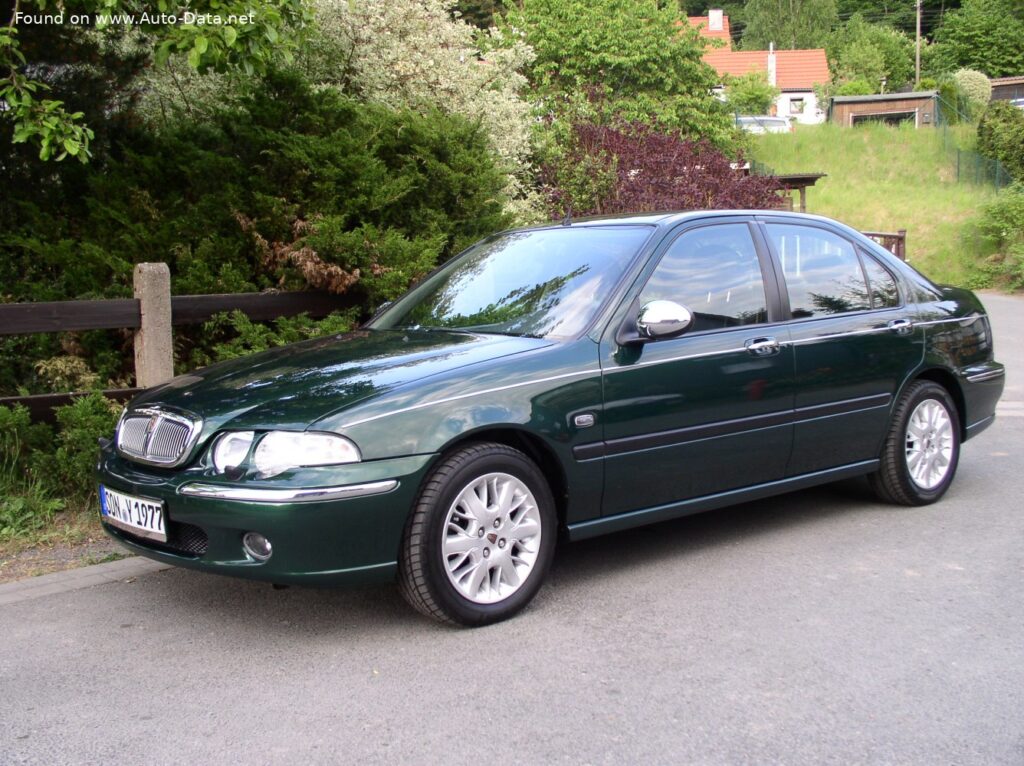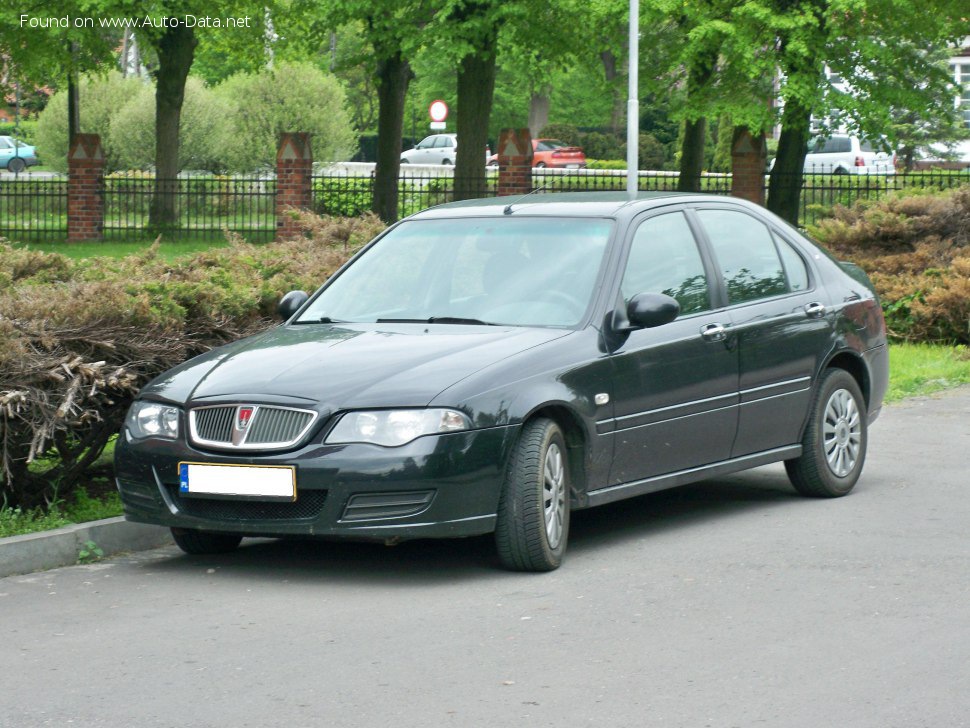
The Rover 45 Hatchback (RT) 2.0 TD (113 Hp) represents a significant, though often overlooked, chapter in the history of the British automotive manufacturer Rover. Produced from 2002 to 2005, this model occupied the competitive compact family car segment, known in Europe as the C-segment. As a direct descendant of the Rover 400 series – a vehicle sharing its underpinnings with the Honda Civic and Domani – the Rover 45 aimed to deliver a blend of traditional British comfort, sensible economics, and everyday practicality. While Rover vehicles were never officially sold in the United States, they held a notable presence in European and Asian markets, distinguished by a focus on ride quality and a more mature design aesthetic compared to some of its contemporaries. The 2.0 TD variant, powered by a robust diesel engine, was particularly well-suited to the European market’s growing preference for diesel technology, offering fuel efficiency and strong torque.
Rover 45 Hatchback (RT) 2.0 TD: A Detailed Overview
The Rover 45 was conceived as a replacement for the aging Rover 400, aiming to modernize Rover’s image and appeal to a broader customer base. It was a crucial model for the company, representing an attempt to compete effectively in a segment dominated by established players like the Ford Focus, Vauxhall/Opel Astra, and Volkswagen Golf. The RT trim level signified a mid-range specification, offering a balance of features and affordability. The 2.0 TD engine option provided a diesel alternative, catering to drivers prioritizing fuel economy and low running costs. Despite its merits, the Rover 45 ultimately faced challenges due to Rover’s financial difficulties and eventual collapse in 2005.
Engine & Performance
The Rover 45 Hatchback (RT) 2.0 TD (113 Hp) is powered by a 2.0-liter (1994 cm³ or 121.68 cubic inches) inline four-cylinder turbocharged diesel engine, internally designated as the L / 20T2N. This engine benefited from a modern Commonrail direct fuel injection system, a technology that significantly improved efficiency and refined power delivery compared to older diesel designs. The engine’s compression ratio of 19.5:1, typical for diesels of that era, combined with the turbocharger and intercooler, allowed it to produce 113 horsepower at 4200 rpm.
However, the engine’s defining characteristic was its torque output. It generated a substantial 191.77 lb.-ft. of torque at a low 2000 rpm. This abundance of low-end torque made the Rover 45 2.0 TD particularly well-suited for urban driving and highway cruising, providing effortless acceleration and minimizing the need for frequent gear changes. Power is transmitted to the front wheels through a reliable 5-speed manual transmission.
Performance figures for the Rover 45 Hatchback (RT) 2.0 TD (113 Hp) were respectable for its class. It could accelerate from 0 to 60 mph in approximately 9.3 seconds, achieving a top speed of around 118.06 mph. Fuel economy was a key strength, especially in the European market. The vehicle achieved an urban fuel economy of 30.2 US mpg and an impressive extra-urban (highway) economy of 54.7 US mpg. The engine’s front-transverse mounting contributed to efficient packaging and maximized interior space.
Design & Features
The Rover 45 Hatchback (RT) adopted the established design language of Rover, characterized by a conservative yet elegant aesthetic. The 5-door hatchback body style prioritized practicality and versatility, making it a popular choice for families and individuals requiring flexible cargo space. Its dimensions – 171.73 inches in length, 66.77 inches in width, and 54.88 inches in height – provided a balance between maneuverability in urban environments and a comfortable cabin. The 103.15-inch wheelbase contributed to a stable ride.
Inside, the Rover 45 offered a comfortable and well-appointed cabin, reflecting Rover’s traditional emphasis on ride quality. The RT trim level included features such as power steering, central locking, electric front windows, and an audio system. Safety features, while not as comprehensive as those found in modern vehicles, included driver and passenger airbags and anti-lock brakes (ABS) on some models. The interior design was functional and user-friendly, with a focus on providing a comfortable driving experience. The Rover 45’s design, while not groundbreaking, was well-executed and appealed to buyers seeking a refined and understated vehicle.
Technical Specifications
| Engine Type | 2.0L Inline-4 Turbo Diesel |
| Engine Code | L / 20T2N |
| Displacement | 1994 cm³ (121.68 cu in) |
| Compression Ratio | 19.5:1 |
| Maximum Power | 113 hp @ 4200 rpm |
| Maximum Torque | 191.77 lb-ft @ 2000 rpm |
| Fuel System | Commonrail Direct Injection |
| Transmission | 5-Speed Manual |
| Drivetrain | Front-Wheel Drive |
| 0-60 mph | 9.3 seconds (approx.) |
| Top Speed | 118.06 mph (approx.) |
| Urban Fuel Economy | 30.2 US mpg |
| Extra-Urban Fuel Economy | 54.7 US mpg |
| Length | 171.73 inches |
| Width | 66.77 inches |
| Height | 54.88 inches |
| Wheelbase | 103.15 inches |