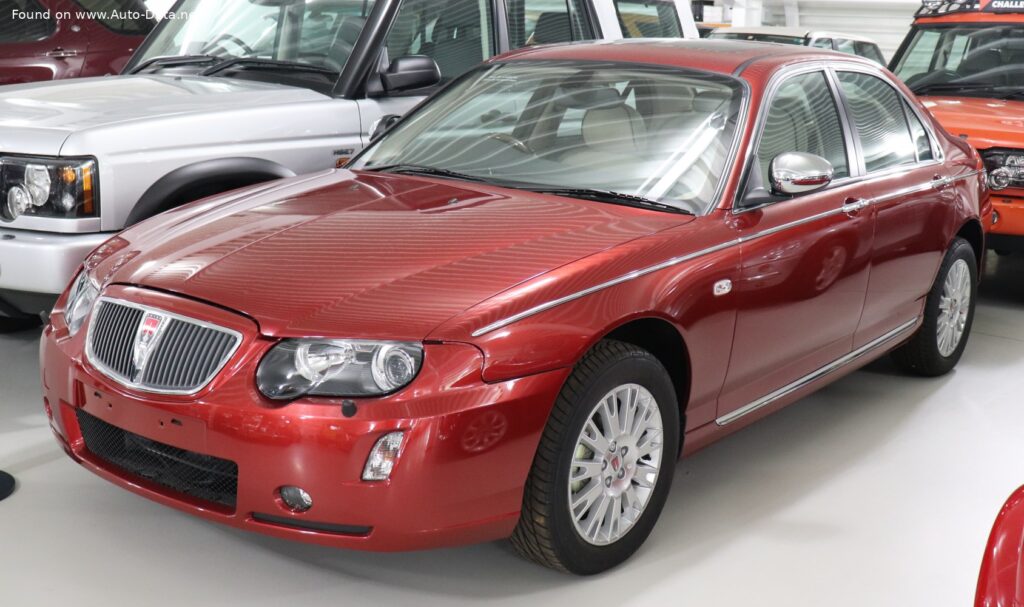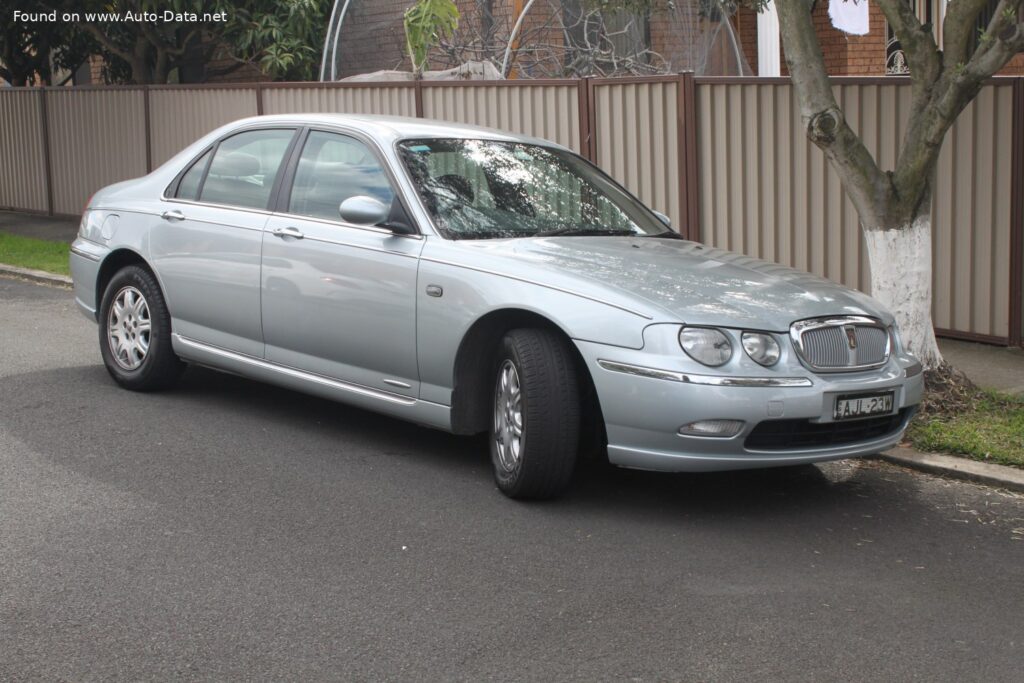
The Rover 75 2.0 CDTi (131 Hp) represents a poignant chapter in the history of British automotive manufacturing. Produced between 2002 and 2004, this mid-size executive sedan was a key offering during a tumultuous period for the Rover marque. Initially launched in 1998 under BMW ownership, the Rover 75 aimed to combine traditional British styling and luxury with German engineering. Primarily targeted at the European market, it competed with established rivals, emphasizing ride comfort and refinement. The 2.0 CDTi model, powered by a robust turbodiesel engine, proved particularly popular due to its efficiency and strong torque, appealing to a growing demand for diesel power in the executive car segment.
Rover 75 2.0 CDTi: A British Executive Sedan
The Rover 75 was distinguished by its elegant design, evoking classic British automobiles from the 1940s and 1950s while incorporating contemporary safety and convenience features. This generation, available exclusively as a four-door sedan, was known for its comfortable interior, smooth ride, and understated luxury. The 2.0 CDTi variant offered a compelling package for buyers seeking a sophisticated and economical long-distance vehicle, representing Rover’s final attempt at a premium product before the company’s eventual demise.
Engine & Performance
The heart of the Rover 75 2.0 CDTi (131 Hp) is a 1,951 cubic centimeter (2.0-liter) inline four-cylinder turbodiesel engine, designated M47R. This engine was derived from BMW’s well-regarded M47 engine family, a testament to the collaboration during BMW’s ownership of the Rover Group. The powertrain, featuring a front-wheel drive configuration, was central to the 75’s appeal in its target markets. Utilizing a common rail direct fuel injection system – a sophisticated technology for its time – the engine delivered precise fuel delivery, optimizing both power and fuel efficiency. A turbocharger and intercooler further enhanced performance, providing a strong and linear power delivery throughout the engine’s operating range.
The 2.0 CDTi engine produces 131 horsepower at 4,000 revolutions per minute (rpm), providing sufficient power for highway cruising and confident overtaking maneuvers. However, its standout characteristic is its impressive torque output of 221.27 pound-feet at a low 1,900 rpm. This substantial torque, readily available at low engine speeds, contributes to the car’s effortless feel and responsiveness, particularly in urban driving and during acceleration. Power is transferred to the front wheels via a smooth-shifting 5-speed manual transmission, favored by European drivers for its engagement and control.
Performance figures for the Rover 75 2.0 CDTi (131 Hp) were respectable for its class. Acceleration from 0 to 60 miles per hour took approximately 9.8 seconds, while the maximum speed reached around 119.92 miles per hour. However, the true strength of the diesel powertrain lay in its exceptional fuel economy. The combined cycle fuel consumption was rated at an impressive 40.6 miles per gallon (US), with extra-urban figures reaching an outstanding 53.5 US mpg. Even in city driving, the vehicle achieved a commendable 29 US mpg. These figures, combined with CO2 emissions of 163 grams per kilometer, made the 2.0 CDTi a financially sensible choice for European motorists seeking an executive car.
Design & Features
The Rover 75’s design represented a deliberate departure from the angular styling trends of the late 1990s and early 2000s. Its appearance was characterized by an elegant, nostalgic aesthetic, featuring prominent chrome accents, rounded lines, and the classic Rover grille. This retro-inspired design was a key differentiator, attracting buyers who appreciated a more traditional and sophisticated look.
As a four-door sedan, the Rover 75 comfortably accommodated five passengers, prioritizing comfort and refinement. The interior was praised for its high-quality materials, tasteful wood and chrome trim, and an ergonomic layout that created a serene driving environment. Attention to detail, such as the analogue clock on the dashboard and the plush seating, contributed to an atmosphere of understated luxury. The trunk (boot) offered 15.26 cubic feet of storage space, ample for family trips or business travel.
The Rover 75’s chassis was engineered for comfort. The front suspension utilized a wishbone setup, providing good wheel control and ride quality, while the rear employed a coil spring arrangement. This combination, along with a rack and pinion steering system, resulted in a smooth and composed ride, effectively absorbing road imperfections. Braking performance was provided by ventilated discs at the front and solid discs at the rear, enhanced by an Anti-lock Braking System (ABS) for improved safety and stability during emergency braking. The vehicle rode on 195/65 R15 tires mounted on 6J x 15-inch wheel rims, a specification chosen to balance ride comfort with adequate grip.
Technical Specifications
| Category | Specification |
| Brand | Rover |
| Model | 75 |
| Generation | 75 |
| Type (Engine) | 2.0 CDTi (131 Hp) |
| Start of Production | 2002 |
| End of Production | 2004 |
| Powertrain Architecture | Internal Combustion engine |
| Body Type | Sedan |
| Seats | 5 |
| Doors | 4 |
| Fuel Consumption (Economy) – Urban | 8.1 l/100 km (29 US mpg) |
| Fuel Consumption (Economy) – Extra Urban | 4.4 l/100 km (53.5 US mpg) |
| Fuel Consumption (Economy) – Combined | 5.8 l/100 km (40.6 US mpg) |
| CO2 Emissions | 163 g/km |
| Fuel Type | Diesel |
| Acceleration 0 – 60 mph | 9.8 sec |
| Maximum Speed | 193 km/h (119.92 mph) |
| Weight-to-Power Ratio | 11.5 kg/Hp (86.8 Hp/tonne) |
| Weight-to-Torque Ratio | 5 kg/Nm (198.7 Nm/tonne) |
| Power | 131 Hp @ 4000 rpm |
| Power per Liter | 67.1 Hp/l |
| Torque | 300 Nm @ 1900 rpm (221.27 lb.-ft. @ 1900 rpm) |
| Engine Displacement | 1951 cm3 (2.0 Liters / 119.06 cu. in.) |
| Number of Cylinders | 4 |
| Engine Configuration | Inline |
| Cylinder Bore | 84 mm (3.31 in.) |
| Piston Stroke | 88 mm (3.46 in.) |
| Compression Ratio | 18:1 |
| Fuel Injection System | Diesel Commonrail |
| Engine Aspiration | Turbocharger, Intercooler |
| Kerb Weight | 1510 kg (3328.98 lbs.) |
| Trunk (Boot) Space – Minimum | 432 l (15.26 cu. ft.) |
| Fuel Tank Capacity | 65 l (17.17 US gal) |
| Length | 4747 mm (186.89 in.) |
| Width | 1778 mm (70 in.) |
| Height | 1424 mm (56.06 in.) |
The Rover 75, and the 2.0 CDTi variant in particular, occupies a unique position in automotive history. Developed during a critical period for the Rover brand, it represented a genuine attempt to restore Rover to its former glory. While ultimately unsuccessful in preventing the company’s collapse, the Rover 75 remains a cherished vehicle among enthusiasts, celebrated for its distinctive styling, comfortable driving experience, and the robust BMW-derived powertrain. It stands as a testament to a bygone era of British automotive engineering and a poignant reminder of a brand that once held a prominent place in the global automotive landscape.