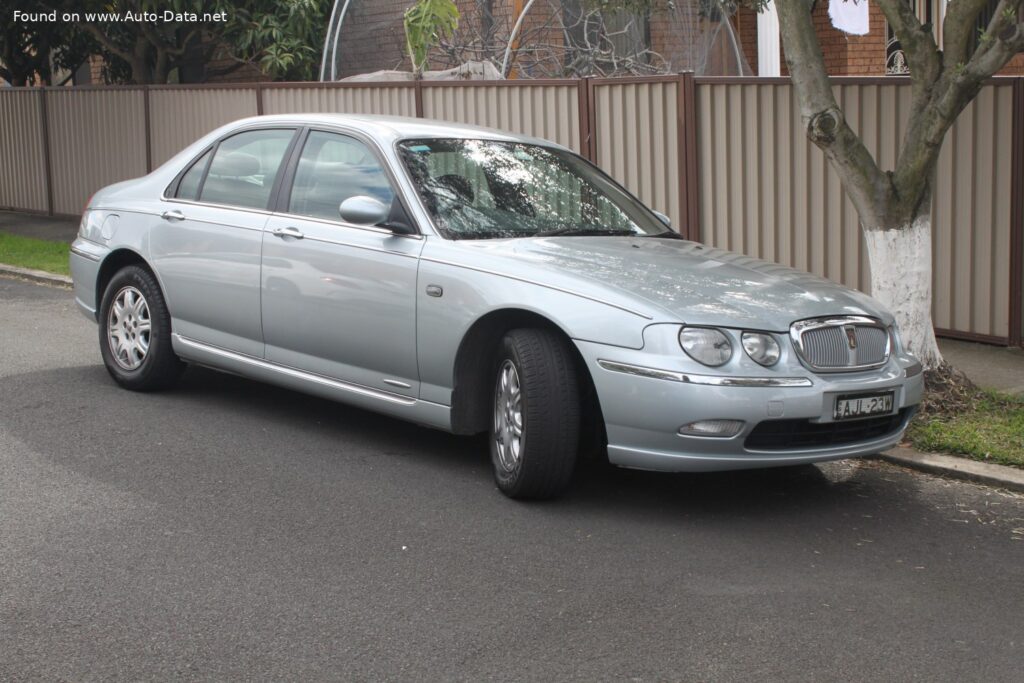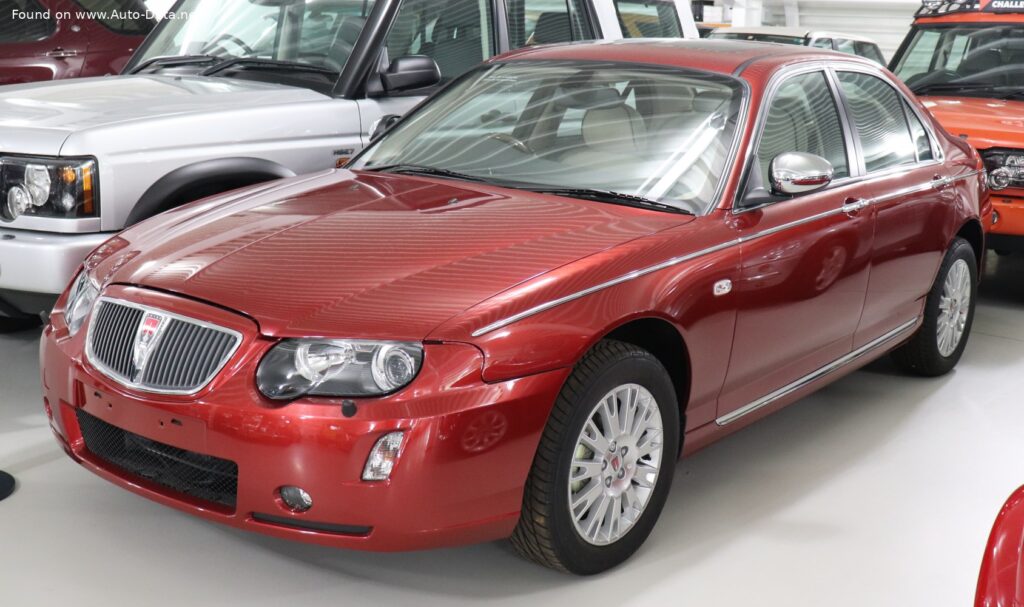
The Rover 75 (facelift 2004) 2.0 CDT (116 Hp) Automatic represents a poignant final chapter in the history of British automotive manufacturing. Positioned as a premium mid-size sedan, the Rover 75 aimed to combine classic British design sensibilities with modern engineering, benefiting from its period under BMW ownership. Though never officially sold in the United States, the Rover 75 found a dedicated following in Europe and other international markets, offering a distinctive alternative to established German and Swedish competitors. This particular variant, featuring the 2.0 CDT diesel engine paired with an automatic transmission, prioritized refined comfort, fuel efficiency, and a relaxed driving experience – qualities highly valued by European consumers.
Rover 75 (facelift 2004): A British Icon’s Last Stand
Launched initially in 1998, the Rover 75 was immediately recognized for its retro-futuristic aesthetic, skillfully blending nostalgic Rover design cues with contemporary styling. The 2004 facelift introduced subtle but important refinements to the exterior, interior, and technical specifications, intended to maintain the model’s competitiveness in a rapidly evolving automotive landscape. Despite its inherent qualities and critical acclaim for its ride comfort and interior ambiance, the Rover 75 ultimately became one of the last significant models produced by the British marque before its collapse in 2005.
Engine & Performance: The 2.0 CDT Powertrain
The Rover 75 (facelift 2004) 2.0 CDT is powered by a 1951 cubic centimeter (2.0-liter) inline-four diesel engine, designated M47R / 204D2. This engine, derived from BMW’s respected M47 series, contributed significantly to the 75’s reputation for refined performance and fuel economy. Equipped with common rail direct fuel injection, a turbocharger, and an intercooler, the engine produces 116 horsepower at 4000 rpm. More notably for a diesel powerplant, it generates 191.77 lb.-ft. of torque at a low 2000 rpm, providing ample pulling power and effortless acceleration in typical driving conditions.
The powertrain is coupled with a 5-speed automatic transmission, driving the front wheels. While not intended for high-performance driving, the combination delivers smooth gear changes and a relaxed driving experience. The Rover 75 (facelift 2004) could accelerate from 0 to 60 mph in 12.3 seconds, achieving a top speed of approximately 120 mph (119.92 mph). These figures were competitive for a comfortable cruiser in its segment and era, particularly considering the automatic transmission. Fuel efficiency was a key strength, with a combined fuel consumption of 34.1 US mpg, decreasing to 23.5 US mpg in urban environments but rising to an impressive 45.2 US mpg on the highway. This made the 2.0 CDT an attractive option for European drivers undertaking long journeys, further supported by its Euro 3 emission standard compliance.
Design & Features: Elegance and Comfort
The design of the Rover 75 (facelift 2004) largely retained the acclaimed aesthetic of the original model, drawing inspiration from classic Rovers of the 1940s and 1950s. Its four-door sedan body style projected an air of understated elegance and British refinement. Key design elements included a prominent chrome grille, twin headlights, and a gracefully sculpted silhouette. The facelift incorporated subtle changes, such as revised front and rear bumpers, updated lighting signatures, and new alloy wheel designs, aiming for a more contemporary appearance without compromising its distinctive character.
The interior of the Rover 75 was celebrated for its inviting and luxurious cabin. High-quality materials, often including wood veneers and chrome accents, created an atmosphere of traditional British craftsmanship. The seating, designed for five occupants, prioritized comfort, making long trips enjoyable. Practicality was also considered, with a trunk capacity ranging from 15.26 cubic feet to 23.8 cubic feet with the rear seats folded. Standard features included power steering with a hydraulic system for tactile feedback, and safety was addressed with ventilated disc brakes at the front, solid discs at the rear, and an Anti-lock Braking System (ABS). The independent McPherson strut front suspension and multi-link rear suspension provided a comfortable ride, enhancing the car’s overall driving dynamics.
Technical Specifications
| Category | Specification |
| General Information | |
| Brand | Rover |
| Model | 75 |
| Generation | 75 (facelift 2004) |
| Type (Engine) | 2.0 CDT (116 Hp) Automatic |
| Start of Production | 2004 |
| End of Production | 2005 |
| Powertrain Architecture | Internal Combustion engine |
| Body type | Sedan |
| Seats | 5 |
| Doors | 4 |
| Performance Specs | |
| Fuel consumption (urban) | 10 l/100 km (23.5 US mpg) |
| Fuel consumption (extra urban) | 5.2 l/100 km (45.2 US mpg) |
| Fuel consumption (combined) | 6.9 l/100 km (34.1 US mpg) |
| CO2 emissions | 190 g/km |
| Fuel Type | Diesel |
| Acceleration 0 – 60 mph | 12.3 sec |
| Maximum speed | 193 km/h (119.92 mph) |
| Emission standard | Euro 3 |
| Weight-to-power ratio | 13.2 kg/Hp (75.8 Hp/tonne) |
| Weight-to-torque ratio | 5.9 kg/Nm (169.9 Nm/tonne) |
| Engine Specs | |
| Power | 116 Hp @ 4000 rpm |
| Power per liter | 59.5 Hp/l |
| Torque | 260 Nm @ 2000 rpm (191.77 lb.-ft. @ 2000 rpm) |
| Engine layout | Front, Transverse |
| Engine Model/Code | M47R / 204D2 |
| Engine displacement | 1951 cm3 (119.06 cu. in.) |
| Number of cylinders | 4 |
| Engine configuration | Inline |
| Cylinder Bore | 84 mm (3.31 in.) |
| Piston Stroke | 88 mm (3.46 in.) |
| Compression ratio | 18:1 |
| Number of valves per cylinder | 4 |
| Fuel injection system | Diesel Commonrail |
| Engine aspiration | Turbocharger, Intercooler |
| Valvetrain | DOHC |
| Engine oil capacity | 6.8 l (7.19 US qt) |
| Coolant | 8.2 l (8.66 US qt) |
| Space, Volume and Weights | |
| Kerb Weight | 1530-1655 kg (3373.07 – 3648.65 lbs.) |
| Max. weight | 2030 kg (4475.38 lbs.) |
| Max load | 375-500 kg (826.73 – 1102.31 lbs.) |
| Trunk (boot) space – minimum | 432 l (15.26 cu. ft.) |
| Trunk (boot) space – maximum | 674 l (23.8 cu. ft.) |
| Fuel tank capacity | 65 l (17.17 US gal) |
| Max. roof load | 80 kg (176.37 lbs.) |
| Permitted trailer load with brakes (12%) | 1600 kg (3527.4 lbs.) |
| Permitted trailer load without brakes | 750 kg (1653.47 lbs.) |
| Permitted towbar download | 100 kg (220.46 lbs.) |
| Dimensions | |
| Length | 4749 mm (186.97 in.) |
| Width | 1778 mm (70 in.) |
| Width including mirrors | 1970 mm (77.56 in.) |
| Height | 1393 mm (54.84 in.) |
| Wheelbase | 2746 mm (108.11 in.) |
| Front track | 1511 mm (59.49 in.) |
| Rear (Back) track | 1504 mm (59.21 in.) |
| Front overhang | 915 mm (36.02 in.) |
| Rear overhang | 1087 mm (42.8 in.) |
| Minimum turning circle (turning diameter) | 11.33 m (37.17 ft.) |
| Drivetrain, Brakes and Suspension Specs | |
| Drivetrain Architecture | Front wheel drive |
| Drive wheel | Front wheel drive |
| Number of gears and type of gearbox | 5 gears, automatic transmission |
| Front suspension | Independent, McPherson with coil spring and anti-roll bar |
| Rear suspension | Independent multi-link spring suspension with stabilizer |
| Front brakes | Ventilated discs |
| Rear brakes | Disc |
| Assisting systems | ABS (Anti-lock braking system) |
| Steering type | Steering rack and pinion |
| Power steering | Hydraulic Steering |
| Tires size | 195/65 R15; 205/60 R15; 215/55 R16 |
| Wheel rims size | 6J x 15; 6.5J x 16 |
The Rover 75 (facelift 2004) occupies a unique and somewhat bittersweet position in automotive history. It was a well-engineered and aesthetically pleasing vehicle, a testament to the talent within Rover and the positive influence of BMW’s engineering during its development. In its primary European market, it competed with premium sedans like the Audi A4, BMW 3 Series, Mercedes-Benz C-Class, and Volvo S60. While it often lacked the dynamic performance or brand recognition of its German rivals, the Rover 75 established a niche by offering a uniquely British blend of comfort, classic charm, and distinctive styling at a competitive price.
Its reputation was built on exceptional ride quality, a quiet cabin, and a sense of occasion that few competitors could match. The 2.0 CDT diesel engine, in particular, was praised for its refinement and economy. However, the car’s impact was overshadowed by the financial difficulties of MG Rover. The 2004 facelift, intended to revitalize the model, arrived just before the company’s administration, ending the Rover brand. This makes the facelifted Rover 75 a significant historical artifact, representing the final, determined effort of a once-great British automaker to produce a competitive and desirable premium vehicle. Today, it is cherished by enthusiasts for its unique character, comfortable ride, and timeless design, serving as a reminder of what could have been for Rover.