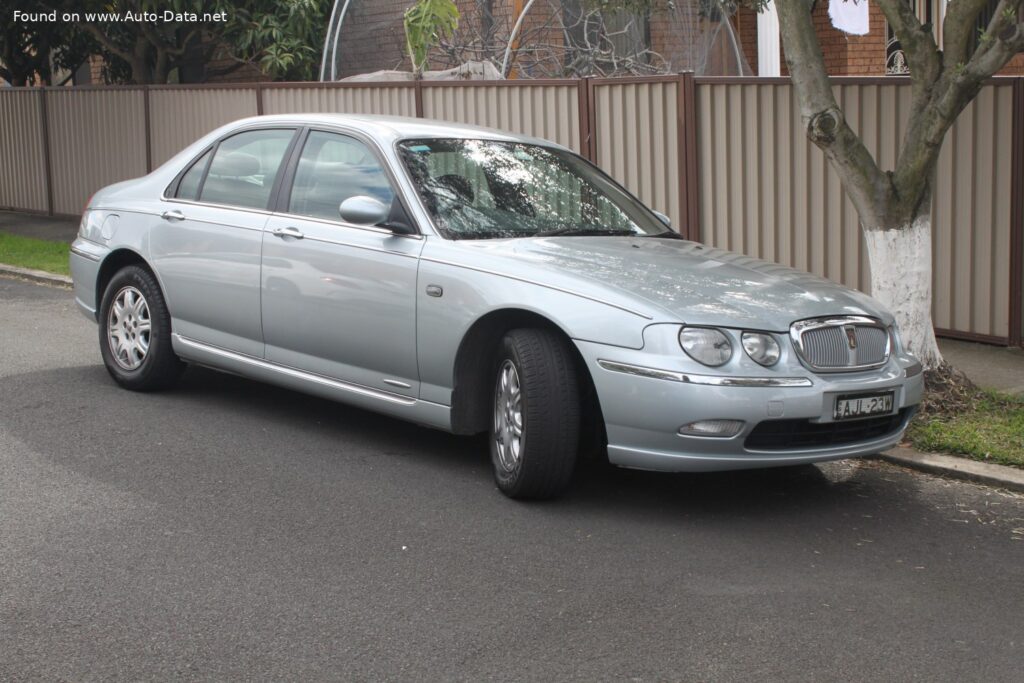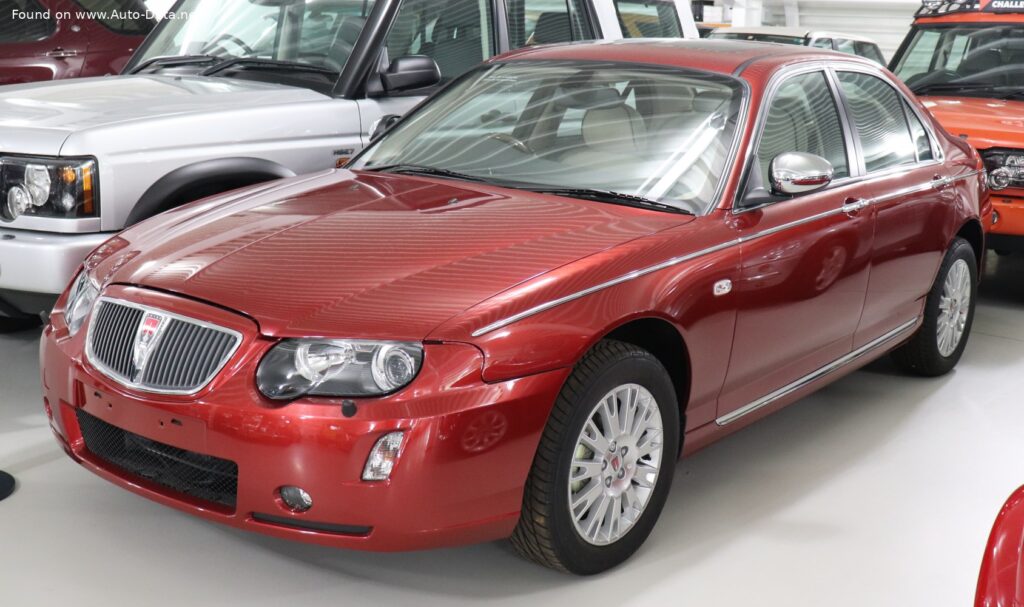
The Rover 75 (facelift 2004), particularly the 2.0 CDTi variant, represents a poignant final chapter in the history of British automotive manufacturing. Positioned as a mid-size luxury sedan, the Rover 75 aimed to blend traditional British styling and craftsmanship with modern engineering, benefiting significantly from its period under BMW ownership. While never officially sold in the United States, the 75 was a notable competitor in the European executive car segment, offering a distinctive alternative to established German rivals. The 2004 facelift was introduced to refresh the model’s appeal in its final years of production before the collapse of MG Rover Group in 2005. The 2.0 CDTi engine, producing 131 horsepower, proved a popular choice due to its balance of performance and fuel efficiency in key European markets.
Engine & Performance of the Rover 75 (facelift 2004)
The Rover 75 (facelift 2004) 2.0 CDTi is powered by a robust and well-regarded turbodiesel engine, designated M47R/204D2. This powerplant is a derivative of BMW’s acclaimed M47 diesel engine, adapted for Rover’s front-wheel-drive platform. The engine boasts a displacement of 1,951 cubic centimeters (approximately 2.0 liters or 119.06 cubic inches) and utilizes an inline four-cylinder configuration. Key features include a common rail fuel injection system, a turbocharger, and an intercooler, all contributing to responsive power delivery and respectable fuel economy.
The engine generates 131 horsepower at 3,500 revolutions per minute, resulting in a power-to-liter ratio of 67.1 horsepower per liter. More importantly for a diesel engine, it produces a substantial 221.27 pound-feet of torque at a low 1,900 rpm. This ample low-end torque contributes to the car’s refined driving characteristics and effortless cruising ability, hallmarks of a well-engineered executive sedan. Power is transferred to the front wheels via a smooth 5-speed manual transmission, providing a direct and engaging driving experience.
Performance figures for the Rover 75 2.0 CDTi include a 0 to 60 mph acceleration time of 10.3 seconds and a maximum speed of 119.92 mph (193 km/h). While not designed as a sports sedan, these figures are competitive within its class, particularly for a diesel variant prioritizing efficiency. Fuel economy is a significant strength, with an estimated 40.6 US miles per gallon in combined driving conditions. Urban consumption is rated at 29 US mpg, while extra-urban driving can achieve an impressive 53.5 US mpg. The vehicle complies with Euro 3 emission standards, with CO2 emissions of 163 g/km, making it an economically sensible choice for long-distance travel.
Design & Features of the Rover 75 (facelift 2004)
The Rover 75 (facelift 2004) retains the elegant “new retro” styling that characterized the model since its 1999 introduction. The facelift incorporates subtle but noticeable exterior revisions, including redesigned front and rear bumpers, a more prominent grille featuring a larger Rover badge, and updated headlamp and taillight designs. These changes provide a slightly more modern and assertive appearance while preserving the car’s distinctly British character. The sedan body style, with four doors and seating for five, projects an image of understated luxury.
The Rover 75 measures 186.97 inches in length, 70 inches in width (77.56 inches including mirrors), and 54.84 inches in height, with a wheelbase of 108.11 inches. The cabin is spacious and well-appointed, renowned for its high-quality materials, traditional wood trim, and chrome accents, creating a warm and inviting atmosphere reminiscent of classic British luxury cars. The seating is plush and supportive, designed for long-distance comfort.
Practicality is also a key attribute, with a trunk (boot) capacity ranging from 15.26 cubic feet (432 liters) to 23.8 cubic feet (674 liters) with the rear seats folded. Safety features for the era include an Anti-lock Braking System (ABS) and ventilated disc brakes at the front, complemented by disc brakes at the rear. The independent McPherson strut front suspension with an anti-roll bar and an independent multi-link rear suspension with a stabilizer ensure a comfortable ride and stable handling. Hydraulic power steering, utilizing a rack and pinion system, provides precise and communicative feedback to the driver.
Technical Specifications: Rover 75 (facelift 2004) 2.0 CDTi (131 Hp)
| Category | Specification |
| Brand | Rover |
| Model | 75 (facelift 2004) |
| Type (Engine) | 2.0 CDTi (131 Hp) |
| Production Start/End | 2004 – 2005 |
| Powertrain Architecture | Internal Combustion Engine |
| Body Type | Sedan (4 Doors, 5 Seats) |
| Fuel Consumption (Urban) | 8.1 l/100 km (29 US mpg) |
| Fuel Consumption (Extra Urban) | 4.4 l/100 km (53.5 US mpg) |
| Fuel Consumption (Combined) | 5.8 l/100 km (40.6 US mpg) |
| CO2 Emissions | 163 g/km (Euro 3 Standard) |
| Fuel Type | Diesel |
| Acceleration 0 – 60 mph | 10.3 sec |
| Maximum Speed | 193 km/h (119.92 mph) |
| Power | 131 Hp @ 3500 rpm (67.1 Hp/l) |
| Torque | 300 Nm @ 1900 rpm (221.27 lb.-ft. @ 1900 rpm) |
| Engine Layout | Front, Transverse |
| Engine Model/Code | M47R / 204D2 (BMW-derived engine) |
| Engine Displacement | 1951 cm3 (119.06 cu. in. approx. 2.0 Liters) |
| Number of Cylinders | 4, Inline |
| Cylinder Bore | 84 mm (3.31 in.) |
| Piston Stroke | 88 mm (3.46 in.) |
| Compression Ratio | 18:1 |
| Valves per Cylinder | 4 |
| Fuel Injection System | Diesel Commonrail |
| Engine Aspiration | Turbocharger, Intercooler |
| Valvetrain | DOHC |
| Engine Oil Capacity | 6.8 l (7.19 US qt) |
| Coolant Capacity | 8.2 l (8.66 US qt) |
| Kerb Weight | 1510-1635 kg (3328.98 – 3604.56 lbs.) |
| Max. Weight | 2030 kg (4475.38 lbs.) |
| Max Load | 395-520 kg (870.83 – 1146.4 lbs.) |
| Trunk (Boot) Space | 432 – 674 l (15.26 – 23.8 cu. ft.) |
| Fuel Tank Capacity | 65 l (17.17 US gal) |
| Length | 4749 mm (186.97 in.) |
| Width | 1778 mm (70 in.) |
| Width including mirrors | 1970 mm (77.56 in.) |
| Height | 1393 mm (54.84 in.) |
| Wheelbase | 2746 mm (108.11 in.) |
| Front Track | 1511 mm (59.49 in.) |
| Rear Track | 1504 mm (59.21 in.) |
| Minimum Turning Circle | 11.33 m (37.17 ft.) |
| Drivetrain Architecture | Front Wheel Drive (Internal Combustion Engine drives front wheels) |
| Number of Gears | 5 (Manual Transmission) |
| Front Suspension | Independent, McPherson with coil spring and anti-roll bar |
| Rear Suspension | Independent multi-link spring suspension with stabilizer |
| Front Brakes | Ventilated Discs |
| Rear Brakes | Disc |
| Assisting Systems | ABS (Anti-lock Braking System) |
| Steering Type | Steering rack and pinion |
| Power Steering | Hydraulic Steering |
| Tire Sizes | 195/65 R15; 205/60 R15; 215/55 R16 |
| Wheel Rim Sizes | 6J x 15; 6.5J x 16 |
Legacy & Market Impact of the Rover 75 (facelift 2004)
The Rover 75, including the 2004 facelift, holds a unique position in automotive history. Originally launched under BMW ownership, it was intended to be Rover’s flagship model, combining traditional British luxury with German engineering. Its “new retro” styling, inspired by classic Rovers, was initially divisive but ultimately praised for its elegance and individuality. The car’s refined ride, quiet cabin, and comfortable interior positioned it as a strong alternative to German executive sedans.
In Europe, the Rover 75 competed with the BMW 3 Series, Audi A4, Mercedes-Benz C-Class, Saab 9-3, and Volvo S60. While it didn’t match the dynamic handling of a BMW or the prestige of a Mercedes-Benz, the 75 offered a unique blend of character, comfort, and value. The 2.0 CDTi engine, benefiting from its BMW origins, was well-received for its performance and fuel economy.
The 2004 facelift was a final attempt to revitalize the model amidst the financial difficulties of MG Rover Group. Despite its qualities, it wasn’t enough to save the company. The Rover 75 (facelift 2004) was among the last vehicles produced at Longbridge before MG Rover’s collapse in 2005, marking the end of the Rover marque. Today, the 75 has a cult following, appreciated for its distinctive style, comfort, and as the final expression of a British luxury car manufacturer. It stands as a testament to Rover’s potential, even if its fate was ultimately determined by broader corporate challenges.