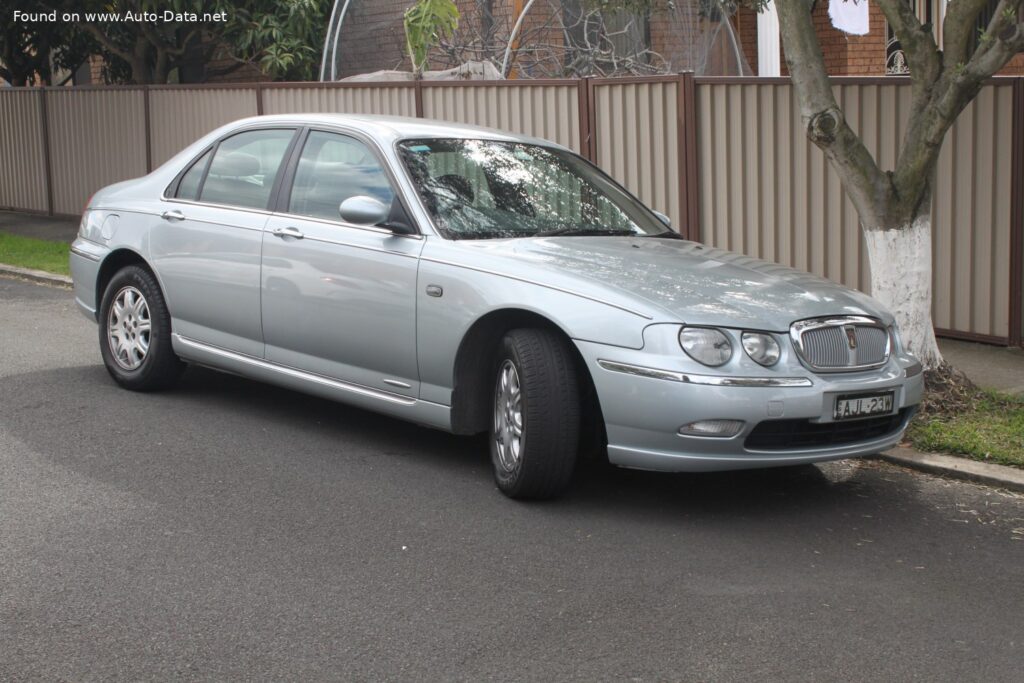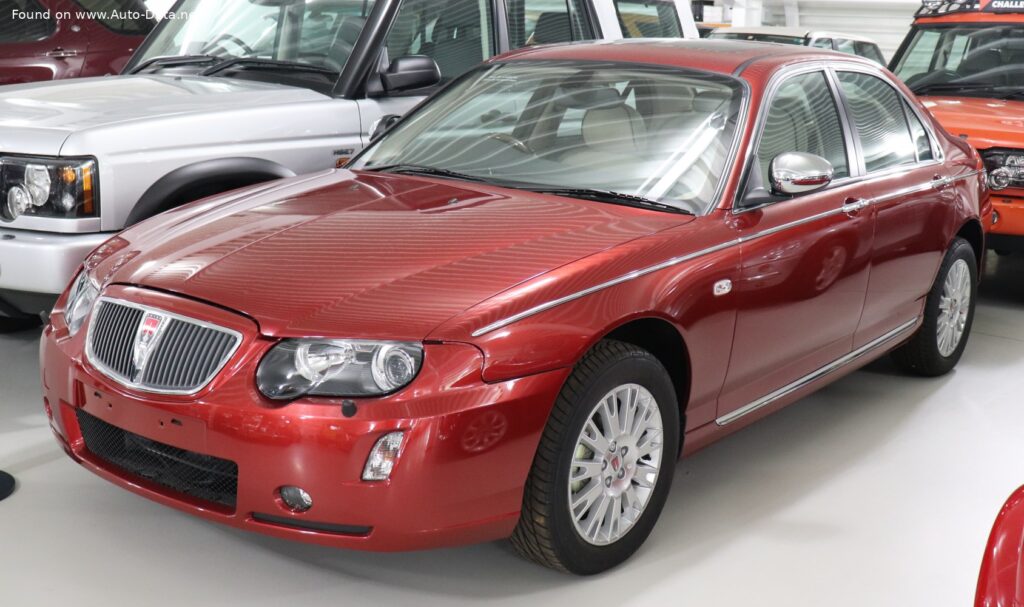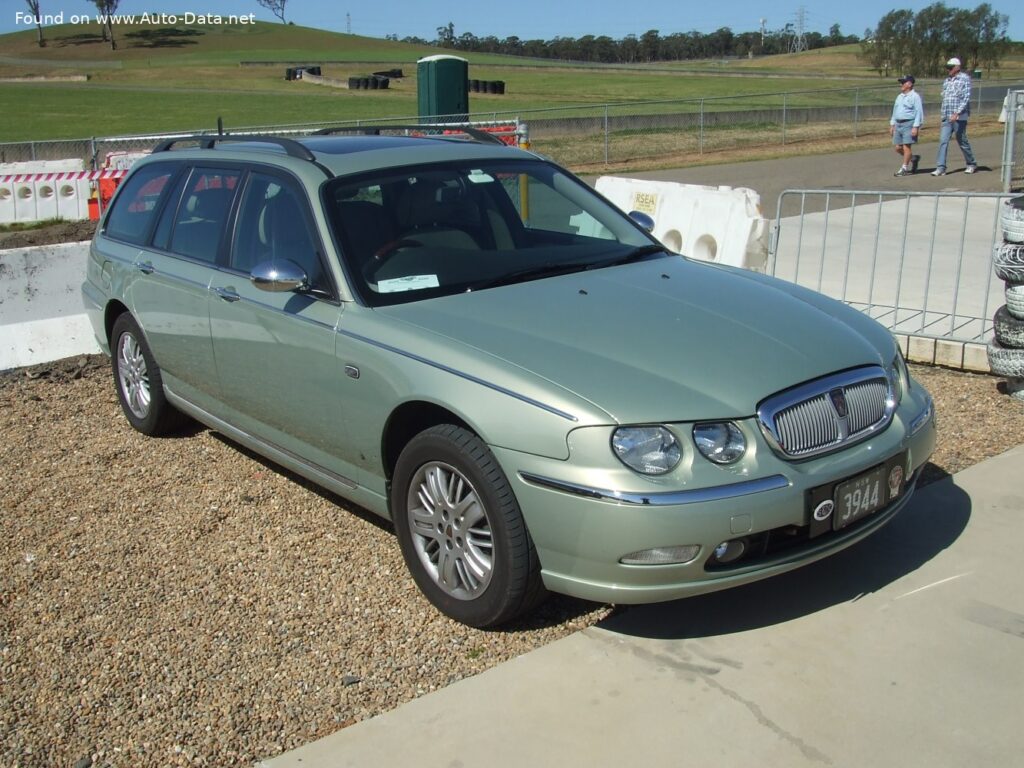
The Rover 75 Tourer 2.0 CDT (115 Hp) represents a significant chapter in the history of the British automotive marque, Rover. Produced between 2001 and 2004, this model was the station wagon (estate) version of the Rover 75 sedan, which debuted in 1998. Positioned in the competitive European D-segment, the 75 Tourer aimed to combine classic British luxury and refinement with modern engineering. The Tourer body style added practicality for families and those needing more cargo space, without sacrificing the distinctive retro-modern aesthetic of the Rover 75. This 2.0 CDT (115 Hp) variant was a popular choice in Europe, offering a blend of diesel efficiency, comfortable cruising, and understated elegance, and stood as a testament to Rover’s ambition to compete with established premium brands.
Engineering and Performance of the Rover 75 Tourer 2.0 CDT (115 Hp)
At the heart of the Rover 75 Tourer 2.0 CDT (115 Hp) lies a 2.0-liter (1951 cm3 or 119.06 cu. in.) inline-four turbodiesel engine. This powerplant, internally coded M47R / 204D2, was derived from BMW’s M47 diesel engine, adapted for Rover’s applications. It features a DOHC (Double Overhead Camshaft) valvetrain with four valves per cylinder and a common rail fuel injection system, representing modern diesel technology for its time. A turbocharger and intercooler further boosted power delivery.
The 2.0 CDT delivers 115 horsepower (Hp) at 4000 rpm, providing ample power for daily driving and highway cruising. More importantly, it generates 191.77 lb.-ft. of torque at 2000 rpm. This torque contributes to effortless acceleration and flexible in-gear performance, making it suitable for both urban and long-distance driving. Power is sent to the front wheels via a smooth-shifting 5-speed manual transmission.
Performance figures include a 0 to 60 mph acceleration time of 11.7 seconds and a top speed of 118.06 mph (190 km/h). While not a performance car, these figures are competitive for a family station wagon focused on economy and comfort. Fuel economy is a major selling point, with a combined rating of 40.6 US mpg (5.8 l/100 km). It achieves 30.5 US mpg (7.7 l/100 km) in urban settings and an impressive 50 US mpg (4.7 l/100 km) on the highway. With CO2 emissions of 163 g/km, it was an economical and environmentally conscious choice for European consumers.
Chassis and Handling
The Rover 75 Tourer is built on a platform designed for comfort and refinement. It features a front-wheel-drive architecture with a sophisticated suspension comprising wishbones at the front and coil springs at the rear. This contributes to the car’s well-regarded ride quality, absorbing road imperfections and providing a composed experience. Braking is handled by ventilated discs at the front and solid discs at the rear, complemented by an Anti-lock Braking System (ABS) for enhanced safety. Hydraulic power steering, utilizing a rack and pinion system, offers a traditional and communicative feel, contributing to the Rover 75’s smooth and comfortable driving experience.
Design and Features of the Rover 75 Tourer
The Rover 75 Tourer maintains the distinctive, retro-inspired styling of the sedan, translating its elegant lines into a practical station wagon form. Measuring 188.78 inches (4795 mm) in length, 70 inches (1778 mm) in width, and 56.06 inches (1424 mm) in height, with a 108.11-inch (2746 mm) wheelbase, the Tourer has a substantial road presence. Its design harkens back to classic British luxury cars, featuring chrome accents, a prominent grille, and smoothly sculpted body panels.
As a five-door, five-seat station wagon, the Tourer excels in versatility. The cargo area is a key differentiator, offering a minimum trunk capacity of 14.13 cu. ft. (400 liters), expandable to 43.15 cu. ft. (1222 liters) with the rear seats folded down. This makes it a practical vehicle for families, luggage, or equipment, embodying the “estate” car philosophy prevalent in Europe. The interior continues the theme of classic British luxury, featuring high-quality materials, comfortable seating, and a thoughtful layout. Trim levels could include wood or chrome trim, leather upholstery, and various convenience options.
Safety and Comfort
Standard safety features include ABS, crucial for maintaining steering control under heavy braking. The car is designed with a strong emphasis on occupant protection, featuring a rigid body structure and multiple airbags. Comfort is paramount, with a focus on noise isolation and ride refinement. The suspension tuning and cabin insulation ensure a quiet and composed environment, even on longer journeys. The vehicle’s generous dimensions translate into ample interior space for five occupants, making it a comfortable long-distance cruiser.
Technical Specifications: Rover 75 Tourer 2.0 CDT (115 Hp)
| Specification | Value |
| Brand | Rover |
| Model | 75 |
| Generation | 75 Tourer |
| Type (Engine) | 2.0 CDT (115 Hp) |
| Start of Production | 2001 year |
| End of Production | 2004 year |
| Powertrain Architecture | Internal Combustion engine |
| Body Type | Station wagon (estate) |
| Seats | 5 |
| Doors | 5 |
| Fuel Consumption (Economy) – Urban | 7.7 l/100 km (30.5 US mpg) |
| Fuel Consumption (Economy) – Extra Urban | 4.7 l/100 km (50 US mpg) |
| Fuel Consumption (Economy) – Combined | 5.8 l/100 km (40.6 US mpg) |
| CO2 Emissions | 163 g/km |
| Fuel Type | Diesel |
| Acceleration 0 – 60 mph | 11.7 sec |
| Maximum Speed | 118.06 mph (190 km/h) |
| Power | 115 Hp @ 4000 rpm |
| Power per liter | 58.9 Hp/l |
| Torque | 260 Nm (191.77 lb.-ft.) @ 2000 rpm |
| Engine Layout | Front, Transverse |
| Engine Model/Code | M47R / 204D2 |
| Engine Displacement | 1951 cm3 (119.06 cu. in.) |
| Number of Cylinders | 4 |
| Engine Configuration | Inline |
| Cylinder Bore | 84 mm (3.31 in.) |
| Piston Stroke | 88 mm (3.46 in.) |
| Compression Ratio | 18:1 |
| Number of Valves per Cylinder | 4 |
| Fuel Injection System | Diesel Commonrail |
| Engine Aspiration | Turbocharger, Intercooler |
| Valvetrain | DOHC |
| Engine Oil Capacity | 6.8 l (7.19 US qt) |
| Coolant | 8.2 l (8.66 US qt) |
| Kerb Weight | 1545 kg (3406.14 lbs.) |
| Max. Weight | 2090 kg (4607.66 lbs.) |
| Max Load | 545 kg (1201.52 lbs.) |
| Trunk (boot) Space – Minimum | 400 l (14.13 cu. ft.) |
| Trunk (boot) Space – Maximum | 1222 l (43.15 cu. ft.) |
| Fuel Tank Capacity | 65 l (17.17 US gal) |
| Length | 4795 mm (188.78 in.) |
| Width | 1778 mm (70 in.) |
| Height | 1424 mm (56.06 in.) |
| Wheelbase | 2746 mm (108.11 in.) |
| Front Track | 1505 mm (59.25 in.) |
| Rear (Back) Track | 1505 mm (59.25 in.) |
| Drivetrain Architecture | Front-wheel drive (Internal Combustion Engine drives front wheels) |
| Drive Wheel | Front wheel drive |
| Number of Gears and Type of Gearbox | 5 gears, manual transmission |
| Front Suspension | Wishbone |
| Rear Suspension | Coil spring |
| Front Brakes | Ventilated discs |
| Rear Brakes | Disc |
| Assisting Systems | ABS (Anti-lock braking system) |
| Steering Type | Steering rack and pinion |
| Power Steering | Hydraulic Steering |
| Tires Size | 195/65 R15 H |
Legacy and Market Impact
The Rover 75 Tourer 2.0 CDT (115 Hp) played a crucial role in Rover’s attempt to rejuvenate its brand image and compete in the European market during the early 2000s. While never sold in the United States, its impact was significant in Europe. The Rover 75 series was praised for its distinctive styling, offering a refreshing alternative to German and Japanese rivals. It blended British craftsmanship with modern engineering, particularly the BMW-derived diesel engine.
In its segment, the Rover 75 Tourer competed with the Ford Mondeo Estate, Vauxhall/Opel Vectra Caravan, Volkswagen Passat Variant, and entry-level premium offerings like the BMW 3 Series Touring and Audi A4 Avant. The Rover distinguished itself by prioritizing comfort, a serene ride, and a unique interior ambiance. Its diesel engine, particularly the 2.0 CDT, was well-regarded for its robustness, fuel economy, and torque.
Despite its strengths, the Rover 75 Tourer faced challenges stemming from Rover’s financial situation and its eventual demise in 2005. However, it is regarded as one of the finest vehicles produced by the Rover Group, a testament to what the brand could achieve with investment. Today, the Rover 75 Tourer 2.0 CDT (115 Hp) is appreciated by enthusiasts as a modern classic, valued for its unique character, comfortable ride, and understated elegance, representing a distinctive example of British automotive heritage.