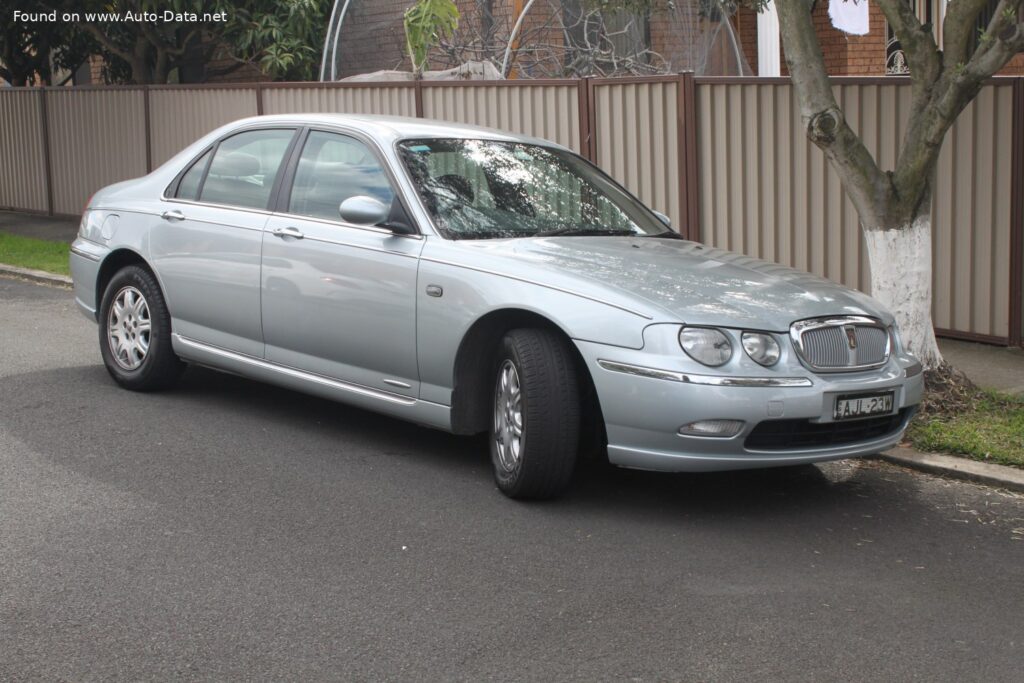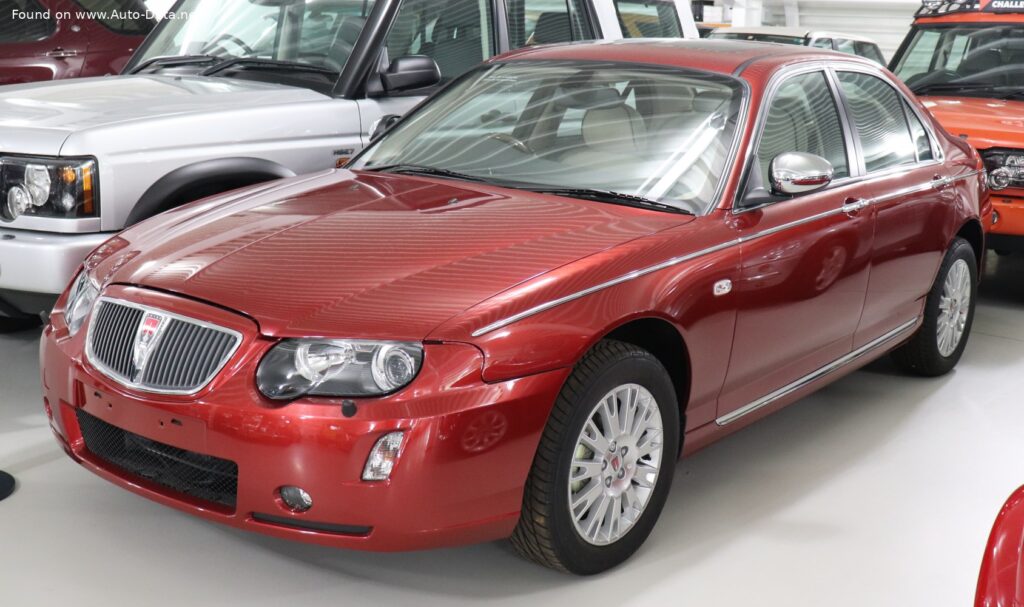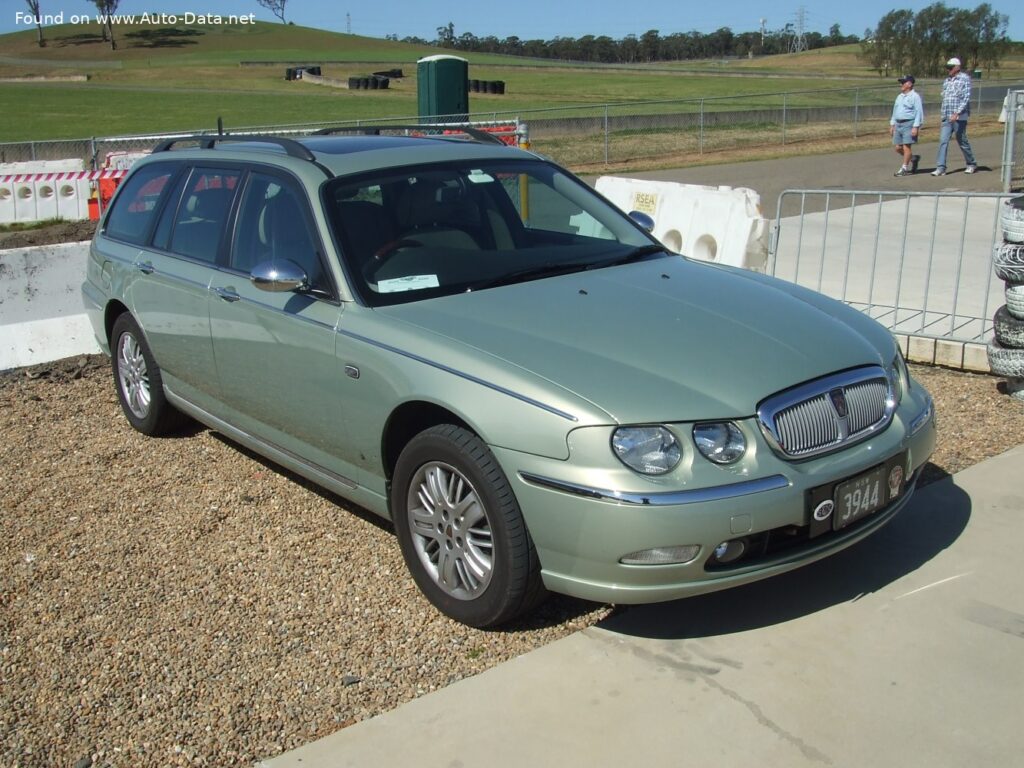
The Rover 75 Tourer 2.5 V6, produced between 2001 and 2004, represents a distinctive chapter in the history of the British automotive marque, Rover. Positioned as an executive compact car, the 75 series was Rover’s attempt to re-establish itself in the premium segment, offering a blend of traditional British luxury and contemporary engineering. The Tourer, or station wagon (estate) body style, added a layer of practicality to the elegant sedan, catering to families and professionals who desired both refinement and cargo versatility.
While the Rover brand enjoyed a long and storied history in its home market and across Europe, the 75 series, including the Tourer variant, was never officially imported or sold in the United States. Its primary markets were the United Kingdom and continental Europe, where it competed against established players like the BMW 3 Series Touring, Audi A4 Avant, and Volvo V70. The Rover 75 Tourer 2.5 V6 was particularly notable for its smooth V6 engine, refined ride quality, and a classic design aesthetic that evoked a sense of “olde world” charm, setting it apart from its more Germanic rivals. This article delves into the technical specifications, design philosophies, and market impact of this unique British offering.
The Rover 75 Tourer 2.5 V6: Engineering and Performance
Engine and Powertrain
At the heart of the Rover 75 Tourer 2.5 V6 (177 Hp) lies Rover’s proprietary KV6 engine. This 2.5-liter (2497 cm3 or 152.38 cubic inches) V-engine, designated KV6 / 25K4F, was a sophisticated unit for its time. It featured a DOHC (Dual Overhead Camshaft) valvetrain with four valves per cylinder, totaling 24 valves for the V6 configuration. With a compression ratio of 10.5:1 and a multi-port manifold fuel injection system, the naturally aspirated engine was designed for smooth power delivery and refinement, hallmarks of a premium executive vehicle.
The engine produced a respectable 177 horsepower at 6500 rpm, translating to a power-per-liter output of 70.9 horsepower per liter. Torque figures stood at 240 Nm (177.01 lb.-ft.) at 4000 rpm, providing ample pulling power for the station wagon body. Power was channeled to the front wheels via a 5-speed manual transmission, a setup chosen for its efficiency and direct driver engagement. The transverse engine layout was characteristic of many front-wheel-drive vehicles of the era, optimizing interior space. The powertrain architecture saw the internal combustion engine driving the front wheels, a practical and common arrangement.
Performance Metrics and Efficiency
Despite its emphasis on luxury and comfort, the Rover 75 Tourer 2.5 V6 offered commendable performance. It could accelerate from 0 to 60 mph in a calculated 8.4 seconds (0-100 km/h in 8.8 seconds), making it swift enough for most driving scenarios. The top speed was rated at 221 km/h (137.32 mph), ensuring confident highway cruising.
Fuel efficiency, while not class-leading by today’s standards, was reasonable for a 2.5-liter V6 engine from the early 2000s. The combined fuel economy was stated at 9.6 liters per 100 kilometers, which translates to approximately 24.5 US mpg. Urban consumption was higher at 14.0 l/100 km (16.8 US mpg), while extra-urban driving saw a more economical 7.0 l/100 km (33.6 US mpg). CO2 emissions were 229 g/km, reflecting the technology available at the time. The vehicle’s weight-to-power ratio was 8.6 kg/Hp (116.1 Hp/tonne), and its weight-to-torque ratio was 6.4 kg/Nm (157.4 Nm/tonne), indicating a balanced approach to performance and mass.
Design & Features
Exterior and Interior Design
The Rover 75 Tourer inherited the distinctive “retro-futuristic” design language of the 75 sedan, characterized by its elegant, flowing lines, chrome accents, and quad-headlight setup. At 188.66 inches (4792 mm) long, 70 inches (1778 mm) wide, and 56.06 inches (1424 mm) high, with a wheelbase of 108.11 inches (2746 mm), the Tourer commanded a substantial road presence. The station wagon body style was seamlessly integrated, maintaining the car’s inherent grace while significantly enhancing its utility. The design aimed to evoke classic British motoring, a stark contrast to the more angular and aggressive designs prevalent from German manufacturers.
Inside, the Rover 75 Tourer continued the theme of traditional luxury. The cabin was renowned for its high-quality materials, often featuring wood and chrome trim, soft-touch plastics, and comfortable seating for five occupants. The driving position was excellent, and the overall ambiance was one of quiet refinement. The Tourer’s primary advantage lay in its cargo capacity. With the rear seats in place, it offered a minimum trunk space of 400 liters (14.13 cu. ft.), expanding to a generous 1222 liters (43.15 cu. ft.) with the rear seats folded down, making it a highly practical choice for families or those needing to transport larger items.
Chassis, Safety, and Practical Features
The chassis of the Rover 75 Tourer was engineered for comfort and refinement. It featured a wishbone front suspension and a coil spring rear suspension, a setup designed to absorb road imperfections effectively and provide a smooth ride. Braking was handled by ventilated discs at the front and solid discs at the rear, augmented by an ABS (Anti-lock Braking System) for enhanced safety during emergency stops. The steering system was a hydraulic rack and pinion unit, providing a traditional, communicative feel to the driver. Standard tire size was 205/65 R15, emphasizing comfort and grip.
Other practical considerations included a fuel tank capacity of 65 liters (17.17 US gallons), providing a decent range between fill-ups. The kerb weight of the vehicle was 1525 kg (3362.05 lbs.), with a maximum permissible weight of 2050 kg (4519.48 lbs.), allowing for a maximum load of 525 kg (1157.43 lbs.) including passengers and cargo. These specifications underscored its capability as a versatile and comfortable long-distance cruiser.
TECHNICAL SPECIFICATIONS: Rover 75 Tourer 2.5 V6 (177 Hp)
| Category | Specification |
| General Information | |
| Brand | Rover |
| Model | 75 |
| Generation | 75 Tourer |
| Type (Engine) | 2.5 V6 (177 Hp) |
| Start of production | 2001 year |
| End of production | 2004 year |
| Powertrain Architecture | Internal Combustion engine |
| Body type | Station wagon (estate) |
| Seats | 5 |
| Doors | 5 |
| Performance Specs | |
| Fuel consumption (economy) – urban | 14.0 l/100 km (16.8 US mpg) |
| Fuel consumption (economy) – extra urban | 7.0 l/100 km (33.6 US mpg) |
| Fuel consumption (economy) – combined | 9.6 l/100 km (24.5 US mpg) |
| CO2 emissions | 229 g/km |
| Fuel Type | Petrol (Gasoline) |
| Acceleration 0 – 100 km/h | 8.8 sec |
| Acceleration 0 – 60 mph (Calculated) | 8.4 sec |
| Maximum speed | 221 km/h (137.32 mph) |
| Weight-to-power ratio | 8.6 kg/Hp (116.1 Hp/tonne) |
| Weight-to-torque ratio | 6.4 kg/Nm (157.4 Nm/tonne) |
| Engine Specs | |
| Power | 177 Hp @ 6500 rpm |
| Power per liter | 70.9 Hp/l |
| Torque | 240 Nm @ 4000 rpm (177.01 lb.-ft. @ 4000 rpm) |
| Engine layout | Front, Transverse |
| Engine Model/Code | KV6 / 25K4F |
| Engine displacement | 2497 cm3 (152.38 cu. in.) |
| Number of cylinders | 6 |
| Engine configuration | V-engine |
| Cylinder Bore | 80 mm (3.15 in.) |
| Piston Stroke | 82.8 mm (3.26 in.) |
| Compression ratio | 10.5:1 |
| Number of valves per cylinder | 4 |
| Fuel injection system | Multi-port manifold injection |
| Engine aspiration | Naturally aspirated engine |
| Valvetrain | DOHC |
| Engine oil capacity | 5.2 l (5.49 US qt) |
| Coolant | 7.5 l (7.93 US qt) |
| Space, Volume and Weights | |
| Kerb Weight | 1525 kg (3362.05 lbs.) |
| Max. weight | 2050 kg (4519.48 lbs.) |
| Max load | 525 kg (1157.43 lbs.) |
| Trunk (boot) space – minimum | 400 l (14.13 cu. ft.) |
| Trunk (boot) space – maximum | 1222 l (43.15 cu. ft.) |
| Fuel tank capacity | 65 l (17.17 US gal) |
| Dimensions | |
| Length | 4792 mm (188.66 in.) |
| Width | 1778 mm (70 in.) |
| Height | 1424 mm (56.06 in.) |
| Wheelbase | 2746 mm (108.11 in.) |
| Front track | 1505 mm (59.25 in.) |
| Rear (Back) track | 1505 mm (59.25 in.) |
| Drivetrain, Brakes and Suspension Specs | |
| Drivetrain Architecture | The Internal combustion engine (ICE) drives the front wheels of the vehicle. |
| Drive wheel | Front wheel drive |
| Number of gears and type of gearbox | 5 gears, manual transmission |
| Front suspension | Wishbone |
| Rear suspension | Coil spring |
| Front brakes | Ventilated discs |
| Rear brakes | Disc |
| Assisting systems | ABS (Anti-lock braking system) |
| Steering type | Steering rack and pinion |
| Power steering | Hydraulic Steering |
| Tires size | 205/65 R15 |
The Rover 75 Tourer 2.5 V6 carved out a niche for itself in the European executive car market. Its distinct styling, which blended classic British elegance with modern proportions, stood in stark contrast to the more austere designs from German manufacturers. This unique aesthetic, coupled with a focus on ride comfort and interior refinement, appealed to buyers seeking an alternative to the dominant BMW, Mercedes-Benz, and Audi offerings. Its competitors in the European market included the BMW 3 Series Touring, Audi A4 Avant, Mercedes-Benz C-Class Estate, and the Volvo V70, all of which were formidable contenders.
Despite its many virtues, the Rover 75 Tourer, like the entire 75 range, faced significant challenges. Launched under BMW’s ownership, and later produced by MG Rover Group, the car was caught in the turbulent final years of the Rover brand. Perceptions of reliability and build quality, though often unfairly tarnished, sometimes hindered its market penetration against its well-established rivals. However, those who purchased the 75 Tourer often praised its comfortable ride, quiet cabin, and the smooth power delivery of the KV6 engine. It gained a reputation as a refined, understated, and quintessentially British executive car.
Today, the Rover 75 Tourer 2.5 V6 is regarded as one of the last true Rover models and a testament to the brand’s attempt to revive its fortunes. It represents a period of significant change and ultimately, the sad demise of a historic nameplate. For enthusiasts in its primary markets, particularly the UK, it remains a cherished classic, admired for its distinctive character, comfortable cruising ability, and a touch of nostalgic British luxury that is increasingly rare in the modern automotive landscape. Its legacy is one of a valiant effort to combine heritage with contemporary demands, leaving behind a car that, while not a global bestseller, holds a special place in automotive history.