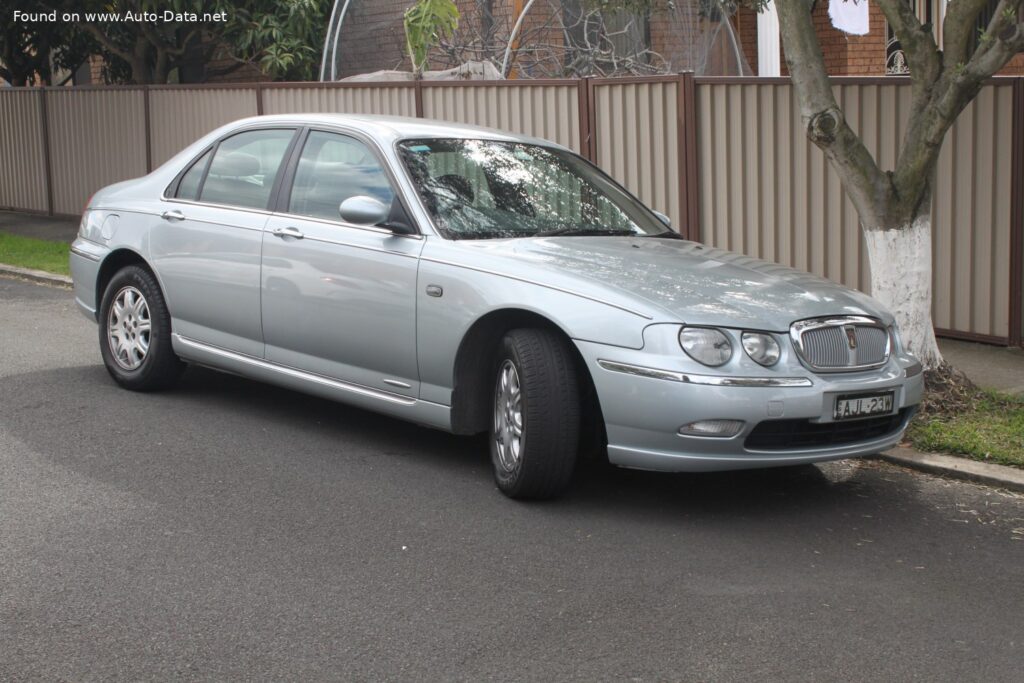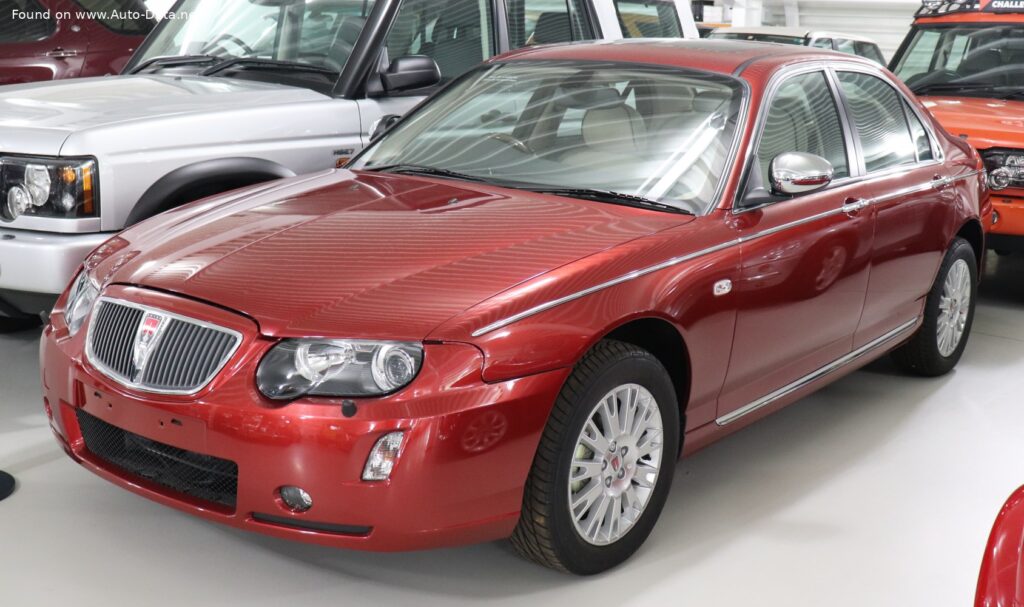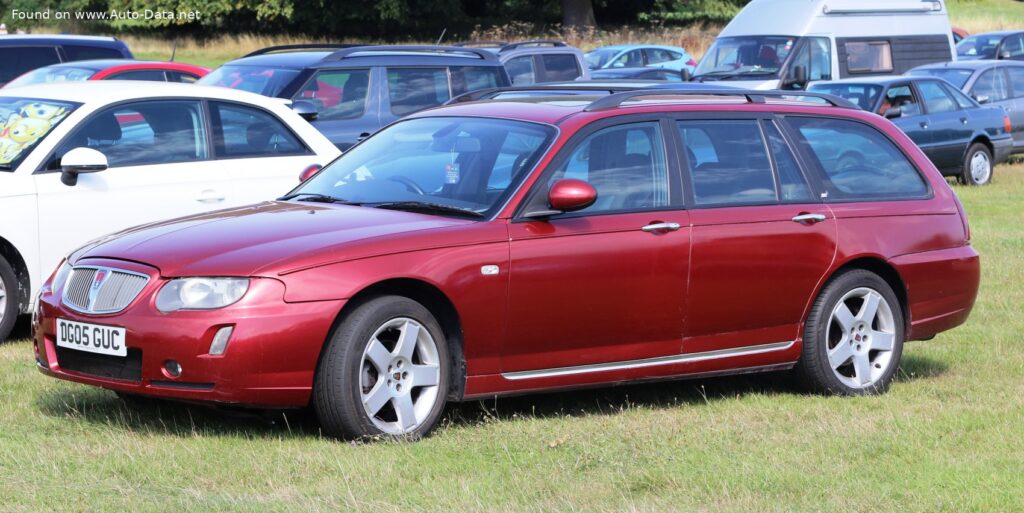
The Rover 75 Tourer (facelift 2004) represents a significant chapter in the history of the British automotive industry, embodying a blend of traditional English luxury and modern engineering principles. Introduced for the 2004 model year, this updated version of the executive station wagon (known as an “estate” in its primary European market) aimed to refresh Rover’s flagship offering in a highly competitive segment. Produced for a brief period between 2004 and 2005, the facelifted 75 Tourer was a testament to Rover’s ambition to compete with established German rivals, even as the company faced increasing financial pressures. This particular variant, equipped with the 2.0 CDTi (131 Hp) diesel engine and an automatic transmission, was a practical and efficient choice for European buyers seeking comfort, space, and a touch of classic British refinement. While never officially sold in the United States, the Rover 75 garnered a reputation in Europe for its smooth ride, distinctive styling, and well-appointed interior, positioning it as a more characterful alternative to its more utilitarian competitors.
Rover 75 Tourer (facelift 2004): A British Executive Wagon
The Rover 75 was originally launched in 1998, benefiting from a period of BMW ownership which brought substantial engineering prowess and quality improvements. The 2004 facelift sought to modernize its appearance and enhance its appeal, though changes were subtle, focusing on refining an already distinctive design. The Tourer, or station wagon, body style offered enhanced versatility and cargo capacity, making it a popular choice for families and business users across the continent. Its powertrain architecture, featuring an internal combustion engine driving the front wheels, provided a conventional yet reliable setup, optimized for touring comfort and fuel efficiency.
Engine & Performance
Under the hood of the Rover 75 Tourer (facelift 2004) 2.0 CDTi lies a robust and well-regarded diesel engine, specifically the M47R (204D2) unit, which was a derivative of BMW’s highly successful M47 engine. This 1,951 cm³ (119.06 cu. in.) inline four-cylinder powerplant featured a double overhead camshaft (DOHC) valvetrain with four valves per cylinder, a common rail diesel fuel injection system, and was augmented by a turbocharger and intercooler. These technologies combined to deliver a respectable 131 horsepower at 3,500 rpm and a substantial 221.27 lb.-ft. of torque (300 Nm) available from a low 1,900 rpm. This torque-rich delivery was particularly well-suited for a vehicle of its size and purpose, providing ample pulling power for highway cruising and load-carrying.
Paired with a 5-speed automatic transmission, the 2.0 CDTi engine offered a smooth and relaxed driving experience. While not designed for outright speed, the powertrain provided adequate acceleration, propelling the Tourer from 0 to 60 mph in 11.4 seconds. Its maximum speed was approximately 113.09 mph (182 km/h), making it perfectly capable of handling European autobahns and motorways. Fuel efficiency was a key selling point for diesel engines in Europe, and the Rover 75 Tourer delivered commendable figures for its class. The combined fuel consumption was rated at 34.1 US mpg (6.9 l/100 km), with extra-urban driving potentially yielding up to 45.2 US mpg (5.2 l/100 km). Urban consumption stood at 23.5 US mpg (10 l/100 km). These figures, combined with a 17.17 US gallon (65-liter) fuel tank, ensured a good cruising range. The engine met Euro 3 emission standards, reflecting the environmental regulations of its time.
Design & Features
The design of the Rover 75 Tourer (facelift 2004) continued the model’s distinctive “retro-modern” aesthetic, which blended classic British styling cues with contemporary proportions. The facelift brought subtle enhancements, primarily to the front fascia, with revised headlights, grille, and bumper that aimed to give it a slightly more assertive and less overtly “classic” look, though its fundamental character remained. The station wagon body type, with its five doors and seating for five passengers, offered significant practicality. Its length of 188.58 inches (4790 mm) and width of 70 inches (1778 mm) provided a substantial road presence, while the 108.11-inch (2746 mm) wheelbase contributed to a comfortable and stable ride.
Inside, the Rover 75 was renowned for its luxurious and well-appointed cabin, often featuring high-quality materials such as wood trim and leather upholstery (depending on the trim level). The Tourer variant excelled in cargo versatility, offering a minimum trunk space of 14.13 cubic feet (400 liters), which could expand to an impressive 43.15 cubic feet (1222 liters) with the rear seats folded down. This made it highly competitive with other executive wagons in terms of utility. Features for the era included standard power steering (hydraulic rack and pinion), ventilated disc brakes at the front and solid discs at the rear, complemented by an Anti-lock Braking System (ABS) for enhanced safety. The suspension system, with independent MacPherson struts and an anti-roll bar at the front and an independent multi-link setup with a stabilizer at the rear, was tuned for comfort, providing a smooth and composed ride characteristic of Rover vehicles. Tire sizes ranged from 195/65 R15 to 215/55 R16, mounted on 15-inch or 16-inch alloy wheels, offering a balance of ride comfort and handling.
Technical Specifications
| Category | Specification |
| General Information | |
| Brand | Rover |
| Model | 75 |
| Generation | 75 Tourer (facelift 2004) |
| Engine Type | 2.0 CDTi (131 Hp) Automatic |
| Production Start | 2004 |
| Production End | 2005 |
| Powertrain Architecture | Internal Combustion Engine |
| Body Type | Station wagon (estate) |
| Seats | 5 |
| Doors | 5 |
| Performance Specs | |
| Fuel Consumption (Urban) | 10 l/100 km (23.5 US mpg) |
| Fuel Consumption (Extra Urban) | 5.2 l/100 km (45.2 US mpg) |
| Fuel Consumption (Combined) | 6.9 l/100 km (34.1 US mpg) |
| CO2 Emissions | 190 g/km |
| Fuel Type | Diesel |
| Acceleration 0-60 mph | 11.4 sec |
| Maximum Speed | 113.09 mph (182 km/h) |
| Emission Standard | Euro 3 |
| Weight-to-Power Ratio | 12.1 kg/Hp, 82.4 Hp/tonne |
| Weight-to-Torque Ratio | 5.3 kg/Nm, 188.7 Nm/tonne |
| Engine Specs | |
| Power | 131 Hp @ 3500 rpm |
| Power per liter | 67.1 Hp/l |
| Torque | 221.27 lb.-ft. (300 Nm) @ 1900 rpm |
| Engine Layout | Front, Transverse |
| Engine Model/Code | M47R / 204D2 |
| Engine Displacement | 119.06 cu. in. (1951 cm³) |
| Number of Cylinders | 4 |
| Engine Configuration | Inline |
| Cylinder Bore | 3.31 in. (84 mm) |
| Piston Stroke | 3.46 in. (88 mm) |
| Compression Ratio | 18:1 |
| Valves per Cylinder | 4 |
| Fuel Injection System | Diesel Commonrail |
| Engine Aspiration | Turbocharger, Intercooler |
| Valvetrain | DOHC |
| Engine Oil Capacity | 7.19 US qt (6.8 l) |
| Coolant Capacity | 8.66 US qt (8.2 l) |
| Space, Volume and Weights | |
| Curb Weight | 3505.35 – 3747.86 lbs. (1590-1700 kg) |
| Max. Weight | 4673.8 lbs. (2120 kg) |
| Max Load | 925.94 – 1168.45 lbs. (420-530 kg) |
| Trunk Space (Minimum) | 14.13 cu. ft. (400 l) |
| Trunk Space (Maximum) | 43.15 cu. ft. (1222 l) |
| Fuel Tank Capacity | 17.17 US gal (65 l) |
| Max. Roof Load | 220.46 lbs. (100 kg) |
| Permitted Trailer Load with Brakes (12%) | 3527.4 lbs. (1600 kg) |
| Permitted Trailer Load without Brakes | 1653.47 lbs. (750 kg) |
| Permitted Towbar Download | 220.46 lbs. (100 kg) |
| Dimensions | |
| Length | 188.58 in. (4790 mm) |
| Width | 70 in. (1778 mm) |
| Width Including Mirrors | 77.56 in. (1970 mm) |
| Wheelbase | 108.11 in. (2746 mm) |
| Front Track | 59.49 in. (1511 mm) |
| Rear Track | 59.21 in. (1504 mm) |
| Minimum Turning Circle | 37.17 ft. (11.33 m) |
| Drivetrain, Brakes and Suspension | |
| Drivetrain Architecture | Front-wheel drive |
| Drive Wheel | Front wheel drive |
| Number of Gears / Gearbox Type | 5 gears, automatic transmission |
| Front Suspension | Independent, McPherson with coil spring and anti-roll bar |
| Rear Suspension | Independent multi-link spring suspension with stabilizer |
| Front Brakes | Ventilated discs |
| Rear Brakes | Disc |
| Assisting Systems | ABS (Anti-lock braking system) |
| Steering Type | Steering rack and pinion |
| Power Steering | Hydraulic Steering |
| Tire Sizes | 195/65 R15; 205/60 R15; 215/55 R16 |
| Wheel Rim Sizes | 6J x 15; 6.5J x 16 |
Legacy and Market Impact
The Rover 75, and particularly the Rover 75 Tourer (facelift 2004), holds a poignant place in automotive history. It was one of the last major new models launched by Rover before the collapse of the MG Rover Group in 2005. Despite its short production run in facelifted form, the 75 Tourer left a lasting impression on the European market. It competed in the executive segment against well-established rivals such as the BMW 3 Series Touring, Audi A4 Avant, Mercedes-Benz C-Class Estate, and the Volvo V70. While it may not have matched their cutting-edge technology or performance, the Rover 75 offered a unique proposition: a distinctive blend of old-world charm, a remarkably comfortable ride, and a well-appointed interior that felt more luxurious than its price point suggested.
Its legacy is multifaceted. On one hand, it showcased the potential of Rover under more stable ownership, benefiting from BMW’s engineering input (especially with the diesel engine). On the other hand, its production coincided with the final, tumultuous years of MG Rover, making it a symbol of a proud but ultimately struggling British marque. The 75 Tourer was praised for its refinement, quiet cabin, and smooth ride quality, making it an excellent long-distance cruiser. Its practicality as a station wagon, combined with its elegant styling, ensured it found a loyal following among those who appreciated its individuality over the more corporate offerings from Germany.
Today, the Rover 75 Tourer is remembered as a comfortable, capable, and characterful executive car that perhaps deserved a longer and more prosperous life. Its brief run as a facelifted model, ending with the company’s demise, makes it a significant piece of modern British automotive heritage. For enthusiasts and collectors, it represents the final iteration of a classic British luxury car, offering a unique driving experience that stands apart from its contemporaries. Its impact, though limited by the company’s fate, underscores the enduring appeal of a car that dared to be different in a segment often dominated by conformity.