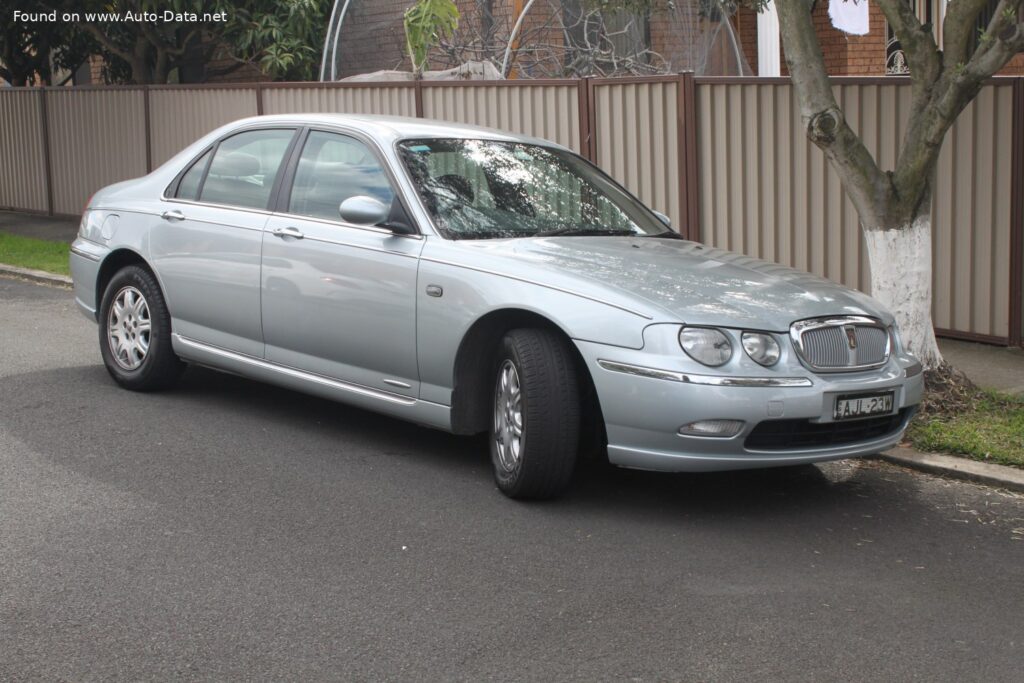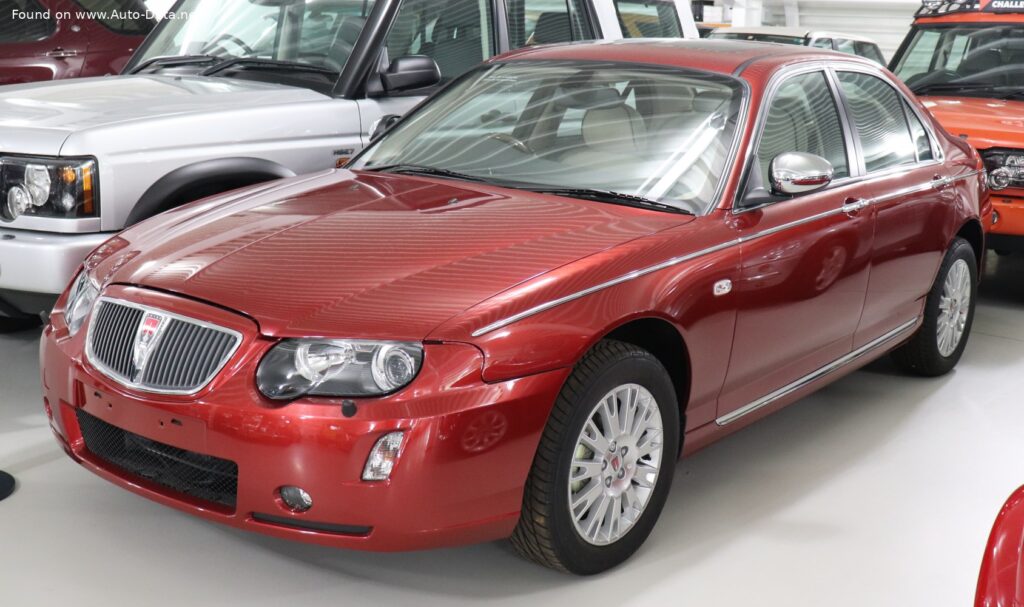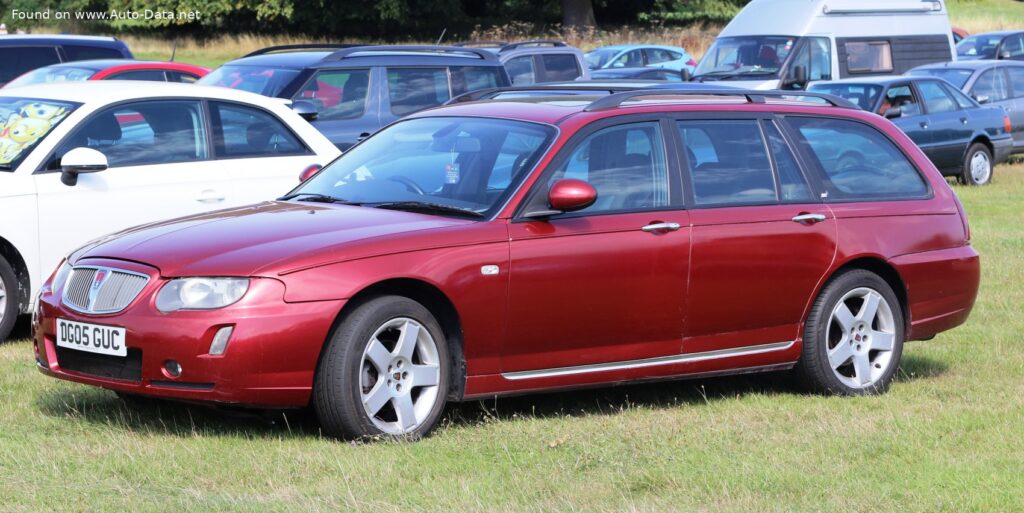
The Rover 75 Tourer (facelift 2004) 2.5 V6 (177 Hp) represents a final, poignant chapter in the history of British automotive manufacturing. This distinctive mid-size executive wagon, a product of MG Rover Group, was primarily aimed at the European market, offering a blend of retro-inspired styling, luxurious comfort, and practical versatility. Though never officially sold in the United States, the Rover 75 Tourer showcased a unique approach to the premium wagon segment, attempting to recapture the spirit of classic British motoring while offering modern features and performance.
Rover 75 Tourer (facelift 2004): A British Executive Wagon
Introduced in 1998, the Rover 75 was the last entirely new model developed by the Rover Group before its collapse. The Tourer variant, launched as the station wagon version, provided increased cargo capacity and practicality without sacrificing the elegant design and refined driving experience of the sedan. The 2004 facelift brought subtle cosmetic updates, aiming to modernize the car’s appearance while retaining its core character. The 2.5-liter V6 engine option, producing 177 horsepower, positioned the Tourer as a compelling alternative to established European competitors.
Engine & Performance: The KV6 Powertrain
The Rover 75 Tourer (facelift 2004) 2.5 V6 is powered by Rover’s KV6 engine, a 2.5-liter naturally aspirated V6 designated KV6 / 25K4F. This engine was a key component of Rover’s engineering identity, known for its smooth operation and characteristic exhaust note. The engine features a Double Overhead Camshaft (DOHC) valvetrain with four valves per cylinder, optimizing airflow for efficient combustion. Displacement is 2497 cubic centimeters (152.38 cubic inches).
The KV6 produces 177 horsepower at 6500 rpm, translating to 70.9 horsepower per liter. Peak torque of 240 Newton-meters (177.01 lb.-ft.) is delivered at 4000 rpm, providing ample power for both passenger transport and cargo hauling. Power is transferred to the front wheels through a 5-speed manual transmission, offering a driver-focused experience. Performance figures are competitive for its class; the Tourer accelerates from 0 to 60 mph in 8.7 seconds and achieves a top speed of 131.11 mph (211 km/h). Fuel economy is rated at approximately 24.5 US mpg (9.6 liters per 100 km) combined, with 16.8 US mpg (14 liters per 100 km) in urban conditions and 33.6 US mpg (7 liters per 100 km) on the open road. The vehicle meets Euro 3 emission standards, with CO2 emissions of 229 g/km.
Design & Features: Elegant Practicality
The Rover 75 Tourer (facelift 2004) maintains the elegant, “retro-modern” aesthetic of the original 75 sedan, enhanced by the practicality of a station wagon body style. The 2004 facelift included redesigned headlights, a more prominent grille, and revised bumpers, subtly updating the car’s appearance. The Tourer’s five-door configuration and seating for five provide ample space for passengers and cargo.
With a length of 188.58 inches (4790 mm) and a wheelbase of 108.11 inches (2746 mm), the Tourer offers a comfortable ride and a spacious cabin. The interior is characterized by high-quality materials, chrome accents, and a warm ambiance. The cargo area is particularly versatile, offering 14.13 cubic feet (400 liters) of space with the rear seats up, expanding to an impressive 43.15 cubic feet (1222 liters) with the seats folded down. Standard features include a hydraulic power steering system, an Anti-lock Braking System (ABS), and a suspension setup featuring independent McPherson struts at the front and an independent multi-link system at the rear, tuned for comfort and stability. Ventilated front disc brakes and rear disc brakes provide confident stopping power. The vehicle typically rides on 16-inch or optional 17-inch wheels, fitted with 215/55 R16 or 215/50 R17 tires, respectively.
Technical Specifications: Rover 75 Tourer (facelift 2004) 2.5 V6 (177 Hp)
| Category | Specification |
| General Information | |
| Brand | Rover |
| Model | 75 |
| Generation | 75 Tourer (facelift 2004) |
| Engine Type | 2.5 V6 (177 Hp) |
| Production Start | 2004 |
| Production End | 2005 |
| Powertrain Architecture | Internal Combustion Engine |
| Body Type | Station Wagon (Estate) |
| Seats | 5 |
| Doors | 5 |
| Performance Specs | |
| Fuel Consumption (Urban) | 14 l/100 km (16.8 US mpg) |
| Fuel Consumption (Extra Urban) | 7 l/100 km (33.6 US mpg) |
| Fuel Consumption (Combined) | 9.6 l/100 km (24.5 US mpg) |
| CO2 Emissions | 229 g/km |
| Fuel Type | Petrol (Gasoline) |
| Acceleration 0 – 60 mph | 8.7 seconds |
| Maximum Speed | 131.11 mph (211 km/h) |
| Emission Standard | Euro 3 |
| Weight-to-Power Ratio | 8.7 kg/Hp (115.3 Hp/tonne) |
| Engine Specs | |
| Power | 177 Hp @ 6500 rpm |
| Power per Liter | 70.9 Hp/l |
| Torque | 240 Nm @ 4000 rpm (177.01 lb.-ft. @ 4000 rpm) |
| Engine Layout | Front, Transverse |
| Engine Model/Code | KV6 / 25K4F |
| Engine Displacement | 2497 cm3 (152.38 cu. in.) |
| Number of Cylinders | 6 |
| Engine Configuration | V-engine |
| Cylinder Bore | 80 mm (3.15 in.) |
| Piston Stroke | 82.8 mm (3.26 in.) |
| Compression Ratio | 10.25:1 |
| Valves per Cylinder | 4 |
| Fuel Injection System | Multi-port manifold injection |
| Engine Aspiration | Naturally aspirated |
| Valvetrain | DOHC |
| Engine Oil Capacity | 5.2 l (5.49 US qt) |
| Coolant Capacity | 7.5 l (7.93 US qt) |
| Space, Volume & Weights | |
| Kerb Weight | 1535-1645 kg (3384.1 – 3626.6 lbs.) |
| Max. Weight (Gross Vehicle Weight) | 2050 kg (4519.48 lbs.) |
| Max. Load | 405-515 kg (892.87 – 1135.38 lbs.) |
| Trunk (Boot) Space – Minimum | 400 l (14.13 cu. ft.) |
| Trunk (Boot) Space – Maximum | 1222 l (43.15 cu. ft.) |
| Fuel Tank Capacity | 65 l (17.17 US gal) |
| Max. Roof Load | 100 kg (220.46 lbs.) |
| Permitted Trailer Load (with brakes 12%) | 1600 kg (3527.4 lbs.) |
| Permitted Trailer Load (without brakes) | 750 kg (1653.47 lbs.) |
| Permitted Towbar Download | 100 kg (220.46 lbs.) |
| Dimensions | |
| Length | 4790 mm (188.58 in.) |
| Width | 1778 mm (70 in.) |
| Width (including mirrors) | 1970 mm (77.56 in.) |
| Wheelbase | 2746 mm (108.11 in.) |
| Front Track | 1511 mm (59.49 in.) |
| Rear Track | 1504 mm (59.21 in.) |
| Minimum Turning Circle | 11.33 m (37.17 ft.) |
| Drivetrain, Brakes & Suspension | |
| Drivetrain Architecture | Front-wheel drive (ICE drives front wheels) |
| Drive Wheel | Front-wheel drive |
| Number of Gears & Gearbox Type | 5 gears, manual transmission |
| Front Suspension | Independent, McPherson with coil spring and anti-roll bar |
| Rear Suspension | Independent multi-link spring suspension with stabilizer |
| Front Brakes | Ventilated discs |
| Rear Brakes | Disc |
| Assisting Systems | ABS (Anti-lock braking system) |
| Steering Type | Steering rack and pinion |
| Power Steering | Hydraulic Steering |
| Tires Size | 215/55 R16; 215/50 R17 |
| Wheel Rims Size | 16; 17 |
Legacy & Market Impact of the Rover 75 Tourer (facelift 2004)
The Rover 75, and particularly its Tourer variant, holds a significant place in automotive history, especially within the context of the British car industry. Launched with high expectations, it aimed to compete with established European rivals like the Volkswagen Passat Variant and Ford Mondeo Estate. Its distinctive styling, a deliberate nod to classic Rovers, set it apart from more conservative designs.
The Rover 75 Tourer (facelift 2004) was praised for its ride comfort, quiet cabin, and overall sense of luxury. The 2.5 V6 engine provided smooth, effortless performance, making it a popular choice for those prioritizing comfort and refinement. However, the Rover 75’s story is intertwined with the collapse of the Rover Group. The facelifted models were among the last vehicles produced before MG Rover Group entered administration in 2005, limiting the impact of the updates.
Despite its short production run and the unfortunate circumstances surrounding its manufacturer, the Rover 75 Tourer remains a fondly remembered vehicle. It represents a testament to British engineering and design, and is now a sought-after collector’s item, appreciated for its style, comfort, and its role as the final chapter in a storied automotive brand.