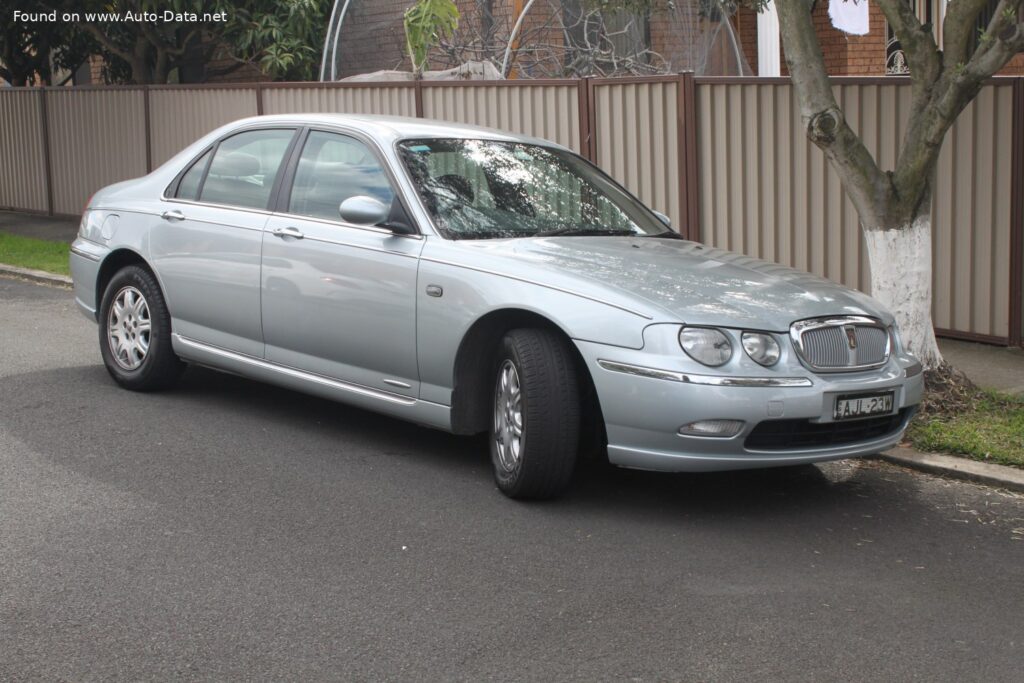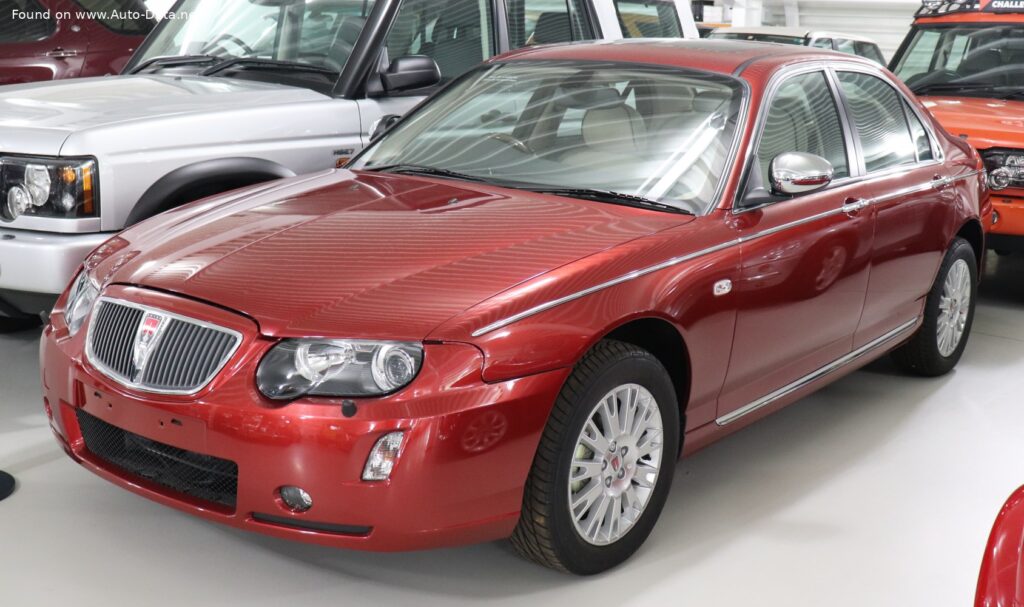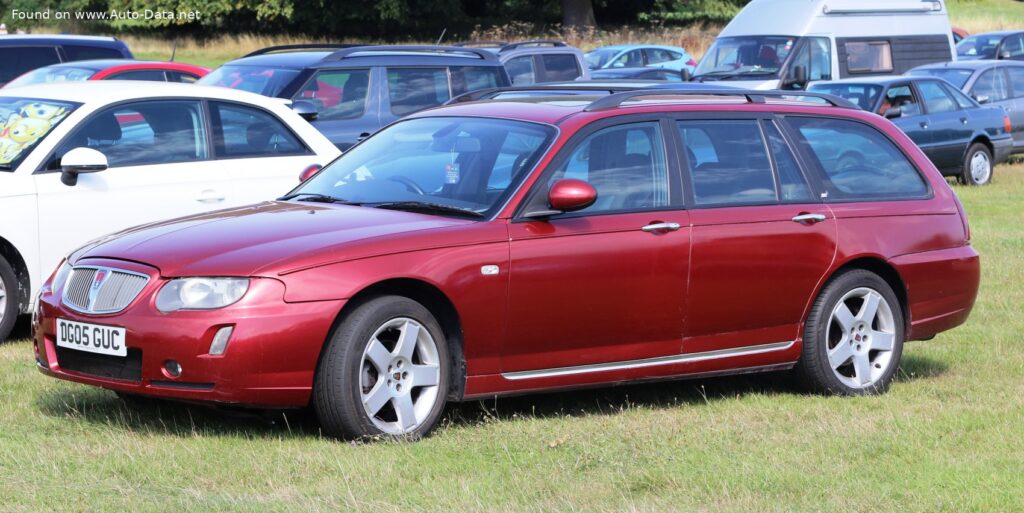
The Rover 75 Tourer (facelift 2004) 4.6 V8 (260 Hp) Automatic represents a fascinating and somewhat unconventional chapter in British automotive history. This model, while never officially sold in the United States, carved out a unique niche in the European executive car market, blending traditional Rover luxury with the unexpected power of an American V8 engine. The Tourer, or station wagon, variant further enhanced its practicality, making it a versatile contender in its segment. This article will delve into the technical details, design philosophy, and market impact of this remarkable vehicle.
Rover 75 Tourer (facelift 2004) 4.6 V8: A British Icon with an American Heart
The Rover 75, initially launched in 1998, was a mid-size or executive car produced by the Rover Group and subsequently by MG Rover. Developed during BMW’s ownership of Rover, it aimed to recapture a sense of traditional British luxury and craftsmanship, targeting a more premium market segment than previous Rover models. The Rover 75 Tourer (facelift 2004) 4.6 V8 Automatic is a high-performance variant of this platform. Introduced after a minor facelift in 2004, this version notably deviated from the standard front-wheel-drive, four- and six-cylinder powertrains. It incorporated a potent 4.6-liter Ford Modular V8 engine, driving the rear wheels, transforming the refined executive wagon into a sophisticated performance car. Production of this specific V8 model ran from 2004 to 2005, making it one of the last and most ambitious projects undertaken by the financially struggling MG Rover Group.
Engine & Performance: The Unconventional Powertrain
The Rover 75 Tourer (facelift 2004) 4.6 V8’s core appeal lay in its extraordinary powertrain. The naturally aspirated V8 engine displaced 4601 cubic centimeters (280.77 cu. in.) and was derived from the Ford Modular series, specifically a variant closely related to the engine found in the contemporary Ford Mustang. This robust unit produced 260 horsepower at 5000 rpm and 302.4 lb.-ft. of torque at 4000 rpm. Featuring a compression ratio of 9.4:1 and a single overhead camshaft (SOHC) valvetrain with two valves per cylinder, the engine, designated 2L2E, was known for its durability and smooth power delivery, characteristics of American V8s.
Unlike the standard Rover 75’s front-wheel-drive architecture, the V8 model underwent significant engineering modifications to accommodate a rear-wheel-drive setup. This involved extensive alterations to the chassis and floorpan, demonstrating the engineering investment in this niche product. Power was delivered through a 4-speed automatic transmission, providing a relaxed yet responsive driving experience. Performance figures for the Rover 75 Tourer (facelift 2004) 4.6 V8 were impressive for an executive station wagon of its era: 0 to 60 mph in 7 seconds and a top speed of 147.26 mph. While not challenging dedicated sports cars, these numbers positioned the V8 Tourer as a remarkably quick and capable long-distance cruiser, especially considering its luxurious appointments.
Fuel economy, as expected from a large displacement V8 in an executive car, was moderate by modern standards. The combined cycle yielded approximately 17.6 US mpg, with urban consumption at 12.9 US mpg and extra-urban at 22.4 US mpg. CO2 emissions were rated at 319 g/km, meeting the Euro 3 emission standard of the time. The car’s weight-to-power ratio was 6.7 kg/Hp, or 149.4 Hp/tonne, indicating a strong power output relative to its 3836.04-pound curb weight.
Design & Features of the Rover 75 Tourer (facelift 2004)
The Rover 75 Tourer (facelift 2004) retained the elegant, retro-inspired styling of the original 75 series, with subtle refinements from the 2004 facelift. The Tourer body style, a five-door station wagon, offered enhanced practicality without compromising the vehicle’s inherent grace. Its length of 188.58 inches and width (including mirrors) of 79.09 inches gave it a substantial presence, while the 108.11-inch wheelbase ensured a spacious cabin and comfortable ride. Styling cues, such as the prominent grille, quad headlights, and flowing lines, deliberately referenced Rover’s heritage, distinguishing it from its German competitors.
Inside, the Rover 75 Tourer exuded a British luxury ambiance. High-quality materials, including wood veneers, chrome accents, and plush fabrics or leather, were used throughout the cabin. The five-seat configuration provided ample room, and the Tourer’s advantage lay in its versatile cargo capacity. With the rear seats up, it offered 14.13 cubic feet of trunk space, expanding to 43.15 cubic feet with the rear seats folded down, making it practical for families or those needing substantial hauling capability.
The Rover 75 Tourer (facelift 2004) was well-equipped for its segment. Standard safety systems included ABS (Anti-lock Braking System). The steering system utilized a hydraulic rack and pinion setup, providing precise feedback, complementing the rear-wheel-drive dynamics. The suspension featured an independent McPherson strut design with coil springs and an anti-roll bar at the front, while the rear employed an independent multi-link spring suspension with a stabilizer, tuned for a comfortable yet composed ride. Braking performance was handled by ventilated discs, 325 mm at the front and 332 mm at the rear, ensuring ample stopping power. The car rode on 17-inch or optional 18-inch wheels, with tires sized 215/50 R17 or 225/45 R18, respectively, enhancing roadholding and aesthetics.
Technical Specifications
| Category | Specification |
| Brand | Rover |
| Model | 75 |
| Generation | 75 Tourer (facelift 2004) |
| Type (Engine) | 4.6 V8 (260 Hp) Automatic |
| Start of Production | 2004 |
| End of Production | 2005 |
| Powertrain Architecture | Internal Combustion engine |
| Body type | Station wagon (estate) |
| Seats | 5 |
| Doors | 5 |
| Fuel Consumption (economy) – urban | 12.9 US mpg (18.3 l/100 km) |
| Fuel Consumption (economy) – extra urban | 22.4 US mpg (10.5 l/100 km) |
| Fuel Consumption (economy) – combined | 17.6 US mpg (13.4 l/100 km) |
| CO2 emissions | 319 g/km |
| Fuel Type | Petrol (Gasoline) |
| Acceleration 0 – 60 mph | 7 sec |
| Maximum speed | 147.26 mph (237 km/h) |
| Emission standard | Euro 3 |
| Weight-to-power ratio | 6.7 kg/Hp, 149.4 Hp/tonne |
| Weight-to-torque ratio | 4.2 kg/Nm, 235.6 Nm/tonne |
| Power | 260 Hp @ 5000 rpm. |
| Power per litre | 56.5 Hp/l |
| Torque | 302.4 lb.-ft. @ 4000 rpm (410 Nm @ 4000 rpm) |
| Maximum engine speed | 6000 rpm. |
| Engine layout | Front, Longitudinal |
| Engine Model/Code | 2L2E |
| Engine displacement | 4.6 Liters (4601 cm3 / 280.77 cu. in.) |
| Number of cylinders | 8 |
| Engine configuration | V-engine |
| Cylinder Bore | 3.55 in. (90.2 mm) |
| Piston Stroke | 3.54 in. (90 mm) |
| Compression ratio | 9.4:1 |
| Number of valves per cylinder | 2 |
| Fuel injection system | Multi-port manifold injection |
| Engine aspiration | Naturally aspirated engine |
| Valvetrain | SOHC |
| Engine oil capacity | 4.97 US qt (4.7 l) |
| Coolant | 13.31 US qt (12.6 l) |
| Kerb Weight | 3836.04 lbs. (1740 kg) |
| Trunk (boot) space – minimum | 14.13 cu. ft. (400 l) |
| Trunk (boot) space – maximum | 43.15 cu. ft. (1222 l) |
| Length | 188.58 in. (4790 mm) |
| Width including mirrors | 79.09 in. (2009 mm) |
| Wheelbase | 108.11 in. (2746 mm) |
| Front track | 59.33 in. (1507 mm) |
| Rear (Back) track | 59.21 in. (1504 mm) |
| Minimum turning circle (turning diameter) | 37.27 ft. (11.36 m) |
| Drivetrain Architecture | The Internal combustion engine (ICE) drives the rear wheels of the vehicle. |
| Drive wheel | Rear wheel drive |
| Number of gears and type of gearbox | 4 gears, automatic transmission |
| Front suspension | Independent, type McPherson with coil spring and anti-roll bar |
| Rear suspension | Independent multi-link spring suspension with stabilizer |
| Front brakes | Ventilated discs, 325 mm |
| Rear brakes | Ventilated discs, 332 mm |
| Assisting systems | ABS (Anti-lock braking system) |
| Steering type | Steering rack and pinion |
| Power steering | Hydraulic Steering |
| Tires size | 215/50 R17; 225/45 R18 |
| Wheel rims size | 17; 18 |
Legacy & Market Impact
The Rover 75 Tourer (facelift 2004) 4.6 V8 holds a unique place in automotive history, particularly within the context of the British car industry. It was a bold, albeit short-lived, attempt by MG Rover to create a halo product combining traditional British luxury with genuine performance. The decision to integrate a Ford V8 engine and convert the platform to rear-wheel-drive was a monumental engineering feat, showcasing a willingness to innovate despite the company’s financial difficulties.
In its primary European market, the Rover 75 Tourer (facelift 2004) 4.6 V8 competed with established German rivals like the BMW 3 Series Touring, Audi A4 Avant, and Mercedes-Benz C-Class Estate. While these competitors offered broader engine options and more advanced technology, the Rover V8 provided a unique proposition: a luxurious, understated station wagon with a powerful, characterful American V8 engine and rear-wheel-drive dynamics. This combination gave it a “sleeper” quality, appealing to enthusiasts who appreciated its individuality and performance.
Its market impact was significant not in sales volume – the V8 models were produced in limited numbers – but in reputation and engineering ambition. It demonstrated that Rover, even in its final years, could produce a truly exciting and engaging driver’s car. The V8 conversion, initially developed for the MG ZT 260 and later applied to the Rover 75, represented a last hurrah for a struggling marque, a testament to the dedication of its engineers. Today, the Rover 75 Tourer 4.6 V8 is a collectible and a cult classic. Its rarity, combined with the unique blend of British luxury and American muscle, makes it a fascinating piece of automotive heritage. It symbolizes ingenuity and passion, a powerful reminder of what could be achieved when disparate automotive cultures converged, even under challenging circumstances. Its legacy is not just one of performance, but also of resilience and a final, defiant roar from a storied British brand.