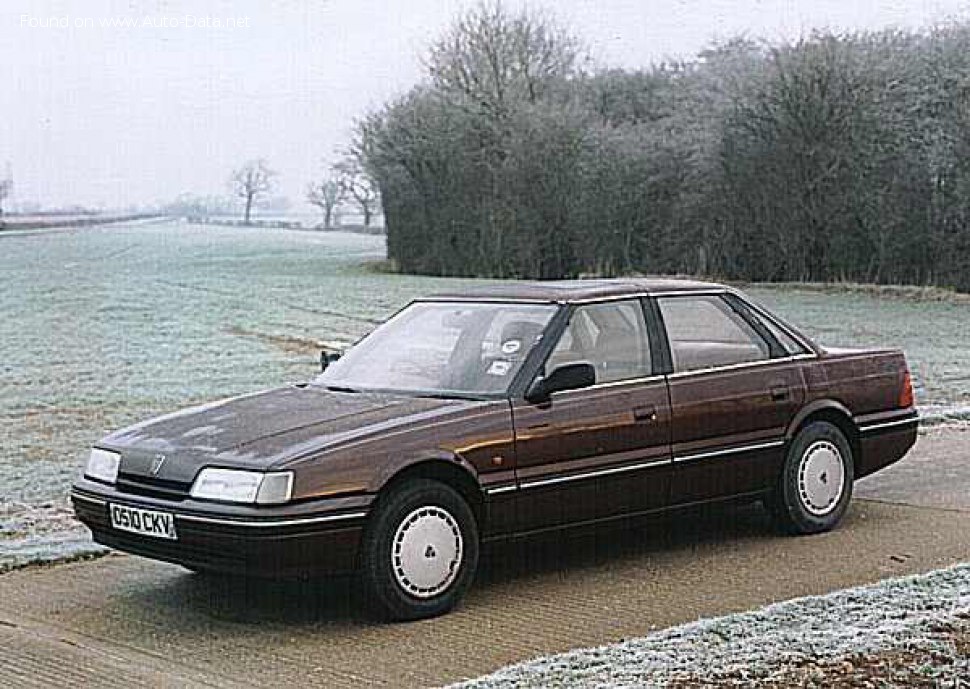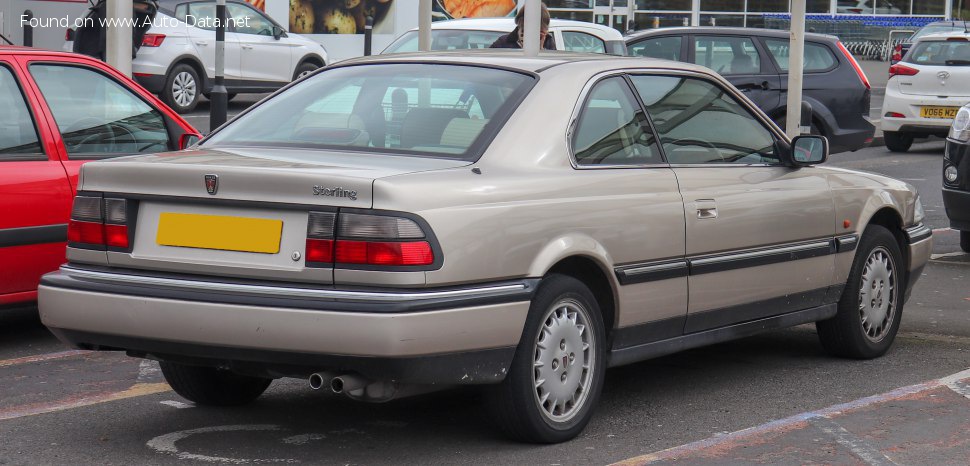
The Rover 800 Coupe represents a significant chapter in British automotive history, particularly during the late 1980s and 1990s. Positioned as an executive car primarily for the European market, it aimed to compete with established German and Swedish luxury brands. The generation highlighted here, the Rover 800 Coupe, specifically the 825 SD (118 Hp) variant introduced in 1993, offered a distinctive two-door option to the lineup. Produced until 1999, this elegant coupe blended traditional British luxury with contemporary engineering, notably featuring a robust turbodiesel engine – an unusual choice for its segment. While never officially sold in the United States, the Rover 800 Coupe provides valuable insight into the European automotive landscape of the era and Rover’s efforts to establish a unique market position.
Engine & Performance: The Diesel Heart of the Rover 800 Coupe
The 825 SD variant of the Rover 800 Coupe was distinguished by its diesel powertrain. Unlike many of its coupe rivals powered by gasoline engines, Rover opted for a practical and potent 2.5-liter (2500 cm3 or 152.56 cu. in.) inline-four turbodiesel engine. Designated 4924 SHI RG, this unit was transversely mounted at the front, driving the front wheels through a 5-speed manual transmission.
This engine produced 118 horsepower at 4200 rpm, sufficient for comfortable cruising rather than outright sports car performance. However, its strength lay in its torque output, generating a substantial 268 Nm (197.67 lb.-ft.) at a low 2100 rpm. This characteristic made the 825 SD a relaxed and capable grand tourer, particularly well-suited for long European motorway journeys. A turbocharger significantly boosted the engine’s output and efficiency compared to naturally aspirated diesel engines of the time.
The fuel injection system employed a precombustion chamber design, a common diesel technology in the 1990s known for smoother operation, though less efficient than modern direct injection systems. With a high compression ratio of 22.1:1, typical for diesel engines, the 825 SD was engineered for durability and fuel economy. Its weight-to-power ratio was 12.2 kg/Hp (81.9 Hp/tonne), and its weight-to-torque ratio was 5.4 kg/Nm (186.1 Nm/tonne), highlighting its strong low-end performance.
Fuel efficiency was a key selling point. The combined fuel consumption was rated at an impressive 6.4 liters per 100 kilometers, equivalent to approximately 36.8 US miles per gallon. Urban driving yielded around 29.4 US mpg, while extra-urban cruising could achieve as high as 48 US mpg, making it an economical choice for its class and size.
Design & Features of the Rover 800 Coupe
The Rover 800 Coupe stood out with its sleek, pillarless two-door body, offering a more sporting and exclusive aesthetic than its sedan and fastback counterparts. Measuring 192.2 inches in length, 68.11 inches in width, and 54.84 inches in height, it presented a commanding yet elegant profile. The 108.9-inch wheelbase contributed to a stable ride and spacious interior. Despite being a coupe, it was designed as a full five-seater, a rare combination in the coupe segment.
Visually, the Coupe shared its front-end styling with the facelifted 800 series, featuring a more modern grille and headlight design. Its unique rear styling, with a gently sloping roofline and distinct taillights, gave it a genuinely individual character. The interior aimed for traditional British luxury, typically featuring wood trim, leather upholstery (often optional), and a well-appointed dashboard.
The chassis featured a sophisticated double wishbone front suspension, providing a balance of ride comfort and handling precision. The rear suspension utilized a coil spring setup. Braking was handled by ventilated discs at the front and solid discs at the rear, complemented by an Anti-lock Braking System (ABS) for enhanced safety. Hydraulic power steering, utilizing a rack and pinion system, ensured responsive and precise control.
Practicality was also considered, with a generous trunk space of 445 liters (15.72 cu. ft.). The 66-liter (17.44 US gallon) fuel tank, combined with the diesel engine’s efficiency, provided an excellent cruising range. The curb weight was 3174.66 lbs. (1440 kg), with a maximum permissible weight of 4343.11 lbs. (1970 kg), allowing for a substantial payload of 1168.45 lbs. (530 kg).
Rover 800 Coupe 825 SD: Technical Specifications
| Category | Specification |
| Brand | Rover |
| Model | 800 |
| Generation | 800 Coupe |
| Type (Engine) | 825 SD (118 Hp) |
| Production Start | 1993 |
| Production End | 1999 |
| Powertrain Architecture | Internal Combustion Engine |
| Body Type | Coupe |
| Seats | 5 |
| Doors | 2 |
| Fuel Consumption (Urban) | 8 l/100 km |
| Fuel Consumption (Extra Urban) | 4.9 l/100 km |
| Fuel Consumption (Combined) | 6.4 l/100 km |
| Fuel Type | Diesel |
| Weight-to-Power Ratio | 12.2 kg/Hp |
| Weight-to-Torque Ratio | 5.4 kg/Nm |
| Power | 118 Hp @ 4200 rpm |
| Power per Liter | 47.2 Hp/l |
| Torque | 268 Nm @ 2100 rpm |
| Engine Layout | Front, Transverse |
| Engine Model/Code | 4924 SHI RG |
| Engine Displacement | 2500 cm3 |
| Number of Cylinders | 4 |
| Engine Configuration | Inline |
| Cylinder Bore | 92 mm |
| Piston Stroke | 94 mm |
| Compression Ratio | 22.1:1 |
| Valves per Cylinder | 2 |
| Fuel Injection System | Precombustion chamber injection |
| Engine Aspiration | Turbocharger |
| Kerb Weight | 1440 kg |
| Max. Weight | 1970 kg |
| Max Load | 530 kg |
| Trunk (Boot) Space – Minimum | 445 l |
| Fuel Tank Capacity | 66 l |
| Length | 4882 mm |
| Width | 1730 mm |
| Height | 1393 mm |
| Wheelbase | 2766 mm |
| Front Suspension | Double wishbone |
| Rear Suspension | Coil spring |
| Front Brakes | Ventilated discs |
| Rear Brakes | Disc |
| Assisting Systems | ABS (Anti-lock braking system) |
Legacy & Market Impact of the Rover 800 Coupe
The Rover 800 Coupe 825 SD entered a competitive European executive car market, receiving a mixed reception. While its styling was praised, its underpinnings were sometimes considered less sophisticated than German rivals. However, the Rover offered a unique blend of British luxury and a more accessible price point.
The choice of a turbodiesel engine for a premium coupe was a bold move. In the 1990s, diesel engines were gaining traction in Europe for their fuel economy and torque, making them popular for long-distance driving. The 825 SD offered a compelling proposition for buyers prioritizing efficiency and relaxed cruising.
Despite its merits, the Rover 800 Coupe struggled to overcome the perception of being a less refined alternative to its competitors. However, for enthusiasts of British automotive history, the Rover 800 Coupe remains a significant model, representing Rover’s final attempt to build a truly premium executive car before the company’s decline. Its rarity and distinctive styling have cemented its status as a modern classic, appealing to those who appreciate its blend of traditional craftsmanship and unique engineering choices.