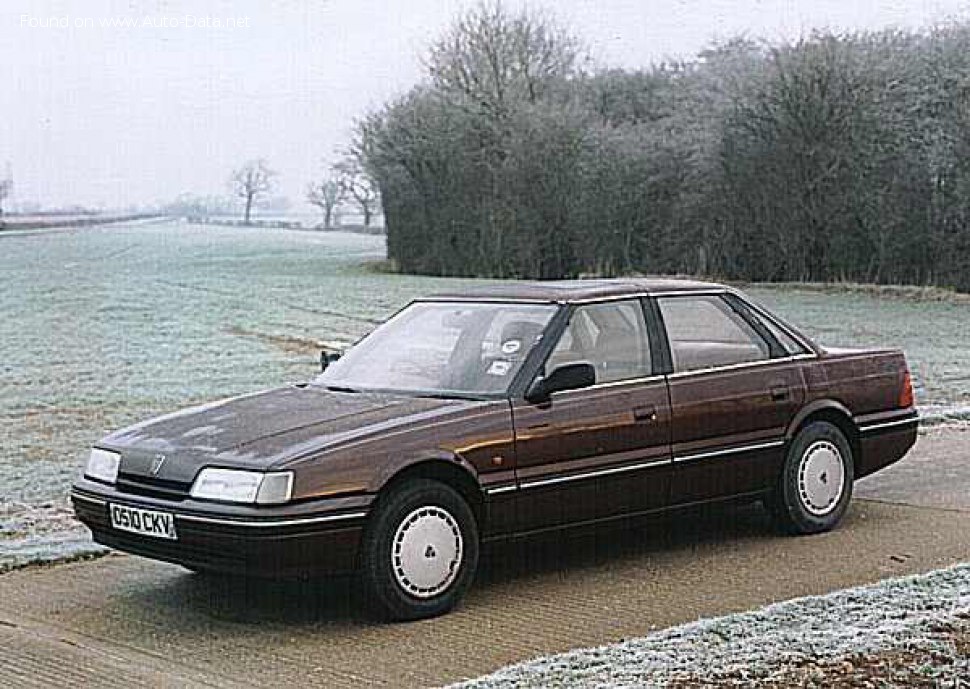
The Rover 800 series, known domestically as the “Executive” in its home market, represents a pivotal moment in the history of the British automaker. Launched in 1986, it was the result of a crucial collaboration between Austin Rover Group (later Rover Group) and Honda, designed to create a competitive executive car for the European market. This partnership produced two related vehicles: the Rover 800 and the Honda Legend. This collaboration was essential for Rover, providing access to Honda’s engineering expertise and quality control, while Honda gained a foothold in the European executive car segment.
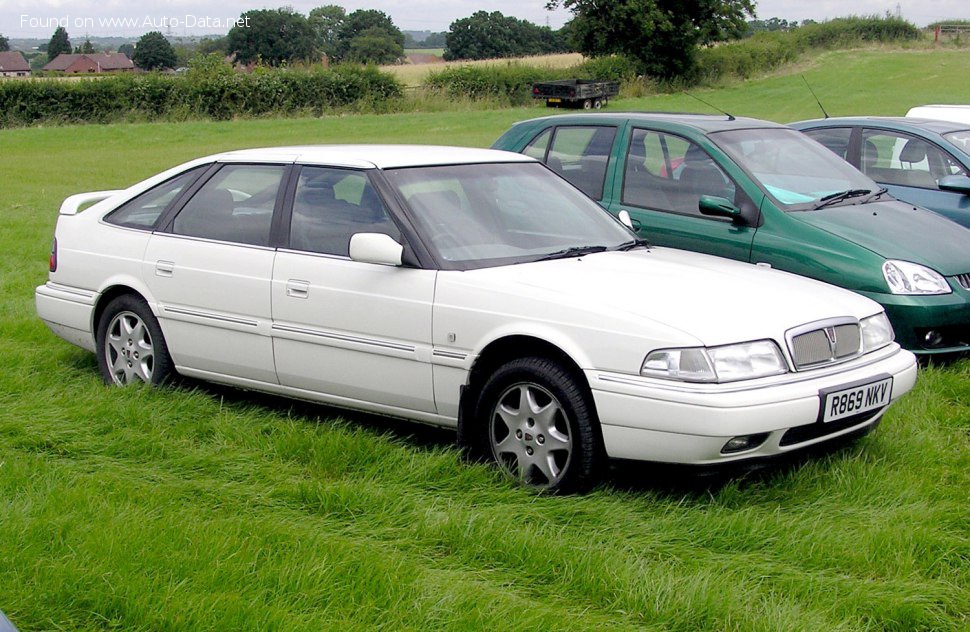
The Rover 800 Hatchback 820 i/Si (XS), introduced in 1988, expanded the 800 series beyond the initial sedan body style. This five-door hatchback offered increased practicality without compromising the executive character of the range. Produced until 1991, the 820 i/Si (XS) was a well-equipped and reasonably powerful option within the 800 series, appealing to buyers seeking a combination of comfort, performance, and versatility in the upper-midsize segment. While the Rover brand wasn’t widely available in the United States, the 800 series played a significant role in the European automotive market, embodying Rover’s ambition to compete with established German and Swedish manufacturers.
Rover 800 Hatchback 820 i/Si (XS): Engine & Performance
The Rover 800 Hatchback 820 i/Si (XS) was powered by Rover’s M16i engine. This 2.0-liter, naturally aspirated, four-cylinder gasoline engine was an evolution of Rover’s existing M-series architecture, updated with multi-point fuel injection – indicated by the ‘i’ in its designation – to meet contemporary emissions standards and improve performance and fuel economy. The M16i was a robust and well-regarded engine for its time, known for its smooth operation and respectable power delivery.
The engine produced 140 horsepower, a competitive figure for a 2.0-liter naturally aspirated unit in the late 1980s. This output allowed the 820 i/Si (XS) to offer brisk acceleration and comfortable cruising speeds on European highways. While specific torque figures aren’t widely documented, they would have been consistent with the horsepower, providing adequate responsiveness in everyday driving. The naturally aspirated design, as opposed to turbocharging or supercharging, resulted in a linear power band and predictable throttle response, characteristics often preferred in executive vehicles for their refined driving experience.
Engine lubrication required 4.5 liters (approximately 4.76 US quarts) of oil, a standard capacity for a four-cylinder engine of this displacement. The cooling system, crucial for maintaining optimal engine temperature, held 10 liters (approximately 10.57 US quarts) of coolant. These specifications highlight the conventional and well-engineered nature of the powertrain, designed for reliability and ease of maintenance throughout its lifespan. The M16i engine benefited from the quality control standards instilled by the Honda partnership, contributing to the car’s overall mechanical integrity.
Design & Features: A British Executive Hatchback
The design of the Rover 800 series, including the Hatchback variant, was a product of the Anglo-Japanese collaboration, sharing its underlying platform and some styling elements with the Honda Legend. However, Rover designers, led by Roy Axe, successfully gave the 800 a distinct British character. The Rover 800 Hatchback 820 i/Si (XS) featured a sleek, aerodynamic profile that was fashionable in the late 1980s. Its five-door hatchback configuration added practicality to the range, offering a large, easily accessible cargo area – a significant advantage over the sedan for families or those needing greater versatility.
The “XS” designation indicated a higher trim level, meaning the 820 i/Si (XS) came with a more comprehensive list of standard features compared to base models. For its era, this included amenities such as power windows, central locking, power steering, and potentially air conditioning or a sunroof as optional extras. The interior was designed with comfort and perceived luxury in mind, featuring quality upholstery – often velour or leather on higher trims – and a well-appointed dashboard with clear instrumentation. The ergonomic layout was generally praised, offering a comfortable driving position and good visibility.
Safety features, while not as advanced as those found in modern vehicles, were typical for the time. This included a robust body structure, front and rear crumple zones, and three-point seatbelts for all outboard passengers. Anti-lock braking systems (ABS) were available, possibly standard on the ‘Si’ and ‘XS’ trims, representing cutting-edge safety technology in the late 1980s. The overall design aimed to project an image of understated elegance and executive professionalism, making it a viable alternative to its European competitors.
Legacy and Market Position
The Rover 800 series, including the Rover 800 Hatchback 820 i/Si (XS), occupied a complex and somewhat controversial position in the European executive car market. It was Rover’s flagship model and a crucial product following the company’s challenging period in the 1970s. The collaboration with Honda was initially seen as a lifeline, bringing much-needed technological advancement and a reputation for reliability to the Rover brand. The 800 series was intended to compete with established players like the Ford Granada/Scorpio, Vauxhall Carlton/Opel Omega, and entry-level models from premium German brands like the BMW 5 Series and Audi 100.
The 800 series received a mixed reception. While often praised for its comfortable ride, spacious interior, and the refinement of its Honda-derived V6 engines (not present in this 820 variant but part of the broader range), the Rover-engined models, particularly early versions, sometimes faced criticism for perceived build quality issues and reliability concerns that undermined the positive influence of the Honda partnership. However, the M16i engine in the 820 i/Si (XS) was generally considered a solid performer for Rover. The hatchback variant specifically offered a unique blend of executive comfort and practical utility that few rivals could directly match, making it an attractive option for a niche segment of buyers.
The 800 series represented a significant attempt by Rover to re-establish itself as a credible force in the executive car segment. Its existence underscored the strategic importance of international collaborations for smaller automakers in an increasingly globalized industry. While the 800 series didn’t ultimately secure Rover’s long-term future, it served as a vital stepping stone, demonstrating the company’s ability to produce a competitive product when leveraging external expertise. Today, the Rover 800 Hatchback 820 i/Si (XS) is remembered as a distinctive, if sometimes overlooked, executive car from the late 20th century, representing a fascinating era of British automotive history and its complex relationship with global partners. Its legacy is one of ambition, innovation, and the challenges faced by a heritage brand striving to adapt in a rapidly changing market.
| Attribute | Specification |
| Brand | Rover |
| Model | 800 |
| Generation | 800 Hatchback |
| Type (Engine) | 820 i/Si (XS) (140 Hp) |
| Start of Production | 1988 |
| End of Production | 1991 |
| Powertrain Architecture | Internal Combustion engine |
| Body Type | Hatchback |
| Seats | 5 |
| Doors | 5 |
| Fuel Type | Petrol (Gasoline) |
| Power | 140 Hp |
| Engine Model/Code | M16i |
| Engine Aspiration | Naturally aspirated engine |
| Engine Oil Capacity | 4.5 l (4.76 US qt) |
| Coolant Capacity | 10 l (10.57 US qt) |