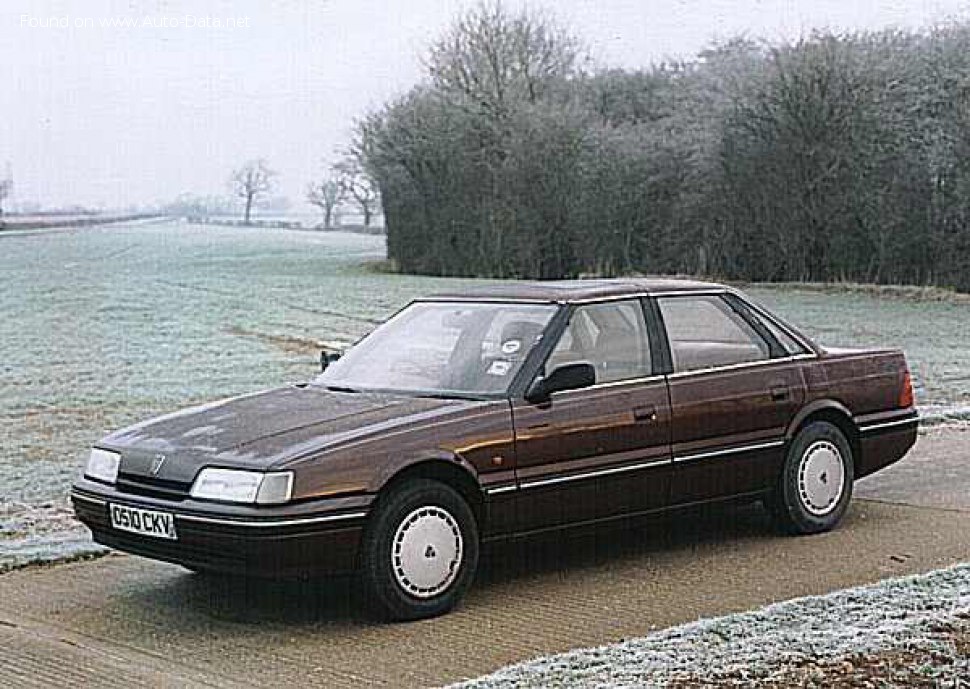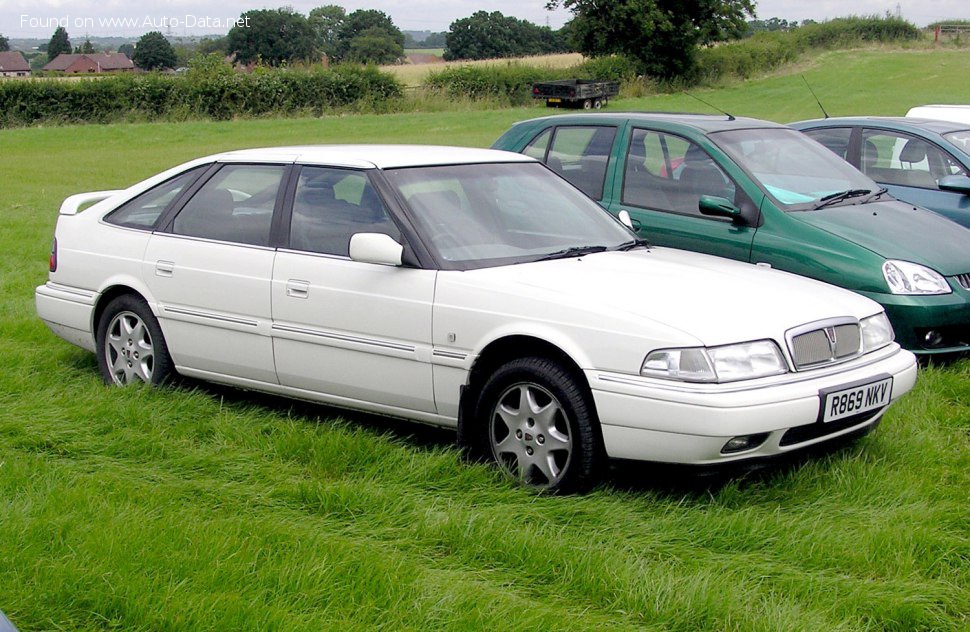
The Rover 800 Hatchback 820 Ti (200 Hp) represents a significant chapter in the history of British automotive engineering. Produced from 1994 to 1999, this model was the flagship offering of the Rover 800 series, positioned within the executive car segment. While never officially sold in the United States, the Rover 800 played a vital role in the European, and particularly the British, market. It aimed to deliver a blend of comfort, refinement, and performance, appealing to buyers seeking a sophisticated and capable five-door hatchback. The 820 Ti variant, with its turbocharged engine, distinguished itself as a performance-oriented iteration within the range.
Engine & Performance: The T16T Powertrain
The heart of the Rover 800 Hatchback 820 Ti (200 Hp) is the T16T engine, a 1994 cm3 (2.0-liter) inline-four cylinder powerplant. This engine was a development of Rover’s established K-series and M-series designs, significantly enhanced with the addition of a turbocharger. The result was a robust 200 horsepower at 6000 rpm, an impressive output for a four-cylinder engine of that era. This translates to a power density of 100.3 horsepower per liter, highlighting the engineering expertise behind the T16T.
The engine’s torque characteristics were equally noteworthy. A peak torque of 240 Nm (177.01 lb.-ft.) was available from a low 2100 rpm, providing excellent drivability and strong acceleration. This broad torque band minimized the need for frequent gear changes, offering both relaxed cruising and responsive overtaking capability. The powertrain was paired with a 5-speed manual transmission, channeling power to the front wheels.
With a kerb weight of 1395 kg (3075.45 lbs.), the 820 Ti could accelerate from 0 to 60 mph in 7.6 seconds (0-100 km/h in 8 seconds). Its top speed was rated at 230 km/h (142.92 mph), making it a competitive performer in its class. The front-wheel-drive layout, combined with a double-wishbone front suspension and coil spring rear suspension, aimed to balance ride comfort with handling prowess. Ventilated front discs and rear discs, coupled with an Anti-lock Braking System (ABS), provided adequate stopping power. Fuel economy figures were 11.8 l/100 km (19.9 US mpg) in urban conditions and 7.7 l/100 km (30.5 US mpg) on the open road, supported by a 68-liter (17.96 US gallon) fuel tank.
Design & Features: Executive Hatchback Practicality
The Rover 800 Hatchback, specifically the second-generation model (R17), was a significant redesign of the original XX series, which was a collaborative effort with Honda. The hatchback body style combined executive presence with practical versatility. Measuring 4880 mm (192.13 inches) in length, 1730 mm (68.11 inches) in width, and 1390 mm (54.72 inches) in height, the 800 Hatchback offered generous interior space. The 2766 mm (108.9 inches) wheelbase contributed to a stable ride and ample legroom for passengers.
The five-door configuration and seating for five prioritized practicality. The trunk space was particularly impressive for its segment, offering a minimum of 530 liters (18.72 cubic feet) of cargo volume. The exterior design retained a conservative yet elegant British aesthetic, characterized by smooth lines and a dignified front grille. Inside, Rover focused on creating a premium environment, typically featuring wood trim, comfortable seating, and a well-designed dashboard.
The hydraulic power steering system, utilizing a rack and pinion setup, provided a communicative steering feel. Standard features included power windows, central locking, and ABS, enhancing both convenience and safety. The 205/55 R16 tires offered a balance between grip and ride comfort. The Rover 800 aimed to provide a refined and comfortable driving experience, appealing to buyers who valued both practicality and a touch of British luxury.
Rover 800 Hatchback 820 Ti (200 Hp) – Technical Specifications
| General Information | |
| Brand | Rover |
| Model | 800 |
| Generation | 800 Hatchback |
| Type (Engine) | 820 Ti (200 Hp) |
| Start of Production | 1994 |
| End of Production | 1999 |
| Powertrain Architecture | Internal Combustion Engine |
| Body type | Hatchback |
| Seats | 5 |
| Doors | 5 |
| Performance Specs | |
| Fuel consumption (economy) – urban | 11.8 l/100 km (19.9 US mpg) |
| Fuel consumption (economy) – extra urban | 7.7 l/100 km (30.5 US mpg) |
| Fuel Type | Petrol (Gasoline) |
| Acceleration 0 – 60 mph | 7.6 sec |
| Acceleration 0 – 100 km/h | 8 sec |
| Maximum speed | 230 km/h (142.92 mph) |
| Weight-to-power ratio | 7 kg/Hp (143.4 Hp/tonne) |
| Weight-to-torque ratio | 5.8 kg/Nm (172 Nm/tonne) |
| Engine Specs | |
| Power | 200 Hp @ 6000 rpm |
| Power per liter | 100.3 Hp/l |
| Torque | 240 Nm @ 2100 rpm (177.01 lb.-ft. @ 2100 rpm) |
| Engine layout | Front, Transverse |
| Engine Model/Code | T16T |
| Engine displacement | 1994 cm3 (121.68 cu. in.) |
| Number of cylinders | 4 |
| Engine configuration | Inline |
| Cylinder Bore | 84.5 mm (3.33 in.) |
| Piston Stroke | 89 mm (3.5 in.) |
| Compression ratio | 8.5:1 |
| Number of valves per cylinder | 4 |
| Fuel injection system | Multi-port manifold injection |
| Engine aspiration | Turbocharger |
| Valvetrain | DOHC |
| Engine oil capacity | 4.5 l (4.76 US qt) |
| Coolant | 8.5 l (8.98 US qt) |
| Space, Volume and Weights | |
| Kerb Weight | 1395 kg (3075.45 lbs.) |
| Max. weight | 1910 kg (4210.83 lbs.) |
| Max load | 515 kg (1135.38 lbs.) |
| Trunk (boot) space – minimum | 530 l (18.72 cu. ft.) |
| Fuel tank capacity | 68 l (17.96 US gal) |
| Dimensions | |
| Length | 4880 mm (192.13 in.) |
| Width | 1730 mm (68.11 in.) |
| Height | 1390 mm (54.72 in.) |
| Wheelbase | 2766 mm (108.9 in.) |
| Front track | 1490 mm (58.66 in.) |
| Rear (Back) track | 1450 mm (57.09 in.) |
| Drivetrain, Brakes and Suspension Specs | |
| Drivetrain Architecture | The Internal combustion engine (ICE) drives the front wheels of the vehicle. |
| Drive wheel | Front wheel drive |
| Number of gears and type of gearbox | 5 gears, manual transmission |
| Front suspension | Double wishbone |
| Rear suspension | Coil spring |
| Front brakes | Ventilated discs |
| Rear brakes | Disc |
| Assisting systems | ABS (Anti-lock braking system) |
| Steering type | Steering rack and pinion |
| Power steering | Hydraulic Steering |
| Tires size | 205/55 R16 |
Legacy and Market Impact of the Rover 800 Hatchback
The Rover 800 series, and particularly the second-generation Hatchback, held a notable position in the European executive car market during the 1990s. While competing with established German brands like BMW and Mercedes-Benz, the 800 offered a distinctive alternative. The 820 Ti, with its 200 Hp turbocharged engine, appealed to buyers seeking performance without the cost of larger, six-cylinder models. Its combination of British comfort, a well-appointed interior, and spirited performance made it a unique choice.
For Rover, the 800 series was a demonstration of its ability to produce a competitive large car. The T16T engine showcased Rover’s engineering capabilities in developing high-output four-cylinder units. However, the 800’s legacy is also linked to the challenges faced by the Rover Group in the 1990s, including ownership changes and market pressures. Despite its qualities, the 800 struggled to consistently match the perceived quality and brand image of its German rivals.
Today, the Rover 800 Hatchback 820 Ti (200 Hp) is remembered as a testament to British automotive engineering from a complex era. It represents a model that offered a unique blend of executive comfort, hatchback practicality, and exciting performance. While its global impact was limited by its focus on the European market, it remains a noteworthy vehicle in Rover’s history, appreciated by enthusiasts for its strong engine and distinctive character. It serves as a reminder of a time when British manufacturers aimed to compete at the highest levels of the automotive world, offering a compelling alternative to mainstream options.