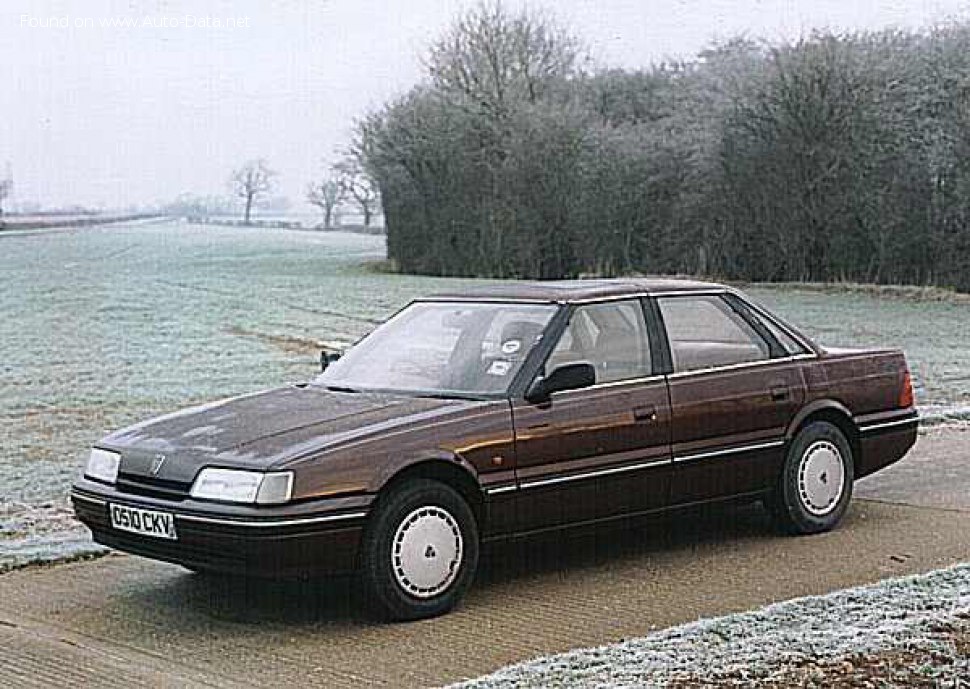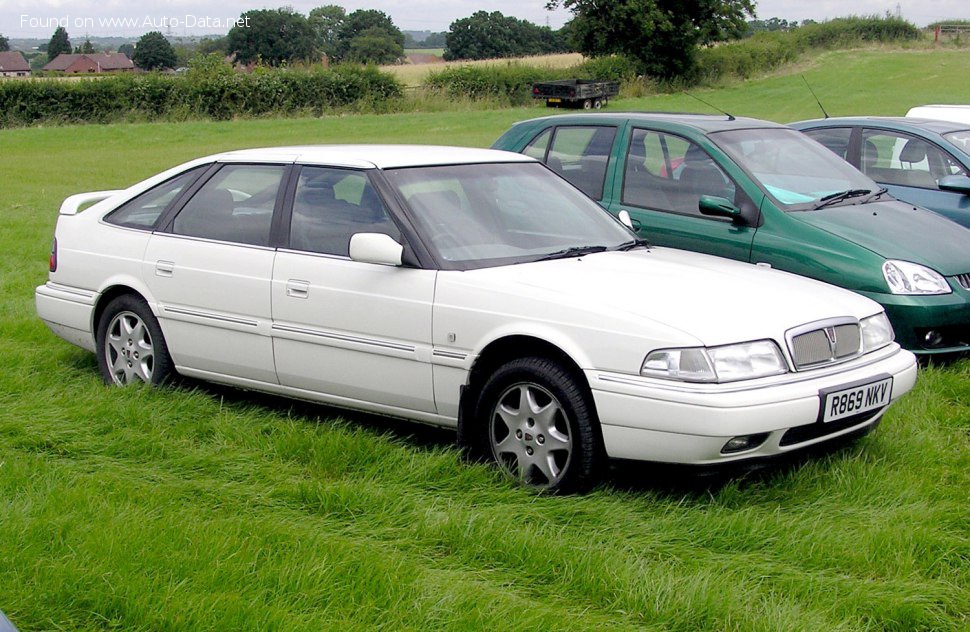
The Rover 800 series represented the British marque’s ambitious foray into the executive car segment, primarily targeting the European market. Launched in 1986 as a joint venture with Honda, the 800 series was a pivotal model for Rover, succeeding the aging SD1. The second generation, known internally as the R17, debuted in 1991 and offered a more rounded, contemporary design compared to its predecessor. The specific variant under review, the Rover 800 Hatchback 827 24V I/SI (RS) CAT (169 Hp), was a key offering within this revised lineup, produced from 1992 to 1999. This particular model, with its powerful 2.7-liter V6 engine, aimed to combine British luxury with reliable Japanese engineering, positioning itself as a comfortable and well-appointed choice for discerning buyers in a competitive segment dominated by German and other European manufacturers.
While the Rover brand never achieved significant sales volume in the United States under its own badge during this period, the 800 series was intrinsically linked to the Honda Legend, which was sold in North America. This collaboration provided Rover with access to advanced platforms and powertrains, crucial for competing in the sophisticated executive class. The Hatchback variant, often referred to as a fastback due to its sleek profile, offered enhanced practicality over the traditional sedan, without compromising the executive appeal.
Rover 800 Hatchback 827 24V I/SI (RS) CAT (169 Hp): Engine & Performance
At the core of the Rover 800 Hatchback 827 24V I/SI (RS) CAT (169 Hp) lies the formidable Honda C27A-V6 engine. This 2.7-liter, naturally aspirated V6 powerplant was a testament to the engineering prowess of the Rover-Honda collaboration. Featuring a 24-valve, Single Overhead Cam (SOHC) design, it delivered a robust 169 horsepower (Hp), providing ample motivation for the executive hatchback. The “24V” in its designation refers to the four valves per cylinder, optimizing airflow for enhanced performance and efficiency, while “I/SI” likely denotes specific trim or specification levels, and “CAT” confirms the presence of a catalytic converter, a standard emission control device by the early 1990s.
This engine was renowned for its smooth operation and refined power delivery, characteristics highly valued in the executive segment. Its naturally aspirated nature meant a linear power band, free from the sudden surge associated with turbochargers, contributing to a comfortable and predictable driving experience. With an engine oil capacity of 4.5 liters (4.76 US quarts) and a coolant capacity of 8.6 liters (9.09 US quarts), the C27A-V6 was designed for longevity and consistent performance. The power output of 169 Hp, while not groundbreaking by today’s standards, was competitive for a non-sporting executive car of its era, allowing for confident highway cruising and respectable acceleration. The choice of a proven Honda V6 engine significantly bolstered the Rover 800’s reputation for reliability, a crucial factor for buyers in this class.
Rover 800 Hatchback 827 24V I/SI (RS) CAT (169 Hp): Design & Features
The Rover 800 Hatchback, particularly the R17 generation, marked a significant stylistic departure from its sharper-edged predecessor. The design embraced smoother, more organic lines, reflecting the prevalent automotive design trends of the early to mid-1990s. The hatchback body style, often referred to as a “fastback,” provided a sleeker profile than the sedan, culminating in an integrated rear hatch that offered considerable practicality. This five-door configuration allowed for easier loading of luggage and bulkier items, making it a versatile choice for families or individuals needing more cargo space than a traditional sedan could provide, without sacrificing the upscale appearance.
Inside, the Rover 800 Hatchback aimed to provide an environment of traditional British luxury. This typically included high-quality materials such as real wood veneer trim on the dashboard and door panels, often complemented by leather upholstery (either standard or a popular option) for the five seats. Ergonomics were generally well-regarded for the period, with controls intuitively placed. Standard features for an executive car of this vintage would have included power windows, central locking, power mirrors, and a sophisticated audio system. Depending on the trim level, amenities like automatic climate control, cruise control, and heated seats would also have been available, catering to the comfort expectations of its target audience.
Safety features, while not as advanced as modern vehicles, were becoming increasingly important in the 1990s. The Rover 800 would typically have offered anti-lock braking systems (ABS) as standard or a widely available option, and airbags for the driver and sometimes the front passenger were also becoming more common throughout its production run. The overall design aimed for a blend of stately presence and functional elegance, distinguishing it from its more overtly sporting or minimalist German rivals.
Legacy and Market Impact
The Rover 800 Hatchback 827 24V I/SI (RS) CAT (169 Hp) and the wider 800 series played a significant, albeit complex, role in the history of the British automotive industry. Positioned as Rover’s flagship model, it was intended to compete directly with established executive cars like the Ford Granada/Scorpio, Vauxhall Carlton/Omega, Volvo 700/900 series, and even entry-level variants of the BMW 5 Series and Mercedes-Benz E-Class in Europe. The collaboration with Honda, particularly the use of the Honda Legend’s platform and the reliable C27A-V6 engine, was a double-edged sword. It provided Rover with a strong mechanical foundation and a much-needed boost in quality and reliability compared to earlier, often maligned, British offerings. However, it also led to criticisms of lacking a distinct “Rover identity” in some quarters, especially regarding the first generation’s interior.
The second-generation R17, including the Hatchback, addressed some of these concerns with a more distinctly British interior design and revised exterior styling that gave it a more imposing and unique presence. The 169 Hp V6 engine offered a compelling blend of performance and refinement, making the 800 a comfortable long-distance cruiser. Its reputation was generally one of understated luxury and comfort, often at a more accessible price point than its German rivals, making it a popular choice for company car fleets and private buyers seeking value.
Despite its strengths, the 800 series faced an uphill battle. Rover’s brand image in the 1990s was undergoing significant changes, eventually leading to its acquisition by BMW in 1994. The 800, while a solid performer, struggled to fully shake off perceptions of inconsistent build quality that plagued some earlier Rover models, even though the Honda-derived components were largely robust. Towards the end of its production run in 1999, the design was beginning to show its age against increasingly modern competitors.
The 800 series was ultimately succeeded by the retro-styled Rover 75, a car that attempted to re-establish a clear British identity and move away from the Honda partnership. However, the legacy of the Rover 800 Hatchback 827 24V I/SI (RS) CAT (169 Hp) remains significant. It represents one of the last truly large executive cars produced by Rover before its eventual demise, showcasing an era of Anglo-Japanese automotive cooperation that was crucial for the survival and evolution of the British brand during a challenging period. It stands as a testament to Rover’s ambition to compete at the top tier of the European automotive market, offering a comfortable, well-equipped, and distinctively styled alternative.
| Category | Specification |
| Brand | Rover |
| Model | 800 |
| Generation | 800 Hatchback |
| Type (Engine) | 827 24V I/SI (RS) CAT (169 Hp) |
| Start of Production | 1992 year |
| End of Production | 1999 year |
| Powertrain Architecture | Internal Combustion engine |
| Body Type | Hatchback |
| Seats | 5 |
| Doors | 5 |
| Fuel Type | Petrol (Gasoline) |
| Power | 169 Hp |
| Engine Model/Code | C27A-V6 |
| Engine Aspiration | Naturally aspirated engine |
| Engine Oil Capacity | 4.5 liters (4.76 US quarts) |
| Engine Oil Specification | Information not provided in source data |
| Coolant Capacity | 8.6 liters (9.09 US quarts) |