
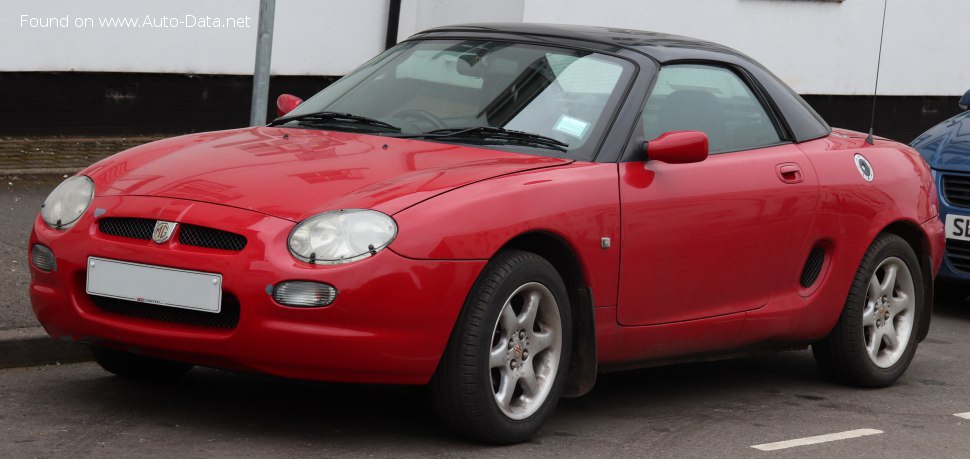
The Rover MGF (RD) 1.8 i VVC (145 Hp) represents a pivotal moment in British automotive history, launched in 1995 as the first all-new MG-badged car since the MG B Roadster ended production in 1980. Positioned as a contemporary, mid-engine roadster, the MGF aimed to revive the tradition of accessible British sports cars. While never officially sold in the United States, it established a unique position in the European market, blending performance, handling, and classic roadster appeal in a modern package. Produced from 1995 to 2000, the 1.8 i VVC variant, with its advanced engine technology, was a performance leader within the MGF range, showcasing Rover’s engineering prowess.
Engine & Performance of the Rover MGF (RD)
The Rover MGF (RD) 1.8 i VVC (145 Hp) was powered by a naturally aspirated 1.8-liter (1796 cm3 or 109.6 cu. in.) inline four-cylinder engine, internally designated 18K4K. The engine’s defining feature was Rover’s Variable Valve Control (VVC) technology. This system continuously adjusted intake valve timing and lift, optimizing engine breathing across the rev range. This resulted in a notable balance of low-end torque and high-revving power, uncommon for naturally aspirated four-cylinder engines of the period.
The VVC engine produced 145 horsepower at 7000 rpm, equating to 80.7 horsepower per liter. Peak torque was 128.34 lb.-ft. (174 Nm) at 4500 rpm. Combined with the MGF’s relatively light curb weight of 2336.9 lbs. (1060 kg), this yielded an excellent weight-to-power ratio of 7.3 kg/Hp (approximately 136.8 Hp/tonne).
Performance figures reflected the MGF’s sporting intent. Acceleration from 0 to 60 mph took 7.3 seconds, and the car achieved a top speed of 131.73 mph (212 km/h). Power was delivered to the rear wheels through a precise 5-speed manual transmission, enhancing the driving experience. The mid-engine, transverse layout contributed to the MGF’s dynamic character, providing near-perfect weight distribution and a low center of gravity, crucial for responsive handling. The DOHC valvetrain, multi-port fuel injection, and a 10.5:1 compression ratio further demonstrated the engine’s advanced design.
Design & Features
The Rover MGF (RD) featured a classic two-seater cabriolet body style, evoking the heritage of British roadsters while incorporating modern design elements. Its compact dimensions – 154.06 inches (3913 mm) in length, 64.09 inches (1628 mm) in width, and 50 inches (1270 mm) in height – gave it a nimble appearance. The short overhangs and purposeful stance were emphasized by a 93.5-inch (2375 mm) wheelbase, promising agile handling.
The MGF’s exterior featured smooth, rounded lines, a departure from the angular designs of some competitors. A manually operated soft-top roof enabled open-air driving. The interior was driver-focused, typical of a sports car, offering comfortable seating for two occupants despite the limited trunk space of 7.38 cu. ft. (209 liters), located at the rear.
The MGF’s suspension system was particularly noteworthy. It utilized a double wishbone setup at both the front and rear, complemented by Rover’s Hydragas suspension. This interconnected hydraulic system, originally developed by BMC, offered a unique blend of ride comfort and handling, absorbing road imperfections while maintaining body control during spirited driving. Ventilated front and solid rear discs, coupled with ABS (Anti-lock Braking System), provided braking performance and enhanced safety. Hydraulic power steering, with a rack and pinion system, offered direct feedback. The car rode on staggered tires – 185/55 VR15 front and 205/50 VR15 rear – optimized for grip and balance.
Rover MGF (RD) Technical Specifications
| Category | Specification |
| General Information | |
| Brand | Rover |
| Model | MGF |
| Generation | MGF (RD) |
| Type (Engine) | 1.8 i VVC (145 Hp) |
| Production Start | 1995 |
| Production End | 2000 |
| Powertrain Architecture | Internal Combustion Engine |
| Body Type | Cabriolet |
| Seats | 2 |
| Doors | 2 |
| Performance Specs | |
| Fuel Consumption (Combined) | 34.1 US mpg (6.9 l/100 km) |
| Fuel Type | Petrol (Gasoline) |
| Acceleration 0 – 60 mph | 7.3 seconds |
| Acceleration 0 – 62 mph (0-100 km/h) | 7.7 seconds |
| Maximum Speed | 131.73 mph (212 km/h) |
| Weight-to-Power Ratio | 7.3 kg/Hp, 136.8 Hp/tonne |
| Weight-to-Torque Ratio | 6.1 kg/Nm, 164.2 Nm/tonne |
| Engine Specs | |
| Power | 145 Hp @ 7000 rpm |
| Power per Liter | 80.7 Hp/l |
| Torque | 128.34 lb.-ft. (174 Nm) @ 4500 rpm |
| Engine Layout | Middle, Transverse |
| Engine Model/Code | 18K4K |
| Engine Displacement | 1.8 liters (1796 cm3 / 109.6 cu. in.) |
| Number of Cylinders | 4 |
| Engine Configuration | Inline |
| Cylinder Bore | 3.15 in. (80 mm) |
| Piston Stroke | 3.52 in. (89.3 mm) |
| Compression Ratio | 10.5:1 |
| Valves per Cylinder | 4 |
| Fuel Injection System | Multi-port manifold injection |
| Engine Aspiration | Naturally aspirated |
| Valvetrain | DOHC (Variable Valve Control – VVC) |
| Dimensions, Volume & Weights | |
| Kerb Weight | 2336.9 lbs. (1060 kg) |
| Maximum Weight | 2910.1 lbs. (1320 kg) |
| Maximum Load | 573.2 lbs. (260 kg) |
| Trunk (Boot) Space | 7.38 cu. ft. (209 liters) |
| Fuel Tank Capacity | 13.21 US gal (50 liters) |
| Length | 154.06 in. (3913 mm) |
| Width | 64.09 in. (1628 mm) |
| Height | 50 in. (1270 mm) |
| Wheelbase | 93.5 in. (2375 mm) |
| Front Track | 55.12 in. (1400 mm) |
| Rear Track | 55.35 in. (1406 mm) |
| Drivetrain, Brakes & Suspension | |
| Drivetrain Architecture | Mid-engine, Rear-wheel drive |
| Drive Wheel | Rear wheel drive |
| Gearbox Type | 5-speed manual transmission |
| Front Suspension | Double wishbone with Hydragas |
| Rear Suspension | Double wishbone with Hydragas |
| Front Brakes | Ventilated discs |
| Rear Brakes | Disc |
| Assisting Systems | ABS (Anti-lock braking system) |
| Steering Type | Steering rack and pinion |
| Power Steering | Hydraulic Steering |
| Tires Size | Front: 185/55 VR15; Rear: 205/50 VR15 |
Legacy and Market Impact
The Rover MGF (RD) arrived during a resurgence in the affordable two-seater roadster market, largely driven by the Mazda MX-5 Miata’s success. The MGF was Rover’s response, quickly becoming a competitive alternative, particularly in Europe. While the Miata offered traditional front-engine, rear-wheel-drive dynamics, the MGF distinguished itself with its mid-engine layout, considered by many enthusiasts to offer superior handling balance. Its Hydragas suspension also provided a unique ride quality, praised for its blend of comfort and control, setting it apart from rivals like the Fiat Barchetta and BMW Z3.
The MGF, and especially the 1.8 i VVC variant, re-established the MG brand in the sports car segment after a long absence. It gained a reputation as a fun-to-drive, stylish, and relatively practical sports car. Its success demonstrated continued demand for British open-top motoring, even as the Rover Group faced financial difficulties.
Despite its positive reception, the MGF faced challenges related to perceived quality and long-term reliability, common issues for some British manufacturers of the era. However, its innovative VVC engine and sophisticated suspension were key differentiators. The MGF’s design influenced its successor, the MG TF, which continued the roadster legacy with coil-spring suspension but retained many of the MGF’s core attributes.
Today, the Rover MGF remains a popular modern classic among enthusiasts, particularly in the UK and Europe. It represents a significant chapter in MG’s history and the British automotive landscape – a successful effort to reimagine the classic British roadster for a new generation, with innovative engineering and a distinctly British flair.
