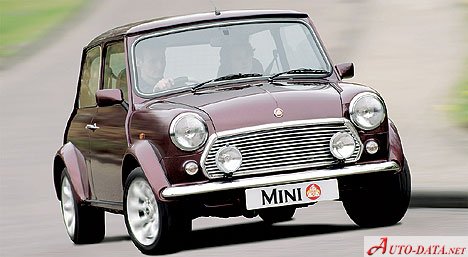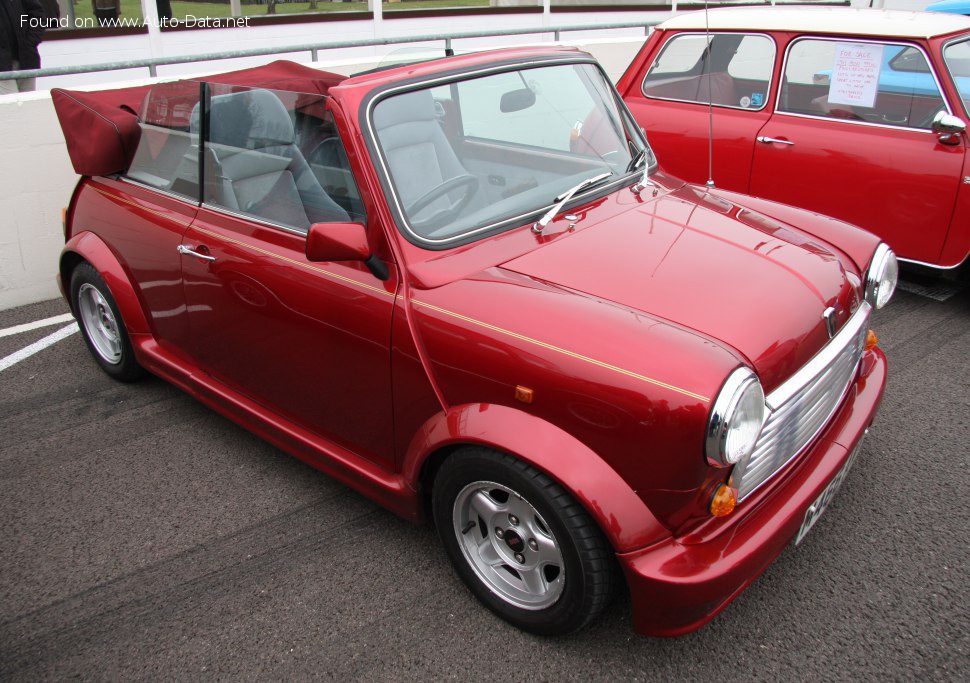
The Rover Mini MK I Cabrio 1300, produced between 1992 and 1995, represents a charming and iconic iteration of the original Mini, a vehicle that revolutionized small car design. While the classic Mini was originally conceived in the late 1950s as a response to the Suez Crisis and the need for fuel-efficient transportation in post-war Britain, the Cabriolet version offered a more open-air driving experience. This particular model, with its 1.3-liter engine producing 63 horsepower, was primarily sold in the European market, where the Mini enjoyed enduring popularity for decades. The Mini’s influence extends far beyond its diminutive size; it became a cultural icon, celebrated for its innovative engineering, nimble handling, and distinctive style.
Rover Mini MK I Cabrio 1300: A Legacy of Innovation
The original Mini, designed by Sir Alec Issigonis, was a groundbreaking vehicle. Its transverse engine and front-wheel-drive layout maximized interior space, a remarkable achievement for a car of its size. The MK I Cabrio built upon this foundation, adding the appeal of open-top motoring. While never officially sold in large numbers in the United States, the Mini gained a cult following among enthusiasts who appreciated its unique character and driving dynamics. The Cabriolet version, in particular, offered a stylish and fun alternative to larger, more conventional convertibles.
Engine & Performance
The Rover Mini MK I Cabrio 1300 is powered by a 1.3-liter (77.68 cubic inches) inline four-cylinder engine. This engine, designated as the 12A2LK70, produces 63 horsepower at 5700 rpm and 95 Nm (70.07 lb.-ft.) of torque at 3900 rpm. The engine utilizes a single-point fuel injection system and a compression ratio of 10.1:1. Power is delivered to the front wheels through a four-speed manual transmission. Performance figures include a 0-60 mph (0-96.6 km/h) acceleration time of approximately 11.9 seconds and a top speed of 145 km/h (90.1 mph). The weight-to-power ratio of 11.9 kg/Hp and weight-to-torque ratio of 7.9 kg/Nm contribute to its surprisingly lively driving experience, especially considering its size and age. Fuel consumption is rated at 7.3 liters per 100 kilometers (32.2 US mpg, 38.7 UK mpg).
Design & Features
The Rover Mini MK I Cabrio is a two-door, five-seater cabriolet. Its compact dimensions – 3100 mm (122.05 in) in length, 1440 mm (56.69 in) in width, and 1350 mm (53.15 in) in height) – are characteristic of the Mini design. The Cabriolet features a manually operated soft top, providing open-air driving enjoyment. The car’s suspension utilizes a wishbone setup at the front and a trailing arm configuration at the rear, contributing to its renowned handling. Braking is provided by disc brakes at the front and drum brakes at the rear, with ABS (Anti-lock Braking System) included as a safety feature. Interior space is maximized through the Mini’s clever packaging, although rear passenger space is limited. Trunk space is modest at 120 liters (4.24 cubic feet). The vehicle rides on 145/70 R12 Q tires.
Technical Specifications
| Brand | Rover |
| Model | Mini MK |
| Generation | Mini MK I Cabrio |
| Type (Engine) | 1300 (63 Hp) |
| Start of production | 1992 |
| End of production | 1995 |
| Powertrain Architecture | Internal Combustion engine |
| Body type | Cabriolet |
| Seats | 5 |
| Doors | 2 |
| Fuel consumption (combined) | 7.3 l/100 km |
| Fuel consumption (US mpg) | 32.2 US mpg |
| Fuel consumption (UK mpg) | 38.7 UK mpg |
| Fuel consumption (km/l) | 13.7 km/l |
| Fuel Type | Petrol (Gasoline) |
| Acceleration 0 – 100 km/h | 12.5 sec |
| Acceleration 0 – 62 mph | 12.5 sec |
| Acceleration 0 – 60 mph | 11.9 sec |
| Maximum speed | 145 km/h / 90.1 mph |
| Weight-to-power ratio | 11.9 kg/Hp |
| Power/tonne | 84 Hp/tonne |
| Torque/tonne | 126.7 Nm/tonne |
| Power | 63 Hp @ 5700 rpm |
| Power per litre | 49.5 Hp/l |
| Torque | 95 Nm @ 3900 rpm / 70.07 lb.-ft. @ 3900 rpm |
| Engine layout | Front, Transverse |
| Engine Model/Code | 12A2LK70 |
| Engine displacement | 1273 cm3 / 77.68 cu. in. |
| Number of cylinders | 4 |
| Engine configuration | Inline |
| Cylinder Bore | 70.6 mm / 2.78 in. |
| Piston Stroke | 81.3 mm / 3.2 in. |
| Compression ratio | 10.1:1 |
| Number of valves per cylinder | 2 |
| Fuel injection system | Single-point injection |
| Engine aspiration | Naturally aspirated engine |
| Engine oil capacity | 4.8 l / 5.07 US qt | 4.22 UK qt |
| Coolant | 4 l / 4.23 US qt | 3.52 UK qt |
| Kerb Weight | 750 kg / 1653.47 lbs. |
| Max. weight | 1070 kg / 2358.95 lbs. |
| Max load | 320 kg / 705.48 lbs. |
| Trunk (boot) space – minimum | 120 l / 4.24 cu. ft. |
| Fuel tank capacity | 34 l / 8.98 US gal | 7.48 UK gal |
| Length | 3100 mm / 122.05 in. |
| Width | 1440 mm / 56.69 in. |
| Height | 1350 mm / 53.15 in. |
| Wheelbase | 2035 mm / 80.12 in. |
| Front track | 1250 mm / 49.21 in. |
| Rear (Back) track | 1208 mm / 47.56 in. |
| Drivetrain Architecture | Front wheel drive |
| Number of gears and type of gearbox | 4 gears, manual transmission |
| Front suspension | Wishbone |
| Rear suspension | Trailing arm |
| Front brakes | Disc |
| Rear brakes | Drum |
| Assisting systems | ABS (Anti-lock braking system) |
| Steering type | Steering rack and pinion |
| Tires size | 145/70 R12 Q |
The Rover Mini MK I Cabrio 1300 remains a highly sought-after classic car, appreciated for its unique charm, historical significance, and enjoyable driving experience. It represents a pivotal moment in automotive history, showcasing innovative design and engineering that continue to influence car manufacturers today.