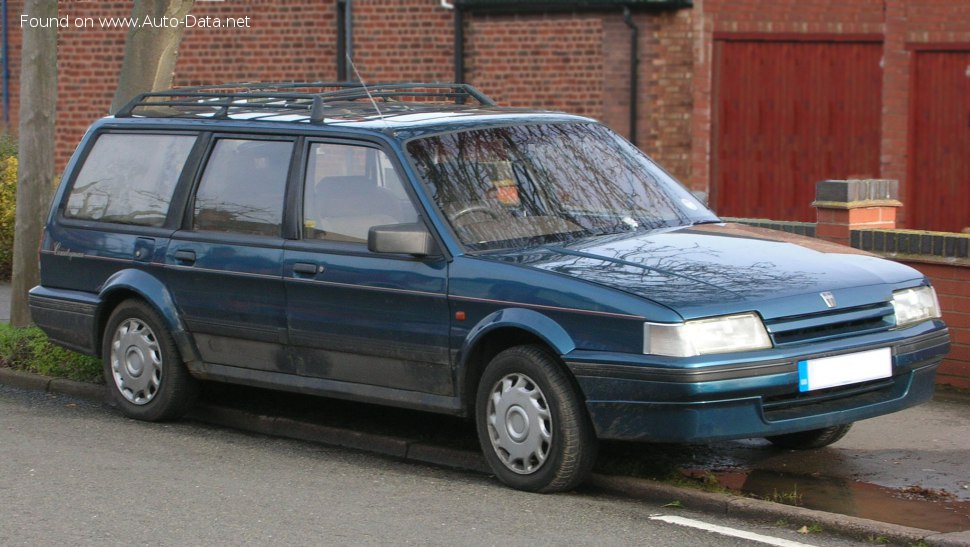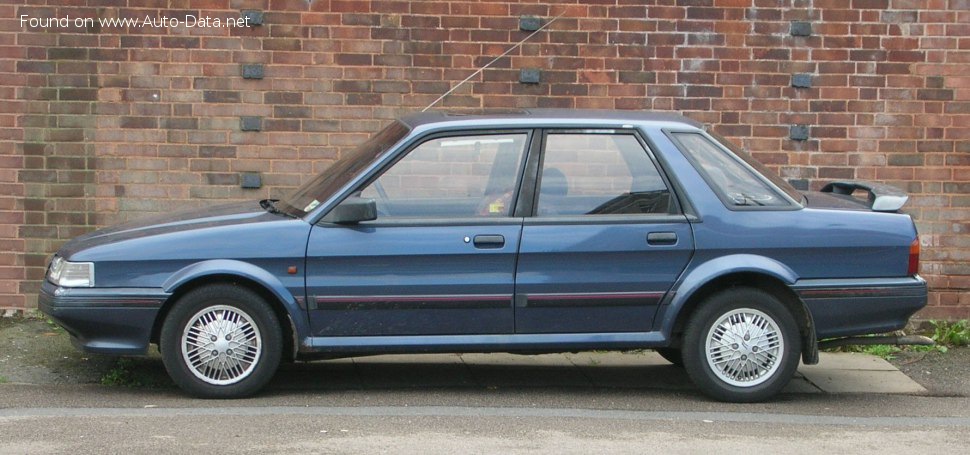
The Rover Montego 2.0i CAT, produced from 1990 to 1994, represents a final attempt by British Leyland – and subsequently Rover Group – to compete in the mid-size family car segment. Positioned above the Rover 200 and alongside the Maestro, the Montego aimed to offer a more upmarket and spacious alternative, though it ultimately struggled to gain significant market share. The “CAT” designation refers to the catalytic converter fitted to the 2.0-liter engine, signifying an effort to meet increasingly stringent European emissions regulations. While not officially sold in the United States, the Montego provides a fascinating case study of British automotive engineering during a period of significant industry restructuring and quality challenges. It was intended to be a more refined and comfortable offering than its predecessor, the Austin Cambridge, and aimed to appeal to buyers seeking a traditionally styled, spacious sedan.
Rover Montego 2.0i CAT: A Detailed Overview
The Montego was born out of the ambitious but ultimately flawed “Project XX” initiative of the late 1970s, intended to create a new platform for a range of Austin and Rover models. The resulting car, launched in 1984, was initially marketed as the Austin Montego, reflecting the then-dominant Austin brand within British Leyland. However, as Rover gained prominence, the car was rebadged as the Rover Montego in 1988. The 2.0i CAT variant, introduced in 1990, represented a refinement of the original model, focusing on improved emissions and a slightly more sophisticated driving experience. It was a product of a time when British automotive manufacturers were battling quality perceptions and fierce competition from Japanese and European rivals.
Engine & Performance
The heart of the Rover Montego 2.0i CAT is its 1,994 cc inline-four cylinder, naturally aspirated engine. This engine produced 102 horsepower, a modest output by contemporary standards, but sufficient for comfortable cruising and everyday driving. The engine featured a single overhead camshaft (SOHC) design and utilized a Bosch fuel injection system. The catalytic converter, denoted by the “CAT” in the model name, was a crucial component in reducing harmful emissions, aligning the Montego with evolving European environmental standards. Power was delivered to the rear wheels via either a five-speed manual transmission or a three-speed automatic gearbox. Performance figures were not particularly impressive; acceleration from 0 to 60 mph took around 11-12 seconds, and the top speed was approximately 105 mph. However, the engine was known for its relatively smooth operation and decent fuel economy for its time, averaging around 28-32 mpg on the combined cycle. The engine’s torque output, while not explicitly stated in available data, was sufficient for relaxed highway driving and moderate acceleration. The powertrain was designed for reliability and ease of maintenance, reflecting the practical needs of its target market.
Design & Features
The Rover Montego’s design was distinctly conservative, aiming for a traditional, understated aesthetic. The body style is a three-box sedan, characterized by a long hood, a clearly defined passenger compartment, and a separate trunk. The exterior styling featured rectangular headlights, a chrome grille, and relatively simple body lines. Inside, the Montego offered a spacious cabin with comfortable seating for five adults. The interior trim was generally functional rather than luxurious, with cloth upholstery and plastic dashboard components. Features included power steering (on most models), central locking, and an optional sunroof. Safety features were limited by the standards of the early 1990s, typically consisting of seatbelts and a collapsible steering column. The Montego’s interior prioritized practicality and space over cutting-edge technology or opulent materials. The car’s suspension system, featuring independent front suspension and a live rear axle, provided a reasonably comfortable ride, although handling was not particularly sharp. The Montego’s design was a deliberate attempt to appeal to buyers who preferred a traditional, British-style sedan over the more modern and angular designs emerging from other manufacturers. The car’s spaciousness and comfortable ride were key selling points, targeting families and drivers who valued practicality and comfort.
Market Position and Legacy
The Rover Montego occupied a challenging position in the European market. It competed with established rivals such as the Ford Sierra, Vauxhall Cavalier (Opel Vectra), and Peugeot 405. While the Montego offered a spacious interior and a comfortable ride, it struggled to match the performance, handling, and perceived quality of its competitors. The car’s reputation for reliability was also hampered by lingering quality control issues that plagued British Leyland for many years. Despite these challenges, the Montego found a niche among buyers who appreciated its traditional styling and spaciousness. It remained in production until 1994, by which time Rover Group was undergoing further restructuring. The Montego was ultimately replaced by the Rover 600, a more modern and competitive mid-size sedan. Today, the Rover Montego is remembered as a somewhat flawed but ultimately endearing example of British automotive engineering. It represents a transitional period in the industry, bridging the gap between the traditional designs of the past and the more modern and technologically advanced cars of the future.
Technical Specifications
| Brand | Rover |
| Model | Montego |
| Generation | Montego |
| Type (Engine) | 2.0 i CAT (102 Hp) |
| Start of production | 1990 |
| End of production | 1994 |
| Powertrain Architecture | Internal Combustion engine |
| Body type | Sedan |
| Fuel Type | Petrol (Gasoline) |
| Power | 102 Hp |
| Engine aspiration | Naturally aspirated engine |