
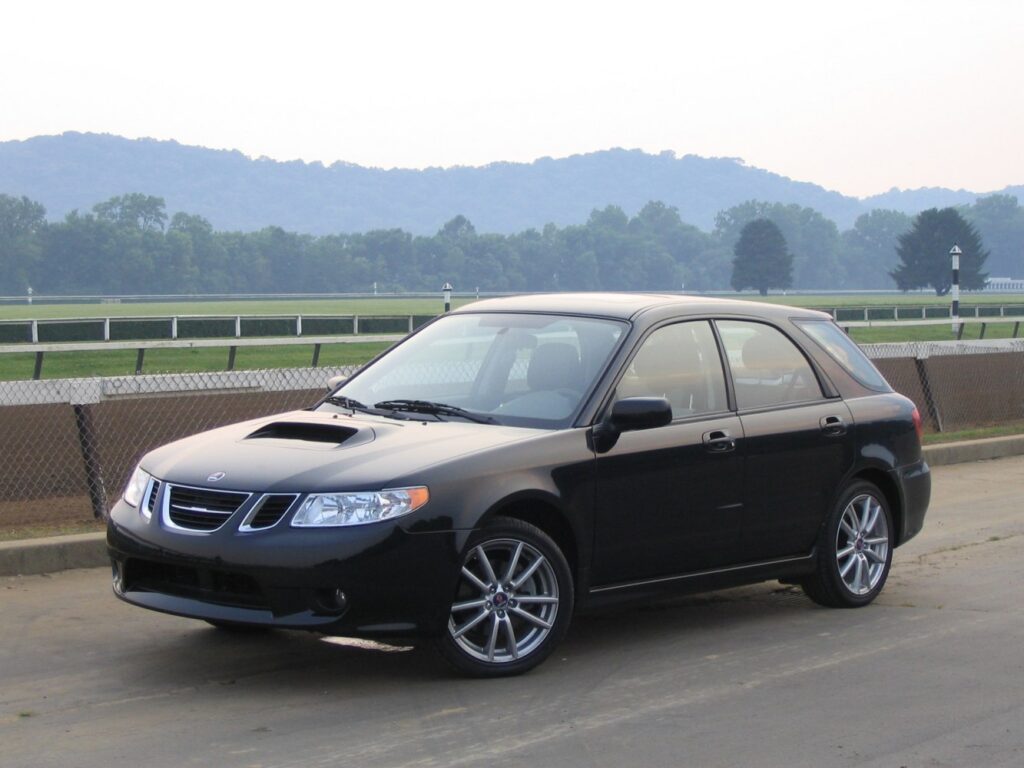
The Saab 9-2X 2.5i 16V (173 Hp) represents a unique and often misunderstood chapter in the history of the Swedish automotive brand, Saab. Launched in 2004, this model was a rebadged and re-engineered version of the second-generation Subaru Impreza wagon, specifically designed to fill a gap in Saab’s product lineup for the North American market. Often affectionately dubbed the “Saabaru” by enthusiasts, the 9-2X was an attempt by General Motors, then Saab’s parent company, to quickly introduce a compact, all-wheel-drive (AWD) vehicle to compete in a segment where Saab had no native offering. Produced for a short two-year run from 2004 to 2006, the 9-2X aimed to blend Subaru’s renowned mechanical robustness and AWD capability with Saab’s distinctive styling cues and interior refinement, targeting a younger, more affluent demographic than typical Subaru buyers.
The Saab 9-2X 2.5i 16V: A Niche Offering
The introduction of the Saab 9-2X was a strategic move by General Motors during a period of significant change for the Saab brand. Facing a need for a compact, entry-level premium vehicle with all-wheel-drive to appeal to American consumers, GM leveraged its partnership with Fuji Heavy Industries (Subaru’s parent company). The result was the 9-2X, which shared its platform, powertrain, and much of its structure with the Subaru Impreza wagon, particularly the Impreza TS and WRX models. Despite its Subaru underpinnings, Saab engineers and designers worked to give the 9-2X a distinct identity, modifying the front and rear fascia, redesigning the interior, and tuning the suspension for a more “Saab-like” driving experience. The 2.5i 16V (173 Hp) variant, with its naturally aspirated Boxer engine, was positioned as the more accessible and practical option within the 9-2X lineup, offering a blend of performance and everyday usability.
Engine & Performance
At the heart of the Saab 9-2X 2.5i 16V (173 Hp) is Subaru’s well-regarded EJ253 2.5-liter, naturally aspirated Boxer engine. This flat-four configuration is a hallmark of Subaru engineering, known for its low center of gravity, which contributes to stable handling characteristics. The engine is longitudinally mounted at the front of the vehicle, driving all four wheels through a robust all-wheel-drive system and a 5-speed manual transmission. This powertrain delivers a healthy 173 horsepower at 5600 rpm and 225 Nm (165.95 lb-ft) of torque at 4000 rpm. The Boxer engine’s design, with its horizontally opposed cylinders, allows for a smooth power delivery and a distinctive engine note. With a displacement of 2457 cm³ (149.94 cu. in.) and a compression ratio of 10:1, the multi-port fuel injection system ensures efficient fuel delivery. The engine’s power output translates to a respectable weight-to-power ratio of 8.1 kg/Hp (124 Hp/tonne) and a weight-to-torque ratio of 6.2 kg/Nm (161.3 Nm/tonne), allowing the 9-2X to achieve a maximum speed of 196 km/h (121.79 mph).
Despite its all-wheel-drive system and 2.5-liter engine, the 9-2X 2.5i offered competitive fuel economy for its class and era. The urban fuel consumption was rated at 11.2 l/100 km (21 US mpg), while extra-urban driving yielded 8.4 l/100 km (28 US mpg). These figures, while not groundbreaking by today’s standards, were reasonable for a vehicle offering permanent all-wheel drive and a naturally aspirated engine. The choice of a 5-speed manual transmission provided an engaging driving experience, allowing drivers to fully utilize the engine’s power band. Saab engineers also tweaked the suspension, utilizing spring struts at both the front and rear, to provide a firmer, more controlled ride that aligned with Saab’s traditional emphasis on handling and driver feedback. The steering, a rack and pinion type, offered precise control, contributing to the car’s agile feel on various road conditions. The presence of ABS (Anti-lock Braking System) and ventilated discs at the front and solid discs at the rear ensured confident stopping power.
Design & Features
The 9-2X’s body type is a 5-door station wagon (often referred to as an estate in Europe), a practical and versatile configuration. While its profile unmistakably shared lines with the Subaru Impreza wagon, Saab designers meticulously crafted new front and rear fascias to give it a unique “Saab” identity. The front featured Saab’s signature three-port grille and distinctive headlights, while the rear received new taillights and a more streamlined bumper, aiming for a more sophisticated and aerodynamic appearance than its Subaru counterpart. These changes, though subtle to the untrained eye, were crucial in attempting to differentiate the 9-2X as a premium offering within the compact wagon segment. The overall length of 4460 mm (175.59 in.) and width of 1695 mm (66.73 in.) gave it a compact footprint, making it maneuverable in urban environments, while the 2525 mm (99.41 in.) wheelbase ensured a stable ride.
Inside, the Saab 9-2X continued its blend of Subaru practicality and Saab refinement. The 5-seat configuration provided comfortable seating for occupants, and the station wagon body offered excellent cargo flexibility. The minimum trunk (boot) space of 790 liters (27.9 cu. ft.) was generous, expanding to an impressive 1744 liters (61.59 cu. ft.) with the rear seats folded down, making it highly capable for hauling luggage, sports equipment, or even small furniture. This versatility was a key selling point for those seeking a premium compact vehicle without sacrificing utility. While the core interior architecture was Subaru-derived, Saab introduced its own touches, including different seat fabrics, instrument cluster graphics, and trim materials, aiming for a more upscale feel. Standard features for the era included power windows, air conditioning, and a quality sound system. The focus on safety was evident with the inclusion of ABS and the robust all-wheel-drive system, providing enhanced control in adverse weather conditions.
Technical Specifications
| Category | Specification |
| Brand | Saab |
| Model | 9-2X |
| Generation | 9-2X |
| Type (Engine) | 2.5i 16V (173 Hp) |
| Start of production | 2004 year |
| End of production | 2006 year |
| Powertrain Architecture | Internal Combustion engine |
| Body type | Station wagon (estate) |
| Seats | 5 |
| Doors | 5 |
| Fuel consumption (economy) – urban | 11.2 l/100 km (21 US mpg) |
| Fuel consumption (economy) – extra urban | 8.4 l/100 km (28 US mpg) |
| Fuel Type | Petrol (Gasoline) |
| Maximum speed | 196 km/h (121.79 mph) |
| Weight-to-power ratio | 8.1 kg/Hp, 124 Hp/tonne |
| Weight-to-torque ratio | 6.2 kg/Nm, 161.3 Nm/tonne |
| Power | 173 Hp @ 5600 rpm. |
| Power per litre | 70.4 Hp/l |
| Torque | 225 Nm @ 4000 rpm. (165.95 lb.-ft. @ 4000 rpm.) |
| Engine layout | Front, Longitudinal |
| Engine Model/Code | EJ253 |
| Engine displacement | 2457 cm³ (149.94 cu. in.) |
| Number of cylinders | 4 |
| Engine configuration | Boxer |
| Cylinder Bore | 99.5 mm (3.92 in.) |
| Piston Stroke | 79 mm (3.11 in.) |
| Compression ratio | 10:1 |
| Number of valves per cylinder | 4 |
| Fuel injection system | Multi-port manifold injection |
| Engine aspiration | Naturally aspirated engine |
| Engine oil capacity | 4 l (4.23 US qt) |
| Coolant capacity | 7.4 l (7.82 US qt) |
| Kerb Weight | 1395 kg (3075.45 lbs.) |
| Trunk (boot) space – minimum | 790 l (27.9 cu. ft.) |
| Trunk (boot) space – maximum | 1744 l (61.59 cu. ft.) |
| Fuel tank capacity | 60 l (15.85 US gal) |
| Length | 4460 mm (175.59 in.) |
| Width | 1695 mm (66.73 in.) |
| Height | 1465 mm (57.68 in.) |
| Wheelbase | 2525 mm (99.41 in.) |
| Front track | 1465 mm (57.68 in.) |
| Rear (Back) track | 1455 mm (57.28 in.) |
| Minimum turning circle (turning diameter) | 10.8 m (35.43 ft.) |
| Drive wheel | All wheel drive (4×4) |
| Number of gears and type of gearbox | 5 gears, manual transmission |
| Front suspension | Spring Strut |
| Rear suspension | Spring Strut |
| Front brakes | Ventilated discs |
| Rear brakes | Disc |
| Assisting systems | ABS (Anti-lock braking system) |
| Steering type | Steering rack and pinion |
| Tires size | 205/55 R16 |
Legacy & Market Impact
The Saab 9-2X 2.5i 16V (173 Hp) occupies a unique place in automotive history, primarily due to its “Saabaru” identity. It was a product of necessity and corporate synergy, born from Saab’s urgent need for a compact, all-wheel-drive vehicle to compete in the North American market, a niche that Subaru had successfully carved out for itself. While controversial among brand purists, the 9-2X represented a practical solution for Saab at the time. It allowed the brand to offer a vehicle with Subaru’s highly regarded symmetrical all-wheel-drive system and robust Boxer engines, packaged with a more premium aesthetic and interior feel that Saab hoped would appeal to its traditional customer base and attract new buyers looking for a quirky, yet capable, alternative to mainstream offerings. The car’s short production run, ending in 2006, coincided with GM divesting its stake in Fuji Heavy Industries, which ultimately led to the discontinuation of the model.
Upon its release, the 9-2X was met with a mixed reception. Automotive journalists generally praised its driving dynamics, particularly the combination of Subaru’s capable AWD system and Saab’s tuned suspension, which offered a more refined ride than its Impreza donor car. The practicality of the station wagon body style and the strong performance of the 2.5-liter Boxer engine were also highlighted. However, the car faced criticism for its relatively high price compared to the Subaru Impreza and for not fully embodying the unique “Saabness” that loyalists expected. Its primary competitors included other compact wagons like the Volkswagen Jetta Wagon, Volvo V50, and even its direct sibling, the Subaru Impreza/WRX Wagon. The 9-2X struggled to establish a strong market presence, partly due to its short lifespan and the ongoing identity crisis within the Saab brand during the mid-2000s.
Despite its initial challenges and brief production, the Saab 9-2X 2.5i 16V (173 Hp) has developed a cult following, especially among enthusiasts of both Saab and Subaru. It is celebrated for its unique blend of attributes: Subaru’s legendary reliability, performance, and all-wheel-drive prowess, coupled with Saab’s distinct styling and slightly more upscale interior. For those seeking a practical, all-weather capable, and somewhat understated performance wagon, the 9-2X remains an intriguing option on the used car market. Its rarity and the story behind its creation contribute to its appeal, making it a conversation piece and a testament to a unique period in automotive corporate history. The 9-2X stands as a fascinating example of badge engineering, demonstrating how two distinct automotive philosophies could briefly converge to create a vehicle with a character all its own.
