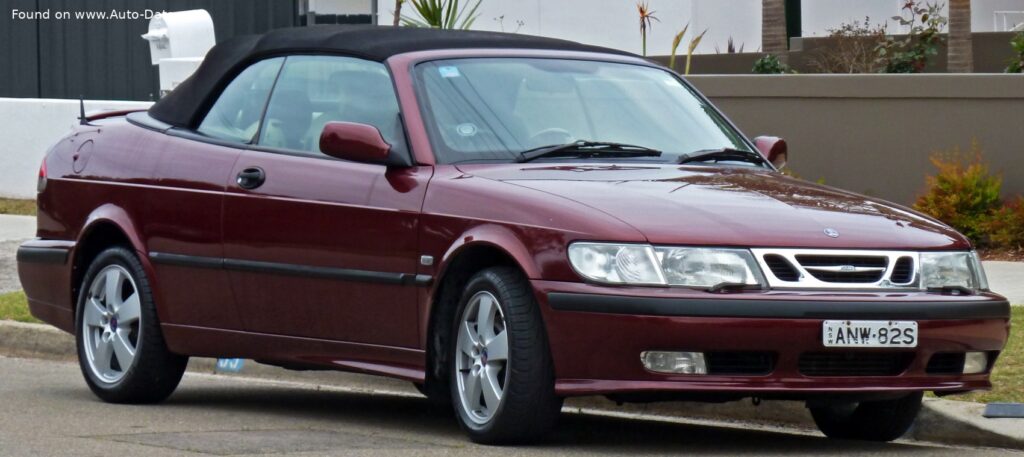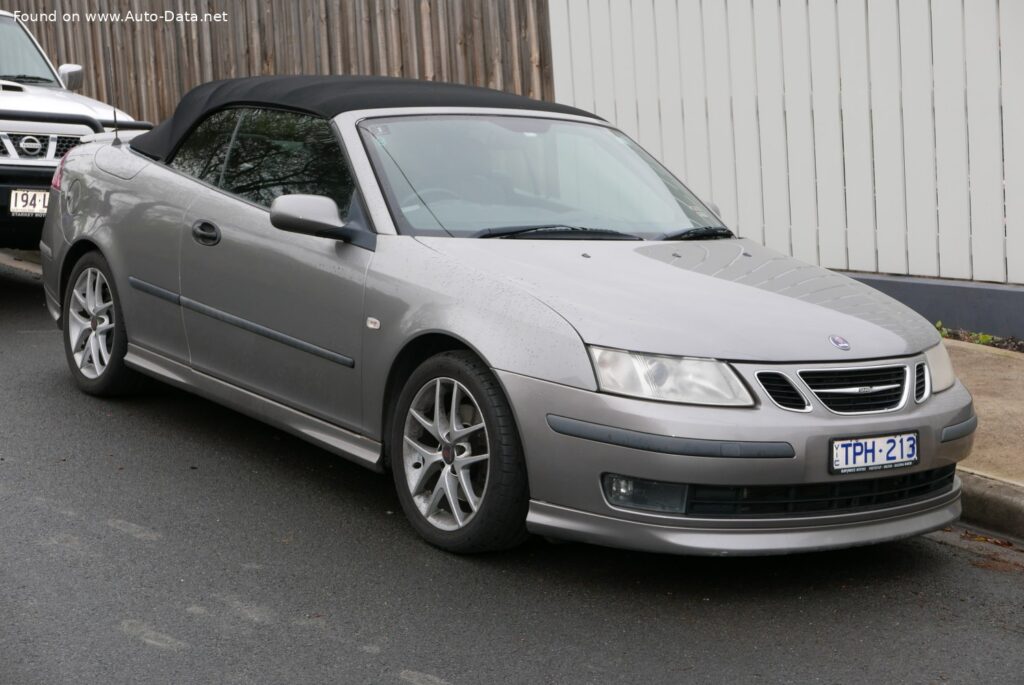
The Saab 9-3 Convertible II 2.0t (175 Hp), produced between 2002 and 2007, represents a significant iteration in Saab’s lineage of open-top vehicles. As a mid-size convertible, it aimed to blend Scandinavian design with a sporty driving experience. This generation, the second for the 9-3 Convertible, was primarily marketed in Europe, where Saab cultivated a loyal following known for appreciating the brand’s unique engineering and safety focus. While Saab never achieved mainstream success in the US market, the 9-3 Convertible II offered a distinctive alternative to more common European and Japanese convertibles.
The Saab 9-3 Convertible II: A Detailed Overview
The 9-3 Convertible II built upon the foundation laid by its predecessor, offering improved refinement, safety features, and a more contemporary aesthetic. It was positioned as a premium offering within the convertible segment, competing with models like the BMW 3 Series Convertible and Audi A4 Cabriolet. The “2.0t” designation refers to the engine – a 2.0-liter turbocharged four-cylinder – and its power output of 175 horsepower. This model was a popular choice within the 9-3 Convertible range, balancing performance with reasonable fuel economy.
Engine & Performance
At the heart of the Saab 9-3 Convertible II 2.0t lies the B207L engine, a 1.998-liter (121.93 cubic inches) inline-four cylinder powerplant. This engine utilizes a turbocharger and intercooler to boost power output to 175 horsepower at 5500 rpm, and 265 Nm (195.45 lb.-ft.) of torque at 2500 rpm. The turbocharging system provides a broad torque curve, making the car responsive in everyday driving situations. Power per liter is a respectable 87.6 hp/l. The engine features multi-port fuel injection and a double overhead camshaft (DOHC) valvetrain with four valves per cylinder. This configuration contributes to both performance and efficiency. The engine requires 6 liters (6.34 US quarts) of oil and 7.5 liters (7.93 US quarts) of coolant for optimal operation.
Power is delivered to the front wheels via a five-speed manual transmission. Acceleration from 0 to 100 km/h (0-62 mph) takes approximately 9 seconds, while the 0-60 mph sprint is achieved in around 8.6 seconds. The car boasts a maximum speed of 220 km/h (136.7 mph). The weight-to-power ratio of 9 kg/Hp and a weight-to-torque ratio of 6 kg/Nm contribute to a reasonably engaging driving experience.
Design & Features
The Saab 9-3 Convertible II is a two-door, four-seater cabriolet. Its design is characterized by clean lines and a relatively understated elegance, typical of Scandinavian aesthetics. The convertible top is a power-operated soft top, designed for ease of use and providing adequate insulation from the elements. The exterior dimensions are 4635 mm (182.48 in) in length, 1762 mm (69.37 in) in width, and 1434 mm (56.46 in) in height, with a wheelbase of 2675 mm (105.31 in).
Inside, the 9-3 Convertible II offers a driver-focused cockpit. Safety was a key consideration in the design, with features like Anti-lock Braking System (ABS) as standard equipment. While not as comprehensive as modern safety suites, ABS was a significant advancement for the time. The interior provides comfortable seating for four adults, although rear passenger space is somewhat limited, as is typical for convertibles. Trunk space ranges from 235 liters (8.3 cu. ft.) with the top up to 352 liters (12.43 cu. ft.) with the top down. The fuel tank capacity is 62 liters (16.38 US gallons).
Technical Specifications
| Brand | Saab |
| Model | 9-3 |
| Generation | 9-3 Convertible II |
| Type (Engine) | 2.0 t (175 Hp) |
| Start of production | 2002 |
| End of production | 2007 |
| Powertrain Architecture | Internal Combustion engine |
| Body type | Cabriolet |
| Seats | 4 |
| Doors | 2 |
| Fuel consumption (combined) | 8.8 l/100 km |
| Fuel consumption (US mpg) | 26.7 US mpg |
| Fuel consumption (UK mpg) | 32.1 UK mpg |
| Fuel consumption (km/l) | 11.4 km/l |
| Fuel Type | Petrol (Gasoline) |
| Acceleration 0 – 100 km/h | 9 sec |
| Acceleration 0 – 62 mph | 9 sec |
| Acceleration 0 – 60 mph | 8.6 sec |
| Maximum speed | 220 km/h (136.7 mph) |
| Weight-to-power ratio | 9 kg/Hp |
| Weight-to-torque ratio | 6 kg/Nm |
| Power | 175 Hp @ 5500 rpm |
| Power per litre | 87.6 Hp/l |
| Torque | 265 Nm @ 2500 rpm (195.45 lb.-ft. @ 2500 rpm) |
| Engine layout | Front, Transverse |
| Engine Model/Code | B207L |
| Engine displacement | 1998 cm3 (121.93 cu. in.) |
| Number of cylinders | 4 |
| Engine configuration | Inline |
| Cylinder Bore | 86 mm (3.39 in.) |
| Piston Stroke | 86 mm (3.39 in.) |
| Compression ratio | 9.5:1 |
| Number of valves per cylinder | 4 |
| Fuel injection system | Multi-port manifold injection |
| Engine aspiration | Turbocharger, Intercooler |
| Valvetrain | DOHC |
| Engine oil capacity | 6 l (6.34 US qt | 5.28 UK qt) |
| Coolant | 7.5 l (7.93 US qt | 6.6 UK qt) |
| Kerb Weight | 1580 kg (3483.3 lbs.) |
| Max. weight | 1970 kg (4343.11 lbs.) |
| Max load | 390 kg (859.8 lbs.) |
| Trunk (boot) space – minimum | 235 l (8.3 cu. ft.) |
| Trunk (boot) space – maximum | 352 l (12.43 cu. ft.) |
| Fuel tank capacity | 62 l (16.38 US gal | 13.64 UK gal) |
| Length | 4635 mm (182.48 in.) |
| Width | 1762 mm (69.37 in.) |
| Height | 1434 mm (56.46 in.) |
| Wheelbase | 2675 mm (105.31 in.) |
| Front track | 1524 mm (60 in.) |
| Rear (Back) track | 1506 mm (59.29 in.) |
| Drivetrain Architecture | Front wheel drive |
| Number of gears and type of gearbox | 5 gears, manual transmission |
| Front suspension | Spring Strut |
| Rear suspension | Coil spring |
| Front brakes | Ventilated discs |
| Rear brakes | Disc |
| Assisting systems | ABS (Anti-lock braking system) |
| Steering type | Steering rack and pinion |
| Tires size | 215/55 R16 |
| Wheel rims size | 16 |
The Saab 9-3 Convertible II 2.0t, while no longer in production, remains a desirable vehicle for enthusiasts who appreciate its unique blend of Scandinavian design, turbocharged performance, and relative rarity. It represents a chapter in Saab’s history marked by innovation and a commitment to driver enjoyment.