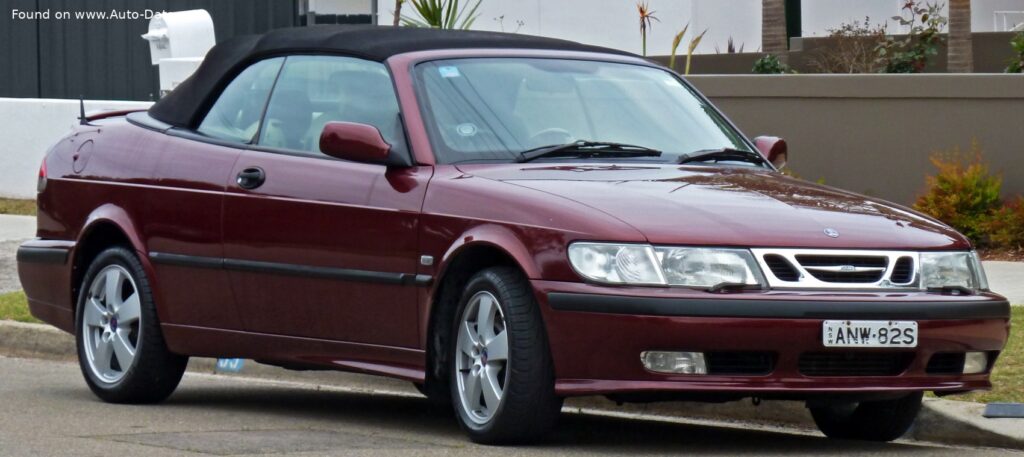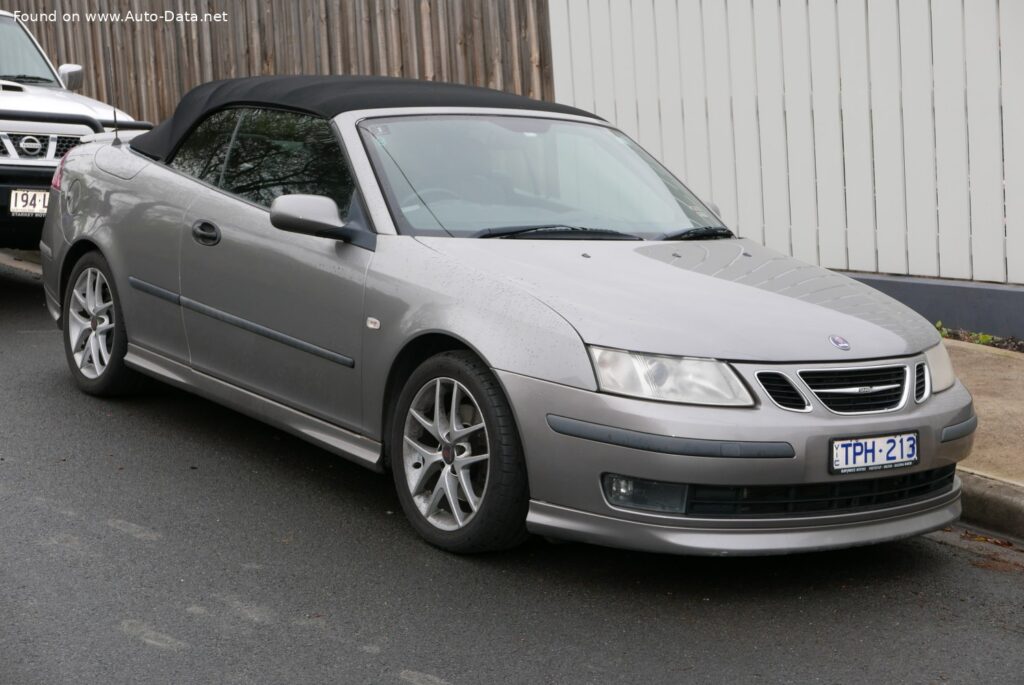
The Saab 9-3 Convertible II 2.0 T (210 Hp) Automatic, produced between 2002 and 2007, represents a compelling blend of Scandinavian design, turbocharged performance, and open-air driving enjoyment. As the second generation of the 9-3 Convertible, this model aimed to refine the formula established by its predecessor, offering a more sophisticated and capable vehicle within the premium compact convertible segment. While Saab as a brand ultimately faced challenges, the 9-3 Convertible II remains a fondly remembered vehicle, particularly for its distinctive styling and engaging driving dynamics. It was primarily marketed in Europe, where the convertible market was, and remains, significantly stronger than in the United States. However, a smaller number were imported to the US, appealing to buyers seeking an alternative to more mainstream offerings.
The Saab 9-3 Convertible II: A Detailed Overview
The 9-3 Convertible II built upon the foundation of the 9-3 sedan and wagon, sharing its core mechanical components but distinguished by its fully automatic, electro-hydraulic convertible top. This allowed for convenient open-top motoring with the touch of a button. The “2.0 T” designation indicates the engine powering this variant – a 2.0-liter turbocharged four-cylinder engine producing 210 horsepower. This engine was a key element of Saab’s identity, offering a strong power output for its size and a characteristic turbocharged surge.
Engine & Performance
At the heart of the Saab 9-3 Convertible II 2.0 T lies the B207R engine, a 1998 cc (121.93 cu. in.) inline-four cylinder powerplant. This engine utilizes a turbocharger with an intercooler to boost power output to 210 Hp at 5500 rpm, and delivers a torque figure of 300 Nm (221.27 lb.-ft.) at 2300 rpm. The engine features multi-port fuel injection and a double overhead camshaft (DOHC) valvetrain with four valves per cylinder. This configuration allows for efficient combustion and strong performance across a broad rev range. Power is delivered to the front wheels via a six-speed automatic transmission.
Performance figures for the 9-3 Convertible II 2.0 T are respectable for its class. Acceleration from 0 to 100 km/h (0-62 mph) takes 8.8 seconds, while the 0-60 mph sprint is achieved in approximately 8.4 seconds. The vehicle boasts a maximum speed of 230 km/h (142.92 mph). Fuel economy is rated at 9.6 l/100 km (24.5 US mpg) combined, with 14 l/100 km (16.8 US mpg) in urban driving and 7.1 l/100 km (33.1 US mpg) on the extra-urban cycle. The engine meets Euro 4 emission standards.
Design & Features
The Saab 9-3 Convertible II is a two-door, four-seater cabriolet. Its design language is distinctly Saab, characterized by clean lines, a wraparound cabin, and a focus on functionality. The convertible top is a key design element, providing a sleek profile when closed and an open-air experience when retracted. The interior is designed with Scandinavian minimalism in mind, prioritizing ergonomics and driver comfort.
Safety features were a priority, even for a convertible. The 9-3 Convertible II included ABS (Anti-lock Braking System) as standard, along with ventilated disc brakes on the front and disc brakes on the rear. The chassis was reinforced to compensate for the lack of a fixed roof, enhancing structural rigidity and occupant protection. Other features included a steering rack and pinion system for precise handling, and 17-inch wheels with 215/50 R17 tires. Trunk space, while compromised by the convertible mechanism, offers 235 liters (8.3 cu. ft.) with the top up and 352 liters (12.43 cu. ft.) with the top down.
Technical Specifications
| Brand | Saab |
| Model | 9-3 |
| Generation | 9-3 Convertible II |
| Type (Engine) | 2.0 T (210 Hp) Automatic |
| Start of production | 2002 |
| End of production | 2007 |
| Powertrain Architecture | Internal Combustion engine |
| Body type | Cabriolet |
| Seats | 4 |
| Doors | 2 |
| Fuel consumption (urban) | 14 l/100 km (16.8 US mpg) |
| Fuel consumption (extra urban) | 7.1 l/100 km (33.1 US mpg) |
| Fuel consumption (combined) | 9.6 l/100 km (24.5 US mpg) |
| Fuel Type | Petrol (Gasoline) |
| Acceleration 0 – 100 km/h | 8.8 sec |
| Acceleration 0 – 62 mph | 8.8 sec |
| Acceleration 0 – 60 mph | 8.4 sec |
| Maximum speed | 230 km/h (142.92 mph) |
| Emission standard | Euro 4 |
| Weight-to-power ratio | 7.6 kg/Hp |
| Weight-to-torque ratio | 5.3 kg/Nm |
| Power | 210 Hp @ 5500 rpm |
| Torque | 300 Nm @ 2300 rpm (221.27 lb.-ft. @ 2300 rpm) |
| Engine layout | Front, Transverse |
| Engine Model/Code | B207R |
| Engine displacement | 1998 cm3 (121.93 cu. in.) |
| Number of cylinders | 4 |
| Engine configuration | Inline |
| Cylinder Bore | 86 mm (3.39 in.) |
| Piston Stroke | 86 mm (3.39 in.) |
| Compression ratio | 9.5:1 |
| Number of valves per cylinder | 4 |
| Fuel injection system | Multi-port manifold injection |
| Engine aspiration | Turbocharger, Intercooler |
| Valvetrain | DOHC |
| Engine oil capacity | 6 l (6.34 US qt | 5.28 UK qt) |
| Coolant | 7.5 l (7.93 US qt | 6.6 UK qt) |
| Kerb Weight | 1590 kg (3505.35 lbs.) |
| Max. weight | 1980 kg (4365.15 lbs.) |
| Max load | 390 kg (859.8 lbs.) |
| Trunk (boot) space – minimum | 235 l (8.3 cu. ft.) |
| Trunk (boot) space – maximum | 352 l (12.43 cu. ft.) |
| Fuel tank capacity | 62 l (16.38 US gal | 13.64 UK gal) |
| Length | 4635 mm (182.48 in.) |
| Width | 1762 mm (69.37 in.) |
| Height | 1434 mm (56.46 in.) |
| Wheelbase | 2675 mm (105.31 in.) |
| Front track | 1524 mm (60 in.) |
| Rear (Back) track | 1506 mm (59.29 in.) |
| Drivetrain Architecture | Front wheel drive |
| Number of gears and type of gearbox | 6 gears, automatic transmission |
| Front suspension | Spring Strut |
| Rear suspension | Coil spring |
| Front brakes | Ventilated discs |
| Rear brakes | Disc |
| Assisting systems | ABS (Anti-lock braking system) |
| Steering type | Steering rack and pinion |
| Tires size | 215/50 R17 |
| Wheel rims size | 17 |