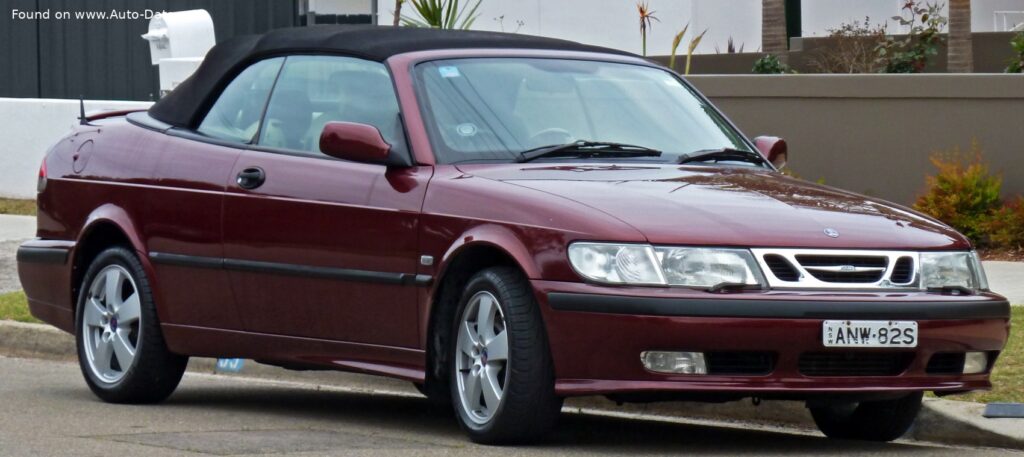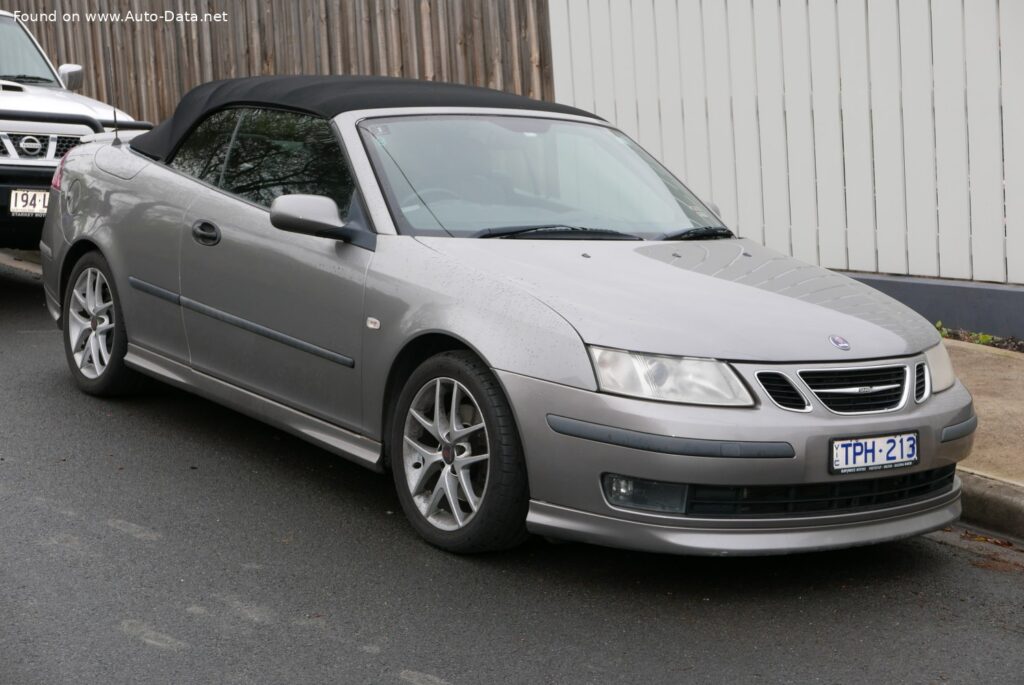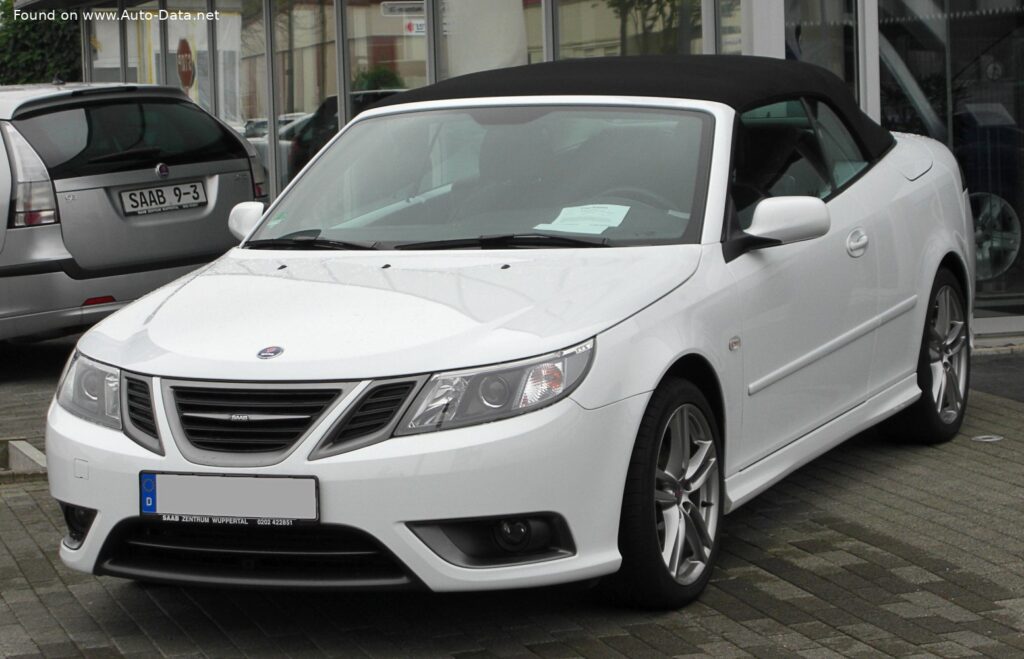
The Saab 9-3 Convertible II, particularly the facelifted version introduced in 2007, represents a compelling blend of Scandinavian design and engineering. Positioned within the premium compact convertible segment, the 9-3 Convertible aimed to offer a sophisticated open-top driving experience with a focus on safety and practicality. This generation, produced from 2007 to 2010, saw refinements to both the exterior styling and interior appointments, enhancing its appeal in a competitive market. The 1.9 TiD Sentronic model, powered by a diesel engine, was a significant offering, particularly in European markets where diesel fuel was prevalent and efficiency was highly valued.
Saab 9-3 Convertible II (2007-2010): A Detailed Overview
The 9-3 Convertible II built upon the foundation of the original 9-3, introducing a more modern aesthetic and improved mechanical components. The facelift in 2007 brought revised front and rear styling, updated interior materials, and enhancements to the vehicle’s safety features. While Saab as a brand ultimately faced financial difficulties, the 9-3 Convertible II remains a testament to the company’s innovative spirit and commitment to distinctive design. The model was primarily sold in Europe, where it competed with vehicles like the BMW 3 Series Convertible, Audi A4 Cabriolet, and Volvo C70.
Engine & Performance
The 1.9 TiD variant of the Saab 9-3 Convertible II is powered by a 1.9-liter inline-four cylinder diesel engine, designated Z19DTH. This engine produces 150 horsepower at 4,000 rpm and 320 Nm (236.02 lb.-ft.) of torque between 2,000 and 2,750 rpm. The engine utilizes a turbocharger with an intercooler to enhance performance and efficiency. Power is delivered to the front wheels via a six-speed Sentronic automatic transmission. This configuration allows for a respectable 0-100 km/h (0-62 mph) acceleration time of 11.8 seconds, and a 0-60 mph time of 11.2 seconds. The maximum speed is rated at 195 km/h (121.17 mph). The engine’s common rail diesel injection system and relatively high compression ratio of 17.5:1 contribute to its fuel efficiency and torque output.
Fuel economy figures, measured using the NEDC standard, are rated at 9.8 l/100 km (24 US mpg) in urban driving, 5.4 l/100 km (43.6 US mpg) in extra-urban driving, and 7.0 l/100 km (33.6 US mpg) in combined cycles. CO2 emissions are rated at 189 g/km, placing it within the Euro 4 emission standard. The engine also incorporates a particulate filter to further reduce emissions.
Design & Features
The Saab 9-3 Convertible II is a two-door, four-seat cabriolet. Its design emphasizes a sleek profile with a long hood and a relatively short rear deck. The convertible top is a power-operated soft top, designed for ease of use and providing a comfortable cabin environment. The interior features a driver-focused layout with ergonomic seating and a clean dashboard design. Safety features include ABS (Anti-lock Braking System) and ventilated disc brakes on all four wheels (302mm front, 292mm rear). The car’s suspension consists of an independent McPherson strut setup at the front and an independent multi-link setup at the rear, providing a balance between ride comfort and handling. Standard features typically included power windows, power locks, and an audio system. The vehicle’s kerb weight ranges from 1650 to 1835 kg (3637.63 to 4045.48 lbs), depending on the specific equipment and options.
The trunk space offers 258 liters (9.11 cu. ft.) with the convertible top up and expands to 352 liters (12.43 cu. ft.) with the top down. The fuel tank capacity is 58 liters (15.32 US gal). The 9-3 Convertible II is capable of towing a braked trailer up to 1600 kg (3527.4 lbs) and an unbraked trailer up to 750 kg (1653.47 lbs).
Technical Specifications
| Brand | Saab |
| Model | 9-3 |
| Generation | 9-3 Convertible II (facelift 2007) |
| Type (Engine) | 1.9 TiD (150 Hp) Sentronic |
| Start of production | September, 2007 |
| End of production | December, 2010 |
| Powertrain Architecture | Internal Combustion engine |
| Body type | Cabriolet |
| Seats | 4 |
| Doors | 2 |
| Fuel consumption (urban) | 9.8 l/100 km (24 US mpg) |
| Fuel consumption (extra urban) | 5.4 l/100 km (43.6 US mpg) |
| Fuel consumption (combined) | 7 l/100 km (33.6 US mpg) |
| CO2 emissions | 189 g/km |
| Fuel Type | Diesel |
| Acceleration 0-100 km/h | 11.8 sec |
| Acceleration 0-62 mph | 11.8 sec |
| Acceleration 0-60 mph | 11.2 sec |
| Maximum speed | 195 km/h (121.17 mph) |
| Emission standard | Euro 4 |
| Weight-to-power ratio | 11 kg/Hp |
| Weight-to-torque ratio | 5.2 kg/Nm |
| Power | 150 Hp @ 4000 rpm |
| Torque | 320 Nm @ 2000-2750 rpm (236.02 lb.-ft.) |
| Engine layout | Front, Transverse |
| Engine Model/Code | Z19DTH |
| Engine displacement | 1910 cm3 (116.56 cu. in.) |
| Number of cylinders | 4 |
| Engine configuration | Inline |
| Cylinder Bore | 82 mm (3.23 in.) |
| Piston Stroke | 90.4 mm (3.56 in.) |
| Compression ratio | 17.5:1 |
| Number of valves per cylinder | 4 |
| Fuel injection system | Diesel Commonrail |
| Engine aspiration | Turbocharger, Intercooler |
| Valvetrain | DOHC |
| Engine oil capacity | 4.6 l (4.86 US qt | 4.05 UK qt) |
| Coolant capacity | 7.4 l (7.82 US qt | 6.51 UK qt) |
| Kerb Weight | 1650-1835 kg (3637.63 – 4045.48 lbs.) |
| Max. weight | 2040-2140 kg (4497.43 – 4717.89 lbs.) |
| Trunk (boot) space (min) | 258 l (9.11 cu. ft.) |
| Trunk (boot) space (max) | 352 l (12.43 cu. ft.) |
| Fuel tank capacity | 58 l (15.32 US gal | 12.76 UK gal) |
| Length | 4647 mm (182.95 in.) |
| Width | 1780 mm (70.08 in.) |
| Height | 1437 mm (56.57 in.) |
| Wheelbase | 2675 mm (105.31 in.) |
| Number of gears | 6 |
| Gearbox type | Automatic transmission Sentronic |