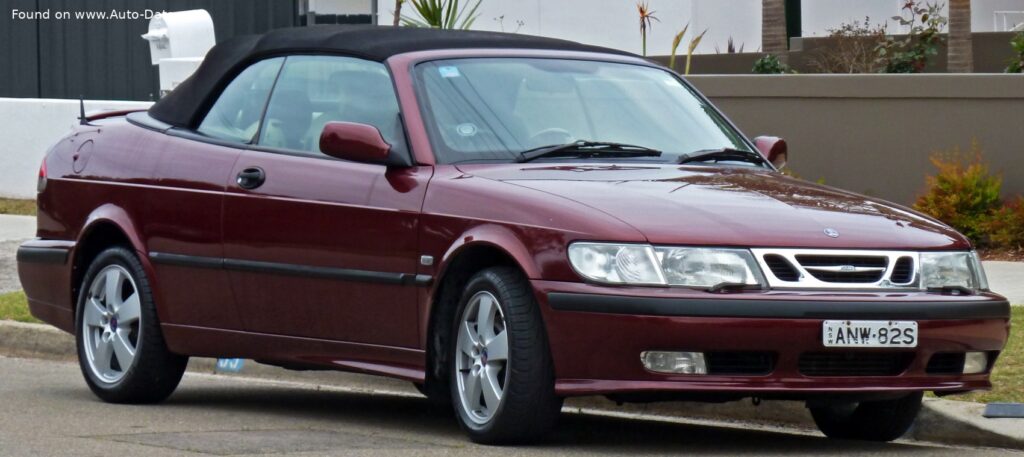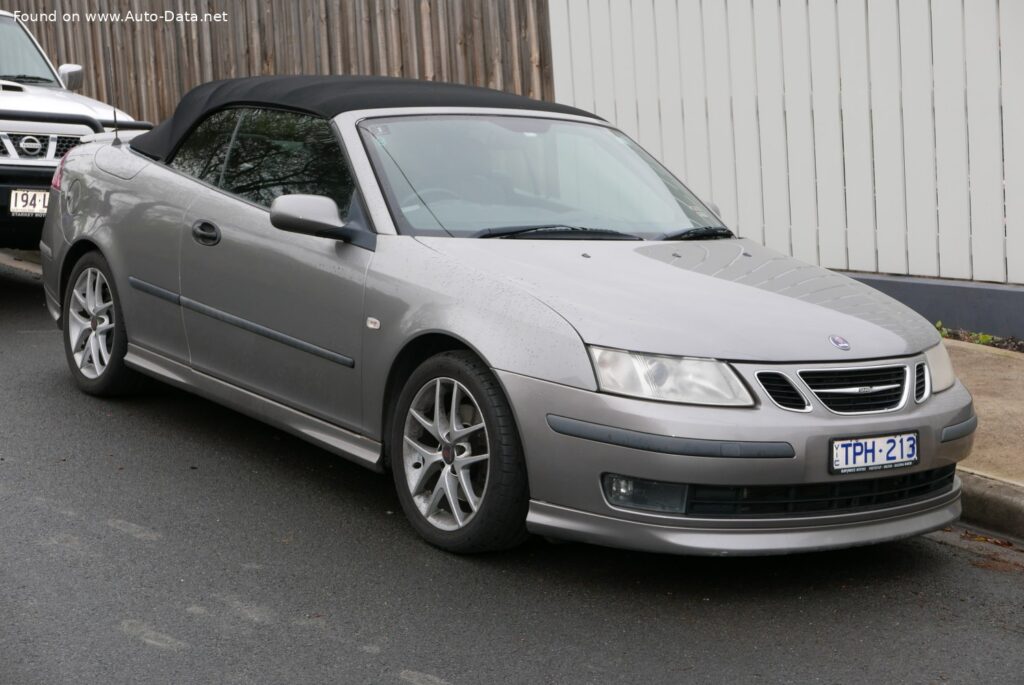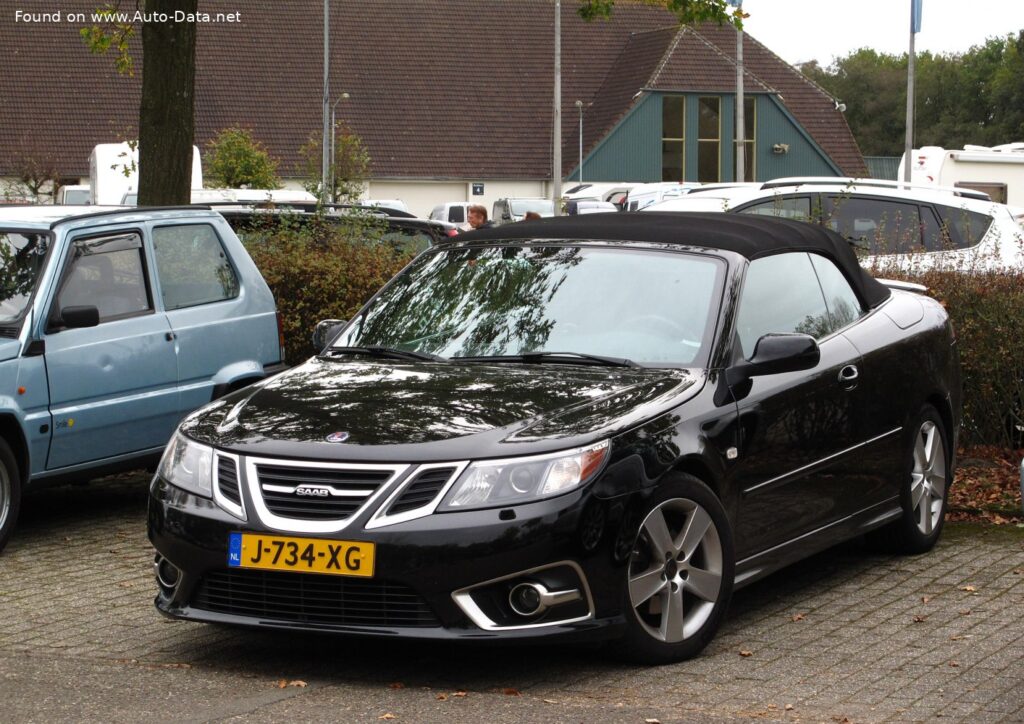
The Saab 9-3 Convertible II Griffin (facelift 2011) 2.0t BioPower represents a final refinement of Saab’s mid-size convertible offering before the brand’s unfortunate demise in December 2011. Positioned as a premium compact convertible, the 9-3 Convertible aimed to blend Scandinavian design with capable performance and a focus on open-air driving enjoyment. This facelifted version, introduced in 2011, incorporated subtle styling updates and continued Saab’s commitment to offering a unique alternative in a segment dominated by German and British manufacturers. The “BioPower” designation indicates the engine’s capability to run on both gasoline and ethanol, reflecting Saab’s early adoption of flex-fuel technology.
Saab 9-3 Convertible II Griffin: A Detailed Overview
The 9-3 Convertible II, and specifically the Griffin facelift, was never a high-volume seller in the United States. Saab, while possessing a loyal following, struggled to compete with established luxury brands. However, the 9-3 Convertible offered a distinctive character, prioritizing driver engagement and a comfortable, yet sporty, driving experience. The Griffin trim level represented a well-equipped variant, offering a balance of features and performance. The 2.0t BioPower engine was a key component, providing a reasonable level of power while also offering the flexibility of alternative fuel operation.
Engine & Performance
At the heart of the 2011 Saab 9-3 Convertible II Griffin lies a 2.0-liter inline-four cylinder engine, designated the B207H. This engine produces 163 horsepower at 4,000-6,000 rpm and 320 Nm (236.02 lb.-ft.) of torque between 1,750 and 3,500 rpm. The engine’s key feature is its “BioPower” capability, allowing it to run on gasoline, E85 ethanol, or any blend of the two. This flexibility was intended to reduce emissions and offer potential cost savings depending on fuel prices. The engine utilizes direct fuel injection and a twin-scroll turbocharger with an intercooler to enhance performance and efficiency. Power is delivered to the front wheels via a six-speed manual transmission. Acceleration from 0 to 100 km/h (0-62 mph) takes 8.3 seconds, while 0-60 mph is achieved in a calculated 7.9 seconds. The vehicle boasts a maximum speed of 210 km/h (130.49 mph). The engine’s power-to-weight ratio is 9.8 kg/Hp, and the torque-to-weight ratio is 5 kg/Nm.
Design & Features
The Saab 9-3 Convertible II Griffin is a two-door, four-seat cabriolet. Its design is characterized by clean lines and a relatively understated elegance, typical of Scandinavian aesthetics. The convertible top is a power-operated soft top, designed for ease of use and providing a comfortable open-air experience. The Griffin trim level included features such as alloy wheels, leather upholstery, and a premium audio system. Safety features, crucial in modern vehicles, included ABS (Anti-lock Braking System). The interior focused on providing a comfortable and driver-focused environment. While not overtly luxurious, the 9-3 Convertible aimed for a refined and functional cabin. Trunk space ranges from 258 liters (9.11 cu. ft.) with the top up to 352 liters (12.43 cu. ft.) with the top down. The vehicle’s dimensions are 4668 mm (183.78 in.) in length, 1762 mm (69.37 in.) in width, and 1437 mm (56.57 in.) in height. The wheelbase measures 2675 mm (105.31 in.).
Technical Specifications
| Brand | Saab |
| Model | 9-3 |
| Generation | 9-3 Convertible II Griffin (facelift 2011) |
| Type (Engine) | 2.0t BioPower (163 Hp) |
| Start of production | 2011 |
| End of production | December, 2011 |
| Powertrain Architecture | Internal Combustion engine |
| Body type | Cabriolet |
| Seats | 4 |
| Doors | 2 |
| Fuel consumption (urban) | 10.8 l/100 km (21.8 US mpg, 26.2 UK mpg, 9.3 km/l) |
| Fuel consumption (extra urban) | 5.5 l/100 km (42.8 US mpg, 51.4 UK mpg, 18.2 km/l) |
| Fuel consumption (combined) | 7.4 l/100 km (31.8 US mpg, 38.2 UK mpg, 13.5 km/l) |
| CO2 emissions | 173 g/km |
| Fuel Type | Petrol / Ethanol – E85 |
| Acceleration 0 – 100 km/h | 8.3 sec |
| Acceleration 0 – 62 mph | 8.3 sec |
| Acceleration 0 – 60 mph | 7.9 sec |
| Maximum speed | 210 km/h (130.49 mph) |
| Emission standard | Euro 5 |
| Weight-to-power ratio | 9.8 kg/Hp |
| Weight-to-torque ratio | 5 kg/Nm |
| Power | 163 Hp @ 4000-6000 rpm |
| Torque | 320 Nm @ 1750-3500 rpm (236.02 lb.-ft.) |
| Engine layout | Front, Transverse |
| Engine Model/Code | B207H |
| Engine displacement | 1998 cm3 (121.93 cu. in.) |
| Number of cylinders | 4 |
| Engine configuration | Inline |
| Cylinder Bore | 86 mm (3.39 in.) |
| Piston Stroke | 86 mm (3.39 in.) |
| Number of valves per cylinder | 4 |
| Fuel injection system | Direct injection |
| Engine aspiration | Twin-scroll turbo, Intercooler |
| Valvetrain | DOHC |
| Engine oil capacity | 6 l (6.34 US qt | 5.28 UK qt) |
| Coolant | 7.5 l (7.93 US qt | 6.6 UK qt) |
| Kerb Weight | 1590-1685 kg (3505.35 – 3714.79 lbs.) |
| Max. weight | 2050 kg (4519.48 lbs.) |
| Max load | 365-460 kg (804.69 – 1014.13 lbs.) |
| Trunk (boot) space – minimum | 258 l (9.11 cu. ft.) |
| Trunk (boot) space – maximum | 352 l (12.43 cu. ft.) |
| Fuel tank capacity | 62 l (16.38 US gal | 13.64 UK gal) |
| Permitted trailer load with brakes (12%) | 1600 kg (3527.4 lbs.) |
| Length | 4668 mm (183.78 in.) |
| Width | 1762 mm (69.37 in.) |
| Width including mirrors | 2040 mm (80.31 in.) |
| Height | 1437 mm (56.57 in.) |
| Wheelbase | 2675 mm (105.31 in.) |
| Front track | 1524 mm (60 in.) |
| Rear (Back) track | 1506 mm (59.29 in.) |
| Front overhang | 1002 mm (39.45 in.) |
| Rear overhang | 991 mm (39.02 in.) |
| Drivetrain Architecture | Front wheel drive |
| Number of gears and type of gearbox | 6 gears, manual transmission |
| Front suspension | Independent, type McPherson with coil spring and anti-roll bar |
| Rear suspension | Independent multi-link spring suspension with stabilizer |
| Front brakes | Ventilated discs, 285 mm |
| Rear brakes | Disc, 278 mm |
| Assisting systems | ABS (Anti-lock braking system) |
| Steering type | Steering rack and pinion |
| Power steering | Electric Steering |
| Tires size | 215/55 R16; 225/45 R17; 225/45 R18 |
| Wheel rims size | 6.5J x 16; 7J x 17; 7.5J x 17; 7.5J x 18 |
The Saab 9-3 Convertible II Griffin (facelift 2011) 2.0t BioPower, while a relatively niche vehicle, offered a compelling combination of Scandinavian design, flexible fuel capability, and a comfortable driving experience. Its discontinuation marked the end of an era for the Saab brand, leaving behind a legacy of innovation and a dedicated following.