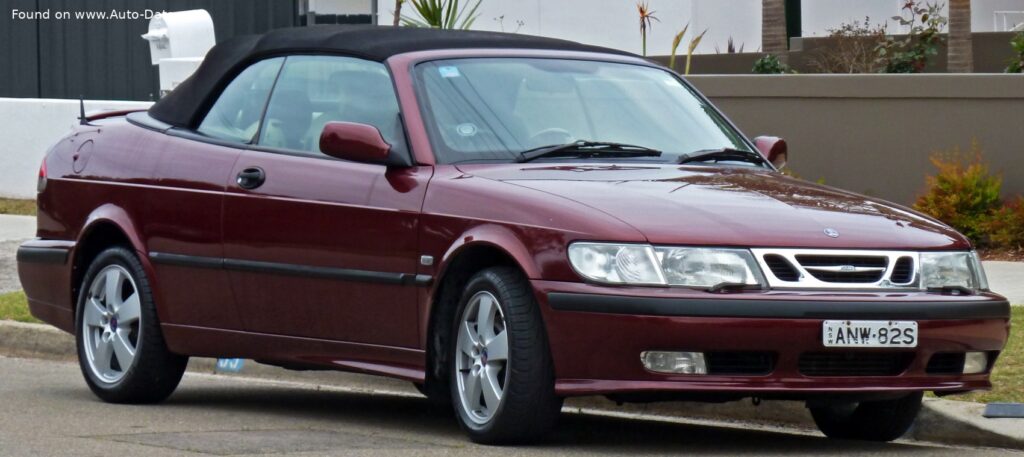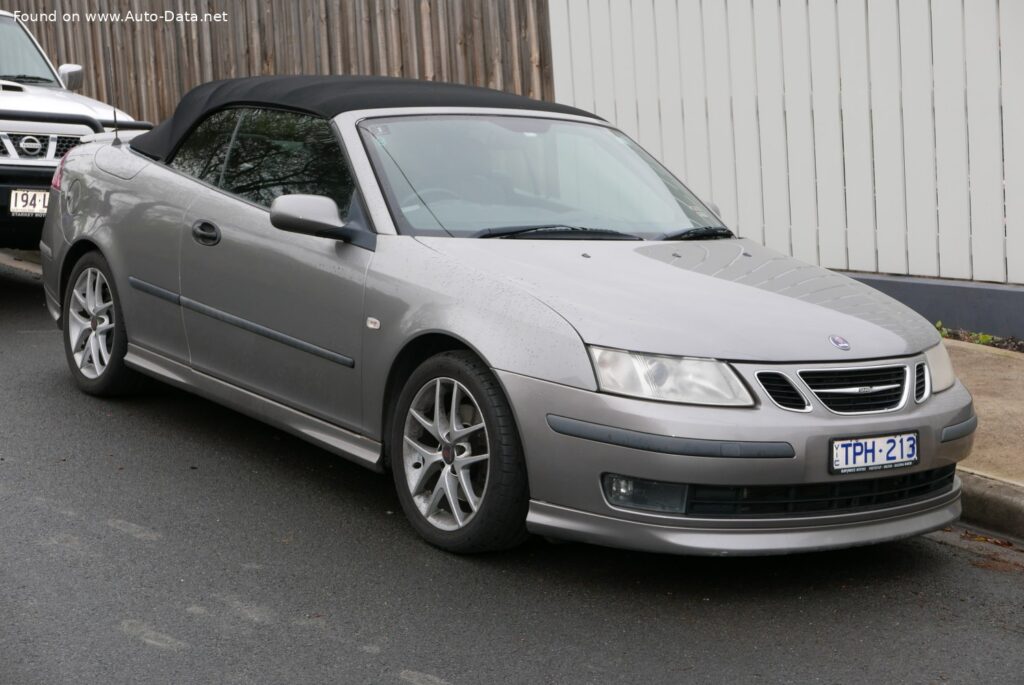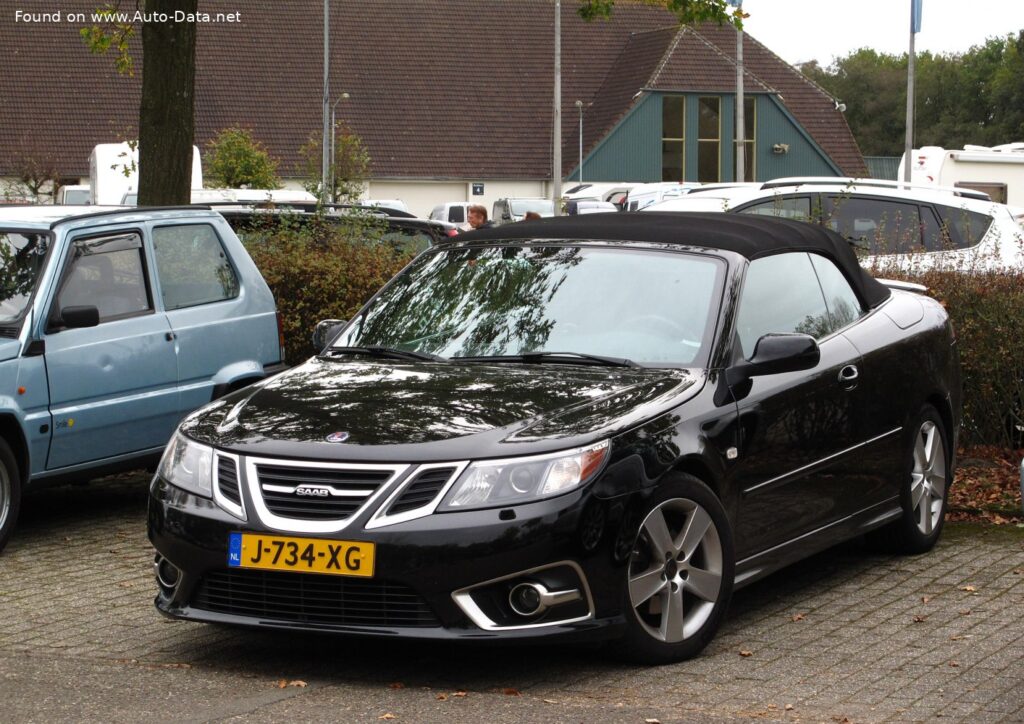
The Saab 9-3 Convertible II Griffin (facelift 2011) 2.0t BioPower Sentronic represents a final refinement of Saab’s mid-size convertible offering before the brand’s unfortunate demise in December 2011. Positioned as a premium, sporty alternative in the convertible segment, the 9-3 Convertible aimed to blend Scandinavian design with capable performance and a unique, environmentally conscious powertrain option. This facelifted version, introduced in 2011, featured subtle styling updates and continued Saab’s tradition of offering a distinctive driving experience. While never a high-volume seller in the United States, the 9-3 Convertible held a loyal following among enthusiasts who appreciated its individuality and engineering.
Saab 9-3 Convertible II Griffin: A Detailed Overview
The 9-3 Convertible II Griffin, produced for a very short period in 2011, was the culmination of a lineage that began with the original Saab 9-3 in 1998. The “Griffin” designation denoted a higher trim level, offering enhanced features and a more luxurious interior. The 2.0t BioPower engine was a key differentiator, allowing the vehicle to run on gasoline, ethanol, or a blend of both, appealing to environmentally conscious drivers. The Sentronic automatic transmission provided convenient gear changes, while the convertible top offered open-air driving enjoyment.
Engine & Performance
At the heart of the 9-3 Convertible II Griffin lies the 2.0t BioPower inline-four cylinder engine. This 1998 cc (121.93 cu. in.) engine produces 220 horsepower at 5300 rpm and 350 Nm (258.15 lb.-ft.) of torque between 2000 and 4000 rpm. The engine utilizes direct fuel injection and a twin-scroll turbocharger with an intercooler to maximize power and efficiency. The BioPower capability allows the engine to run on up to 100% ethanol (E85), offering reduced emissions and potentially increased performance, depending on fuel availability and quality. Power is delivered to the front wheels via a six-speed Sentronic automatic transmission. Performance figures include a 0-100 km/h (0-62 mph) acceleration time of 9.2 seconds and a 0-60 mph time of 8.7 seconds, with a maximum speed of 230 km/h (142.92 mph). The engine’s power-to-weight ratio is 7.3 kg/Hp, and the torque-to-weight ratio is 4.6 kg/Nm.
Design & Features
The Saab 9-3 Convertible II Griffin is a two-door, four-seat cabriolet. Its design emphasizes Scandinavian minimalism, with clean lines and a focus on functionality. The convertible top is a multi-layer fabric design, providing good insulation and weather protection. The Griffin trim level includes features such as leather upholstery, heated front seats, and a premium audio system. Safety features include ABS (Anti-lock Braking System) and ventilated disc brakes on all four wheels (302mm front, 292mm rear). The car’s independent suspension – McPherson struts at the front and a multi-link setup at the rear – aims to provide a comfortable ride and responsive handling. The interior is driver-focused, with ergonomically designed controls and a relatively spacious cabin for a convertible. The trunk offers 258-352 liters (9.11-12.43 cu. ft.) of storage space, depending on whether the top is up or down.
Technical Specifications
| Brand | Saab |
| Model | 9-3 |
| Generation | 9-3 Convertible II Griffin (facelift 2011) |
| Type (Engine) | 2.0t BioPower (220 Hp) Sentronic |
| Start of production | 2011 |
| End of production | December, 2011 |
| Powertrain Architecture | Internal Combustion engine |
| Body type | Cabriolet |
| Seats | 4 |
| Doors | 2 |
| Fuel consumption (urban) | 12.6 l/100 km (18.7 US mpg, 22.4 UK mpg, 7.9 km/l) |
| Fuel consumption (extra urban) | 6.2 l/100 km (37.9 US mpg, 45.6 UK mpg, 16.1 km/l) |
| Fuel consumption (combined) | 8.6 l/100 km (27.4 US mpg, 32.8 UK mpg, 11.6 km/l) |
| CO2 emissions | 199 g/km |
| Fuel Type | Petrol / Ethanol – E85 |
| Acceleration 0 – 100 km/h | 9.2 sec |
| Acceleration 0 – 62 mph | 9.2 sec |
| Acceleration 0 – 60 mph | 8.7 sec |
| Maximum speed | 230 km/h (142.92 mph) |
| Emission standard | Euro 5 |
| Weight-to-power ratio | 7.3 kg/Hp |
| Weight-to-torque ratio | 4.6 kg/Nm |
| Power | 220 Hp @ 5300 rpm |
| Torque | 350 Nm @ 2000-4000 rpm (258.15 lb.-ft. @ 2000-4000 rpm) |
| Engine layout | Front, Transverse |
| Engine Model/Code | A20NFT |
| Engine displacement | 1998 cm3 (121.93 cu. in.) |
| Number of cylinders | 4 |
| Engine configuration | Inline |
| Cylinder Bore | 86 mm (3.39 in.) |
| Piston Stroke | 86 mm (3.39 in.) |
| Number of valves per cylinder | 4 |
| Fuel injection system | Direct injection |
| Engine aspiration | Twin-scroll turbo, Intercooler |
| Valvetrain | DOHC |
| Engine oil capacity | 6 l (6.34 US qt | 5.28 UK qt) |
| Coolant capacity | 7.5 l (7.93 US qt | 6.6 UK qt) |
| Kerb Weight | 1600-1700 kg (3527.4 – 3747.86 lbs.) |
| Max. weight | 2080 kg (4585.62 lbs.) |
| Max load | 380-480 kg (837.76 – 1058.22 lbs.) |
| Trunk (boot) space – minimum | 258 l (9.11 cu. ft.) |
| Trunk (boot) space – maximum | 352 l (12.43 cu. ft.) |
| Fuel tank capacity | 62 l (16.38 US gal | 13.64 UK gal) |
| Permitted trailer load with brakes (12%) | 1600 kg (3527.4 lbs.) |
| Length | 4668 mm (183.78 in.) |
| Width | 1762 mm (69.37 in.) |
| Width including mirrors | 2040 mm (80.31 in.) |
| Height | 1437 mm (56.57 in.) |
| Wheelbase | 2675 mm (105.31 in.) |
| Front track | 1524 mm (60 in.) |
| Rear track | 1506 mm (59.29 in.) |
| Front overhang | 1002 mm (39.45 in.) |
| Rear overhang | 991 mm (39.02 in.) |
| Drivetrain | Front wheel drive |
| Number of gears | 6 |
| Gearbox type | Automatic transmission Sentronic |
| Front suspension | Independent, McPherson with coil spring and anti-roll bar |
| Rear suspension | Independent multi-link spring suspension with stabilizer |
| Front brakes | Ventilated discs, 302 mm |
| Rear brakes | Ventilated discs, 292 mm |
| Steering type | Steering rack and pinion |
| Power steering | Electric |
| Tires size | 215/55 R16; 225/45 R17; 225/45 R18 |
| Wheel rims size | 6.5J x 16; 7J x 17; 7.5J x 17; 7.5J x 18 |
The Saab 9-3 Convertible II Griffin (facelift 2011) 2.0t BioPower Sentronic, though short-lived, represents a compelling example of Saab’s commitment to innovation and individuality. Its blend of Scandinavian design, capable performance, and environmentally conscious technology made it a unique offering in the convertible market, and it remains a sought-after vehicle among Saab enthusiasts today.